
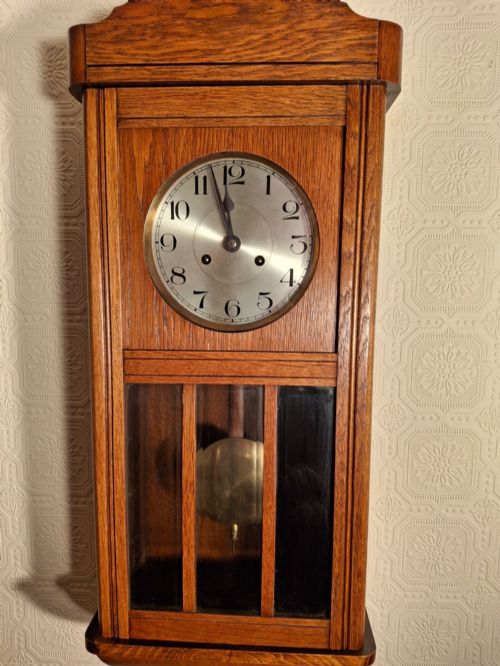
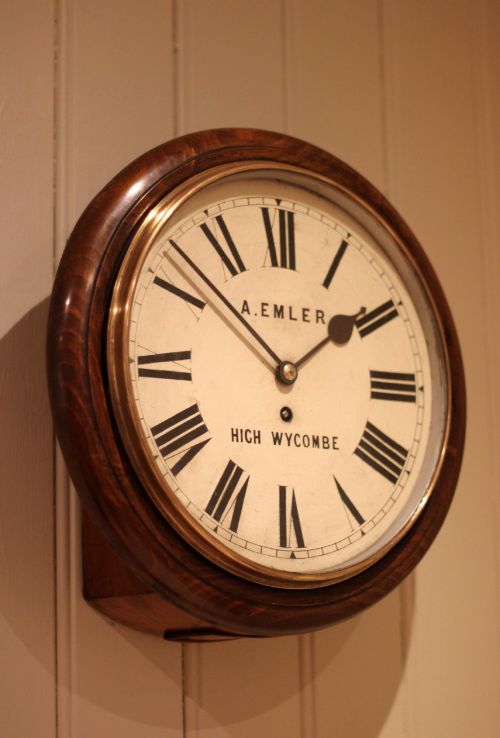
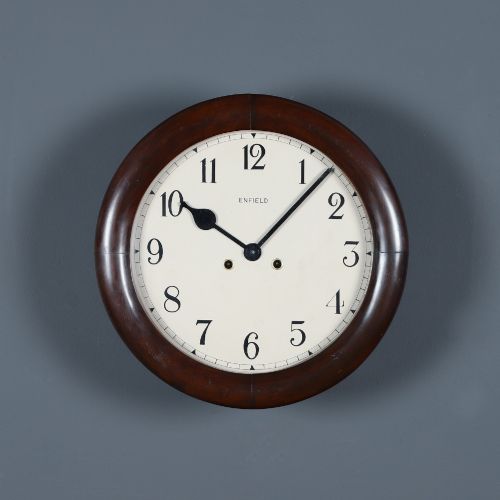
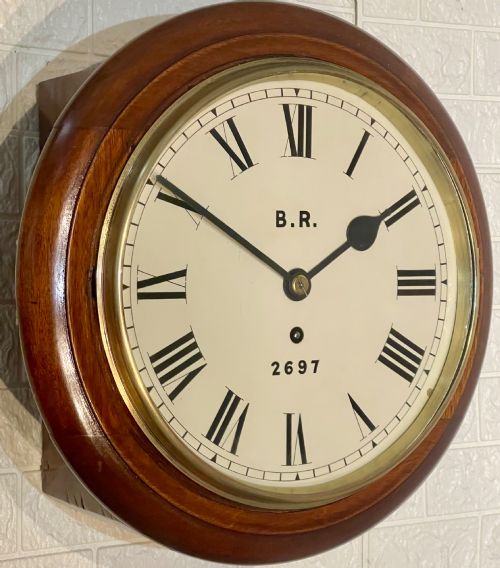
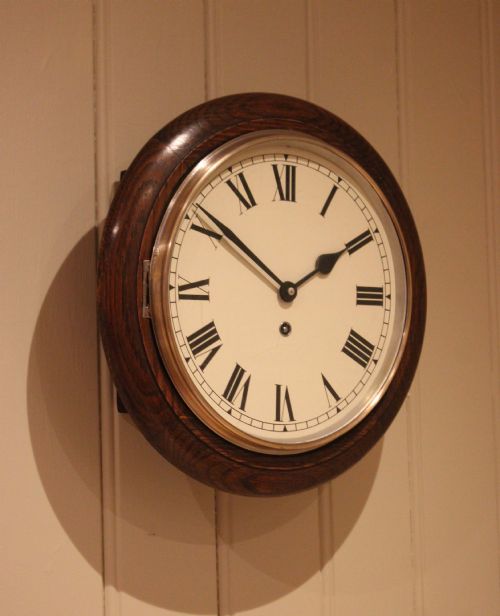
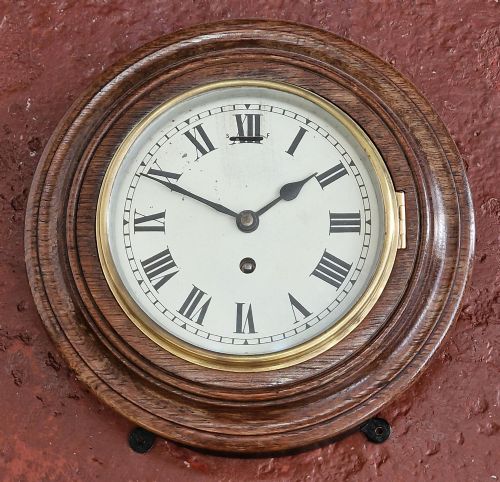
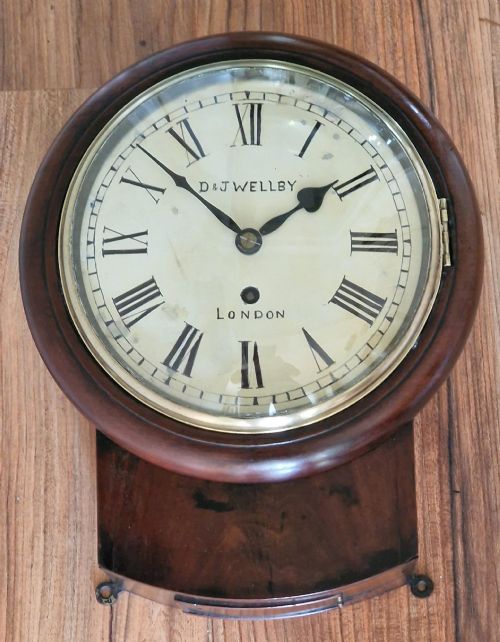
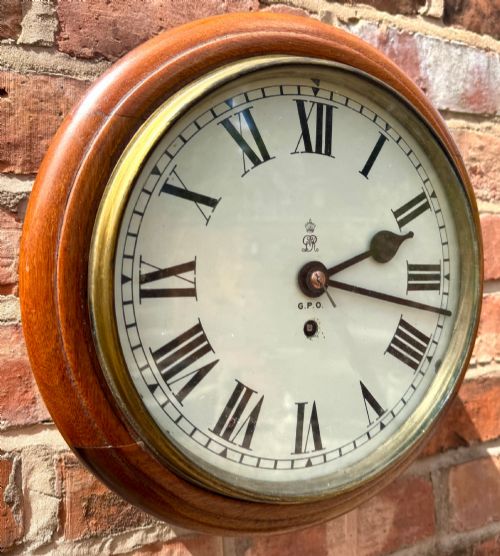
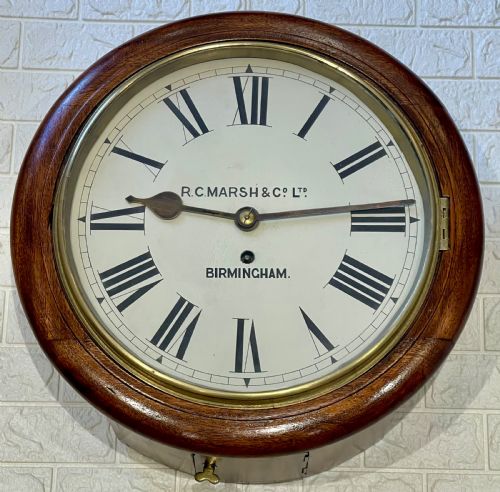
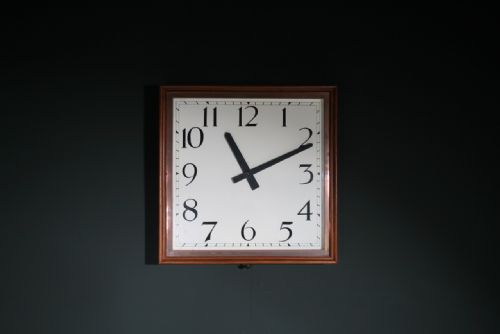


Edwardian Wooden Wall Clock
An edwardian wooden wall clock brings practical timekeeping and warmth into a room, combining traditional cabinet woods with clear dial faces.
Edwardian Wooden Wall Clock
An edwardian wooden wall clock is a functional timepiece designed to hang securely on a domestic, office, or railway wall, providing reliable hours through mechanical movements. Buyers exploring this selection encounter various circular and drop dial formats housed in timber cases that reflect the practical needs of the period.
The pieces appearing here span early twentieth-century production alongside related items from the nineteenth century, Victorian era, and later decades. Mahogany, oak, walnut, and beech dominate the timber frames, enclosing white painted dials and brass bezels designed for legibility in busy public spaces and quiet homes alike.
Round dial railway, school, and office wall clocks form a large portion of the available items, alongside fusee timepieces and combined wall clocks with barometers and thermometers. These functional pieces range from small six-inch dial versions to larger examples carrying specific regional or transport history.
Materials and construction
Cabinetmakers constructed the circular and drop dial enclosures using solid hardwoods such as mahogany, oak, walnut, and beech, frequently housing the timber cases with glass viewing windows and brass bezels. Many dials feature painted numerals behind glass, protected by heavy wooden rims hinged for easy access to the movement.
Movements rely on single chain fusee mechanisms, striking trains, and timepieces driven by weights or springs, often paired with brass numbers and copper accents. The integration of electric movements appears in specific factory pieces alongside traditional mechanical setups.
Dial faces utilise convex glass and hand-painted or metal markings, whilst carved details and inlaid wooden surfaces appear on specific specimens from High Wycombe, London, and provincial workshops.
Listings feature timbers including mahogany, oak, walnut, beech, and metal, spanning Victorian, Edwardian, and George V periods.
Quality factors
The calibre of the movement largely dictates the standard of a clock, with clean fusee mechanisms and numbered components showing greater attention to original manufacture. Precision in the joinery of the mahogany or oak case and the crispness of dial lettering further separate standard utility pieces from finer examples.
Retained transport or institutional history adds distinction to an item, particularly when railway companies, municipal authorities, or named makers are recorded on the dial or movement. Provenance tied to specific stations, town halls, or makers elevates the historical interest of the clock.
The clarity and preservation of the timber grain, together with original brass bezels and undisturbed painted dials, influence the overall integrity of the surviving wall clock.
D&J Wellby London·Balbiani Brookley·Payne of Tunbridge Wells·Camerer Cuss and Co
The Edwardian Wooden Wall Clock Glossary
- Fusee
- A conical pulley used in spring-driven clocks to maintain even power as the mainspring unwinds. It ensures consistent timekeeping across the running period of the movement.
- Drop dial
- A clock case featuring a circular dial at the top above an extended wooden box below. This lower portion often houses a pendulum and allows room for a longer drop.
- Dial clock
- A wall-mounted timepiece with a prominent circular face designed for clear reading from a distance. These were standard fittings in schools, railway stations, and offices.
- Bezel
- The metal ring, frequently made of brass, that holds the glass protecting the clock face. It often opens on a hinge to allow hand-setting.
- Timepiece
- A clock that indicates the time without striking hours or quarters. It possesses a going train only, omitting any striking mechanism.
Edwardian Wooden Wall Clock: Frequently Asked Questions
How do I wind a fusee wall clock?
Wind the clock using the appropriate key inserted into the winding hole on the dial face, turning it gently until resistance indicates the mainspring is fully tensioned.
Avoid over-winding the mechanism, as this can place unnecessary stress on the chain and fusee cone.
Where were railway station clocks placed?
Railway clocks hung in prominent positions on platform walls, ticket offices, and waiting rooms where passengers and staff needed instant visibility.
Their robust construction and clear dial faces ensured reliability in busy, smoky environments.
How do I tell an Edwardian clock from a Victorian one?
Edwardian clocks often display lighter oak or mahogany tones and cleaner, less ornate cases compared to the heavier carved styles typical of the Victorian era.
Examining the dial typography, backplate markings, and case timber helps determine the approximate period of manufacture.
Can I hang a heavy wooden wall clock on plasterboard?
Heavy wooden wall clocks require direct fixing into a wall stud or masonry using appropriate wall anchors to support the weight securely.
Hanging a clock from a standard picture hook on plasterboard risks pulling the fixing out of the wall.