

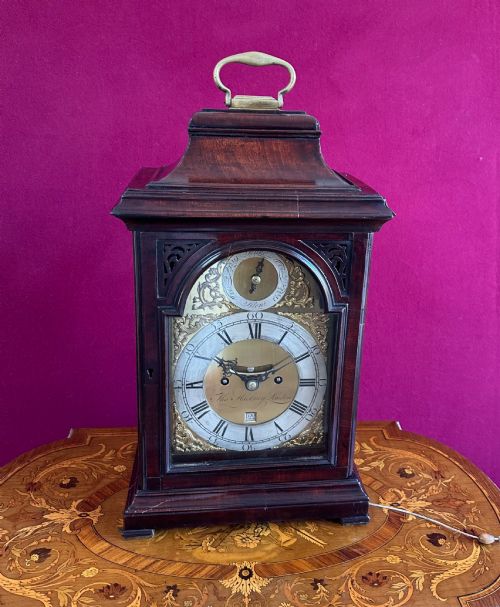
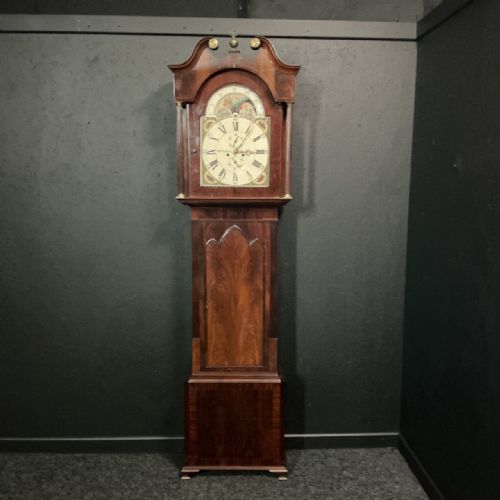
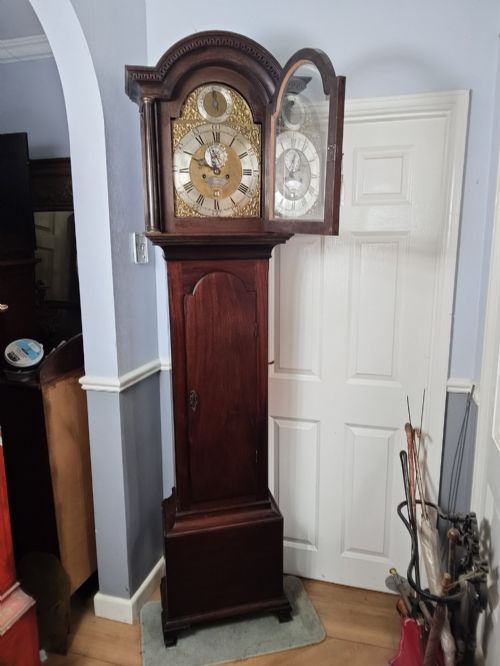
Dark Mahogany Dial Clock
These pieces for a dark mahogany dial clock bring together rich timber cases and clear dials from across the Georgian, Victorian, and Regency periods.
Dark Mahogany Dial Clock
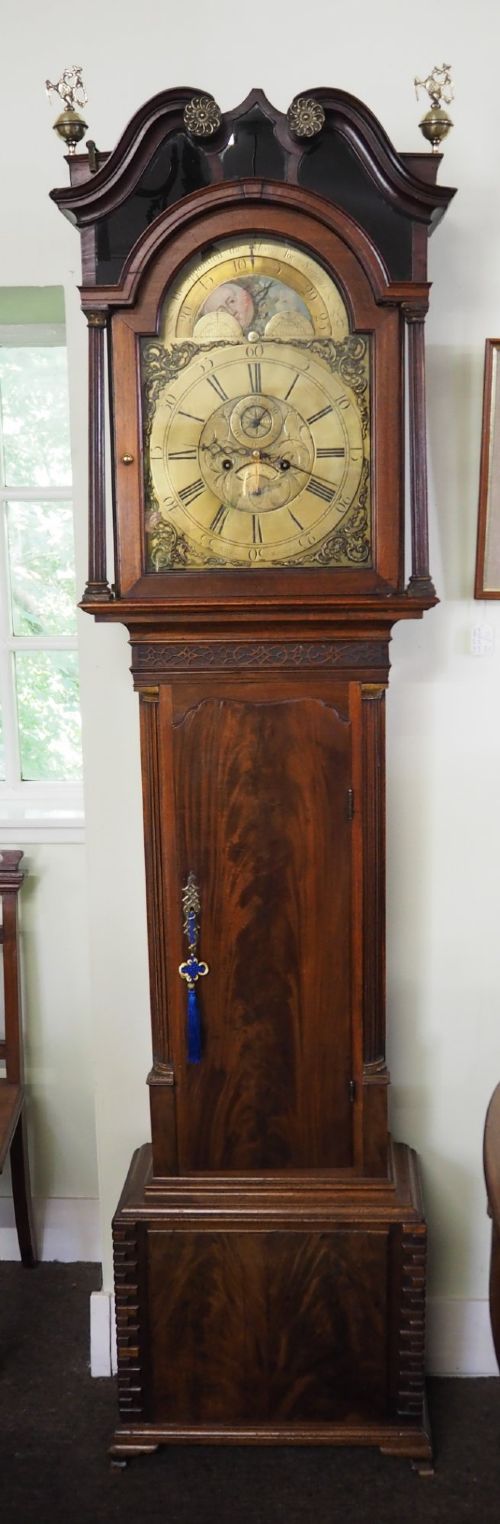
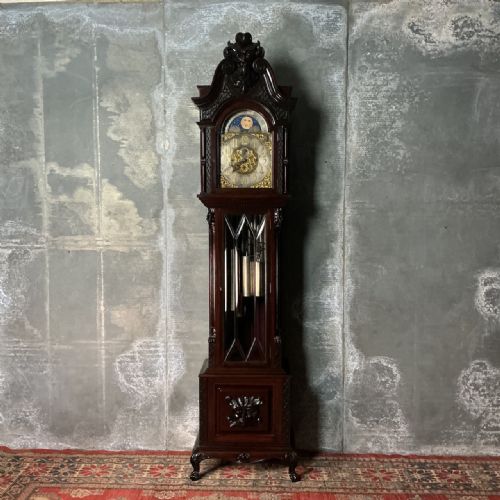
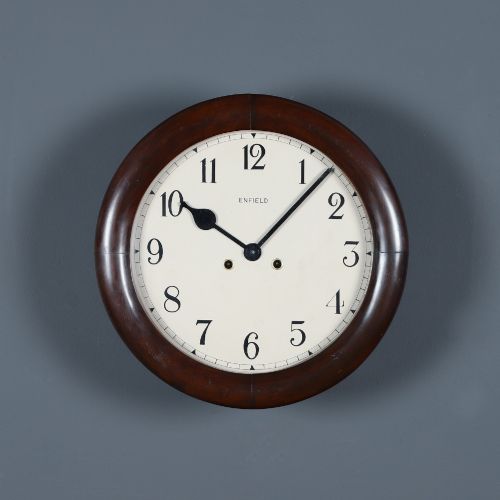
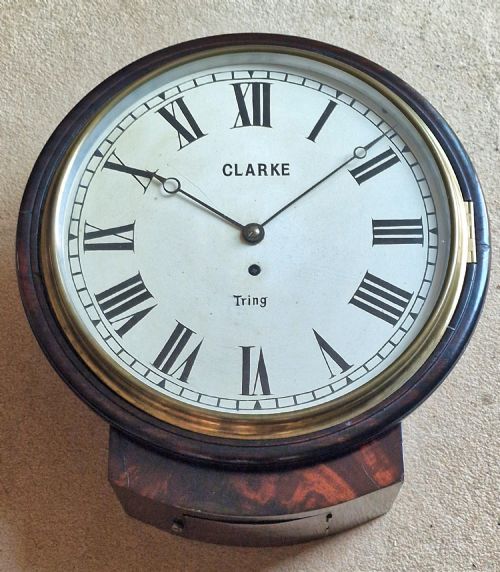
Buyers seeking a dark mahogany dial clock find robust wall-mounted round faces alongside substantial longcase and bracket clocks. The selection covers forms ranging from simple school room timepieces to complex London movements.
Makers from various regions contribute to this selection, incorporating brass details, painted metal dials, and glass covers into the mahogany housing. The prevalence of these dark wood cases reflects durable construction traditions across British workshops.
How they were made
Makers built these clock housings using solid mahogany timber, often pairing the dark wood body with brass bezels, steel internal gears, and glass dial covers. Enamel and painted metal provided clean backgrounds for numerals on the round faces.
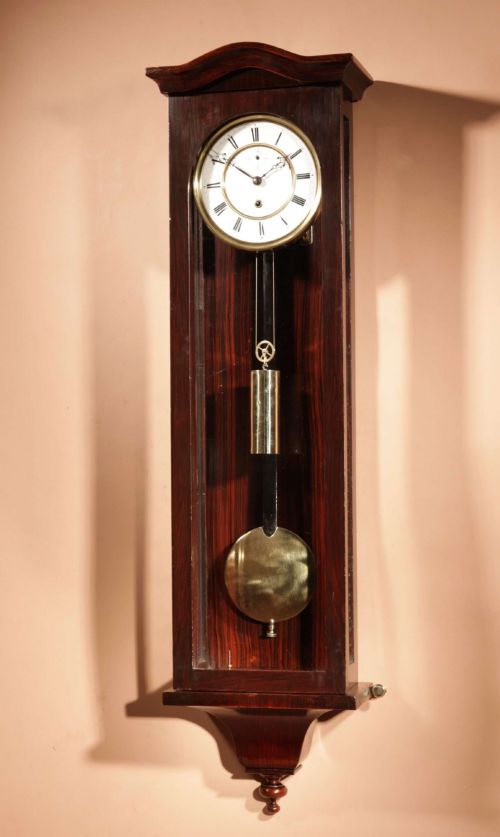
Movements relied on brass and steel components, utilising fusee mechanisms or traditional weight-driven systems to regulate time. Case construction involved careful joinery to enclose the delicate gear trains securely.
Listings feature mahogany, brass, glass, steel, oak, and enamel across Georgian, Victorian, Regency, and Edwardian periods.
What varies in quality
Quality in these timepieces rests on the precision of the movement and the finish of the timber case. Finer examples feature crisp dial lettering, well-cast brass bezels, and well-figured mahogany grain on the housing.
Regional variations in clockmaking skill influence the complexity of the internal mechanism, from standard time-only fusee setups to striking or musical arrangements. The crispness of the painted metal dial and the integrity of the wood joinery distinguish standard utilitarian clocks from exceptional pieces.
Gordon of Aberdeen·Gillett & Johnston of Croydon·James Field of Hempstead·George Clarke Tring·Samuel Kellett of Bredbury·William Jourdain·Henry Harris of Monythusloyn·Priory of Dundee Scotland·George Hallifax Of Doncaster·Henry Weedon London·Edward Shepley of Manchester·Joseph Bird of Stroud·Thomas Hedge of Colchester·Matt Wylie Paisley·Joseph Gibson Ecclefechan·Mappin & Webb
The Dark Mahogany Dial Clock Glossary
- Fusee
- A conical pulley used in spring-driven clocks to equalize the diminishing power of the mainspring as it unwinds. This mechanism helps maintain consistent timekeeping accuracy throughout the running period.
- Longcase clock
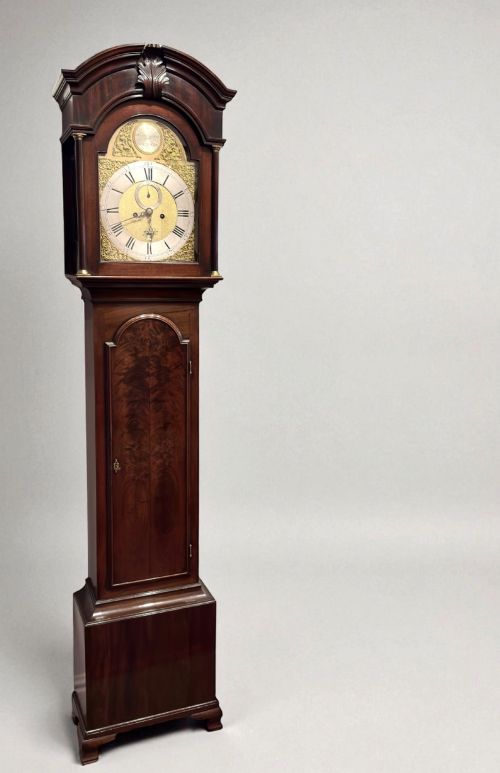
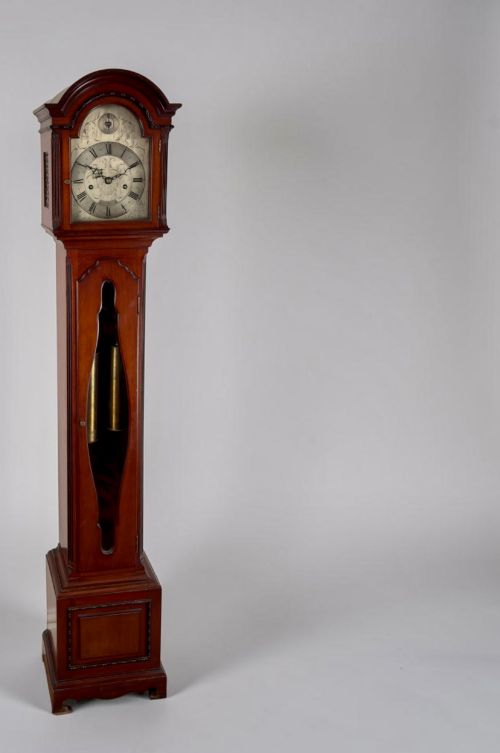
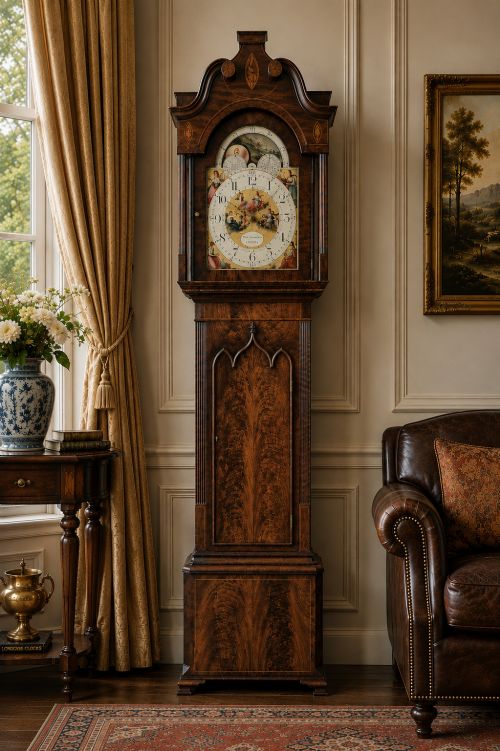
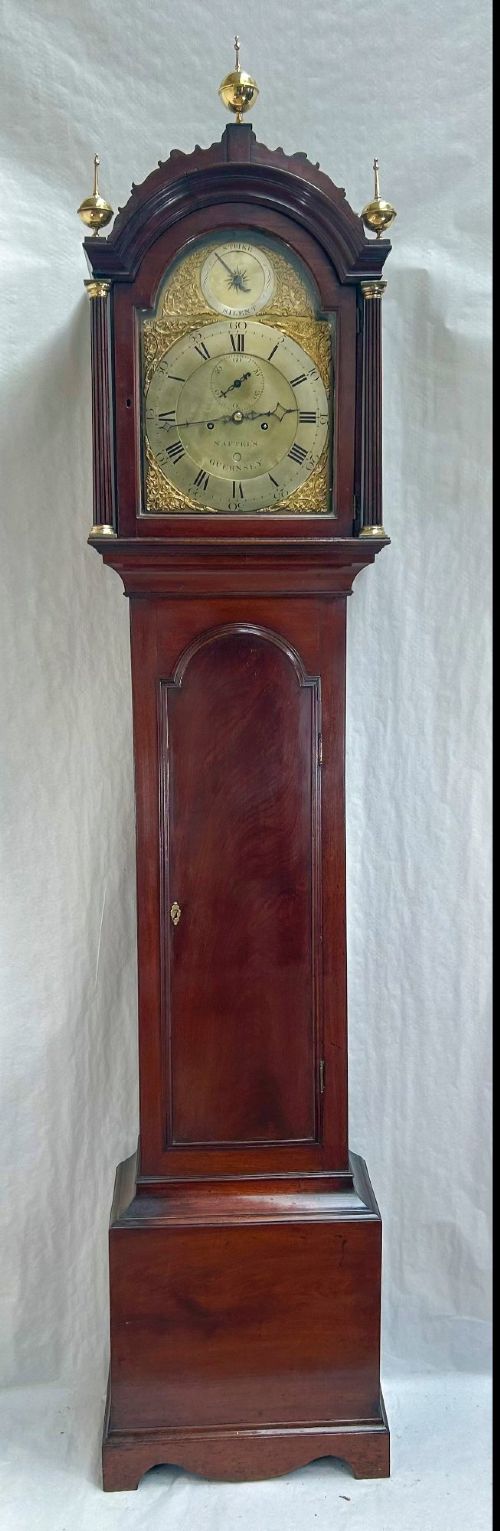
- A tall pendulum clock enclosed in a wooden case that stands directly on the floor. These pieces are often called grandfather or grandmother clocks depending on their height.
- Dial clock
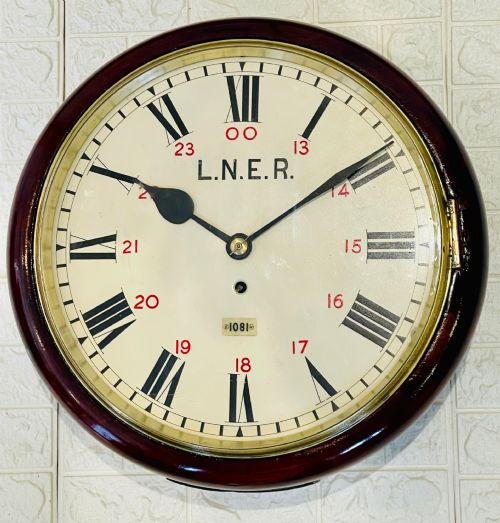
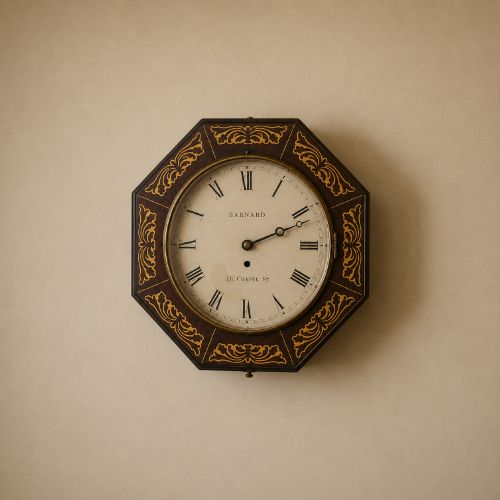
- A wall-mounted timepiece featuring a prominent round face enclosed in a timber surround. They were common in railway stations, schools, and offices.
- Verge movement
- An early type of escapement mechanism that controls the release of gear trains in older clocks. It works with a balance wheel or pendulum to regulate the speed.
- Drum head longcase clock
- A variation of the tall clock featuring a circular dial housing set atop a slender mahogany trunk. This style gained popularity during the Regency and Victorian eras.
Dark Mahogany Dial Clock: Frequently Asked Questions
What is a fusee dial clock?
A fusee dial clock utilises a specialised conical pulley inside the movement to regulate the mainspring's power. This ensures the clock maintains steady time as the spring winds down.
These pieces typically hang on walls in domestic and public settings, combining a clear round dial with a sturdy dark mahogany frame.
How do I tell a Georgian dial clock from a Victorian one?
Georgian models often display simpler, utilitarian proportions with hand-painted metal dials and understated timber surrounds. Victorian versions frequently introduce brass bezels, hinged side doors, and more prominent railway or station markings.
Examining the internal movement type and the style of the wood housing helps clarify the period of manufacture.
Where were dark mahogany dial clocks used?
These timekeepers appeared in railway stations, schools, offices, and domestic hallways where clear time visibility mattered. Their robust mahogany cases protected the delicate brass and steel gear trains from dust and moisture in busy environments.
Wall-mounted versions allowed workers and travellers to check the hour quickly from across a room.
How do I care for a mahogany longcase clock?
Keep the timber case away from direct sunlight and sudden temperature shifts to protect the mahogany grain. Dust the glass and brass bezels gently with a soft cloth without using harsh chemical polishes.
Allow a professional horologist to service the weight-driven or spring-driven movement periodically to keep the gears running smoothly.