
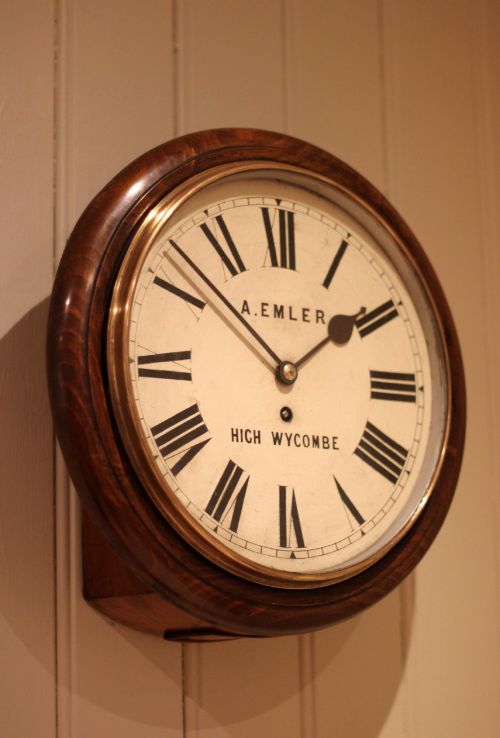
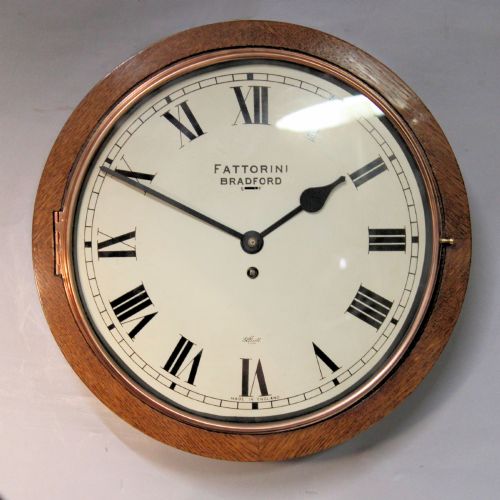
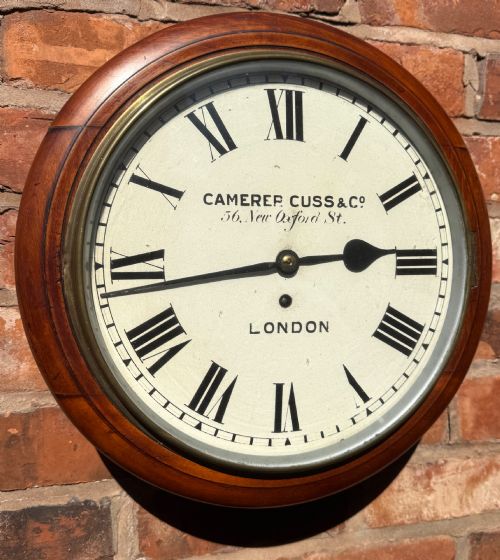

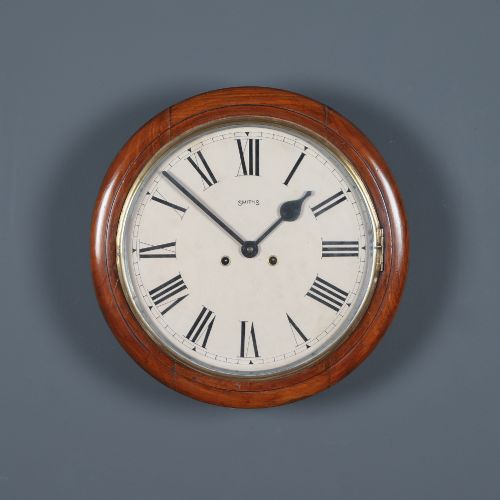
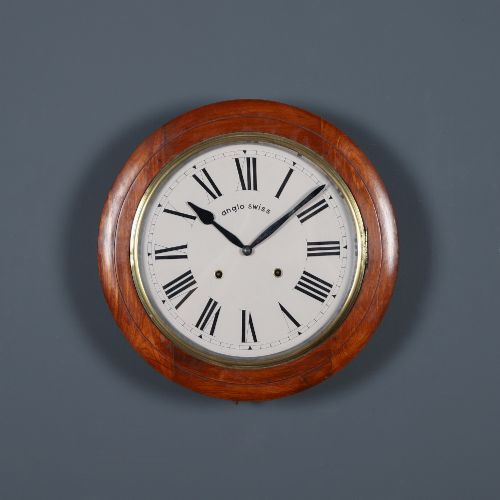
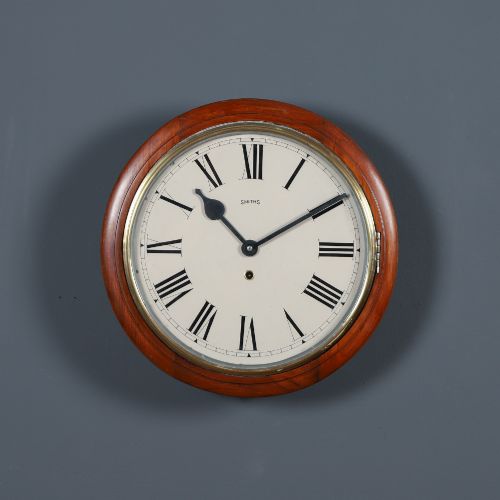
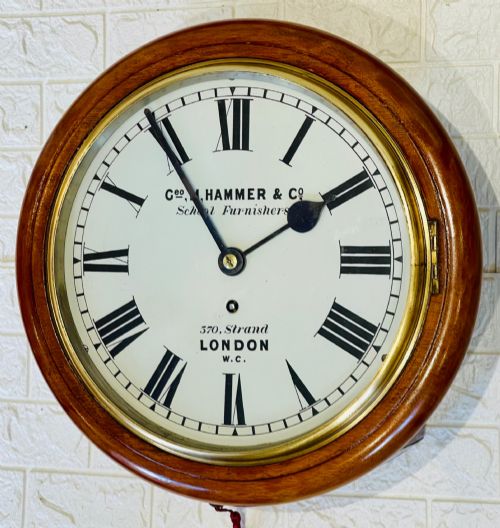
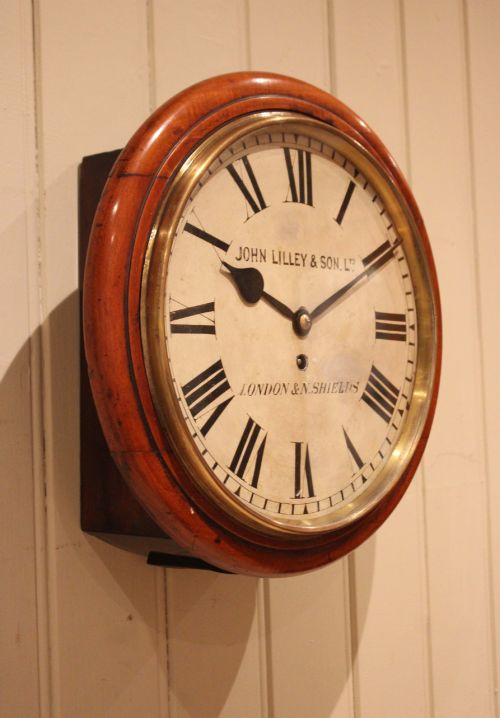
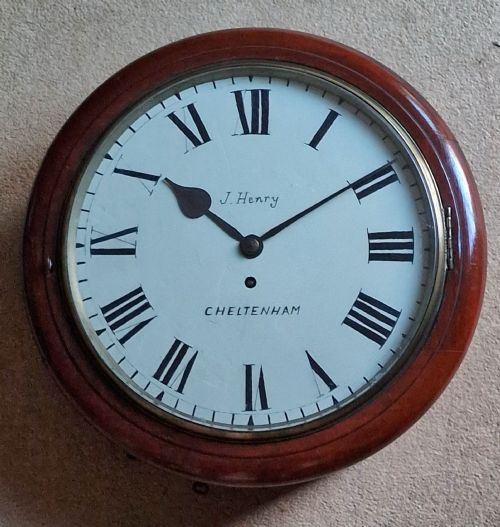
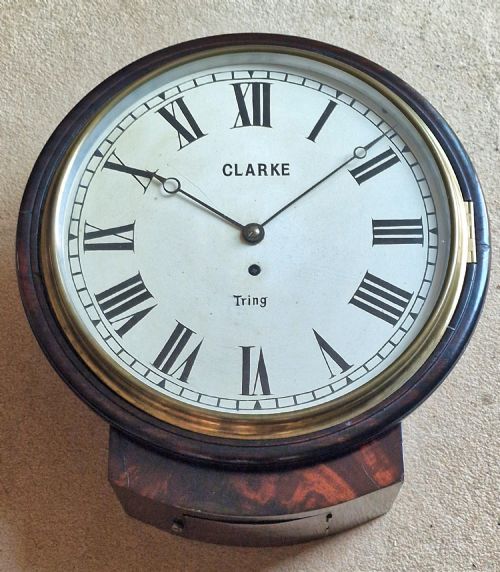
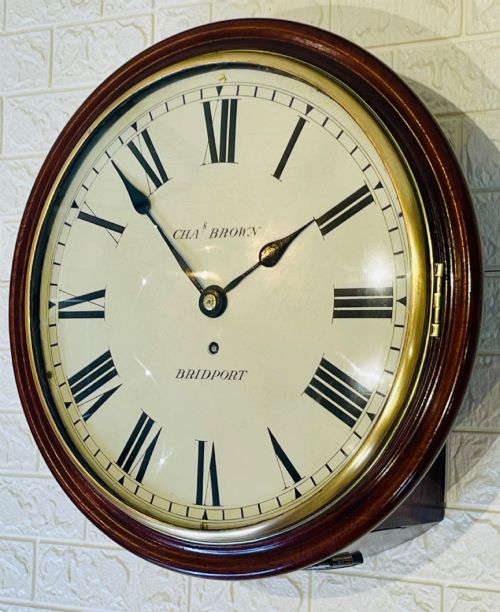
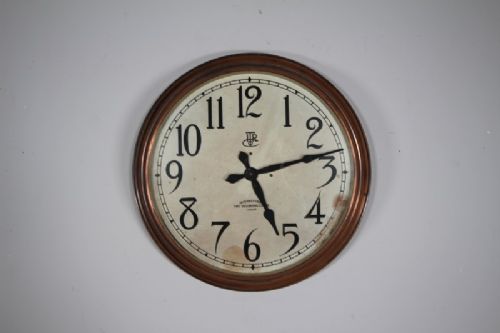
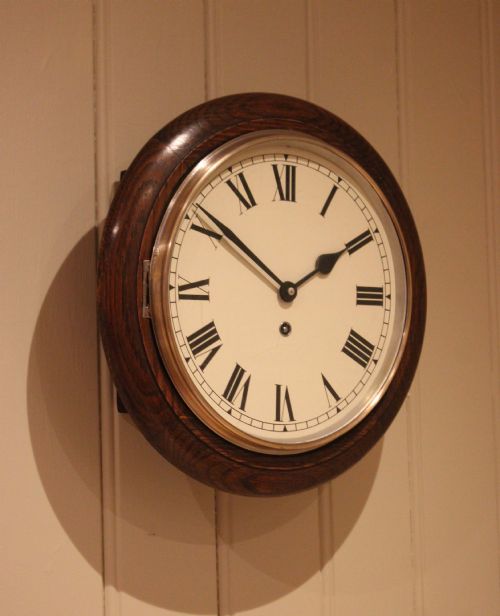
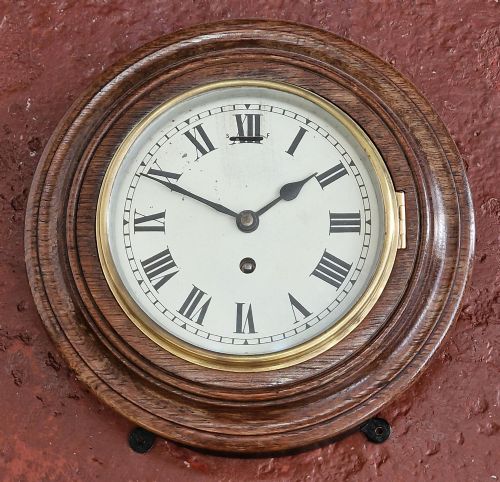
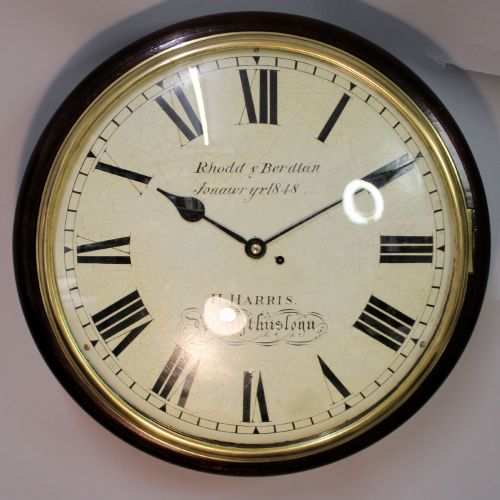
Antique Circular Wall Clock
An antique circular wall clock brings functional timekeeping and bold dial presence into a room, combining brass, mahogany, and glass.
What an antique circular wall clock is
An antique circular wall clock serves as a practical timepiece featuring a prominent round dial designed for high visibility across a room. These pieces range from railway station and school variants to factory and advertising formats.
The pieces listed here span the Georgian, Victorian, Edwardian, and George V periods, extending into nineteen-thirty. Forms include single chain fusee mechanisms and wooded dials housed in mahogany and pressed composition.
Originating largely from English workshops, these items reflect utilitarian and institutional settings such as postal offices and railways. The typical survival pairs a sturdy timber or metal surround with a clear protective glass face.
How they were made
Construction relies heavily on solid mahogany, wood, and pressed composition for the structural cases, paired with brass and copper components. Dial faces often utilise painted wood or metal protected by hinged glass bezels.
Mechanisms incorporate traditional fusee movements designed to maintain even tension as the mainspring unwinds. Cases frequently feature stamped numbering and fitted access doors for winding and maintenance.
Retail Price Guide 2026
Typical UK retail prices for circular wall clock, calculated from the Sellingantiques database of over a million retail prices indexed since 2003. This retail price guide relies exclusively on Sellingantiques data; no external sources or auction records are used, so the figures do not describe the wider market.
The site listings feature materials including glass, brass, mahogany, copper, metal, pressed composition, and wood across nineteenth-century and early twentieth-century pieces.
What varies in quality
Distinction across the range rests on the sophistication of the internal movement, such as the presence of a chain fusee mechanism rather than simpler gearing. The crispness of dial lettering and the integrity of the original timber case also elevate a piece.
Provenance and maker attribution, demonstrated by signed dials from makers like Francis Perigal or official institutional markings such as GPO stamps, set higher tier examples apart from unbranded variants.
The Antique Circular Wall Clock Glossary
- Fusee
- A conical pulley used in clock movements to equalise the torque of the mainspring as it runs down. This mechanism ensures more accurate timekeeping throughout the duration of the wind.
- Dial
- The face of the clock where the hours and minutes are marked. On these wall pieces, dials are frequently large and legible for public or institutional viewing.
- Bezel
- The metal or wooden rim that holds the glass protecting the clock face. It often hinges open to allow access to the hands and dial.
- Timepiece
- A clock that indicates the time without striking hours or quarters. Many wall-mounted round clocks are strictly timepieces.
- Molliscorium
- A patented material used for advertising clock faces during the nineteenth century. It provides a distinct textured surface for lettering.
Frequently Asked Questions
How do I wind a fusee wall clock?
Use the appropriate winding key inserted into the dial hole to turn the movement clockwise until resistance is met. Take care not to overwind the spring.
Ensure the pendulum is stationary before moving the clock body to prevent damage to the suspension spring and internal escapement.
Where were these clocks originally used?
Many circular wall clocks hung in railway stations, schools, factories, and post offices where clear time reading from a distance was essential.
Others served commercial purposes as advertising pieces in shops or private offices before entering the domestic market.
How do I date a Victorian wall clock?
Examine the timber, the style of the numerals on the dial, and any stamps or markings left inside the case by makers. Fusee movements and specific crown ciphers also help narrow down the decade.
Comparing construction methods with documented pieces from the nineteenth century provides further confirmation of the period.
Are these clocks suitable for modern walls?
The substantial weight of mahogany cases and brass mechanisms requires secure fixing into wall studs or solid masonry using appropriate fixings.
Allowing sufficient clearance for the drop of the pendulum or weight ensures the movement operates without obstruction.