
Vintage School Dial Clock
A vintage school dial clock brings the clear, unpretentious timekeeping of public spaces into domestic rooms.

Vintage School Dial Clock
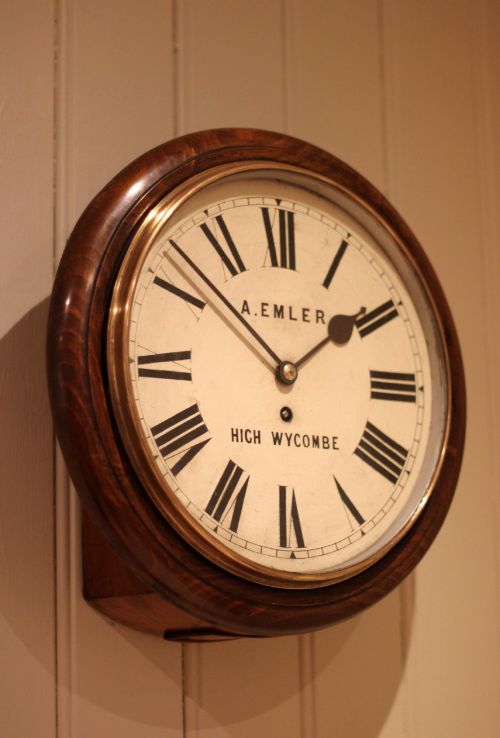
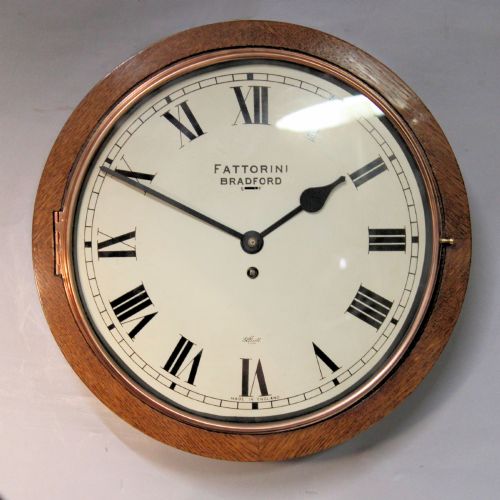
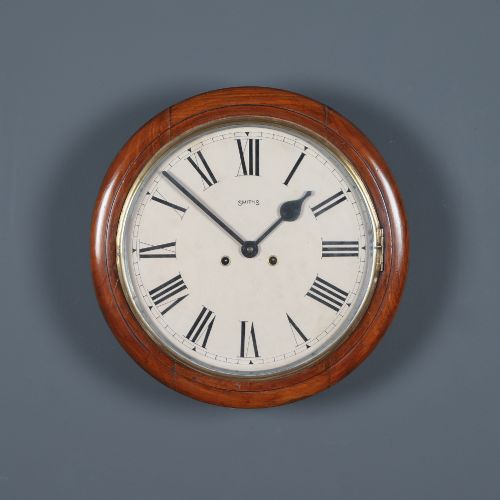
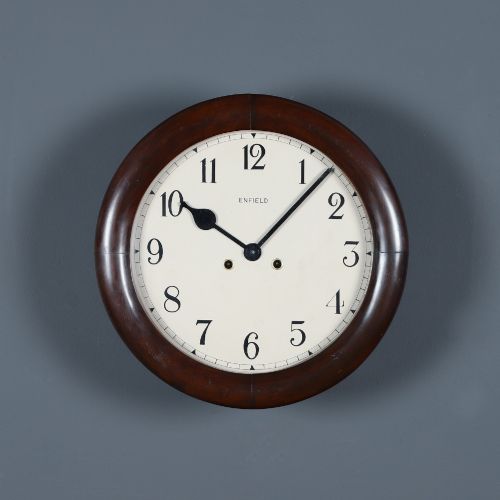
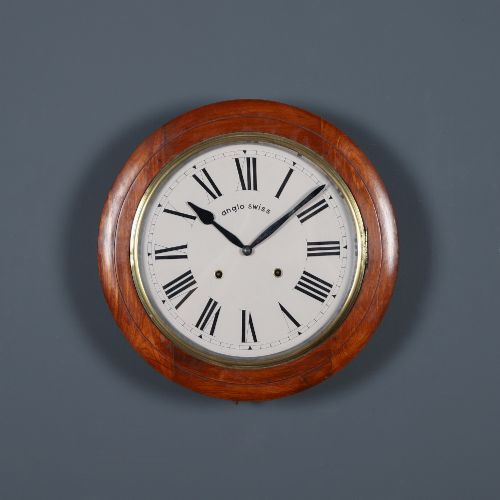
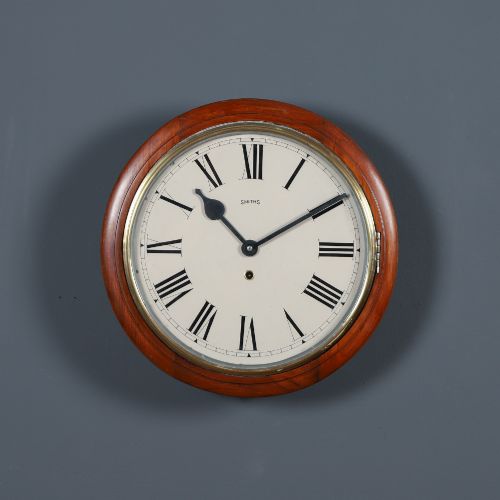
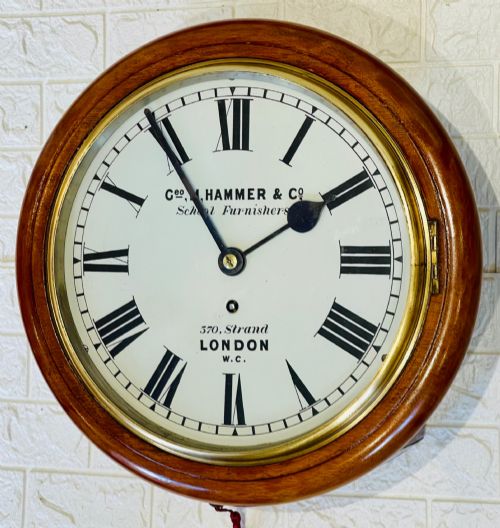
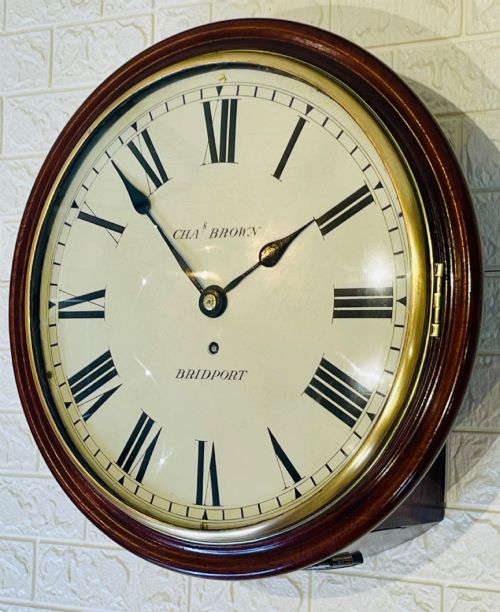
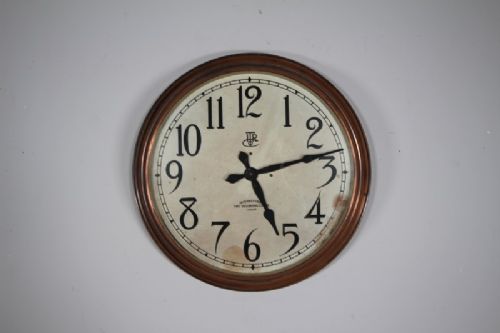
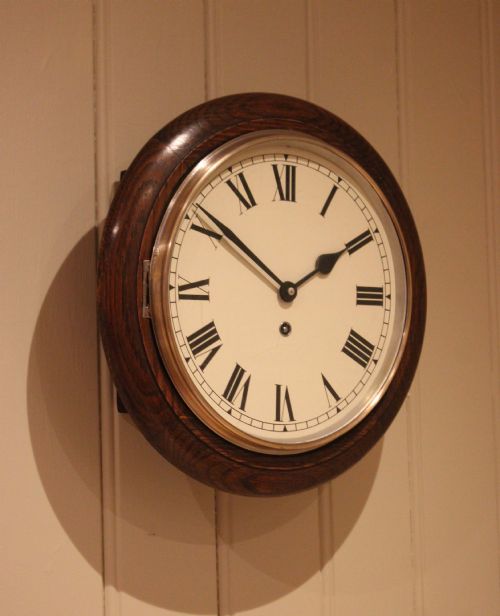
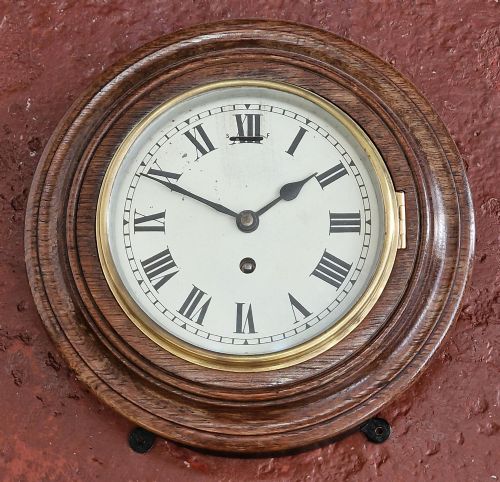
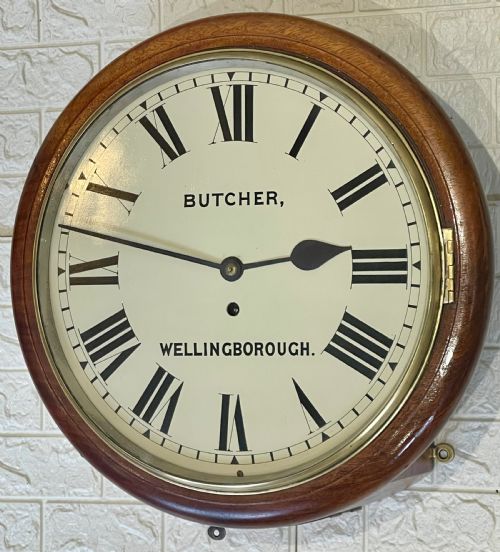
A vintage school dial clock is a round-faced timepiece designed for wall mounting in classrooms, corridors, and public institutions. These clocks are characterised by bold, legible numerals and sturdy timber surrounds intended to withstand heavy daily use.
Most examples found on this page date from the Victorian period through to the mid-twentieth century. They span utilitarian railway and school models to refined fusee movements housed in rich mahogany, oak, or beech cases.
How they were made
Casework relies on solid timbers such as mahogany, oak, beech, and rosewood, steam-bent or joined with tight mitres to form sturdy circular rings. Brass bezels secure the glass face, while iron and steel components form the internal wheel trains and escapements.
Movements often utilise chain-driven or cord-driven fusee mechanisms, designed to equalise the declining power of the mainspring as it unwinds. Simpler variants employ lever escapements or spring-driven striking trains housed in compact wooden drums.
Vintage School Dial Clock Retail Price Guide 2026
Typical asking prices for vintage school dial clock among the pieces listed under this phrase on Sellingantiques today, from the lower quarter to the upper quarter. They describe what is for sale here now, not the wider market.
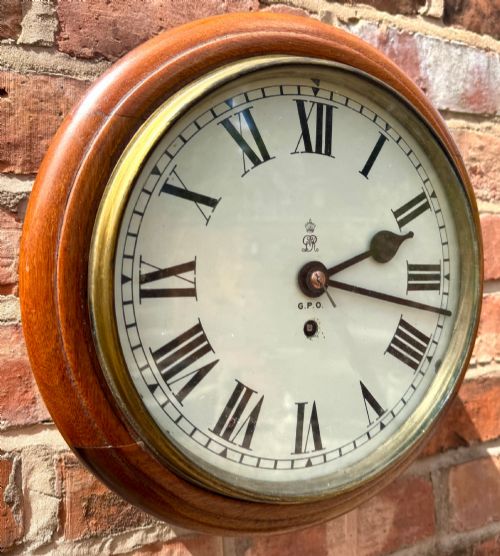
Some clocks bear stamps from railway companies and government ministries, having spent decades quietly timing platform departures and office tea breaks.
What varies in quality
Quality reveals itself in the crispness of the timber framing and the precision of the internal movement. Heavy, hand-beveled mahogany or oak cases with well-fitted access doors represent superior craftsmanship compared to later, utilitarian workshop boxes.
The sophistication of the movement dictates the grade of the clock, distinguishing simpler spring-driven timepieces from complex chain-fusee mechanisms signed by notable makers. Original painted dials with clean lettering also elevate the standing of an individual piece.
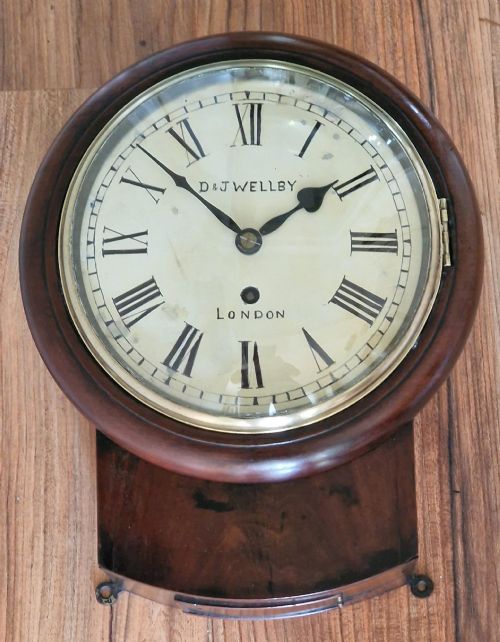
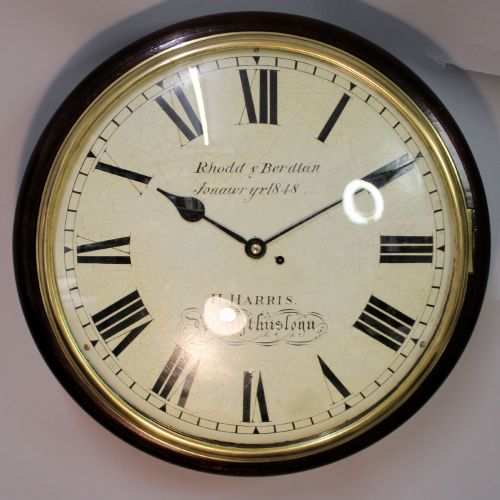
Elliott·Smiths·Enfield·D&J Wellby·Henry Harris·L Morris·Rudge·Harrods·J C Ralls
The Vintage School Dial Clock Glossary
- Fusee
- A conical pulley used in mechanical clocks to maintain even force on the gear train as the mainspring unwinds. This mechanism ensures consistent timekeeping throughout the duration of the winding cycle.
- Escapement
- The mechanical linkage that regulates the release of power in a clock movement, controlling the motion of the gears. Common variants include lever and anchor designs.
- Bezel
- The metal rim, often hinged and glazed, that holds the protective glass cover over the dial. It allows easy access for hands adjustment and routine maintenance.
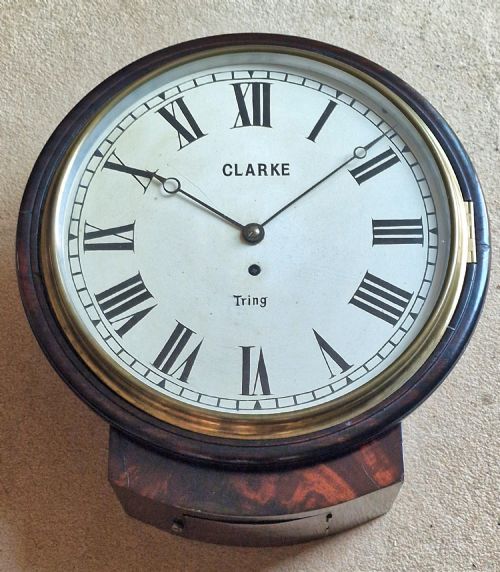
- Drop dial
- A clock case featuring a circular dial at the top that extends downward into a trunk or box. This lower section frequently accommodates a longer pendulum swing.
- Timepiece
- A clock that indicates the time without including any striking or chiming mechanisms. It relies solely on a going train.
Vintage School Dial Clock: Frequently Asked Questions
Where should I hang a heavy wall clock?
Choose a sturdy interior wall capable of supporting the substantial weight of hardwood and cast iron movements. Secure the fixing directly into a wall stud or use heavy-duty masonry anchors.
Ensure the clock hangs completely vertical so the pendulum beats evenly. An uneven mount will cause the mechanism to stop.
How do I tell an older dial clock apart?
Examine the construction of the case and the materials used for the dial and movement backplate. Earlier nineteenth-century examples often feature solid mahogany cases with fusee movements and painted wooden or iron dials.
Mid-twentieth-century pieces tend to utilise simpler spring-driven movements and lighter oak or beech surrounds. Maker signatures and stamped government cyphers also help establish the approximate age.
Why does my clock run fast or slow?
Clock movements are sensitive to changes in temperature and humidity within a room. Seasonal shifts cause the metal pendulum rod to expand or contract slightly.
Regulation is achieved by adjusting the small nut at the base of the pendulum. Turning it up shortens the effective length to make the clock run faster, while lowering it slows the beat.