
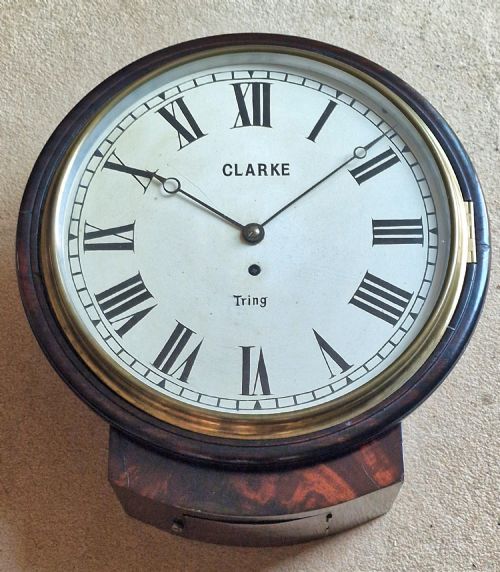
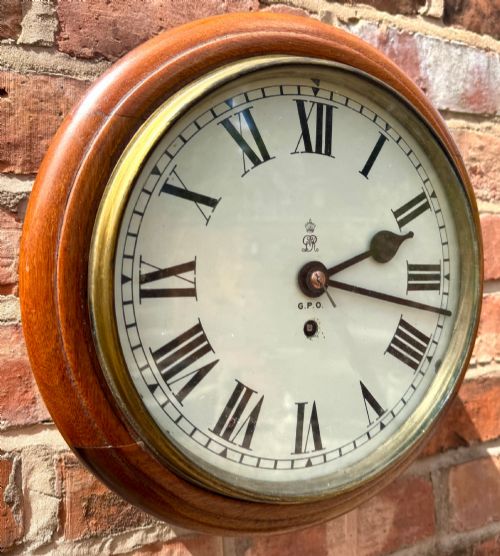
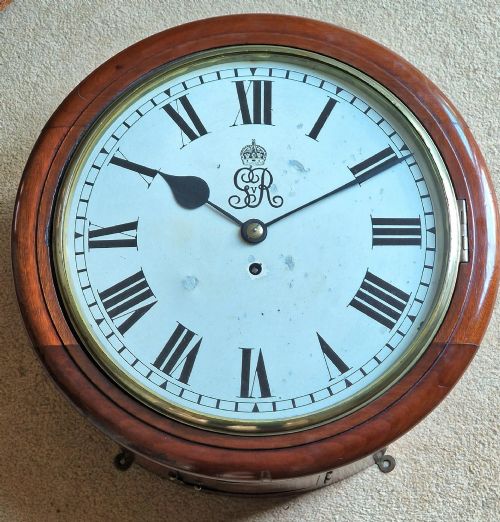


George V Wall Clock
These george v wall clock pieces are robust timepieces built for utility, offering buyers a reliable mechanism housed in timber.
George V Wall Clock
When you search for a george v wall clock, you are looking at practical timekeepers from the early twentieth century alongside related examples from the eighteenth and nineteenth centuries. The pieces on this page span several stylistic eras, including Georgian, Victorian, and Interwar British Military periods, reflecting decades of domestic and official use.
Dial wall clocks and school clocks dominate the selection, often featuring painted metal or silvered metal faces. Alongside standard wall clocks, you will find barometers and specialised instruments in mahogany, ebonised wood, and rosewood cases.
Most items tie back to institutional, railway, or postal service use, such as GPO or Department of War pieces. Buyers frequently encounter single chain fusee movements housed in round timber surrounds designed for clear legibility in public spaces.
How they were made
Cases are constructed from solid hardwoods like mahogany and rosewood, frequently turned or carved into circular bezels and drop dial enclosures. Ebonised wood and iron also appear in structural elements, providing durability for heavy daily use.
Listings feature mahogany, rosewood, ebonised wood, and brass, spanning the Georgian, Victorian, and mid-twentieth century eras.
What varies in quality
Quality rests in the precision of the timber housing, from simple carved wood to finely figured mahogany and rosewood cases. Superior examples maintain crisp dial markings and retain original brass bezels without modern replacements.
The sophistication of the internal movement dictates the tier of the piece, particularly whether it employs a reliable fusee mechanism. Original stamped numbered cases and documented maker signatures elevate an example above standard utility models.
George Clarke·John Seddon·George Buckmaster·Edward Clarke
The George V Wall Clock Glossary
- Fusee
- A conical pulley used in clock movements to maintain an even pull as the mainspring unwinds. This mechanism helps ensure steady timekeeping across the power reserve.
- Dial clock
- A wall-mounted clock featuring a prominent circular face and a compact case. These were standard in offices, schools, and railway stations.
- Cartel clock
- An ornamental wall clock enclosed in a carved, gilt, or wooden frame. They originated in France and gained popularity during the Georgian period.
- Drop dial
- A clock case where the circular dial sits above a short, downward-extending wooden box. This lower section accommodates the pendulum swing.
- Escapement
- The mechanism that converts rotational energy into impulses for the pendulum or balance wheel. Different types determine the precision of the beat.
George V Wall Clock: Frequently Asked Questions
What is a fusee dial clock?
A fusee dial clock utilises a specialised conical drum inside its movement to equalize the force of the mainspring. This design provides steady power to the gears as the spring runs down.
These pieces typically feature circular painted dials and sturdy mahogany frames built for institutional or domestic placement.
Where were these clocks used?
Many examples served in public buildings, post offices, and military departments, including GPO and Department of War installations. Their clear faces and robust movements made them ideal for keeping time in busy environments.
Other versions were produced for domestic interiors, utilising finer timbers like rosewood and carved mahogany.
How do I identify a Georgian wall clock?
Georgian wall clocks often display classic eighteenth-century cabinetmaking techniques, utilising solid mahogany and traditional dial layouts. Details like cartel frames and verge escapements point toward this earlier era.
Comparing the case timber and dial materials helps distinguish these eighteenth-century pieces from later Victorian and twentieth-century issues.
Are school clocks different from standard wall clocks?
School clocks generally refer to robust dial timepieces hung in educational institutions or offices for easy reading from a distance. They share similarities with railway and post office clocks in their straightforward presentation.
Their utilitarian design prioritizes clear painted metal faces and sturdy wooden surrounds over decorative carving.