
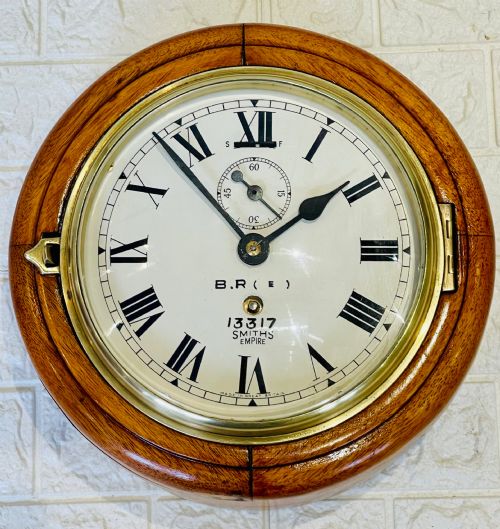
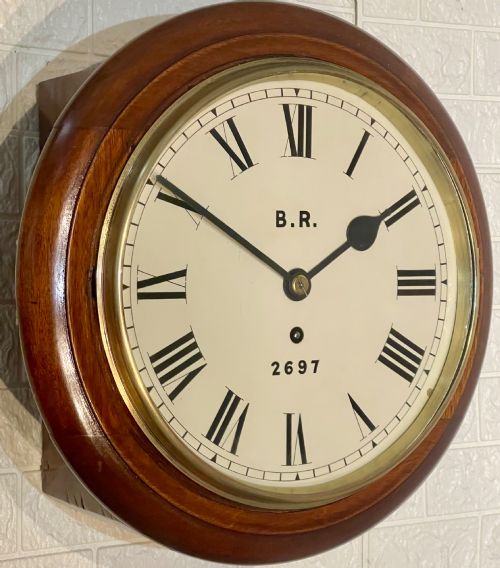
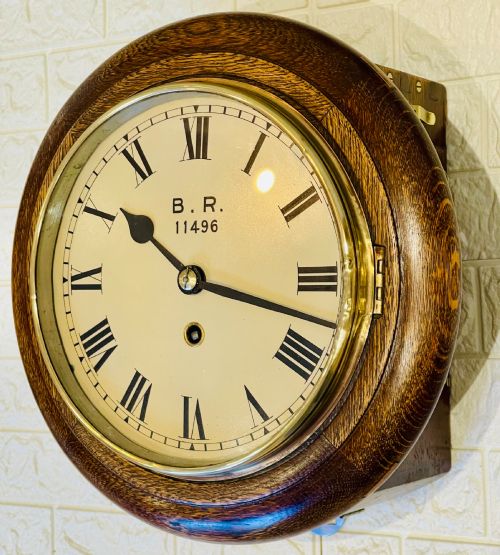
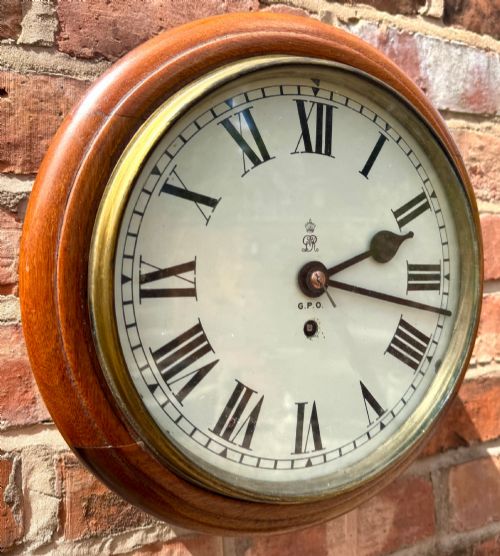
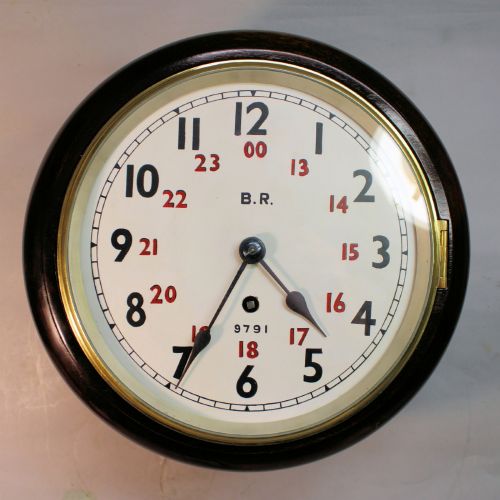

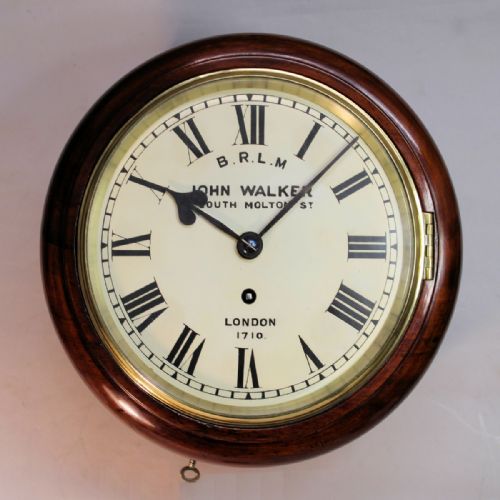
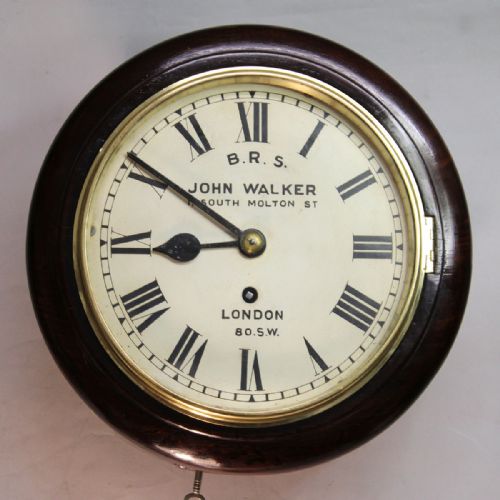


British Railways Wall Clock
A british railways wall clock brings heavy station utility into a room, trading domestic delicacy for the authority of a municipal dial.
British Railways Wall Clock
A british railways wall clock is a heavy-duty timekeeper that served in station master offices, signal boxes, and platform buildings across the network. These objects carry the imprint of major transport companies like the Great Western Railway, London Midland and Scottish Railway, and London and North Eastern Railway.
Most examples found here date from the Victorian period through to the mid-twentieth century, spanning eras from the eighteen-eighties to nineteen-fifties. The common forms on this page include fusee dial clocks and signal box tool clocks housed in robust timber surrounds.
Buyers look for these pieces to anchor a workspace or hallway with authentic transport history. They connect directly to specific locations such as Darlington, Dorset, Lymington Town station, and Peterborough East.
Materials and construction
Makers housed these movements in sturdy timber cases, relying heavily on mahogany and oak for strength and durability in busy transport environments. Brass components feature significantly in the dial fittings, bezels, and internal gear trains.
Protection of the dial relied upon thick glass set within hinged brass or wooden bezels. Iron and bakelite also appear in later industrial variants, reflecting the changing manufacturing methods of the twentieth century.
Some signal box clocks earned the affectionate nickname pork pie from railway workers due to the deep, round profile of their wooden cases.
Evaluating quality and provenance
Quality rests upon the maker of the movement and the clarity of the station provenance stamped or painted on the dial and case. Renowned makers such as John Walker of London command attention for their precision engineering and crisp dial lettering.
The integrity of the timber case and the presence of numbered matching components elevate an example significantly. Clocks retaining their original fusee movements and documented railway station history represent the pinnacle of this collecting field.
John Walker·Smith·Camerer Cuss and Co
The British Railways Wall Clock Glossary
- Fusee
- A conical pulley used in older clock movements to maintain even force on the gear train as the mainspring unwinds. This mechanism ensures accurate timekeeping over the duration of the wind.
- Dial
- The visible face of the clock displaying the numerals and minutes. On railway pieces, these are frequently painted white with bold black numerals for rapid reading.
- Bezel
- The ring of brass or wood that holds the protective glass cover over the dial. It usually hinges open to allow access for winding and hand adjustment.
- Signal Box Clock
- A specialised timepiece designed for railway signal boxes to govern train movements. These robust clocks often featured specific housing shapes, such as the pork pie style.
- Station Master
- A senior railway official whose office typically housed the primary regulator clock. Clocks associated with these specific station roles carry enhanced documentary interest.
British Railways Wall Clock: Frequently Asked Questions
How do fusee movements work?
A fusee movement uses a conical drum and a cord or chain to equalize the decreasing power of the mainspring as it unwinds. This clever mechanical device keeps the force driving the gear train constant from a full wind down to the last tick.
Such mechanisms were essential for railway timekeepers where accuracy governed the movement of trains across the network. They require careful winding with a matching key, typically once a week.
Where were these clocks originally mounted?
Railway clocks were installed wherever precise timekeeping mattered for station operations and train dispatch. Common locations included station master offices, ticket halls, waiting rooms, and railway signal boxes.
Many pieces bear specific regional lettering on the dial or stamps on the timber case to record their assigned station or operating company. This geographic link forms a key part of their historical appeal.
How do I date a railway clock?
Dating relies on a combination of case timber, dial signature, construction methods, and company lettering. Victorian examples often feature solid mahogany cases with fusee movements and maker signatures from firms like John Walker.
Later pieces from the mid-twentieth century transition towards simpler oak surrounds or industrial materials like bakelite. Stamped serial numbers on the case timber or backbox also help establish the chronology.
How should I hang a heavy wall clock?
Because these clocks feature substantial timber cases and heavy glass bezels, they require secure mounting directly into wall studs or masonry. Using a rated screw and wall plug matched to the weight of the mahogany or oak case is essential.
Ensure the clock hangs level on the wall so the pendulum swings freely and the fusee movement keeps an even beat. Professional installation prevents damage to historic timber and internal mechanisms.