

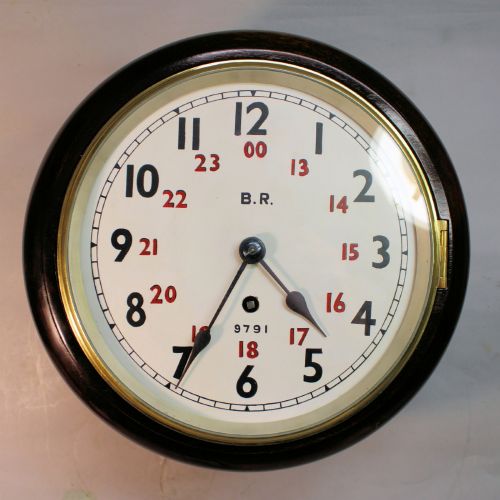

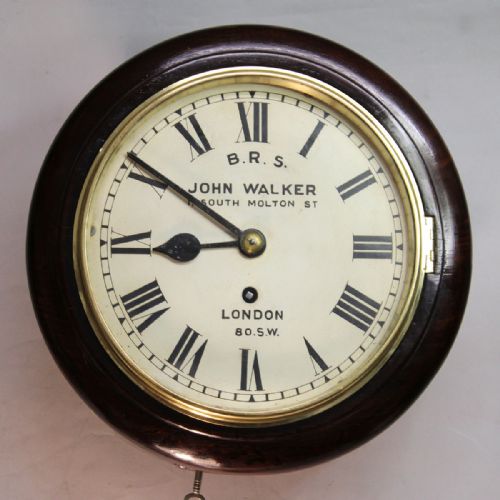


Wooden Railway Clock
A wooden railway clock keeps time with robust mechanical honesty, bringing the steady rhythm of the station platform into a room.
Wooden Railway Clock
A wooden railway clock is a round-dial timepiece designed for punctuality in public transport offices, waiting rooms and platforms, combining utility with robust engineering. When exploring this selection, buyers encounter round dial formats intended for clear reading from a distance, housed in sturdy timber surrounds.
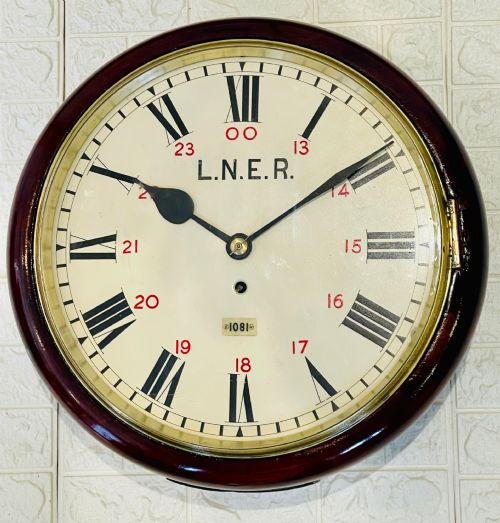
The periods represented stretch from the Victorian era and the nineteenth century through to the Edwardian period, 1900, 1910, 1920, 1930 and 1940. Company names such as L.N.E.R, GWR, N.E.R, LMS and British Railways frequently appear alongside specific locations like Swindon, Fenchurch Street and Darlington.
Most pieces on this page are wall-mounted timepieces rather than striking clocks, relying on precision movements to track hours and minutes. They reflect the operational needs of nineteenth and twentieth-century transport networks where accurate timekeeping was essential.
Materials and construction
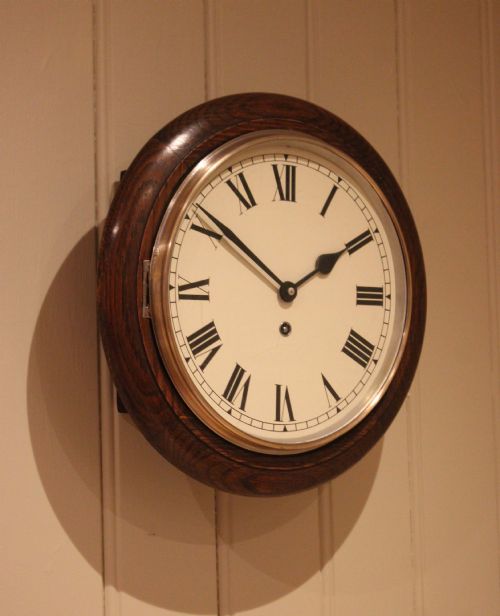
Cases are predominantly constructed from dense hardwoods like mahogany and oak, supplemented by beech and framed with glazed brass or iron bezels to protect the paper or painted dials. These materials were chosen to withstand the vibrations and atmospheric changes of busy transport hubs.
Movements rely on brass, steel and iron components, often driven by a fusee mechanism that maintains even tension on the gear train as the mainspring unwinds. This ensured consistent timekeeping between weekly or daily windings.
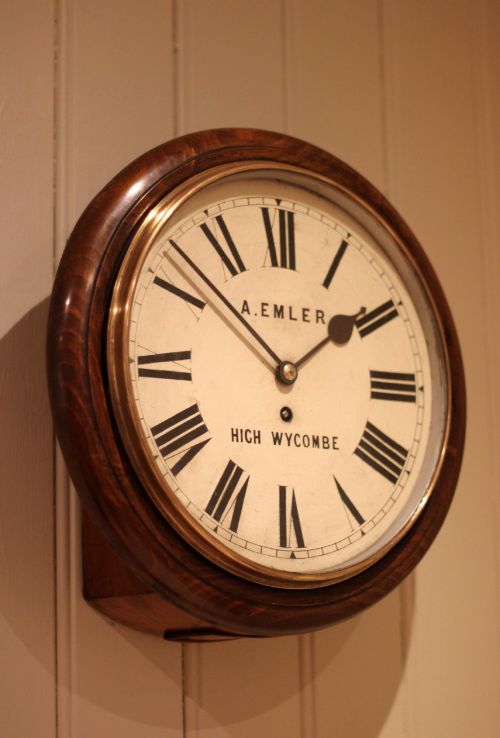
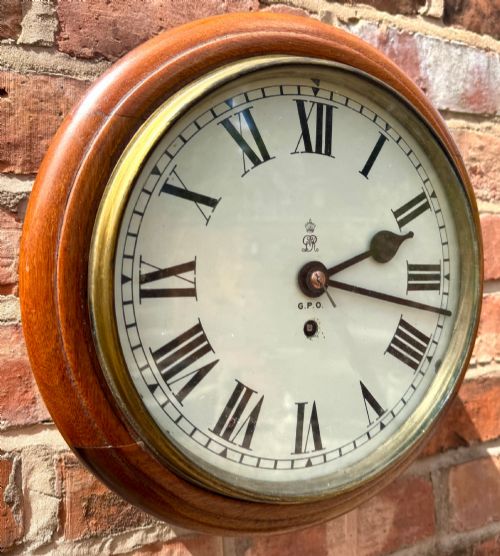
Dials are generally protected by heavy glass set into hinged brass rims, allowing quick access for winding and setting while keeping soot and moisture away from the face.
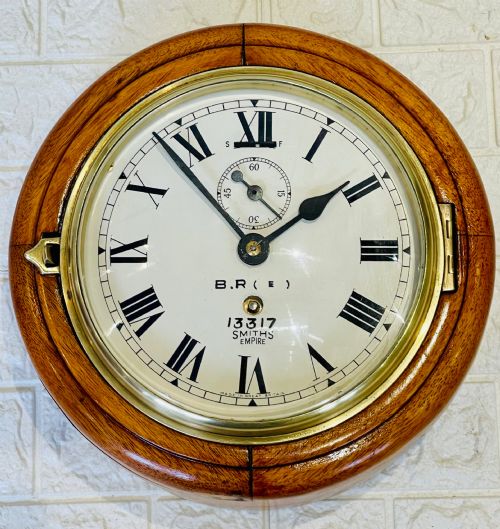
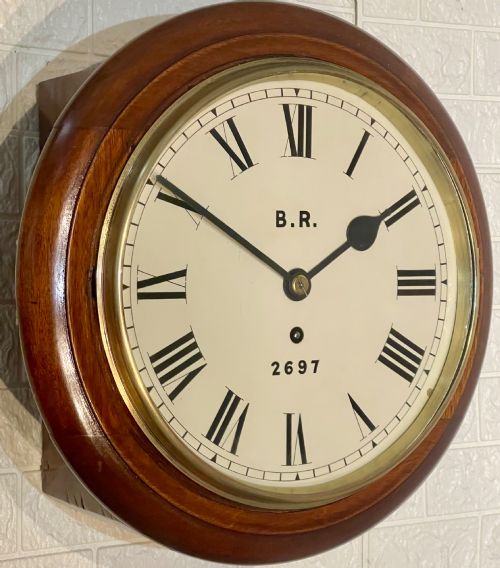
Railway company initials such as GWR, L.N.E.R and LMS appear frequently across dial faces and stamped timber cases.
Quality and proportion
The calibre of a wooden railway clock rests upon the crispness of the timber case, the legibility of the dial lettering and the integrity of the fusee movement. Better examples retain original components, clear station lettering and unpolished timber surfaces with honest patination.
Makers such as John Walker, Camerer Cuss & Co and Thomas Gibbs represent higher tiers of craftsmanship through precise movement finishing and robust case joinery. Lesser examples may show replacement bezels, repainted dials or heavier wear from decades of industrial service.
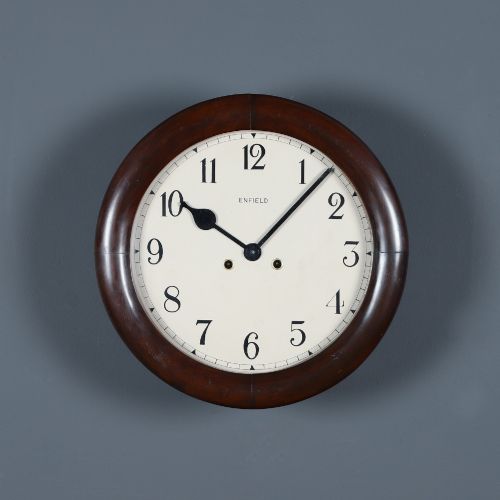
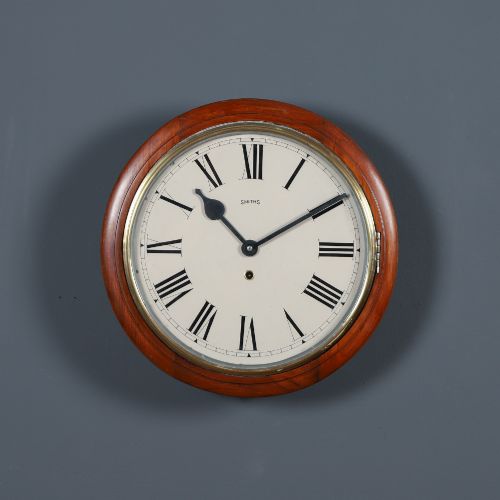
John Walker·Camerer Cuss & Co·Thomas Gibbs·Anglo Swiss Watch Co·Enfield·Smiths
The Wooden Railway Clock Glossary
- Fusee
- A conical pulley connected to the mainspring by a chain or cord, designed to equalise the torque as the spring unwinds. This mechanism is central to the accuracy of nineteenth-century timepieces.
- Dial clock
- A wall clock featuring a prominent circular face, typically mounted in public buildings, schools and railway offices. They prioritise immediate legibility over decorative complexity.
- Bezel
- The brass or wooden ring that holds the glass door protecting the clock face. It is usually hinged to allow access for winding.
- Timepiece
- A clock that indicates the time without striking the hours or quarters. Most railway dial clocks perform this specific function to avoid confusion in busy offices.
Wooden Railway Clock: Frequently Asked Questions
How do I wind a fusee railway clock?
Use the appropriate key on the dial winding square, turning it gently until resistance is felt. Care must be taken not to overwind the mechanism.
Most fusee movements require attention once a week, maintaining steady tension through the chain and cone assembly.
Where were these clocks originally hung?
They were positioned in station master offices, waiting rooms, signal boxes and platform areas where staff and passengers needed reliable timekeeping.
The sturdy mahogany and oak cases were built to endure the soot, steam and vibration of daily railway operations.
How do I identify a genuine railway company clock?
Look for painted or engraved lettering on the dial and stamped markings on the timber case corresponding to networks like the GWR, L.N.E.R or British Railways.
Many pieces also retain station names or inventory numbers that link them directly to specific geographic locations.
Can I hang a heavy dial clock on a modern wall?
These clocks are heavy due to their dense hardwood cases, thick glass and brass movements, requiring secure fixing directly into brick or wall studs.
Using an appropriate load-bearing screw and wall plug ensures the timber case hangs level and safe.