
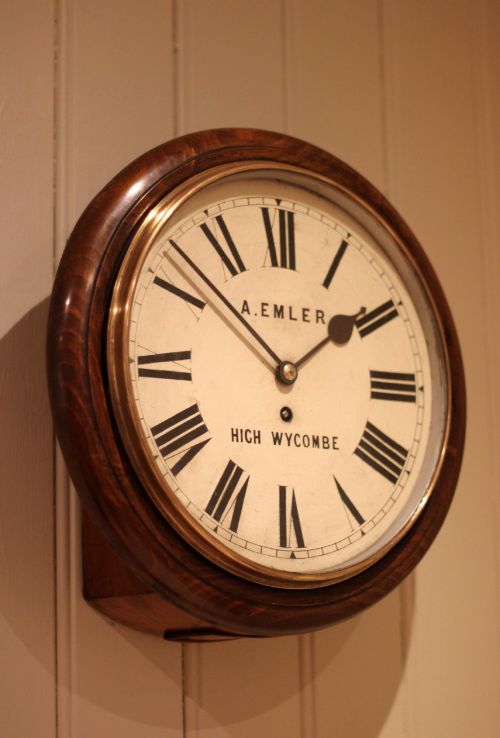
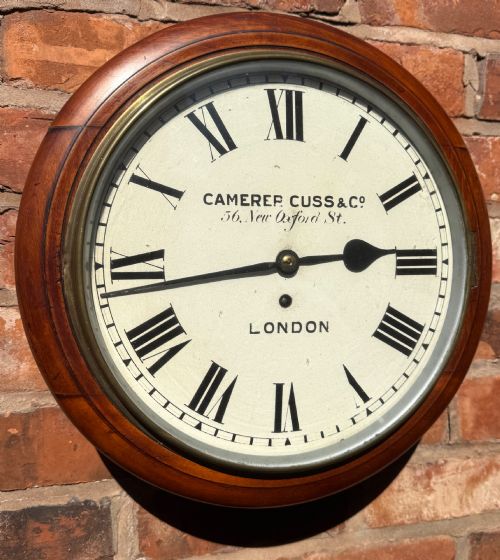

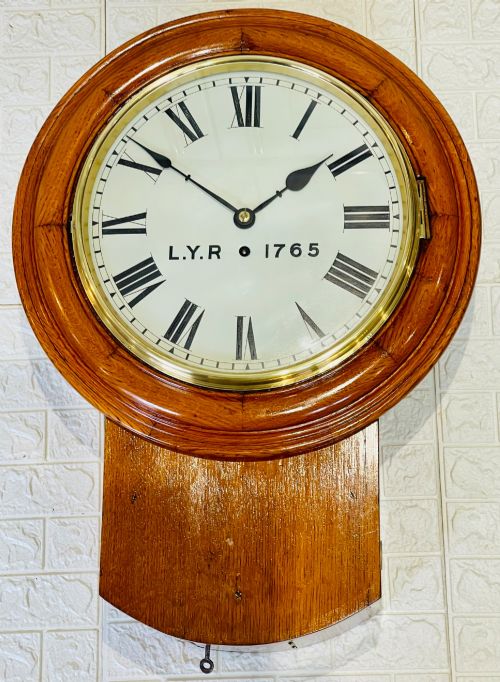
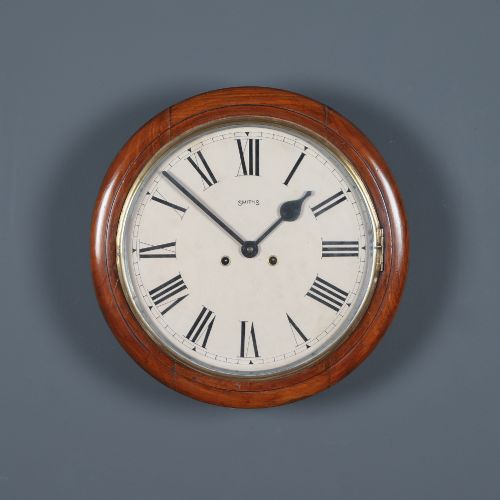


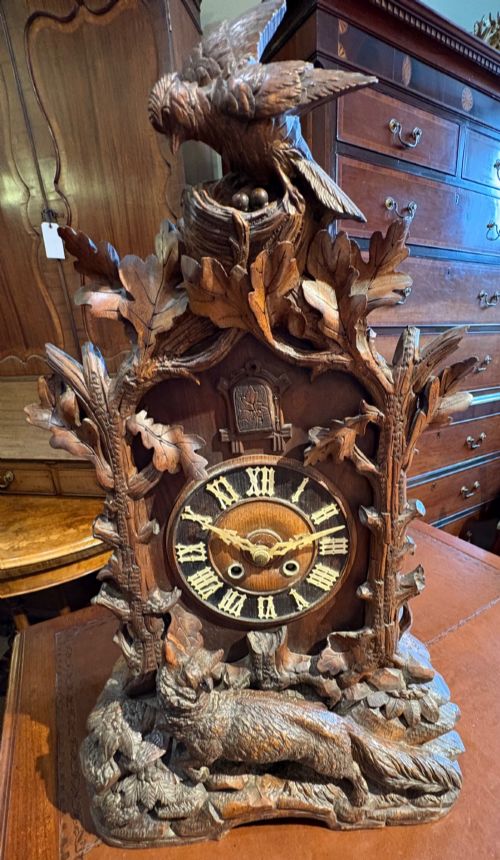
Antique Mechanical Wall Clock
An antique mechanical wall clock brings precision engineering and period craftsmanship straight to the room, offering reliable movement alongside character.

Identifying an antique mechanical wall clock
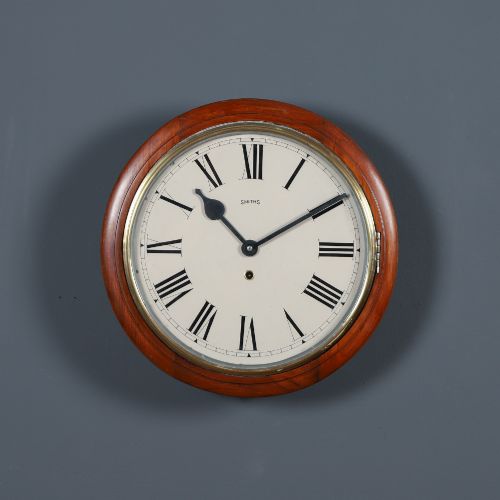
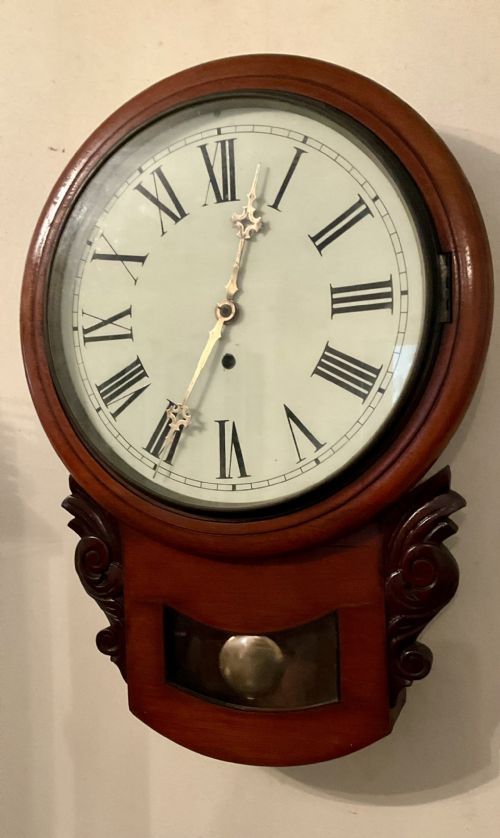
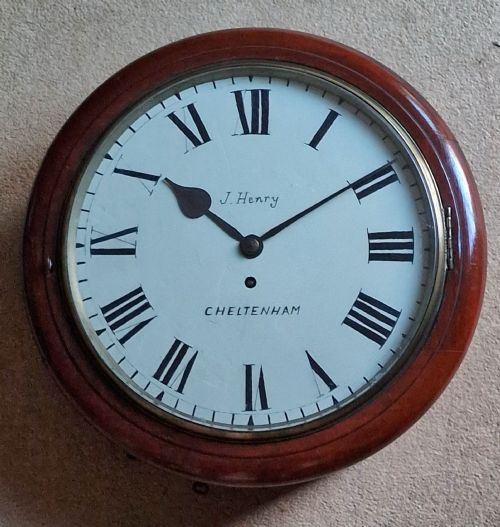
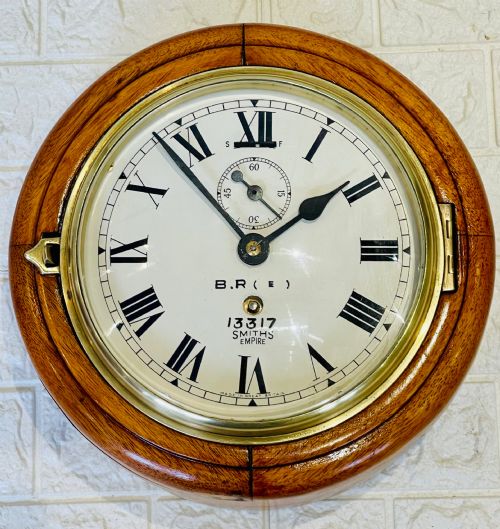
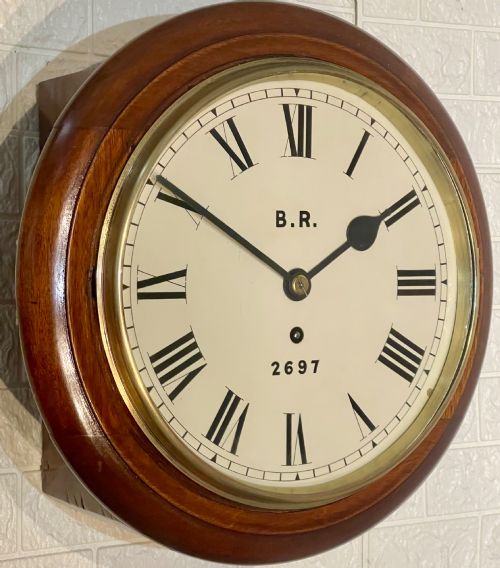
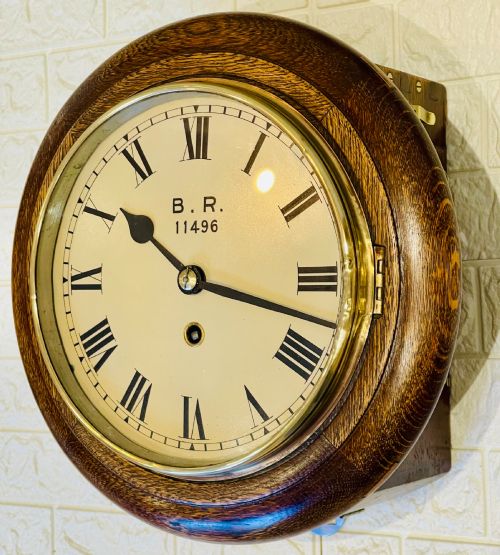
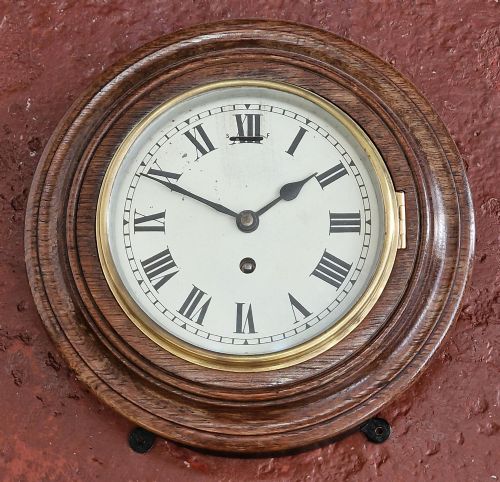
An antique mechanical wall clock encompasses functional timepieces driven by weight or spring movements housed in traditional timber cases. These instruments range from restrained nineteenth century drop dial designs to elaborate Victorian and Art Deco striking wall clock formats.
Buyers frequently encounter nineteenth century mahogany and walnut examples featuring fusee movements or double and triple weight configurations. Origin points span London workshops, continental makers, and specialised regional centres.
Materials and construction
Casework relies on dense hardwoods such as mahogany, walnut, and rosewood, frequently enhanced with inlaid details and carved elements. Glazed doors protect the dial while revealing the pendulum and movement within.
Internal mechanics combine brass gears and plates with enamel dials and steel springs or suspended weights. Fusee mechanisms ensure even power delivery to the gear train as the mainspring unwinds.
Retail Price Guide 2026
Typical UK retail prices for mechanical wall clock, calculated from the Sellingantiques database of over a million retail prices indexed since 2003. This retail price guide relies exclusively on Sellingantiques data; no external sources or auction records are used, so the figures do not describe the wider market.
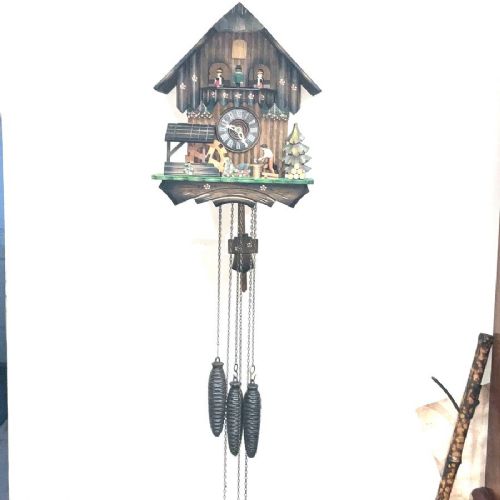
Some clocks feature automation and Italian interest, reminding us that antique timekeepers were built to entertain as well as measure the hours.
Judging quality
Superior examples demonstrate meticulous timber selection, refined case carving, and sophisticated striking or chiming complications like grande sonnerie. Simpler single fusee models depend on clean lines and legible enamel dials for their appeal.
The sophistication of the movement and the integrity of the original case components distinguish standard production timepieces from distinguished maker-signed works.
The Antique Mechanical Wall Clock Glossary
- Fusee
- A conical pulley used in spring-driven clocks to maintain equal force on the gear train as the mainspring runs down. This mechanism ensures consistent timekeeping accuracy.
- Drop dial
- A clock design featuring a circular dial mounted above an extended wooden case that houses the pendulum swing. This proportion characterises many nineteenth century pieces.
- Grande sonnerie
- A complex striking train that chimes the hours and the quarters automatically on every quarter hour. Such capability denotes advanced horological work.
- Enamel dial
- A metal face covered with fused powdered glass to create a smooth, durable white surface for painted numerals. These faces require careful handling to prevent chipping.
Frequently Asked Questions
How do fusee wall clocks work?
A fusee uses a special cone-shaped pulley connected to the mainspring by a fine chain or cord. As the spring loses tension, the chain moves to a wider part of the cone, maintaining steady power.
This clever mechanical compensation helps the clock keep more accurate time throughout its running cycle.
Where should I hang a wall clock?
Choose an interior wall that remains stable and free from excessive vibrations, heavy door slams, or direct sunlight. Solid masonry or properly anchored stud walls provide the necessary support for heavier timber cases.
Ensure the location allows easy access for routine winding and periodic pendulum adjustment.
What is a Vienna Regulator?
A Vienna Regulator is a precision weight-driven clock developed in Austria during the nineteenth century, known for its elegant glazed case and refined movement. These clocks prioritized extreme timekeeping accuracy and often featured visible pendulums.
They represent some of the finest horological achievements of the period.