
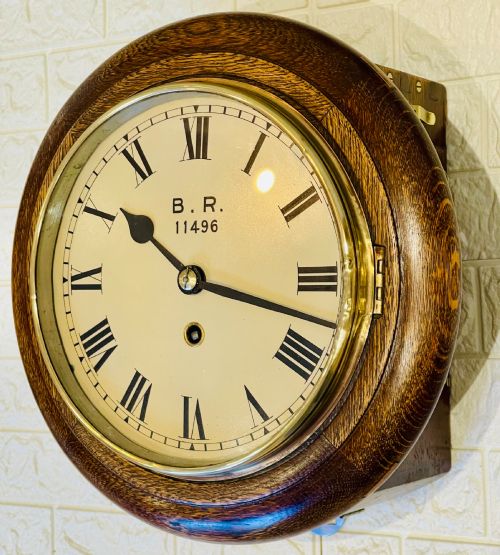
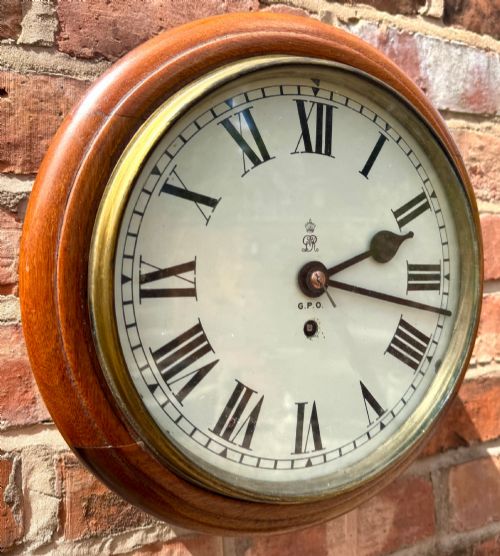
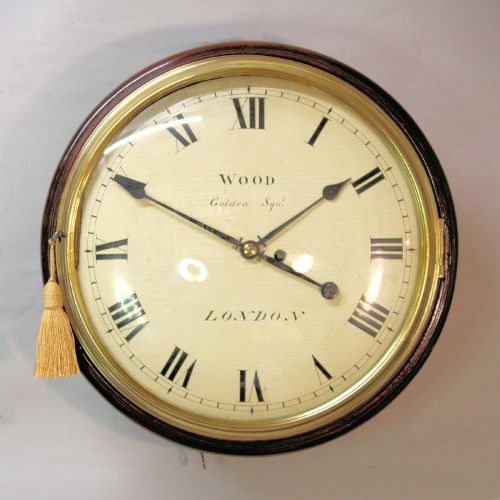


Single Fusee Dial Clock
A single fusee dial clock delivers precise mechanical timekeeping in a clean wall-mounted form that suits both period and modern rooms.
Single Fusee Dial Clock
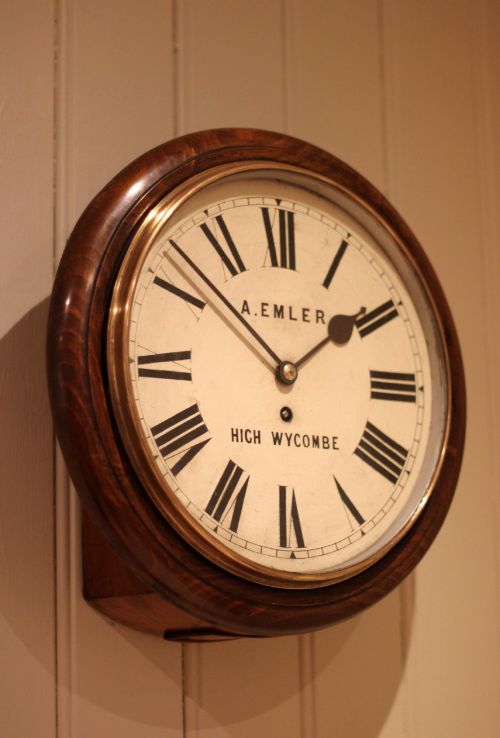
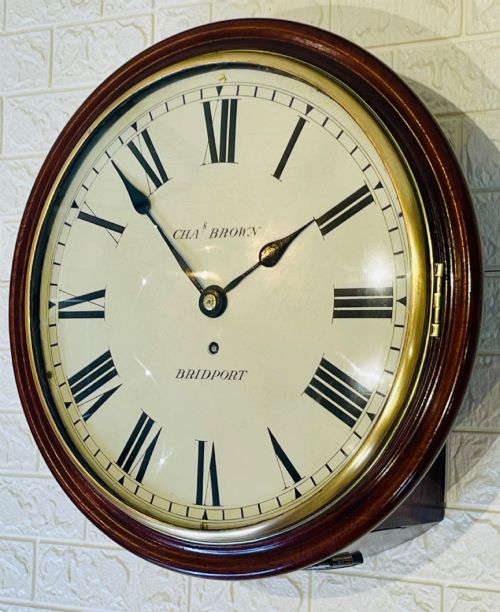
A single fusee dial clock is primarily a circular wall timepiece designed for clear legibility in homes, offices, and railway stations. The evidence shows these pieces span periods from the Georgian era through the Victorian age into the mid-twentieth century.
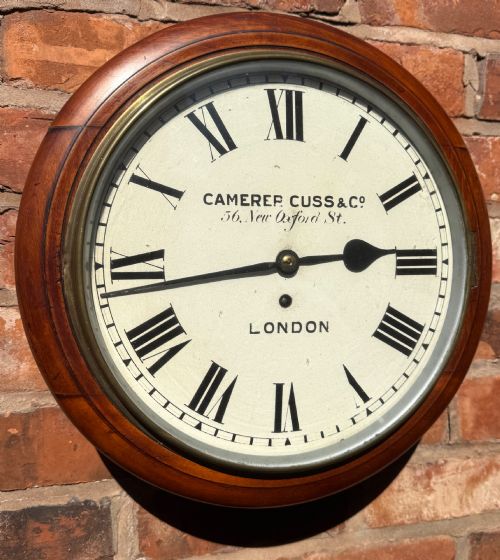
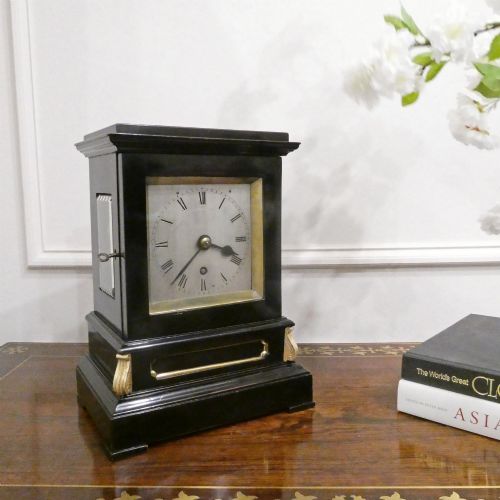
Most examples you meet on this page are wall-mounted dial clocks housed in mahogany, oak, or ebonised wood frames. Alongside these wall models, you also encounter library clocks, mantel pieces, and drop dial variants made for specific interior settings.
Materials and construction
Cases utilise timber frames of mahogany, oak, beech, and rosewood, paired with brass movements and protective glass bezels. Iron and slate appear in specialised industrial or architectural mantel pieces.
The fusee movement itself drives the mechanism via a cone-shaped pulley that equalises the pull of the mainspring as it unwinds. Dials are fashioned from painted wood, silvered metal, or convex wood, often featuring distinct regional signatures.
Some railway wall clocks still bear the quiet scars of wartime service rooms.
Judging execution
Quality rests in the crispness of the case timber and the precision of the engraved silvered metal or painted dial. Maker signatures inscribed on the dial or movement elevate an example, particularly those originating from notable London workshops.
Proportion and case retention also dictate merit. An untouched dial paired with an original matching fusee movement demonstrates higher horological integrity than a piece with heavily replaced components.
Camerer Cuss & Co London·Thomas Cole and James Cole·William Hardy London·Barraud & Lund London·John Walker
The Single Fusee Dial Clock Glossary
- Fusee
- A conical pulley used in clock movements to maintain even power from the mainspring as it runs down. This mechanical cone ensures more accurate timekeeping throughout the duration of the winding cycle.
- Dial
- The face of the clock where the hours and minutes are displayed. On these clocks, dials are commonly made from painted wood, silvered metal, or brass.
- Drop dial
- A clock case featuring an extended lower portion, often with a curved or box-like bottom, designed to house a longer pendulum. This format was widely used for railway and office wall clocks.
- Bezel
- The ring or frame that holds the glass protecting the dial. It is typically hinged in brass or integrated into the wooden case.
- Library clock
- A portable or table-standing time-piece intended for domestic study rooms. These smaller variants often feature fine wood cases such as rosewood or ebonised timber.
Single Fusee Dial Clock: Frequently Asked Questions
How do single fusee clocks work?
These timepieces rely on a spring-driven mechanism regulated by a fusee cone that balances the tension. As the mainspring unwinds, the chain rides along the wider parts of the cone to sustain uniform force.
This clever mechanical arrangement prevents the loss of accuracy typically caused by a fading spring toward the end of the winding cycle.
Where were dial clocks used historically?
Dial clocks were essential fixtures in public spaces, railway stations, offices, and domestic hallways. Their bold faces allowed workers and travellers to read the time instantly from a distance.
Railway companies such as the South Eastern Railway and GPO commissioned sturdy oak or mahogany wall clocks to maintain strict schedules across their networks.
How do I wind a fusee clock?
Winding requires inserting a key into the dial aperture and turning it gently until the movement reaches its stop. Care must be taken not to overwind antique mechanisms.
Most traditional movements are designed to run for eight days on a single winding, meaning weekly maintenance keeps the timepiece running steadily.
How can I date my dial clock?
Dating depends on examining the case timber, the style of the bezel, and any signature painted on the dial. Georgian and Regency pieces often show lighter mahogany and refined bezels.
Victorian and later Edwardian examples frequently feature sturdier oak frames, railway markings, or maker inscriptions that tie the piece to a specific decade and location.