


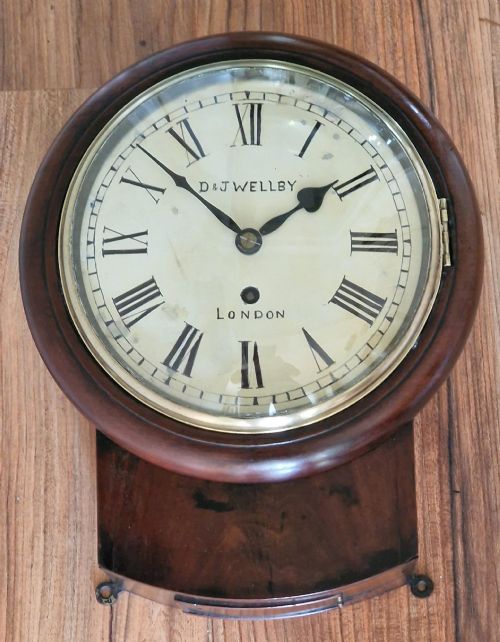
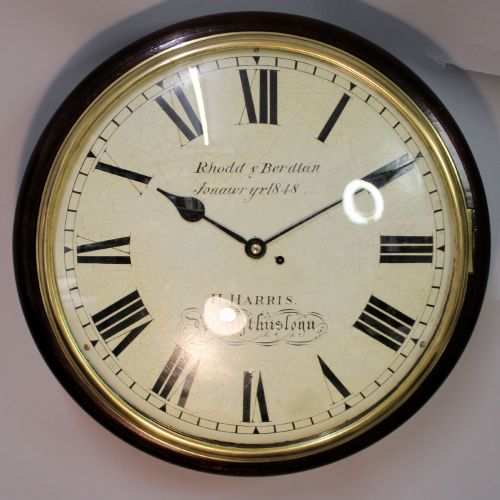
Victorian Mahogany Dial Clock
When you search for a victorian mahogany dial clock, you are looking for a round wall timepiece housed in timber and built to keep time reliably in public offices, railway stations and domestic halls.
Victorian Mahogany Dial Clock
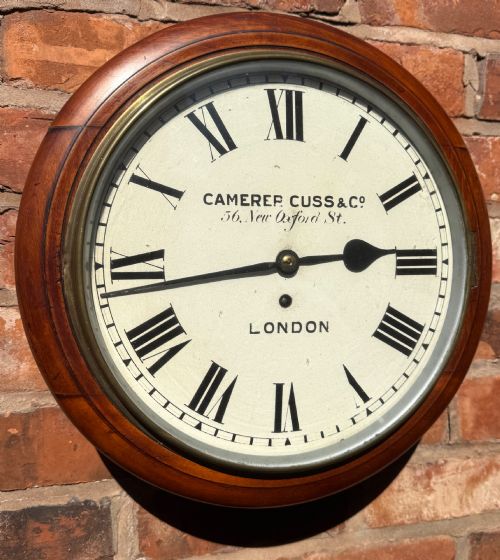
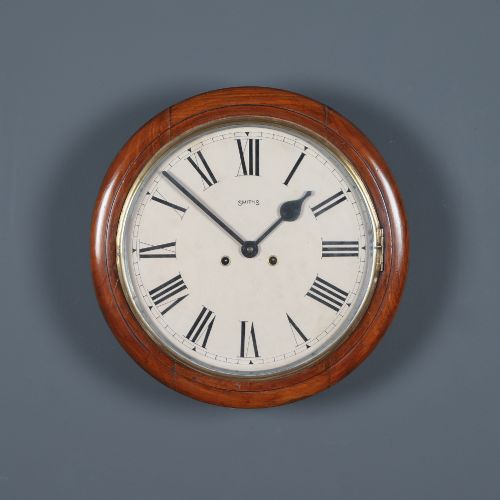
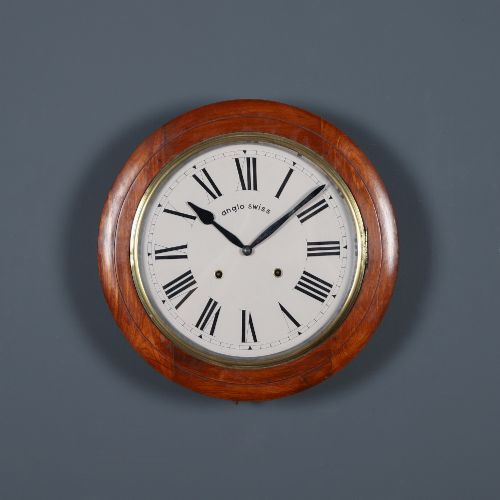
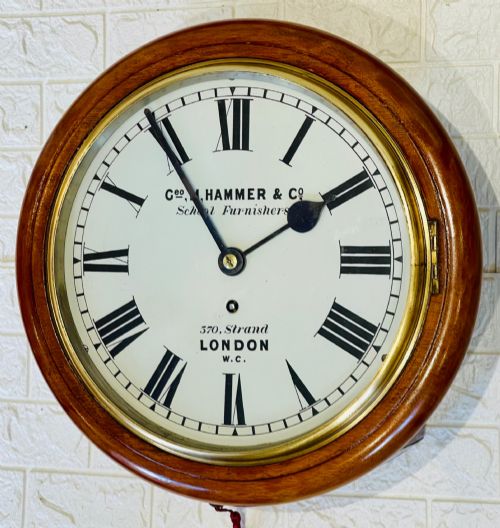
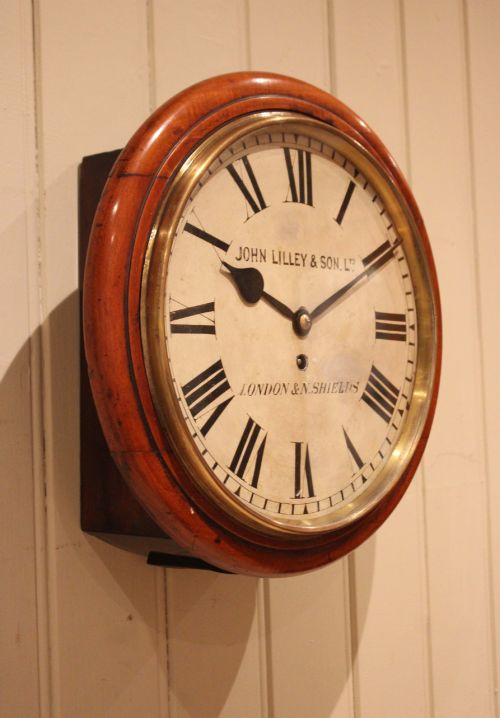
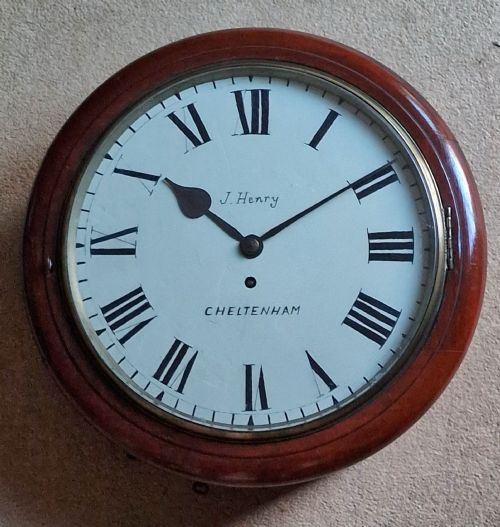
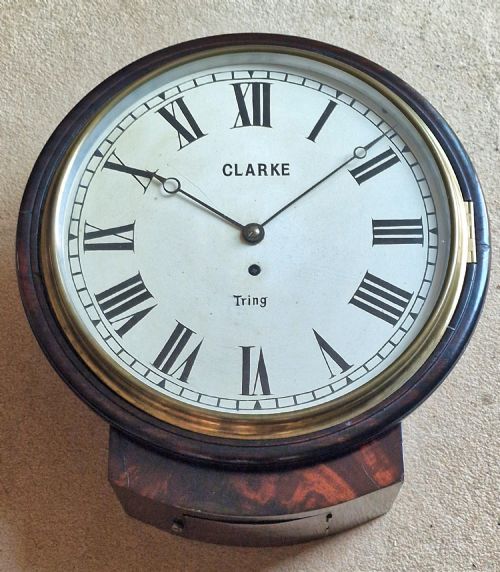
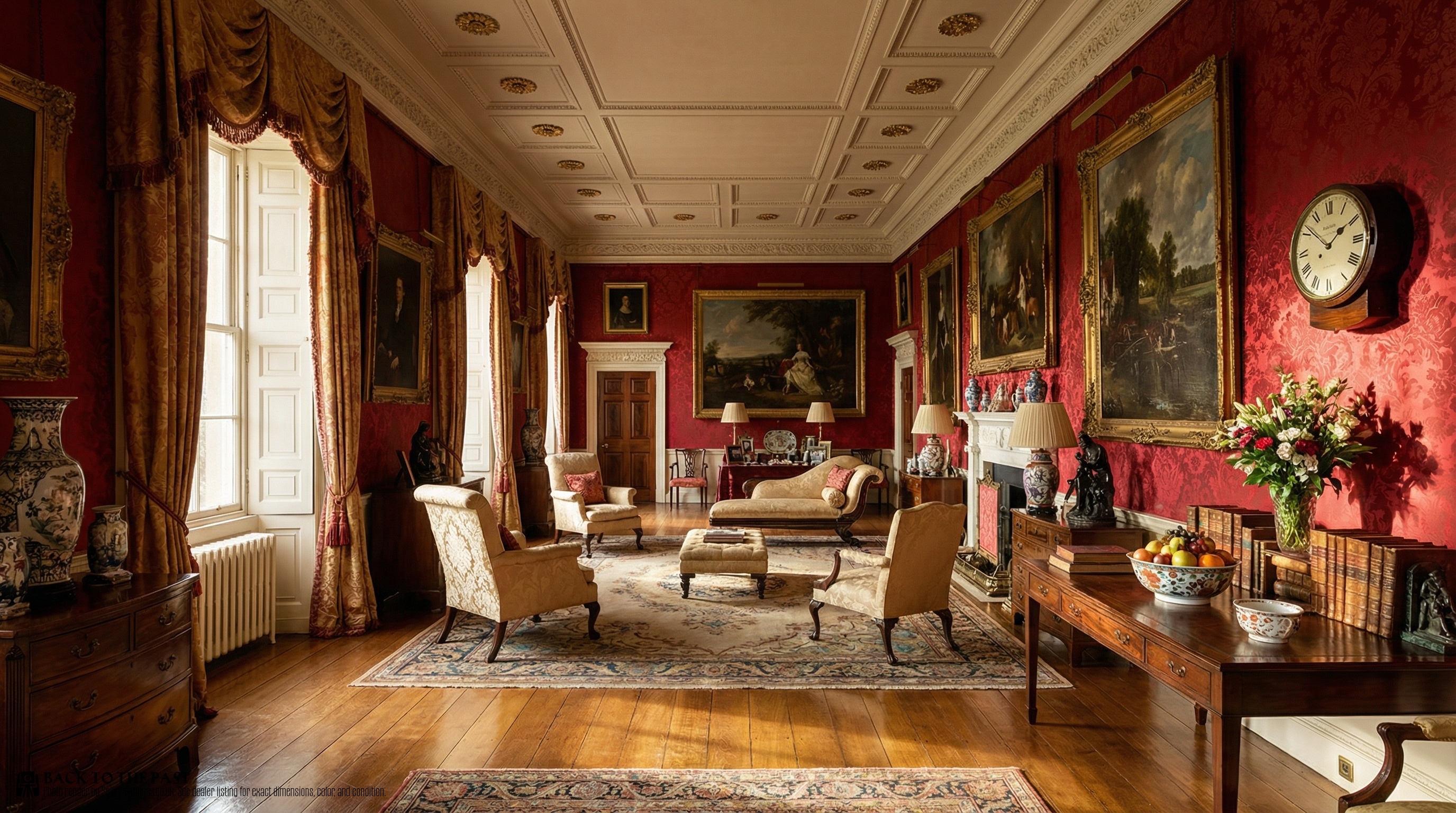
A victorian mahogany dial clock typically takes the form of a wall-mounted round timepiece with a hinged wooden bezel holding protective glass over a painted iron or enamel face. These pieces originate predominantly from the nineteenth century, spanning various decades from the eighteen-fifties through to the eighteen-eighties, alongside occasional examples produced into the early twentieth century.
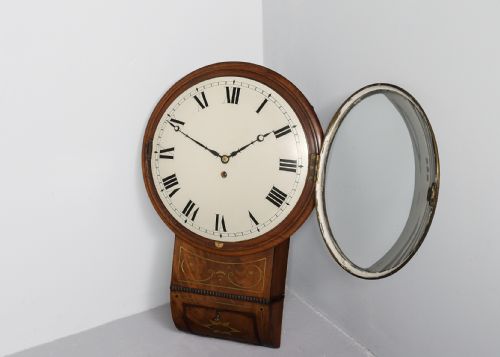
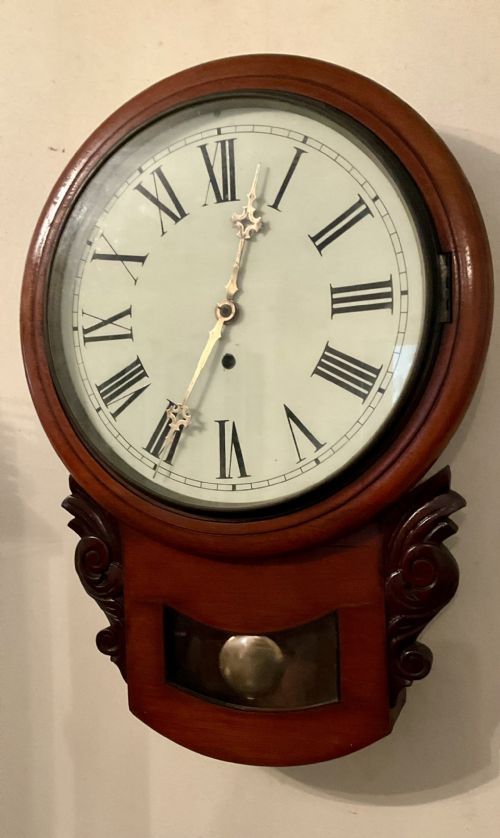
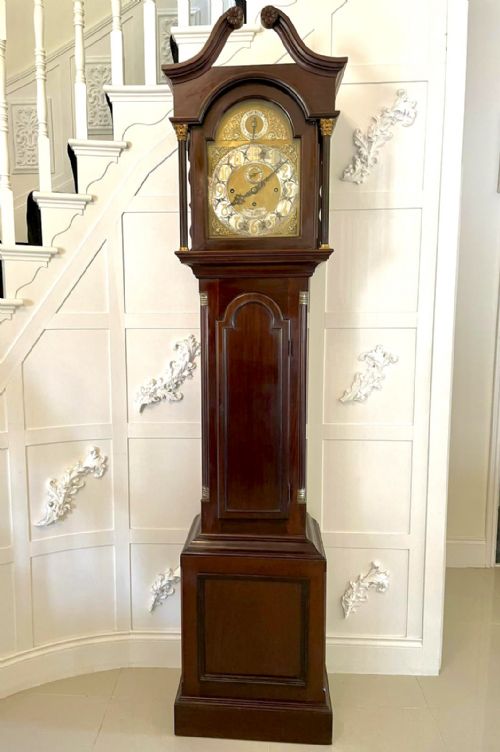
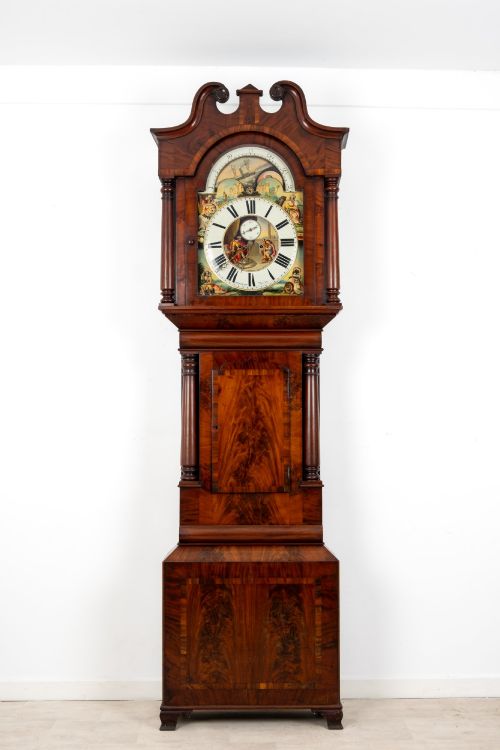
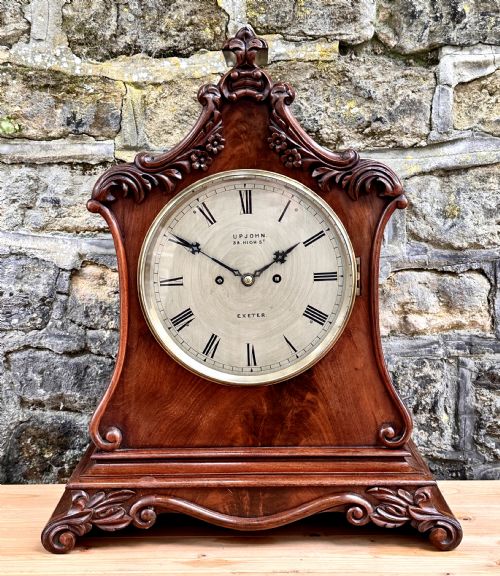
Beyond the standard wall-hanging round format, related pieces meeting this description include drop dial wall clocks with extended lower cases, alongside occasional longcase clocks, bracket clocks and library clocks housed in matching timber.
How they were made
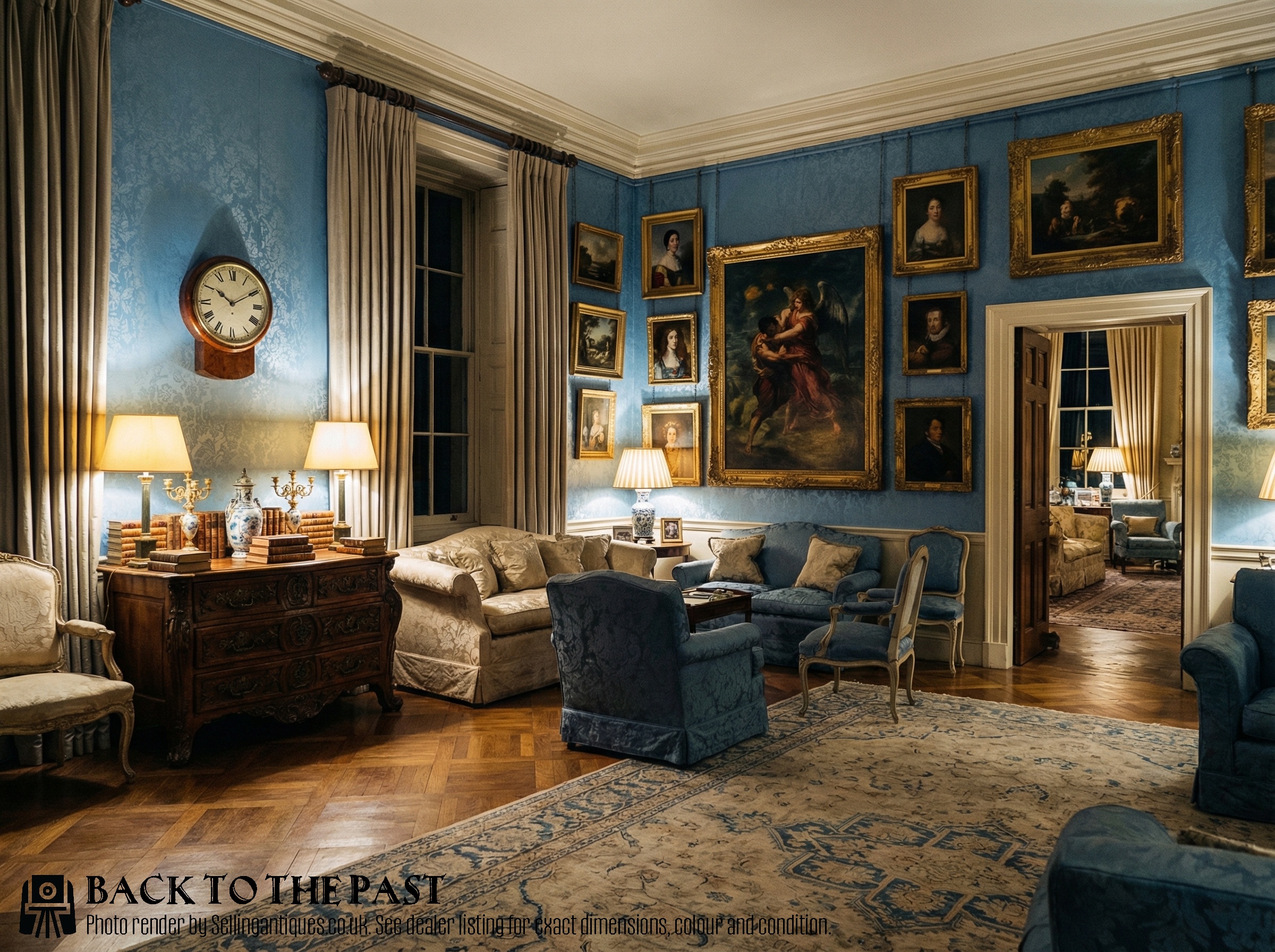
Makers housed the movements inside turned or jointed mahogany cases, frequently utilising brass for bezels, side hooks, and internal gear components, while iron and painted iron served for the circular dials.
Many of these timepieces rely on a chain fusee movement to equalise the drive force of the mainspring as it unwinds, ensuring steady timekeeping across an eight-day run.
Victorian Mahogany Dial Clock Retail Price Guide 2026
Typical asking prices for victorian mahogany dial clock among the pieces listed under this phrase on Sellingantiques today, from the lower quarter to the upper quarter. They describe what is for sale here now, not the wider market.
Several railway station clocks carry precise company stamps and inventory numbers, documenting their previous working lives in bustling nineteenth-century transit hubs.
What varies in quality
The standard of a victorian mahogany dial clock depends heavily on the crispness of the cabinet timber grain, the delicacy of brass inlay work, and the original hand-painted lettering upon the dial.
Movement sophistication also distinguishes examples, particularly the precision engineering of single or twin fusee mechanisms compared to standard spring-driven alternatives.
Camerer Cuss And Co·J Henry Cheltenham·George Clarke Tring·Winsor Bishop Norwich·Parkinson Bros Batley·D And J Wellby·Henry Harris Monythusloyn·Andrew Thom·Joseph Bird Stroud·Mappin And Webb·John Walker·Dent·William Burch·James Waring Stockport·James Bennett Norwich·Anthony Binks
The Victorian Mahogany Dial Clock Glossary
- Fusee
- A conical pulley used with a cord or chain to maintain even tension on the gear train as the mainspring unwinds. This mechanism compensates for the drop in power as the spring relaxes.
- Drop dial
- A wall clock featuring an extended lower wooden case, often pentagonal or rectangular, below the main circular dial. This drop box accommodates the pendulum swing.
- Bezel
- The ring, usually made of brass or mahogany, that holds the glass door protecting the clock face. It typically opens on a hinge to allow hand-setting.
- Chain fusee
- A fusee movement utilising a fine steel chain rather than gutline to connect the spring barrel to the conical pulley. It represents a robust method of power transmission.
Victorian Mahogany Dial Clock: Frequently Asked Questions
How do fusee clocks work?
A fusee movement uses a conical pulley connected to the mainspring via a chain or cord. As the spring unwinds, the chain moves to a wider part of the cone, maintaining constant torque on the gear train.
This clever mechanical compensation ensures the clock maintains an even driving force throughout its running cycle, leading to more accurate timekeeping.
What is a drop dial clock?
A drop dial clock is a wall timepiece where the circular dial sits atop an extended lower wooden case. This lower section houses the pendulum and its swing.
Cabinet makers often shaped these lower boxes with geometric or flared outlines to provide visual balance beneath the prominent upper dial.
Where were dial clocks used?
These clocks served as reliable timekeepers in railway stations, schools, offices, and public institutions throughout the Victorian era. Their clear painted dials allowed large rooms of people to read the time from a distance.
Railway companies frequently stamped their specific initials and inventory numbers onto the wooden bezels or dial faces for asset tracking.
How do I wind a wall clock?
Winding requires inserting a matching key into the winding hole on the painted dial and turning it gently until the spring feels firm. Care must be taken not to overwind the mechanism.
Most traditional fusee movements run for eight days, requiring a consistent weekly routine to keep the pendulum swinging accurately.