

19th Century Dial Clock
Discover the appeal of a 19th century dial clock, combining practical timekeeping with the rich textures of mahogany, oak, and brass.
19th Century Dial Clock
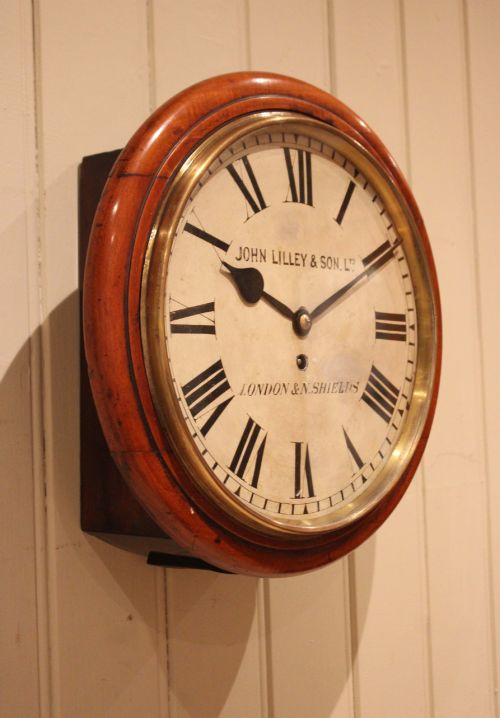
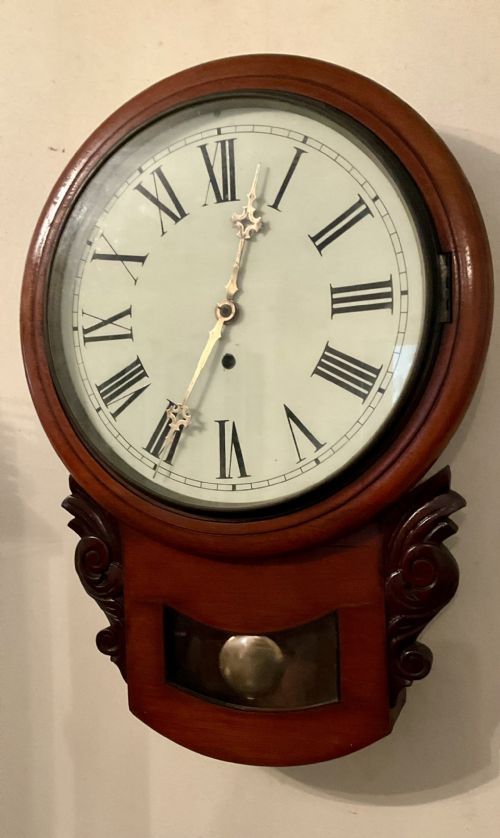
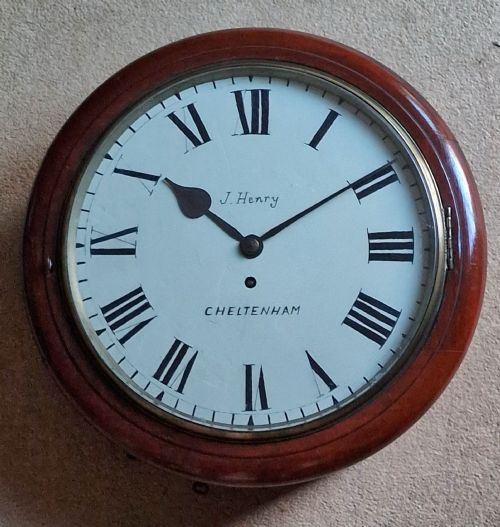
A 19th century dial clock serves as a primary focus for interior timekeeping, emerging from an era when precise mechanical time became essential to daily life. These timepieces range from wall-hanging drop dial models intended for offices, railways, and schools to domestic wall clocks and larger architectural examples.
Makers across England, Scotland, and Wales produced these pieces in various regional timber cases, frequently pairing a prominent circular face with a dependable fusee movement. Buyers encounter both straightforward utilitarian models and more decorative architectural versions originating from the Georgian, Regency, and Victorian periods.
Materials and Construction Techniques
Cases utilise dense hardwoods like mahogany, oak, and walnut, frequently shaped into robust circular surrounds or extended drop-dial housings designed to protect the internal mechanics. Timber selection dictated the visual weight of the piece, with mahogany dominating English workshops and local oaks appearing frequently in regional Scottish and Welsh pieces.
Movements rely on brass components, often driven by fusee mechanisms that maintain even tension on the gear train as the mainspring unwinds. Faces feature painted enamel, silvered brass, or cast iron dials protected by heavy glass bezels, housing intricate gear trains assembled by specialist horologists.
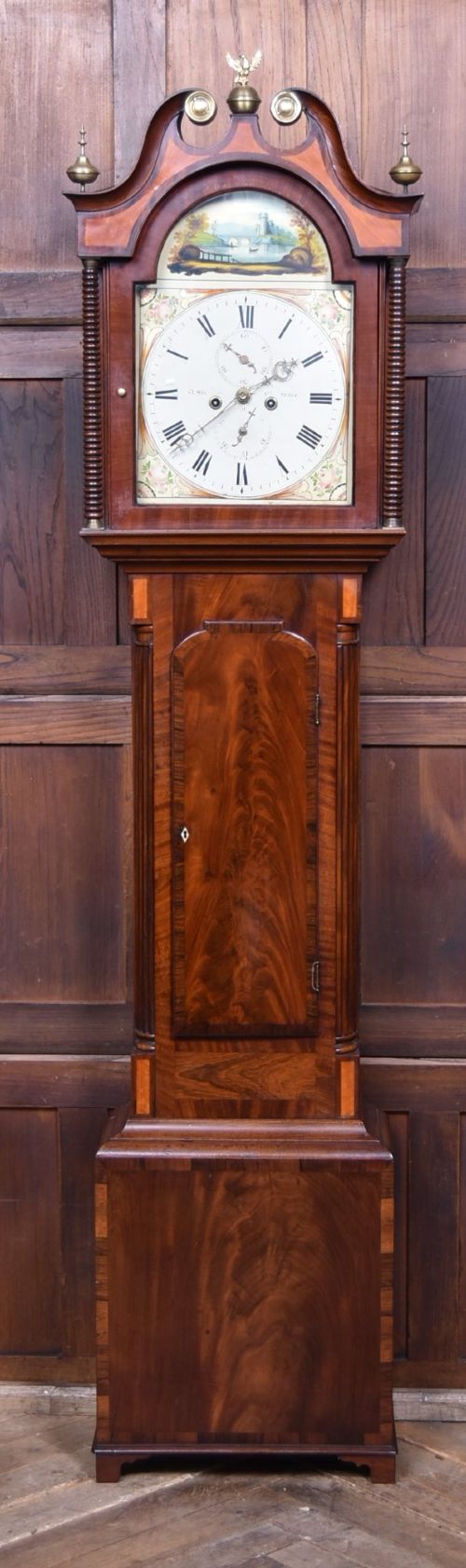
Some Welsh longcase clocks feature rocking ships on the dial, animating the passage of time on stormy seas.
Markers of Quality and Craftsmanship
Superior examples display crisp finishing on the brass bezels, clean calibration on the painted or silvered dial, and substantial timber cases free from excessive later alterations. The calibre of the fusee movement itself distinguishes standard commercial timepieces from those produced by master makers.
Proportion and dial legibility dictate the visual success of the piece, with well-balanced bezels and harmonious timber grain separating finer gallery and office clocks from ordinary utility models.
Cousens & Whiteside·Henri Jacot·Japy Freres·Henry Harris·Richard Winter·Drocourt Paris
The 19th Century Dial Clock Glossary
- Fusee
- A conical pulley connected to the mainspring by a cord or chain, designed to equalise the torque as the spring unwinds. This mechanism ensures consistent force is delivered to the escapement for accurate timekeeping.
- Dial
- The visible face of the clock where the hours and minutes are displayed. On these pieces, they are frequently painted, silvered, or cast in iron and protected by a hinged glass bezel.
- Drop dial
- A wall-mounted clock case featuring an extended lower section below the circular dial. This drop often houses a pendulum and allows for a longer swing.
- Bezel
- The metal ring that holds the glass protecting the clock face. It typically opens on a hinge to allow hand-setting and winding.
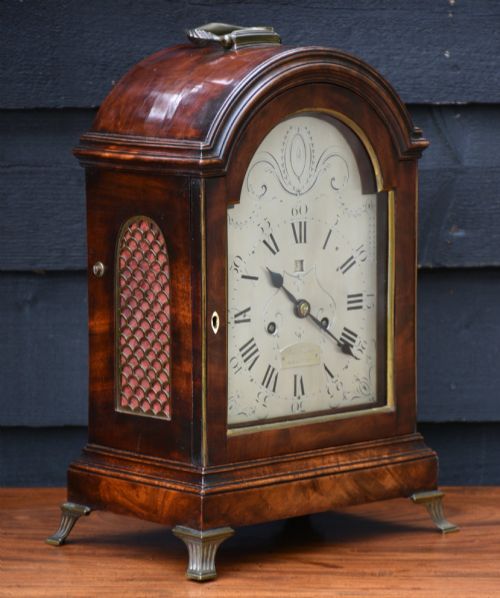
- Bracket clock
- A portable spring-driven clock originally designed to sit on a bracket or shelf. These often incorporate striking mechanisms and refined timber cabinetry.
19th Century Dial Clock: Frequently Asked Questions
Where were dial clocks typically hung?
These clocks were commonly positioned in public spaces, hallways, offices, and railway stations where clear visibility and reliable timekeeping were paramount.
Domestic settings also accommodated them in main rooms, where their straightforward circular faces provided an easy reference for the household.
How do fusee movements function?
A fusee movement uses a conical drum linked to the mainspring via a delicate chain to regulate the power delivered to the gear train.
As the spring loses tension, the chain moves to a wider part of the cone, maintaining steady force and improving accuracy.
What timber types are most common?
Mahogany appears most frequently in English and regional workshops, valued for its durability and rich grain.
Oak and walnut also occur regularly, particularly in pieces originating from Scottish and Welsh makers.
How do wall dial clocks differ from longcase clocks?
Wall dial clocks concentrate the timekeeping mechanism within a compact, often circular housing designed to mount directly onto a wall.
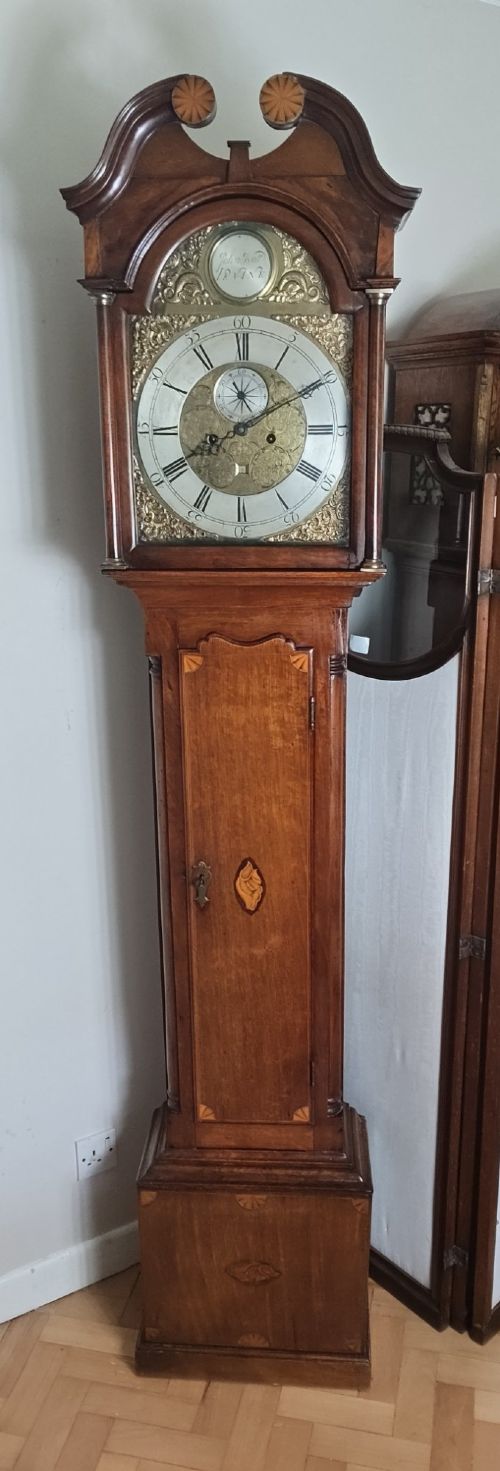
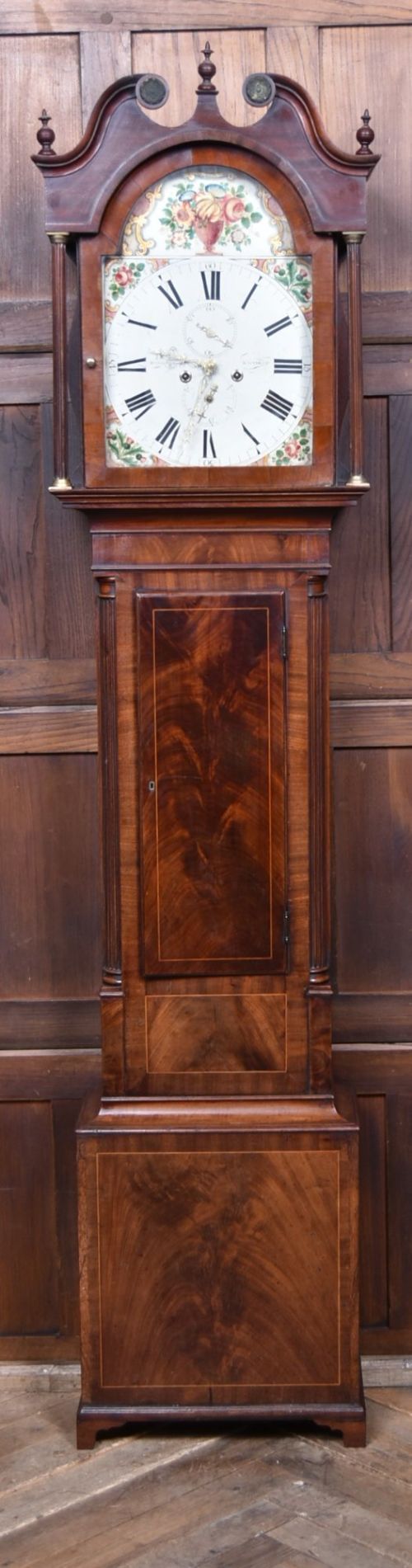
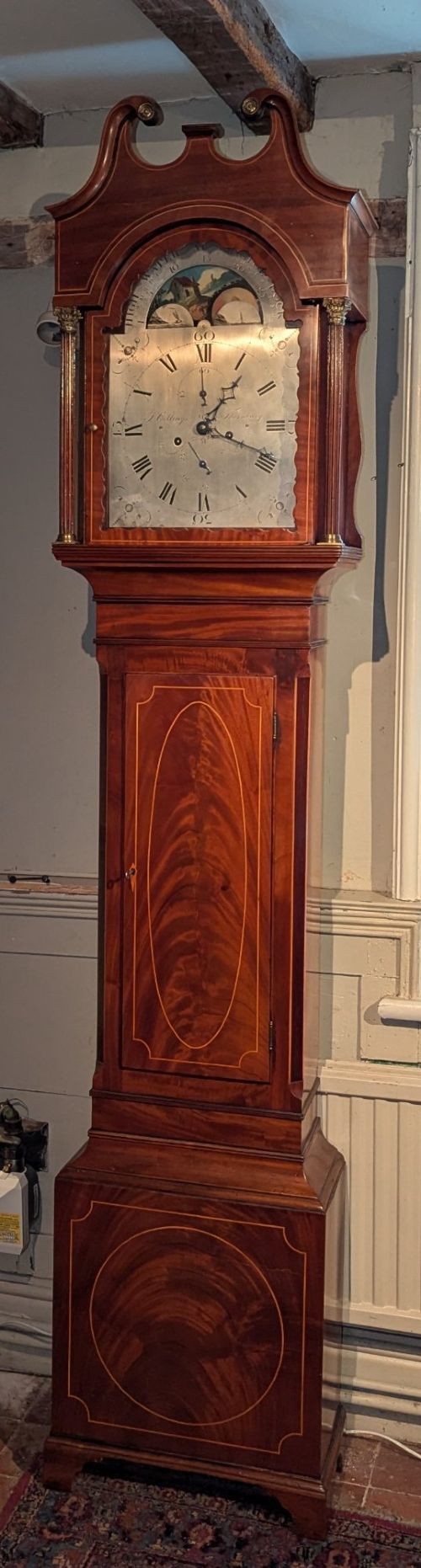
Longcase clocks extend from the dial down to a tall wooden trunk that encloses a hanging pendulum and heavy weights.