


Vintage Station Timepiece
A vintage station timepiece is a heavy, robust dial clock meant to keep time across platforms and offices, prized for its honest industrial presence.
Vintage Station Timepiece
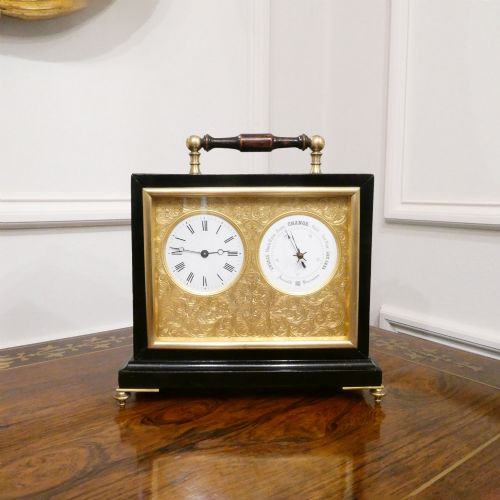
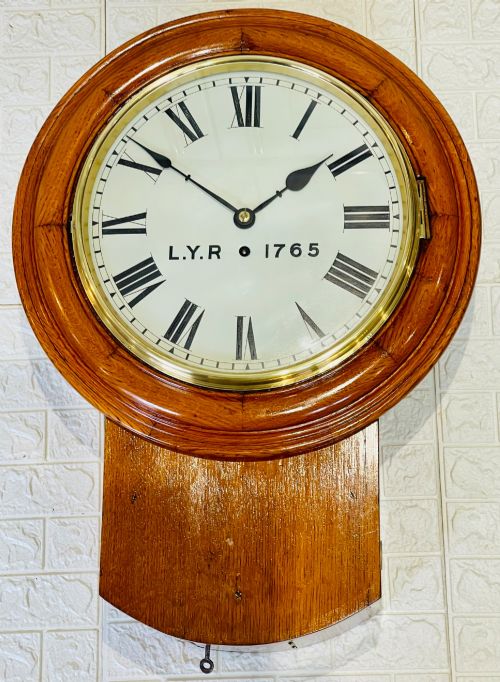
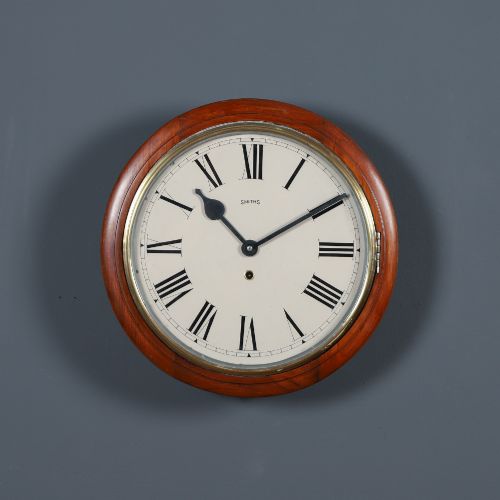
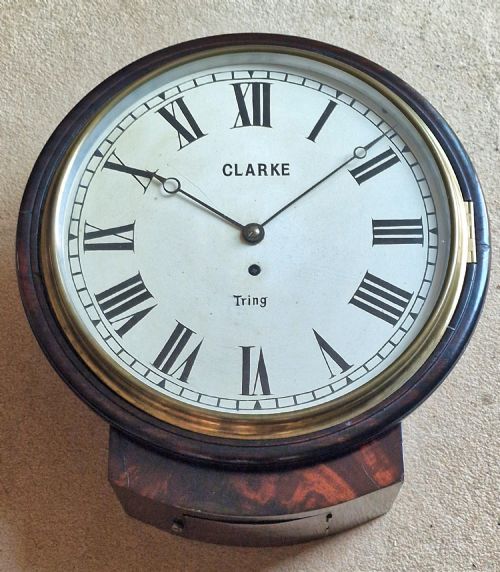
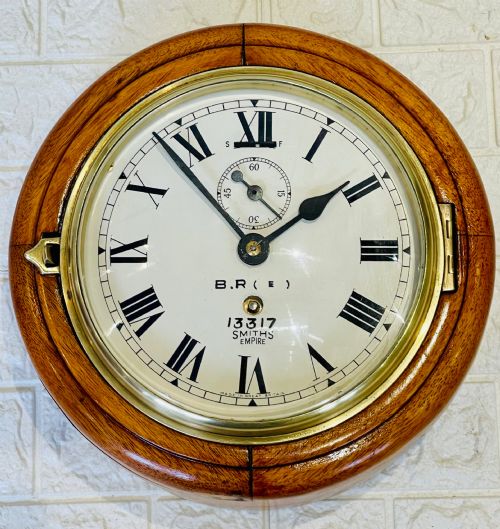
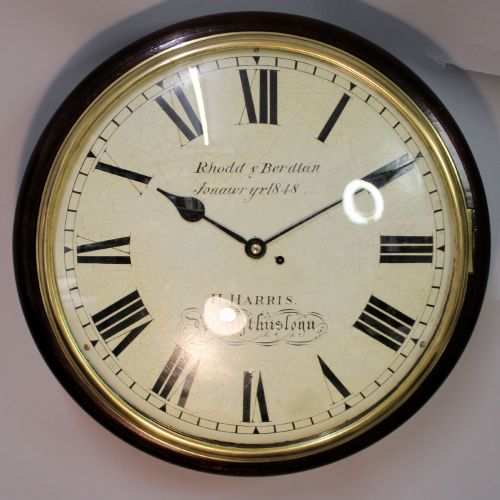
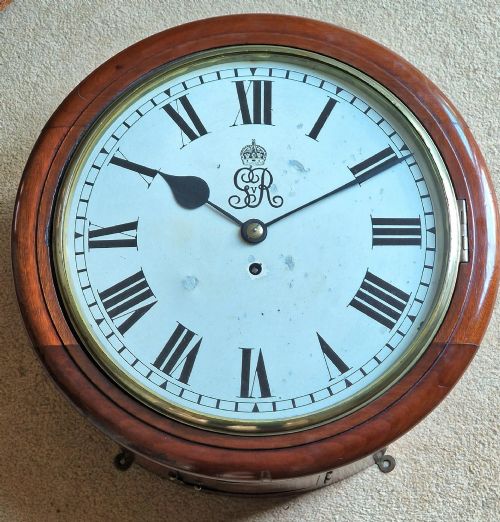
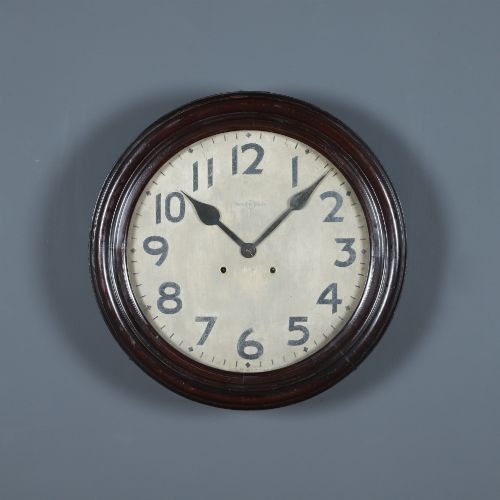
When searching for a vintage station timepiece, a buyer is looking at circular wall clocks and dial clocks originating from railway companies, schools, and military offices. These pieces range from substantial mahogany and oak round dial wall clocks to specific drop dial variants bearing railway company lettering.
The version most commonly met on this page is the fusee wall clock, often housed in a deep mahogany or oak case with a convex dial. These clocks were built for legibility and punctuality in busy environments, resulting in clean faces and durable timber frames.
How they were made
Timbers such as mahogany, oak, and ebonised wood form the robust outer cases, joined securely to protect the movement from dust and dampness in transit environments. Brass and painted metal construct the bezels and dials, providing stark contrast for clear black numerals.
Movements rely on fusee mechanisms or standard mechanical gear trains designed to maintain even tension and accurate timekeeping over long running periods. Glass protects the dial face, held within hinged brass or wooden surrounds that allow easy access for winding and setting.
Listings feature wall clocks and mantel clocks spanning the Victorian era through the mid-twentieth century, constructed in mahogany, oak, and brass.
What varies in quality
The distinction between standard utility office pieces and superior examples rests in the complexity of the movement and the pedigree of the maker or retailer. Fusee movements with sustained power represent a higher grade of engineering than basic spring-driven alternatives.
Cabinetry also dictates standing, with dense figured mahogany cases and bracket supports showing greater care than plain industrial pine or secondary timbers. Signed dials bearing recognised railway lines or established makers elevate the historical interest of the clock.
John Walker·Henry Harris·George Clarke·Anglo Swiss Watch Co·John Wilson
The Vintage Station Timepiece Glossary
- Fusee
- A conical pulley used in older clock movements to equalise the diminishing power of the mainspring as it unwinds. This mechanism ensures consistent force is delivered to the gear train for greater accuracy.
- Drop dial
- A wall clock featuring an extended wooden case below the circular dial, often housing a pendulum box. This shape accommodates the drop of the movement and provides balanced proportions.
- Convex dial
- A clock face that curves outward toward the viewer, designed to reduce glare from windows and gas lighting. They are frequently paired with curved glass covers.
- Bezel
- The metal or wooden ring that holds the glass door in front of the clock face. Hinged bezels allow the dial to be opened for daily maintenance.
Vintage Station Timepiece: Frequently Asked Questions
How do I wind a fusee wall clock?
Use the appropriate key on the winding square located on the dial face, turning gently until resistance increases. Avoid over-winding to protect the mainspring.
Ensure the pendulum is hanging plumb within the case before starting the movement. Allow the clock to settle after hanging it firmly on a secure wall bracket.
Why do some dials say railway names?
Many of these pieces were commissioned by specific transport companies to regulate train departures and station operations. Company initials or full titles were painted directly onto the dial.
This provenance ensures the clock served a practical transport function rather than domestic use. Collectors value these markings for their direct link to railway history.
Are these clocks suitable for daily use?
Mechanical wall clocks require regular winding and occasional professional servicing to maintain reliable timekeeping. They perform best when mounted securely on sturdy interior walls away from dampness.
Living with a mechanical timepiece brings the rhythmic sound of ticking and the ritual of weekly winding into the room. Their robust construction suits everyday home environments well.
How do I distinguish a railway clock from a school clock?
Railway clocks often feature specific company lettering or cipher markings on the dial or timber case. School clocks generally share the same robust round dial proportions but lack transport company provenance.
Both types utilise clear numerals and durable timber surrounds designed for public spaces. Examining the dial text usually reveals the original context of use.