


Large Circular Clock
A large circular clock commands a room with architectural presence, offering bold form and reliable timekeeping from eras spanning the nineteenth and twentieth centuries.
Large Circular Clock
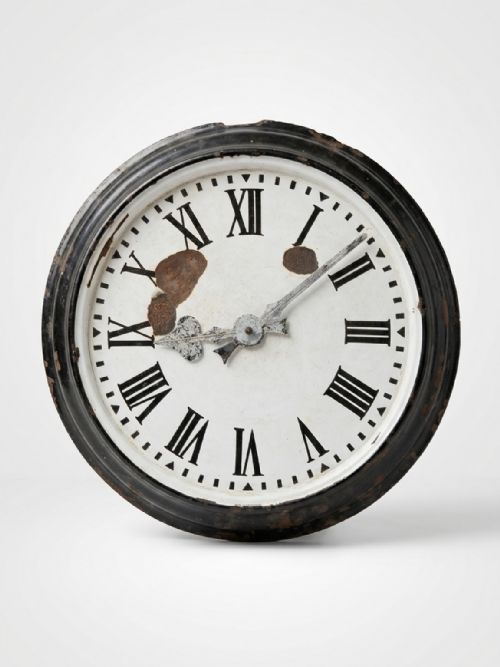
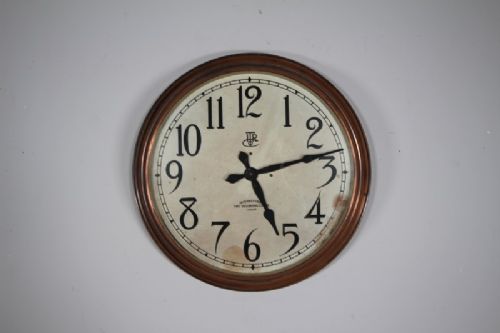
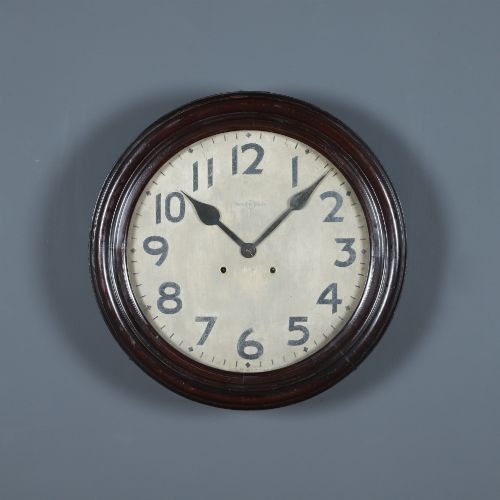
A large circular clock functions primarily as a wall-mounted timepiece, taking forms such as dial clocks, factory clocks, and station clocks across this selection. These pieces originate from periods including the Victorian and Edwardian eras, alongside later Art Deco and mid-century designs.
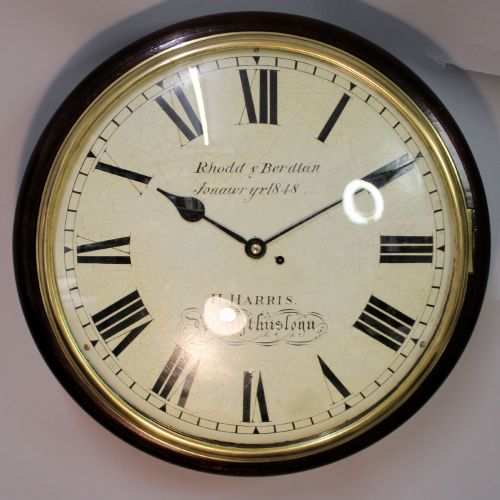
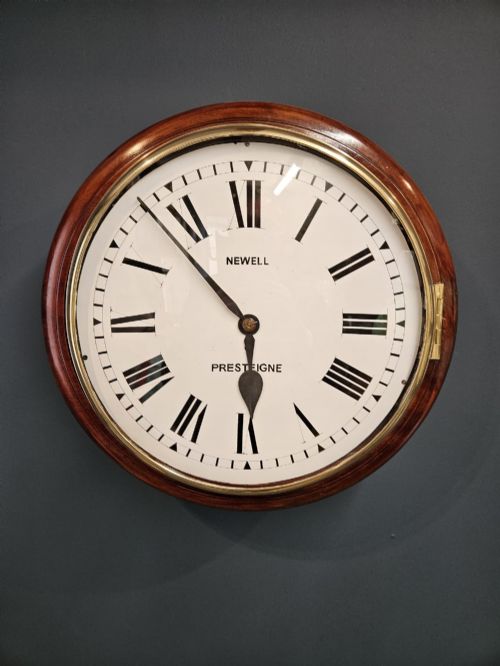
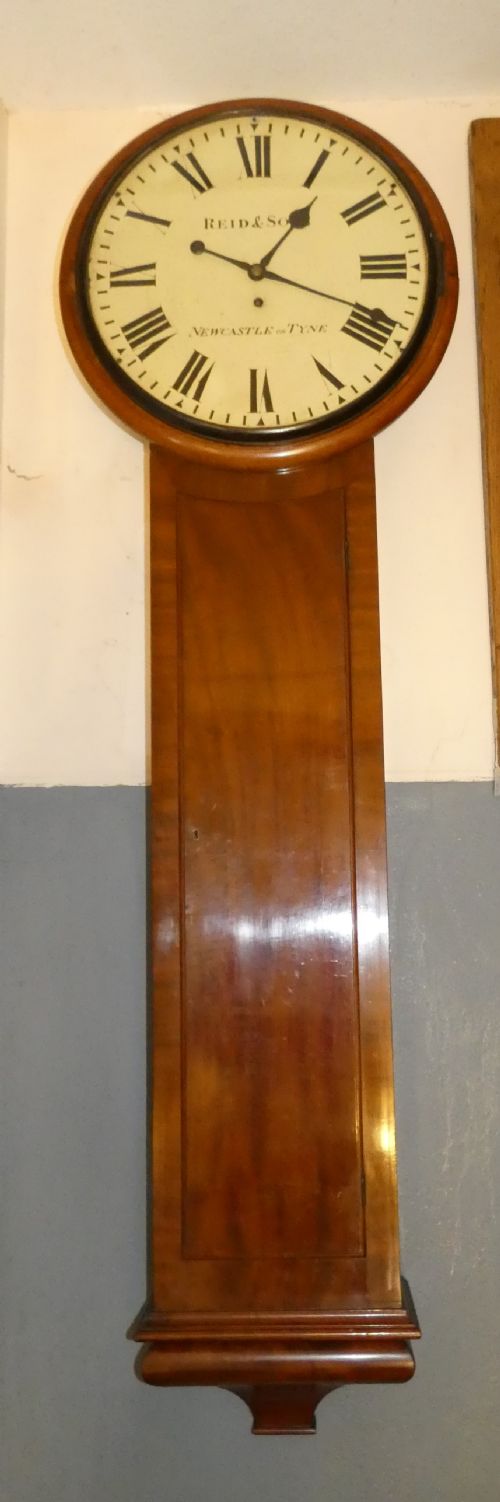
Buyers encounter variations featuring mahogany cases, brassbezels, and painted steel dials. Railway station and school clocks sit alongside domestic dial clocks, each displaying distinct regional origins and functional histories.
The objects span from mid-nineteenth-century fusee movements to later striking and chiming mechanisms. Architectural and utilitarian origins dictate the scale and visual weight of each piece.
Materials and construction
Cases utilise dense timbers such as mahogany, turned and shaped to house heavy mechanical movements securely against walls. Glass protects the dial face, while brass and copper components form bezels and interior gear trains.
Dial construction involves painted steel or metal plates, lettered with Roman or Arabic numerals depending on the period and utility. Fusee movements regulate the pull of the mainspring to maintain consistent tension for accurate timekeeping.
Recorded object forms include wall clocks and school clocks, with origins stretching from mid-nineteenth-century workshops to twentieth-century council offices.
Assessing quality and finish
Quality rests in the precision of the mechanical movement, particularly the presence of fusee setups compared to standard spring-driven alternatives. Finer examples exhibit crisp dial painting and robust timber framing without excessive replacement parts.
Maker attribution elevates a piece, as signed dials from known regional or institutional clockmakers demonstrate superior workshop standards. The integrity of original glass, bezels, and dial numerals distinguishes exceptional survivors from heavily altered examples.
Henry Harris of Monythusloyn·Palmer and Co
The Large Circular Clock Glossary
- Fusee
- A conical pulley used in mechanical clocks to maintain even power as the mainspring unwinds. This mechanism ensures consistent timekeeping accuracy throughout the running cycle.
- Dial clock
- A wall clock featuring a prominent circular face and a simple case designed for public or domestic spaces. These pieces prioritize immediate legibility from a distance.
- Drop-dial
- A clock case where the circular dial sits above a lower box or trunk that houses the pendulum or weight drop. This configuration balances compact upper proportions with extended lower woodwork.
- Bezel
- The metal or wooden ring that holds the glass cover over the clock face. It often hinges open to allow hand adjustment and winding.
Large Circular Clock: Frequently Asked Questions
How do I wind a fusee wall clock?
Winding requires a dedicated key inserted into the dial aperture, turned gently until resistance indicates the mainspring reaches capacity.
Care must be taken not to overwind, ensuring the mechanism maintains steady tension for the duration of its run.
Where were large circular clocks originally used?
These pieces hung in railway stations, schools, factories, and municipal offices where clear timekeeping was essential for large groups.
Domestic spaces also accommodated them in hallways and kitchens, driven by the demand for reliable public and private scheduling.
How do I distinguish a Victorian dial clock from an Edwardian one?
Victorian examples often feature robust fusee movements housed in deep mahogany cases with traditional painted iron dials. Edwardian pieces frequently refine these proportions while retaining similar utilitarian framing.
Examining the depth of the case and the lettering style on the dial provides clear clues to the manufacturing period.
Can these clocks be hung on standard interior walls?
The substantial weight of mahogany cases and mechanical movements requires secure fixing directly into wall studs or masonry.
Proper weight distribution ensures the pendulum swings freely and the clock keeps accurate time without straining the hanging bracket.