


Antique Double Dial
These antique double dial timepieces tell dual stories through paired faces, offering the collector a functional complication housed in period cabinetry.
Antique Double Dial
When you search for an antique double dial clock, you are looking at specialised timekeeping instruments that feature two separate display faces within a single case. These pieces primarily manifest as large wall clocks and mantel clocks from the nineteenth century, utilising mahogany, oak, and slate to house their complex movements. You will most frequently encounter nineteenth-century English and French examples designed to show different time zones, perpetual calendars, or combined barometric readings alongside the primary hour.
The layout of these clocks serves a practical historical purpose, often combining standard time with secondary complications such as date indicators or tide information. While wall clocks tend to feature prominent wooden surrounds in mahogany or oak, mantel versions lean towards architectural slate and ebonised wood. Finding one of these dual-faced instruments means acquiring a functional piece of horological engineering that reflects the Victorian demand for precision and utility.
What Varies in Quality
The calibre of the movement dictates the upper tier of these pieces, where complex double fusee systems and perpetual calendar mechanisms operate with enduring precision. Master horologists ensured that gear trains, escapements, and pendulum suspensions were finished to a higher standard, resulting in smoother operation and reliable timekeeping across both dials.
Cabinet construction separates ordinary examples from exceptional ones through the selection of timber and the crispness of carved or applied ornament. Superior clocks feature well-proportioned cases of solid mahogany or oak with intact bevelled glass and clear, legible enamel or silvered dials that have survived without major restoration.
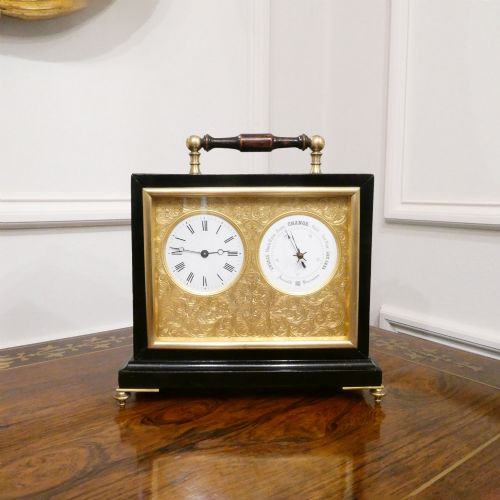
Some nineteenth century desk companions packed time, weather, and date into a single heavy bronze package for the perpetually busy executive.
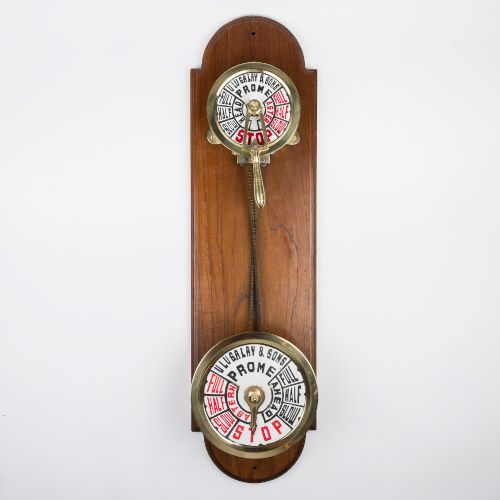
Ulugary & Sons·Richard Rooker·Goldsmiths & Silversmiths London·Brocot
The Antique Double Dial Glossary
- Double dial
- A clock featuring two distinct faces within the same case, typically displaying secondary information such as a calendar or a second time zone alongside the primary time.
- Fusee
- A conical pulley used in better quality spring-driven clocks to equalize the diminishing power of the mainspring as it unwinds. It ensures consistent force is delivered to the gear train.
- Perpetual calendar
- A mechanism within a clock that automatically adjusts for the varying lengths of months and accounts for leap years without manual intervention.
- Bracket clock
- A portable spring-driven clock originally designed to sit on a bracket attached to a wall, featuring a carrying handle and a refined wooden or ebonised case.
- Desk compendium
- A multi-instrument desk accessory that groups timekeeping with other scientific functions such as barometers or thermometers within a unified decorative housing.
Antique Double Dial: Frequently Asked Questions
What is an antique double dial clock?
An antique double dial clock is a timepiece that incorporates two separate display faces within a single housing. These secondary faces often show calendar dates, barometric readings, or alternative time zones.
Such instruments were built during the nineteenth century to serve offices, maritime stations, and households requiring multiple streams of information. Their dual nature makes them distinct from standard single-face clocks.
How do you wind a double fusee clock?
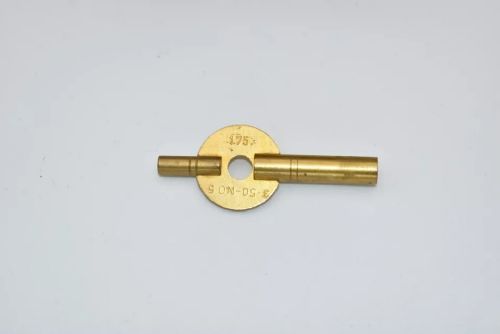
Winding a double fusee clock requires inserting a key into the winding squares on the dial or behind the access door to tension both spring barrels. The fusee mechanism ensures that the pull remains even as the springs wind down.
Care must be taken not to overwind the mechanism, as the chain and fusee cone require steady, measured turns. Regular servicing by a horologist keeps the twin power sources operating smoothly.
Where were double dial clocks used?
These clocks were typically placed in prominent locations where tracking multiple types of data was necessary, such as ship boardings, railway offices, and grand hallways. Their dual faces provided at-a-glance convenience for busy environments.
In domestic settings, they served in libraries and studies where gentlemen monitored weather conditions alongside standard time. Their robust construction suited both public and private institutional spaces.
How do you distinguish wall clocks from mantel versions?
Wall clocks featuring dual dials are built with hanging brackets and deep wooden rims in oak or mahogany designed to be secured at eye level. Mantel versions sit independently on flat surfaces, often utilising heavy Belgian slate or architectural marble.
While both share complex internal movements, their exterior housings reflect different domestic placements. Wall variants prioritize clear visibility across a room, whereas mantel pieces focus on desk or shelf stability.