

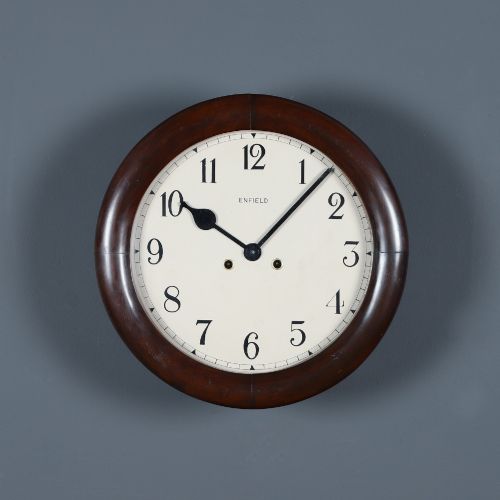
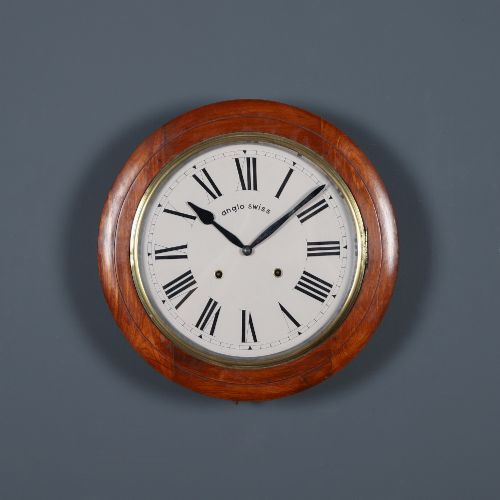
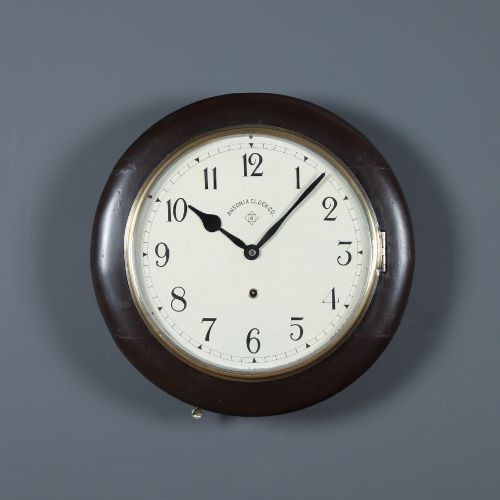
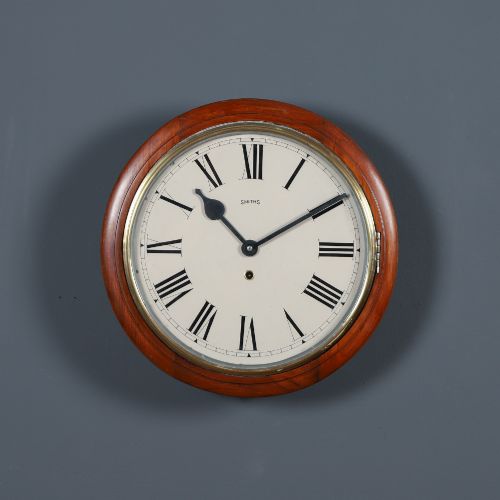
Mahogany Station Clock
Mahogany station clock pieces are robust timepieces housed in rich timber frames that brought synchronized timing to platforms and public rooms.
Mahogany Station Clock
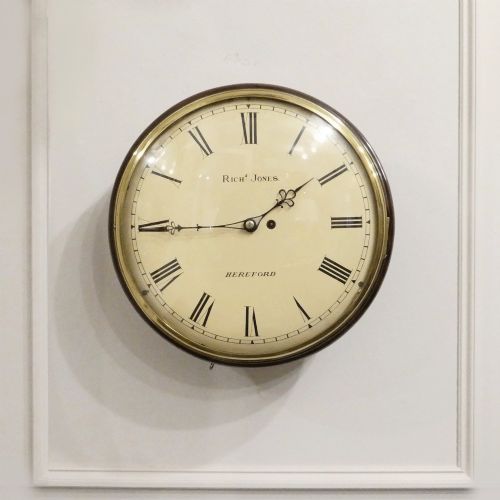
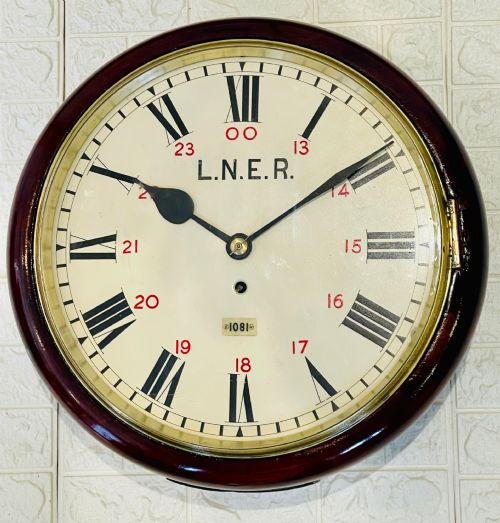
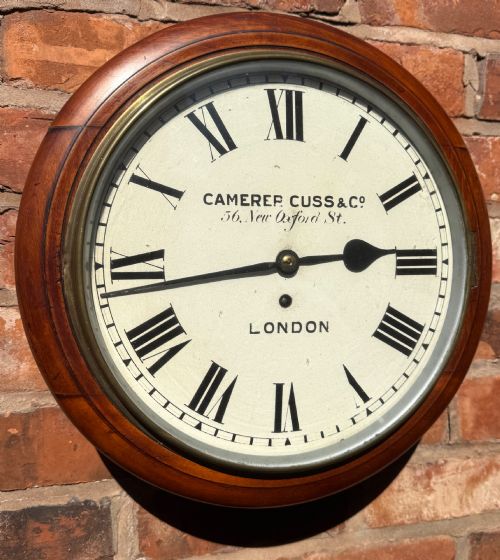
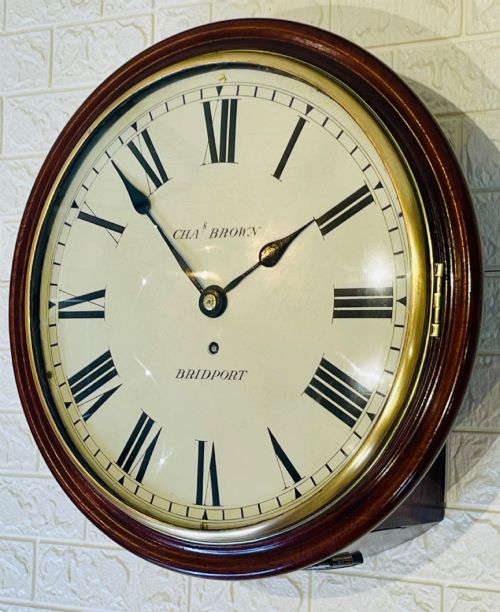
A mahogany station clock is a dependable timekeeper built for public visibility, featuring a round dial protected by glass and housed within a sturdy timber surround. When searching this phrase, a buyer encounters round-faced instruments originating from the Victorian, Georgian, and later periods up to the mid-twentieth century. These pieces often carry the specific names of railway companies, provincial makers, or London retailers on their faces.
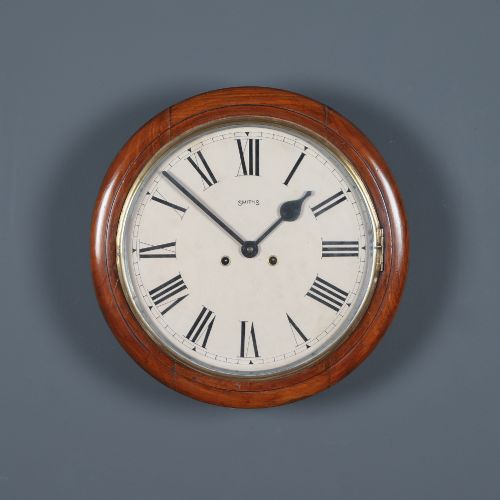
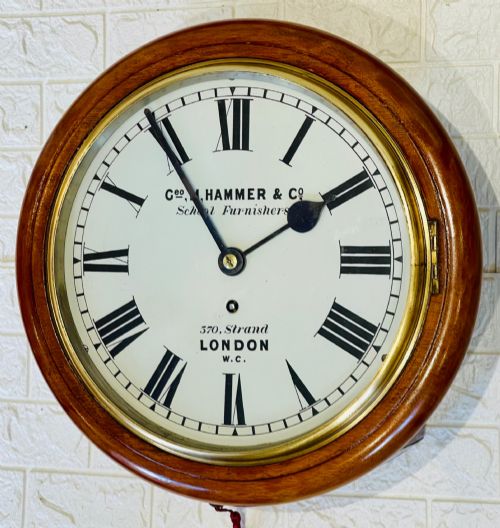
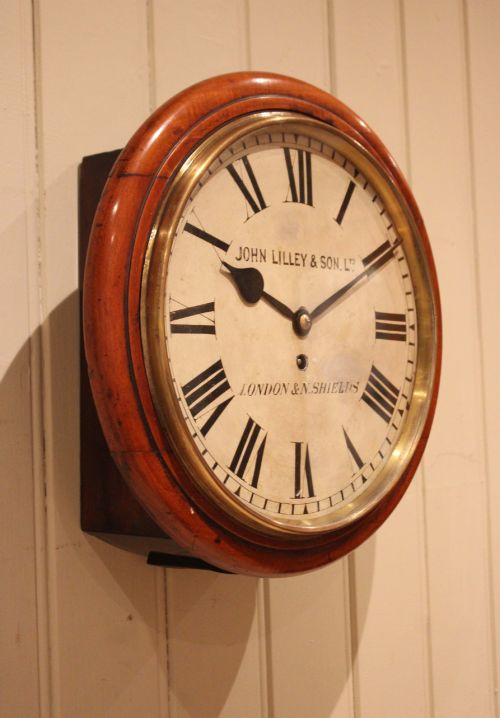
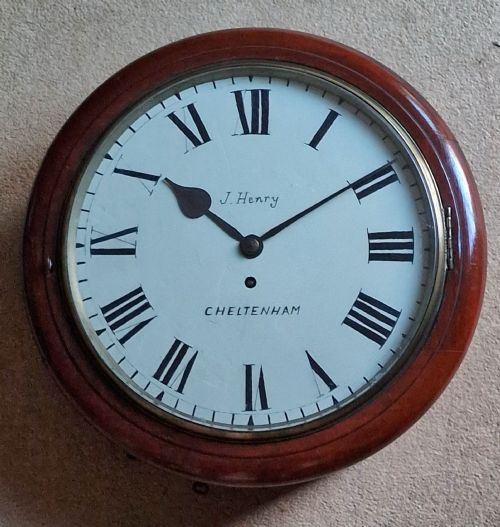
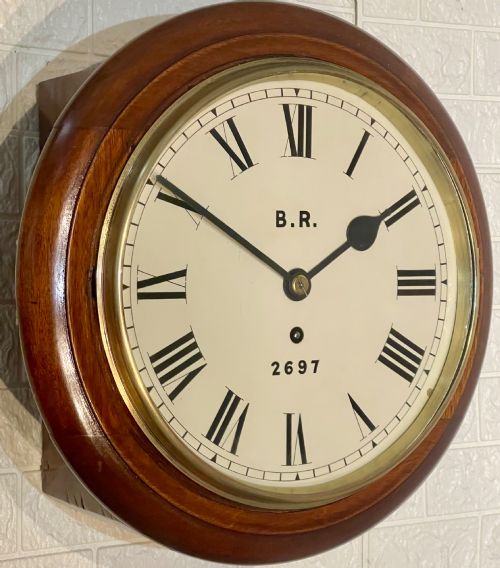
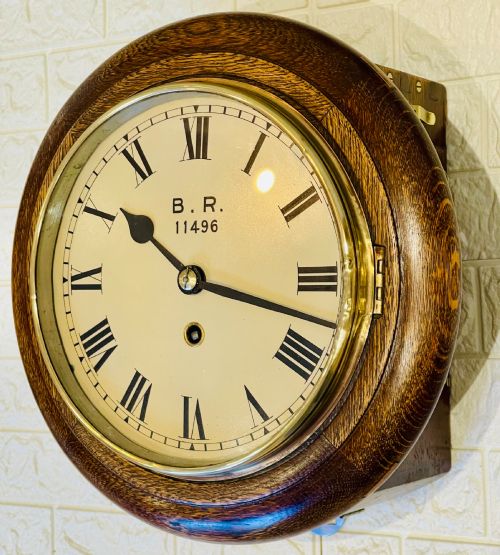
The most common versions met on this page are fusee dial wall clocks with mahogany cases, frequently associated with railway networks like the GWR, LNER, or British Railways. They range from compact eight-inch office dials up to much larger twenty-inch exhibition pieces, adapting to the scale of the room they originally inhabited. Many reflect traditional British styles, constructed to maintain accurate time in busy public environments.
How they were made
The construction relies heavily on solid mahogany for the case, shaped into deep round boxes with hinged side or bottom doors for access to the movement. This dense timber resists warping, protecting the delicate internal mechanics from atmospheric changes in busy stations and offices. Brass and iron components form the robust gear trains, while steel arbors and springs drive the mechanical heart of the clock.
Many examples utilise a chain or cord fusee movement, a sophisticated mechanism that equalises the declining power of the mainspring as it unwinds to ensure consistent timekeeping. Dial faces are commonly painted iron or metal, featuring bold black numerals protected behind a heavy brass bezel and curved glass pane. The combination of seasoned mahogany housing and precise metal gearing explains the enduring survival of these functional objects.
Listings span multiple decades from the Georgian era through the 1950s, utilising mahogany cases alongside brass, iron, and painted metal components.
What varies in quality
The distinction between standard utility timepieces and finer examples lies in the execution of the movement and the crispness of the dial markings. Master makers and premier retailers invested greater precision into cutting fusee teeth and engraving signature panels, resulting in smoother mechanical operation and lasting reliability. Lesser pieces might show simpler time-only movements without striking trains, or replacement dials repainted during subsequent maintenance.
Cabinetwork also separates the tiers, with superior models exhibiting carefully selected flame mahogany veneers, well-fitted locking access doors, and substantial brassbezels cast with clean lines. The integrity of the original timber case, combined with a fully signed dial bearing a recognised maker or railway company name, elevates the character and historical interest of the clock.
Richard Jones of Hereford·Camerer Cuss and Co London·Henry Harris·John Walker·Mapin and Webb
The Mahogany Station Clock Glossary
- Fusee
- A conical pulley used with a cord or chain to maintain equal power on the gear train as the mainspring unwinds. This clever mechanism ensures the clock maintains steady accuracy throughout its eight-day run.
- Dial
- The visible face of the clock where the hours and minutes are displayed. On these pieces, it is typically painted iron or metal protected by a brass bezel and glass.
- Bezel
- The ring of brass or metal that holds the glass cover over the dial. It usually hinges open to allow hand-setting and winding.
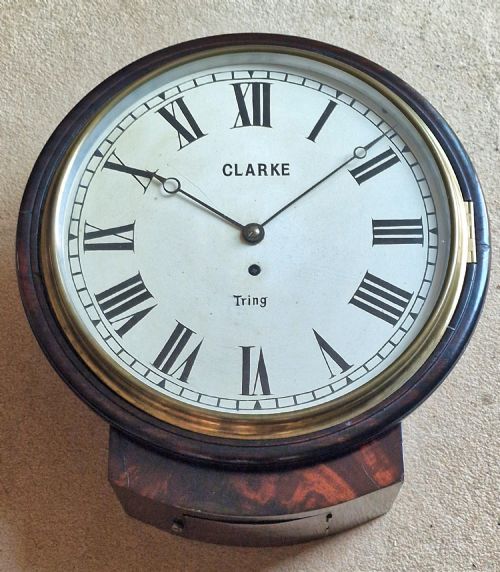
- Drop-dial
- A clock case featuring a rounded top for the dial and an extended lower trunk, often used to accommodate a longer pendulum or simply to balance the visual proportions.
- Timepiece
- A clock that indicates the time without striking the hours or sounding alarms. These mechanical units focus purely on continuous motion.
Mahogany Station Clock: Frequently Asked Questions
How do I wind a fusee wall clock?
Winding requires inserting the key into the small aperture on the painted dial and turning it gently until the spring reaches full tension. Care must be taken not to overwind the mechanism, stopping as soon as resistance increases.
Most traditional fusee movements run for eight days on a single wind. Establishing a consistent weekly routine helps preserve the longevity of the chain and internal brass teeth.
Where were these clocks originally hung?
These clocks were positioned in prominent locations where railway staff and passengers needed clear visibility of the time. Common sites included station master offices, ticket halls, platforms, and administrative boardrooms.
Their robust timber frames and large contrasting dials ensured readability across smoky, bustling public spaces. Later examples also served schools, municipal buildings, and military offices.
How can I identify a railway-issued clock?
Railway clocks often feature company initials or specific station names painted directly onto the dial surface or stamped into the mahogany case. Common markings reference historic networks such as the GWR, LNER, or British Railways.
In addition to lettering, many possess inventory numbers punched into the wood or brass bezel. These digits correspond to internal company records tracking equipment across the transport network.
Are these clocks suitable for domestic walls?
These timepieces adapt well to modern domestic interiors, bringing architectural presence and industrial history to living rooms or hallways. Their classic circular geometry contrasts effectively against plain walls.
Because they are heavy, secure wall fixing into masonry or solid studs is essential to support the weight of the mahogany case and mechanical movement.