

Railway Dial Clock
When you search for a railway dial clock, you find robust timepieces built to govern time across Britain's vast network of stations and offices.
Railway Dial Clock
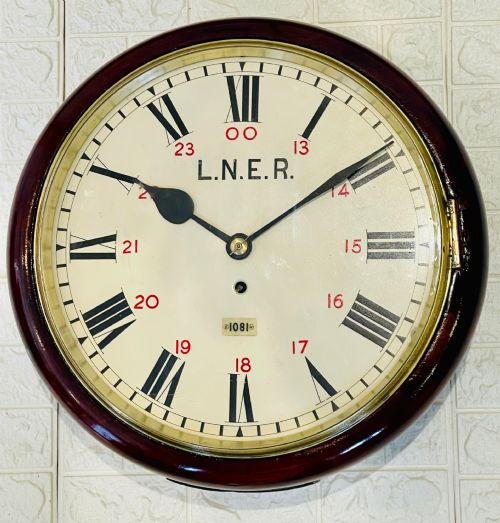
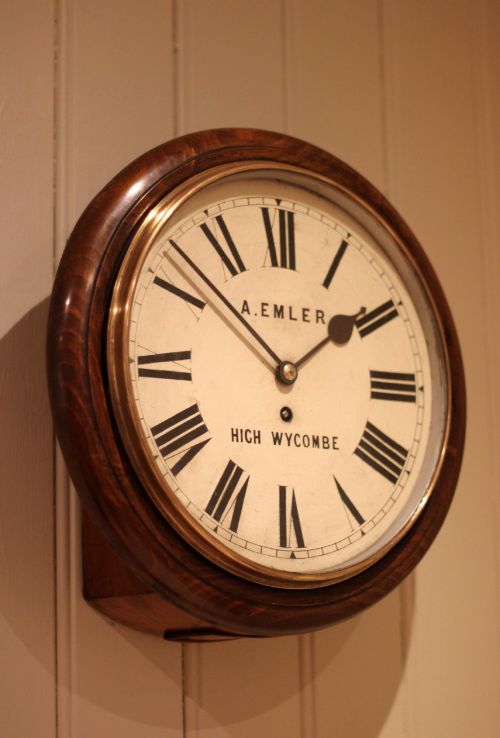
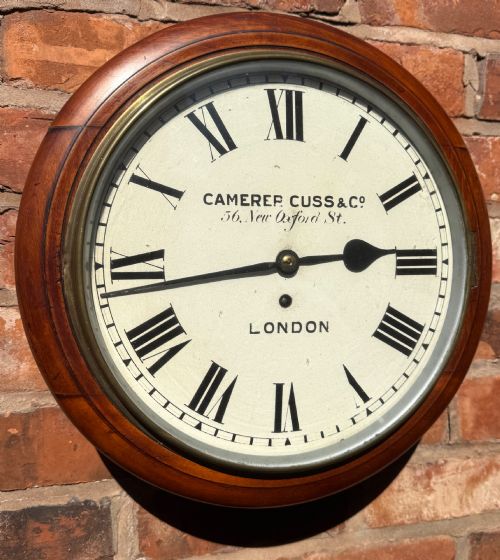
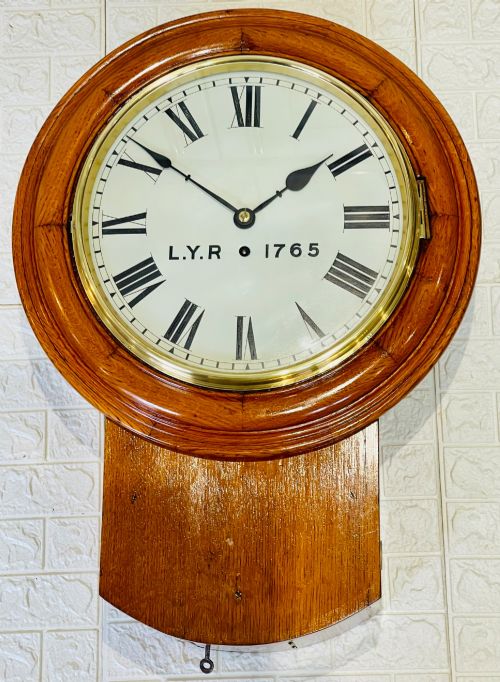
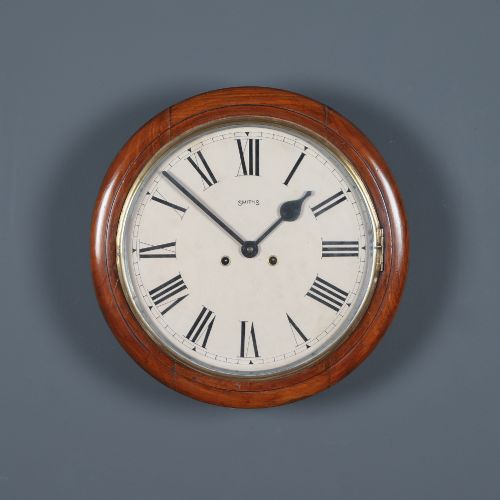
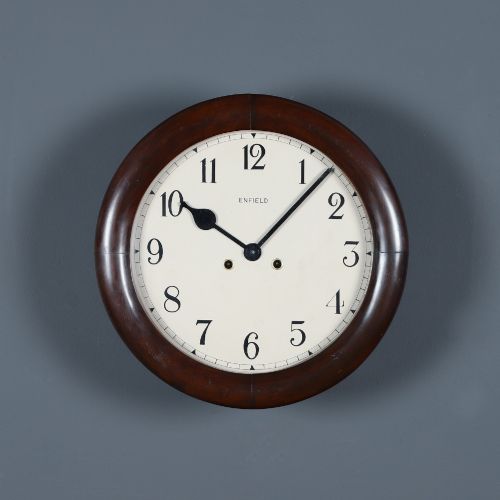
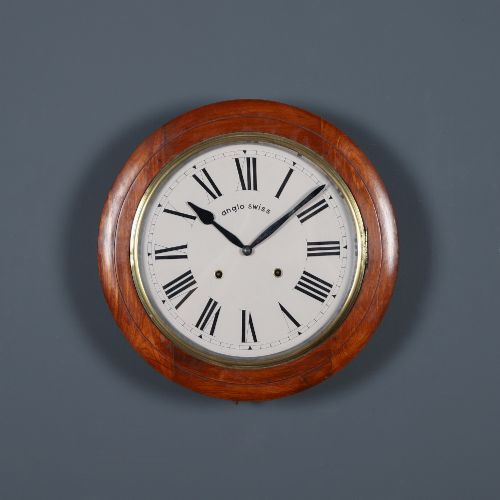
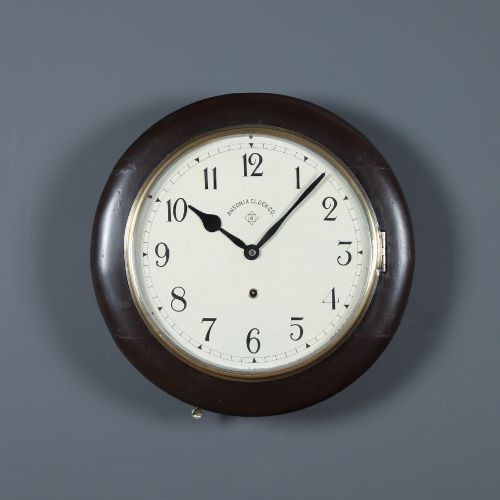
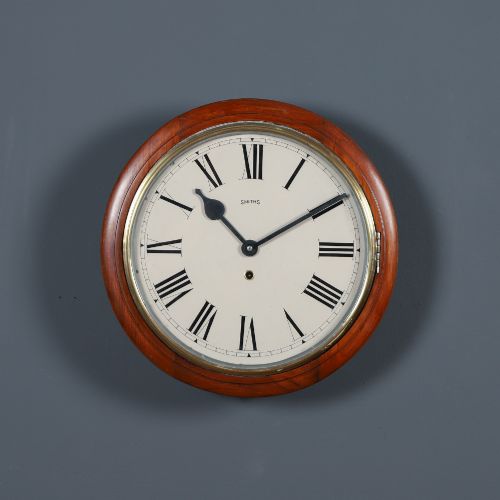
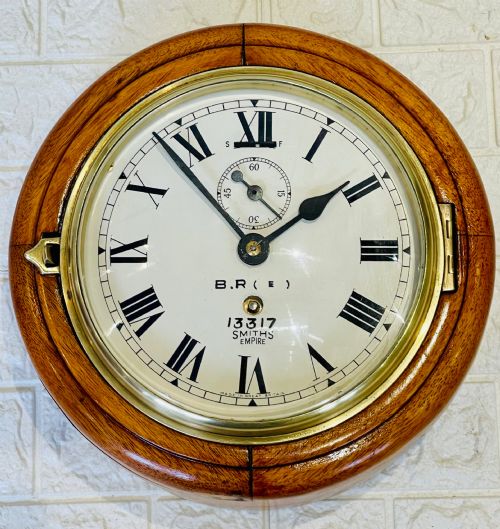
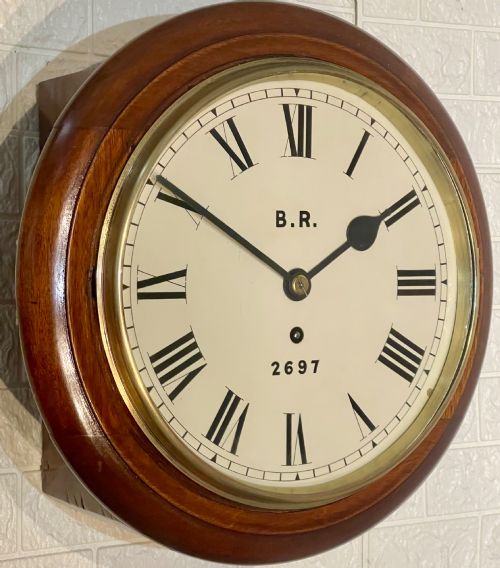
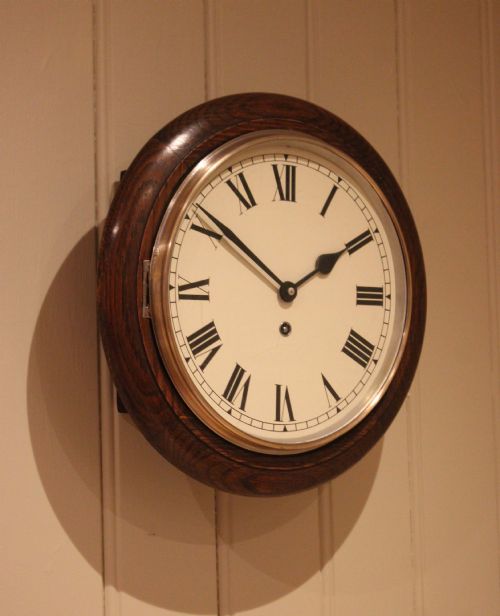
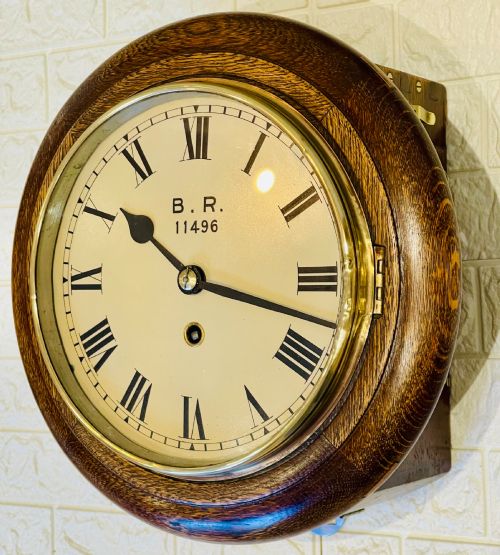
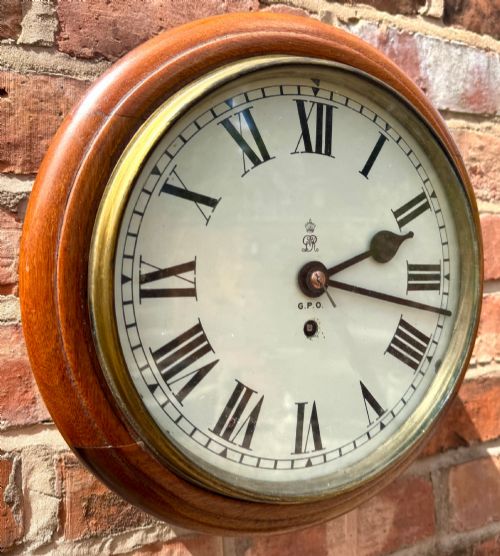
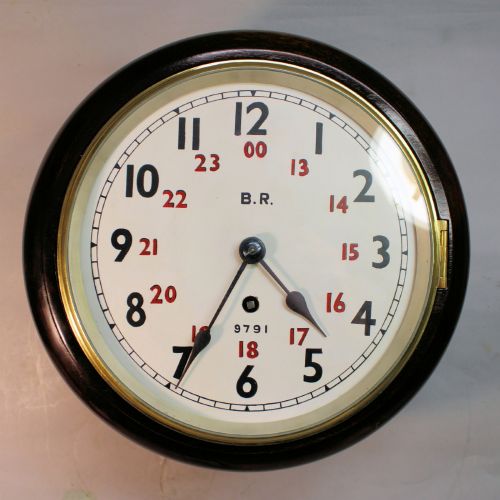
A railway dial clock is a substantial wall timepiece designed for high-traffic environments like platforms, waiting rooms, and administrative offices. The version you meet most frequently on this page is the fusee wall clock housed in a circular mahogany or oak case with a glazed front door.
These utility timepieces originated in the nineteenth century and continued production through the mid-twentieth century, often bearing company initials or station names on the dial. The format prioritises clear legibility from a distance, featuring bold Arabic or Roman numerals against a white background.
How They Were Made
Maker workshops housed mechanical movements inside sturdy timber cases turned from solid mahogany, oak, or beech, fitted with heavy hinged brass bezels and thick protective glass. The cases often include side doors or bottom access boxes secured with locks to allow routine winding and regulation without removing the clock from the wall.
The internal mechanism typically relies on a fusee movement driven by a chain or cord and a spring barrel, designed to maintain even tension as the mainspring unwinds. This mechanical arrangement delivers the timekeeping consistency demanded by strict railway timetables.
Station masters famously regulated their pocket watches against these clocks every single morning before stepping out onto the platforms.
What Varies in Quality
The distinction between standard utility models and superior specimens rests on the complexity of the movement and the integrity of the case construction. Clocks equipped with single chain fusee movements and heavy brass plates represent a higher grade of horological engineering than basic spring-driven counterparts.
Provenance and original station markings elevate a piece, particularly when engraved railway company ciphers match stamped numbers on the timber housing. The crispness of the original dial signwriting and the matching of internal movement serial numbers further separate standard workshop output from exceptional commissions.
John Walker·Camerer Cuss & Co·Smiths·Ansonia·Thomas Gibbs
The Railway Dial Clock Glossary
- Fusee
- A conical pulley connected to the mainspring by a chain or cord, designed to equalise the torque as the spring unwinds. This mechanism is central to the accuracy of traditional British wall clocks.
- Drop dial
- A clock case featuring a rounded dial section at the top that extends downwards into a trunk or box to accommodate a longer pendulum. This format was widely adopted for offices and ticket halls.
- Bezel
- The ring of brass or wood that holds the protective glass pane over the clock face. It is typically hinged on one side to allow access for hand setting.
- Timepiece
- A clock that indicates the hours and minutes without a striking or chiming mechanism. Many station clocks were simple timepieces to avoid mechanical complications.
- Chain driven
- A movement powered by a fine metal chain wrapping around the fusee cone rather than a gut cord. This method provides greater durability under heavy daily use.
Railway Dial Clock: Frequently Asked Questions
What is a fusee dial clock?
A fusee dial clock uses a specialised conical pulley mechanism to ensure even power delivery to the gear train as the spring loses tension.
This design was favoured for railway use because it maintained consistent timekeeping over an eight-day period between windings.
How do I read station markings?
Many dials and cases display acronyms or full names representing specific railway operating companies such as the GWR, LNER, or LMS.
These painted or engraved letters connect the clock to its original geographical region and administrative history on the network.
Where were these clocks hung?
Station masters placed these timepieces in prominent locations including booking offices, platform waiting rooms, and signal boxes.
Their robust timber frames and clear, high-contrast dials ensured staff and passengers could read the hour across busy, smoke-filled rooms.
How do I wind my wall clock?
You use a matching winding key inserted into the dial aperture to tension the mainspring via the fusee chain.
Care should be taken not to overwind the mechanism, stopping as soon as resistance indicates the spring is fully tensioned.