
Vintage Fusee Wall Clock
A vintage fusee wall clock brings precision timekeeping and utilitarian character into a room through a mechanism driven by a cone-shaped pulley.
Vintage Fusee Wall Clock
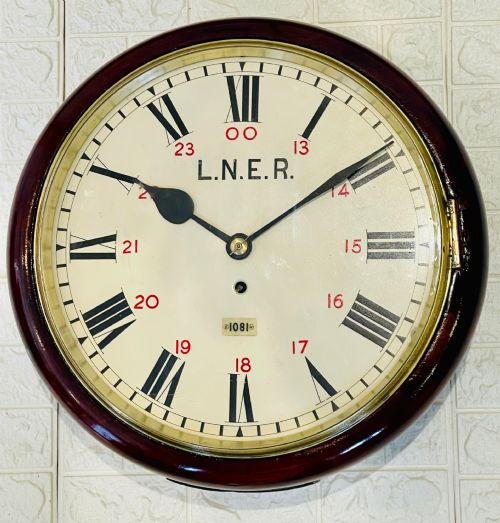
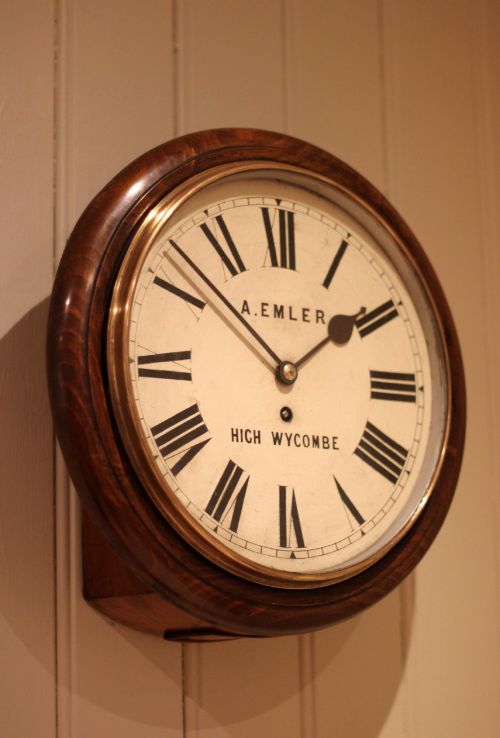
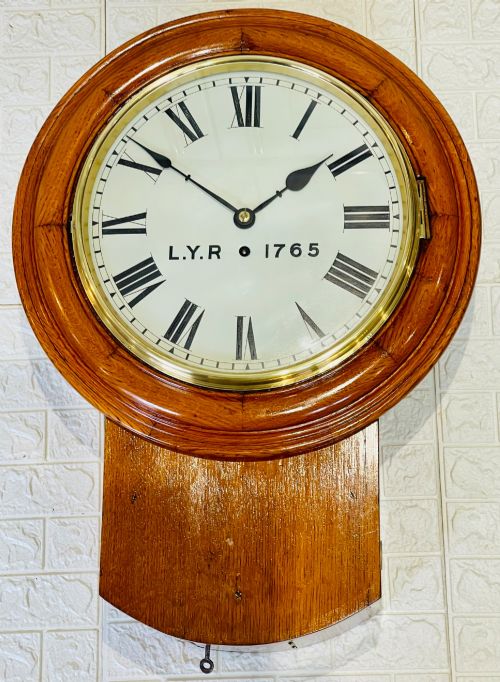
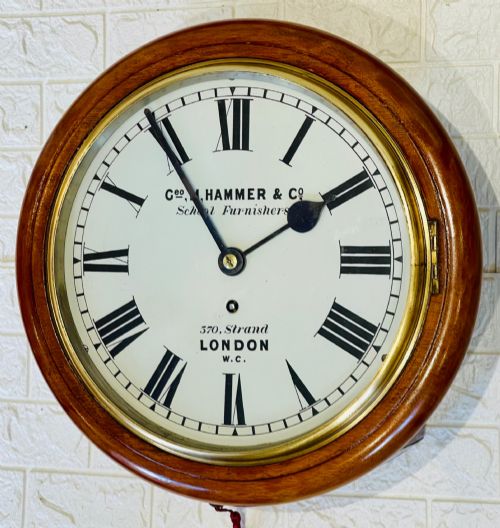
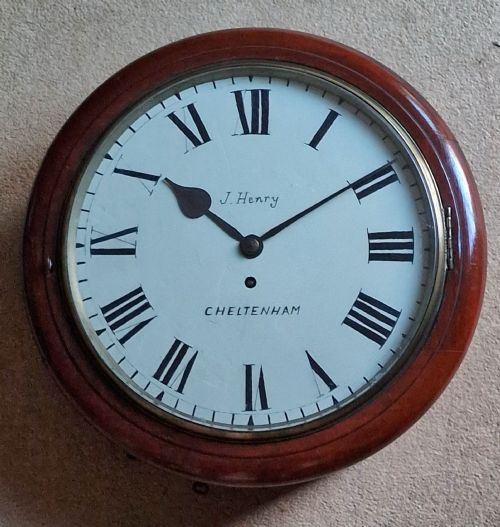
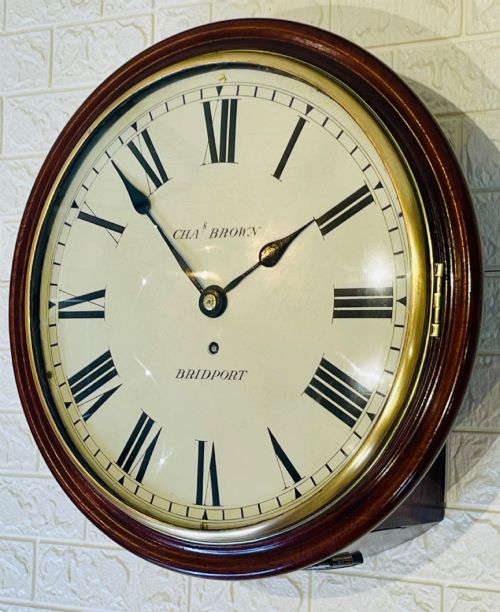
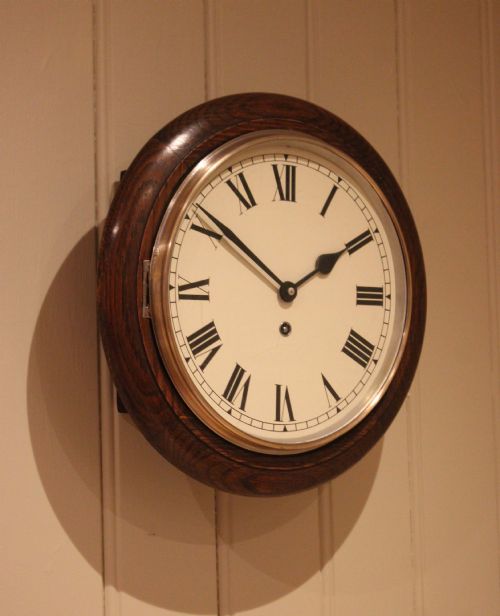
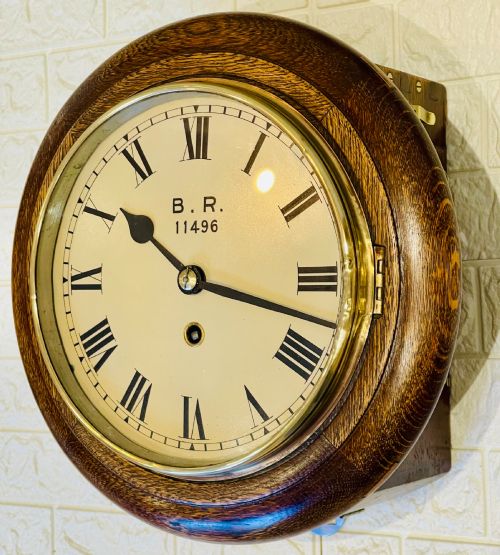
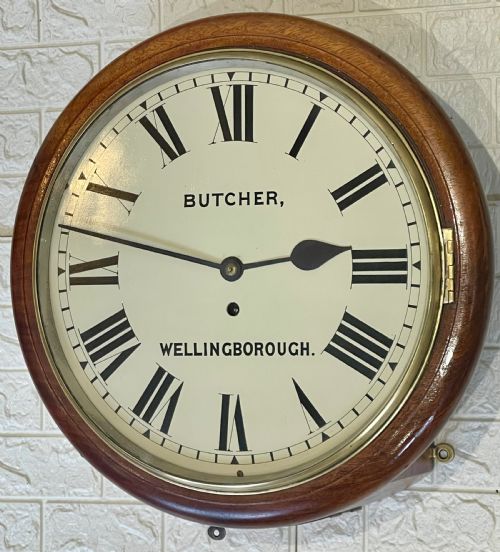
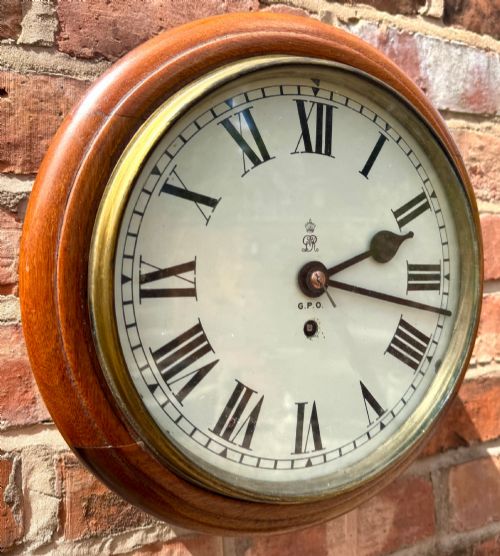
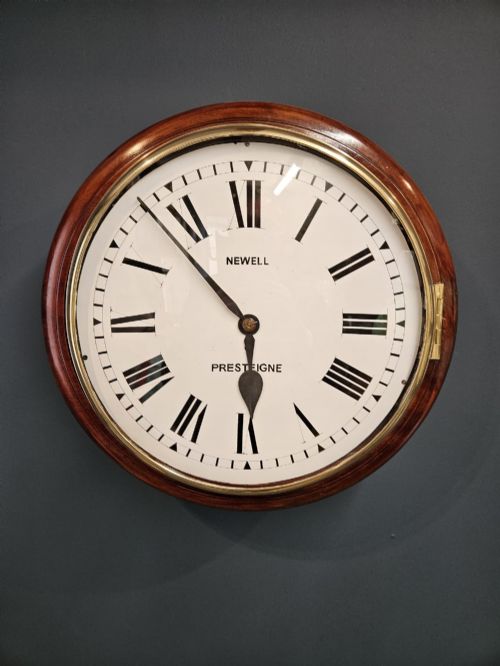
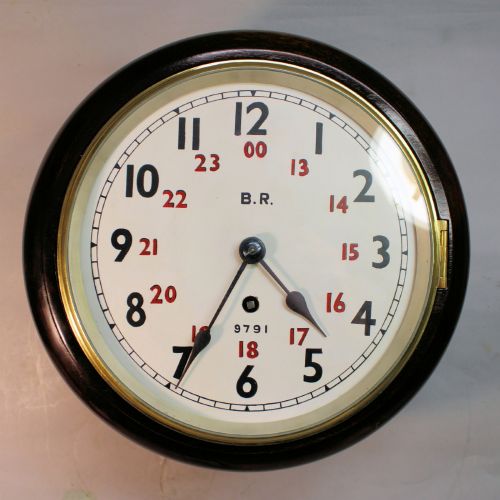
A vintage fusee wall clock is primarily represented on this page by Victorian and nineteenth-century railway, station and municipal dial clocks. These round-faced instruments were designed for clear legibility in public offices, platforms and boardrooms rather than domestic drawing rooms.
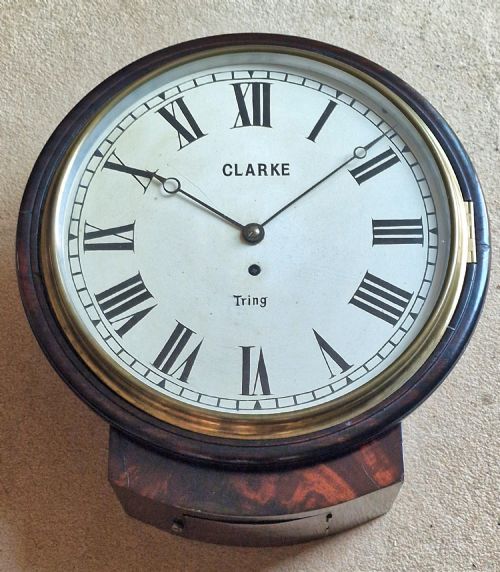
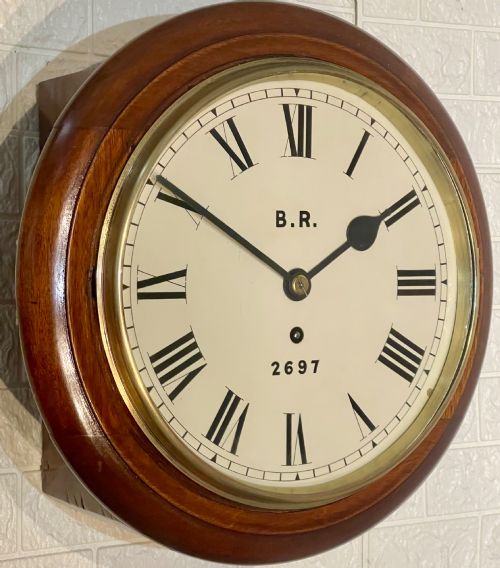
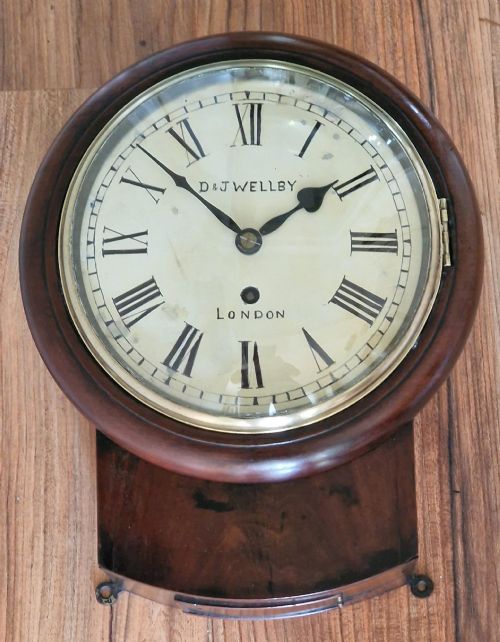
The selection encompasses standard circular dial clocks alongside drop-dial variants, often housed in robust timber surrounds with side or bottom access doors for winding and setting. Many examples carry specific regional railway company lettering on the painted dial face, denoting service use across historic British networks.
Origins span provincial makers working in market towns to major London retailers and railway contractors operating through the Georgian, Victorian and Edwardian eras. The predominant surviving forms utilise either chain or cord drive systems paired with sturdy wooden cases.
Materials and construction
Cases are predominantly constructed from dense timber species such as mahogany, oak and occasionally beech or rosewood, shaped to house both the circular dial and the depth of the brass movement behind. Glass protects the painted iron or enamel dial face, which is typically secured within a hinged bezel.
The defining mechanical element is the fusee, a conical pulley designed to equalise the diminishing pull of the mainspring as it unwinds, ensuring constant torque and steady accuracy. Brass plates, steel pivots and either chain or cord linkage form the core of the weight-driven or spring-driven going train.
Listings feature timber cases in mahogany, oak, beech and rosewood alongside painted metal and enamel dials from Victorian and Georgian periods.
Distinguishing finer examples
Quality in a vintage fusee wall clock rests upon the crispness of the dial signature, the original legibility of the numerals, and the unblemished state of the brass movement components. Unfaded painted metal or enamel dials with minimal restoration command greater appreciation from collectors.
The joinery and timber selection of the surrounding case also dictate standard, where well-figured mahogany or oak with intact patination and original locking doors demonstrates superior workshop origin. Finer makers invested care in precise wheel cutting and robust framing that maintained reliability through decades of continuous public service.
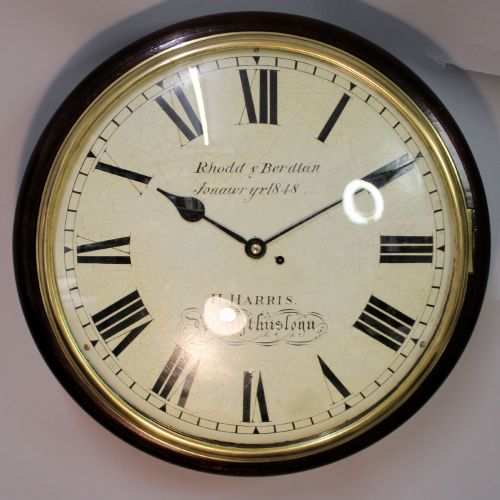
J Henry Cheltenham·George Clarke Tring·D and J Wellby London·Henry Harris Monythuslwyn·Thomas Hedge Colchester·L Morris Islington·Joseph Mansfield·John Walker
The Vintage Fusee Wall Clock Glossary
- Fusee
- A conical pulley with a helical groove that equalises the pull of the mainspring. This clever mechanical device ensures even power delivery to the escapement as the spring unwinds.
- Drop dial
- A clock case featuring an extended lower trunk beneath the circular dial. This drop often accommodates a pendulum box or provides structural balance.
- Bezel
- The brass or timber ring that holds the glass protecting the dial face. It is usually hinged to allow easy access for hand-setting and regulation.
- Going train
- The series of gears that transmits power from the mainspring or weight to the escapement. Unlike striking clocks, these timepieces focus purely on recording the hours and minutes.
- Convex dial
- A dial face that curves outward toward the viewer rather than sitting flat. This design reduces glare from interior lighting and improves legibility from oblique angles.
Vintage Fusee Wall Clock: Frequently Asked Questions
How do I wind my fusee clock?
Open the side or bottom access door of the timber case and insert the winding key into the aperture on the dial face. Turn the key gently clockwise until the mechanism meets resistance, taking care not to overwind.
Ensure you support the pendulum if the clock needs to be moved or stopped during maintenance. Regular gentle winding preserves the tension on the fusee chain or cord.
What is a railway dial clock?
A railway dial clock is a heavy-duty timepiece commissioned by transport companies for stations, offices and signal boxes. These pieces feature clear, bold numerals for rapid reading by staff.
Many bear company initials such as L.N.E.R or G.W.R painted directly onto the dial. Their robust construction was engineered to withstand vibration and constant use.
Why does the dial curve outward?
Some Victorian dial faces are convex, meaning the metal plate curves toward the glass cover. This traditional shaping prevents overhead light from creating distracting reflections on the surface.
It also allows room for the hands to clear deeper mechanical components positioned directly behind the centre arbor. This feature is frequently found on quality maritime and office clocks.