


Vintage Pub Wall Clock
These vintage pub wall clocks are robust timepieces built to keep time in busy rooms, offering characterful dials and traditional timber surrounds.

Vintage Pub Wall Clock
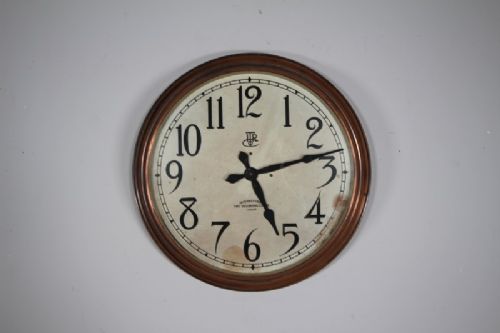
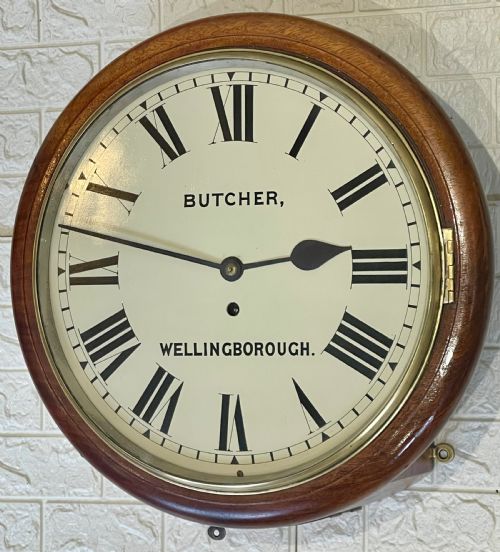
When you search for a vintage pub wall clock, you are looking at sturdy timekeepers designed for public houses, taverns, stations, and offices. The pieces available here span several decades, featuring wall clocks and tavern clocks housed in traditional wooden cases.
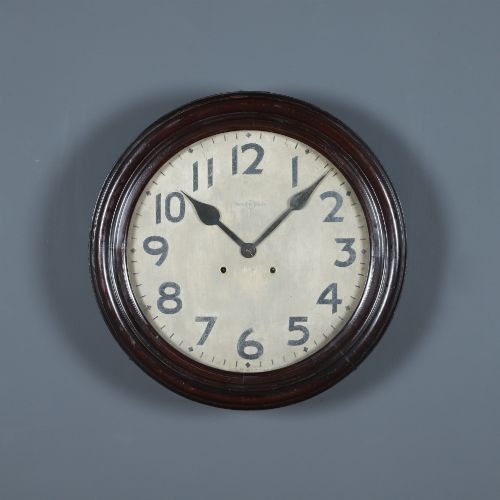
The versions you are most likely to meet on this page include dial clocks with timber surrounds, alongside larger railway and station clocks. They draw on periods ranging from the Georgian era through the Victorian and Edwardian periods into the nineteen-twenties.
Makers and retailers varied from local clockmakers to major department stores such as Harrods, whose name appears on dial clocks from eighteen-ninety. Formats range from drop dial wall clocks to simple painted clock face displays.
How they were made
Makers constructed these clocks using solid timber cases of mahogany, oak, pine, and occasionally brass or copper details. Movements relied on mechanical systems, notably chain-driven fusee mechanisms designed to maintain even tension as the mainspring unwound.
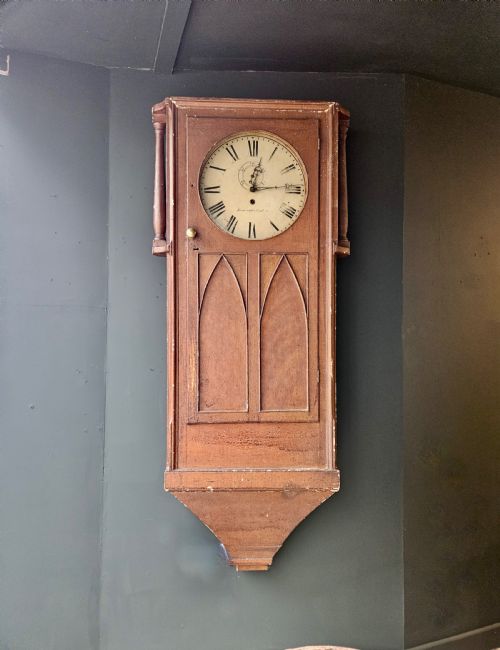
Dials frequently featured glass covers protecting painted wooden or metal faces marked with numerals. Original paint finishes survive on pieces such as the Gothic pine tavern clock, while others display polished mahogany and oak surrounds.
One twenty-inch Japanese mahogany railway station clock made its way to England, proving that trains and timekeeping unite the globe.
What varies in quality
Quality rests in the fidelity of the timber case and the sophistication of the movement inside. Fusee movements represent a higher standard of clockmaking compared to standard spring-driven alternatives, offering smoother power delivery and more reliable timekeeping.
Condition of the painted dial and the retention of original paint or polished timber finishes dictate the desirability of each piece. Simpler pine tavern clocks in original paint sit alongside finely proportioned Georgian drop dial examples with mahogany cases.
Harrods
The Vintage Pub Wall Clock Glossary
- Fusee
- A conical pulley used in mechanical clocks to equalise the torque of the mainspring as it runs down. This mechanism helps the clock maintain consistent accuracy throughout its winding cycle.
- Drop dial clock
- A wall clock featuring a circular dial at the top and an extended wooden case below, often used to house a longer pendulum. These cases frequently incorporate mahogany or oak construction.
- Tavern clock
- A large wall clock with a prominent dial and a pendulum case, historically mounted in public houses and coaching inns for public visibility. They often date from the eighteenth and nineteenth centuries.
- Gothic Revival
- A nineteenth-century style drawing inspiration from medieval architecture and design motifs. Pieces in this style utilise pointed arches and heavier decorative elements.
Vintage Pub Wall Clock: Frequently Asked Questions
How do fusee clocks work?
A fusee movement uses a conical pulley connected to the mainspring by a chain or cord. As the spring unwinds, the chain pulls higher up the cone's wider radius to compensate for the decreasing power.
This clever mechanical arrangement ensures the force delivered to the escapement remains constant throughout the running period. It represents a traditional method used by British clockmakers to improve accuracy.
Where were tavern clocks hung?
Tavern clocks were traditionally mounted high on the wall in public houses, taprooms, and coaching inns. Their large dials allowed patrons and staff to read the time easily from across a crowded room.
Because they were placed in communal spaces, their sturdy oak or mahogany cases were built to withstand bustling environments and fluctuating indoor temperatures.
How do I date a wall clock?
Dating relies on examining the timber, construction methods, dial materials, and the style of the case. Georgian and Victorian examples often feature distinct proportions, hand-painted wooden dials, and specific pendulum arrangements.
Maker signatures or retailer stamps on the dial can also provide clues, though many movements were produced by regional clockmakers without exterior branding.
Are these clocks suitable for daily use?
Most mechanical wall clocks can keep reliable time if they receive regular winding and occasional professional servicing. Chain-driven fusee movements require careful handling during setup to avoid damaging the mechanism.
Placing them on a secure wall away from direct sunlight and damp conditions helps preserve both the wooden case and the interior brass components.