

Victorian Station Wall Clock
A victorian station wall clock combines utilitarian precision with bold framing, offering a commanding focal point for any room.
Victorian Station Wall Clock
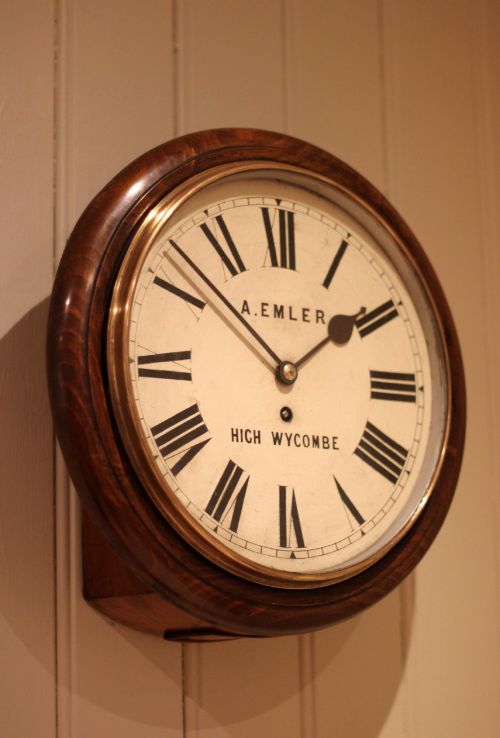
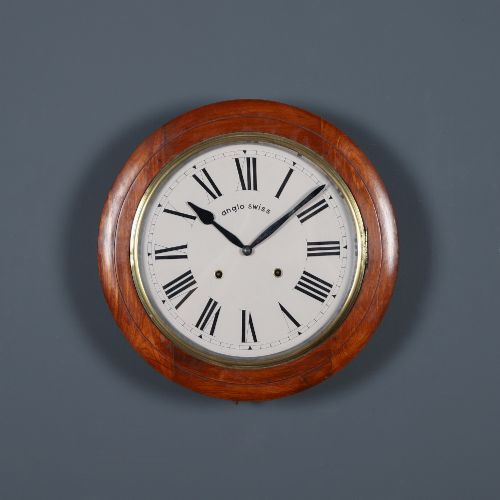
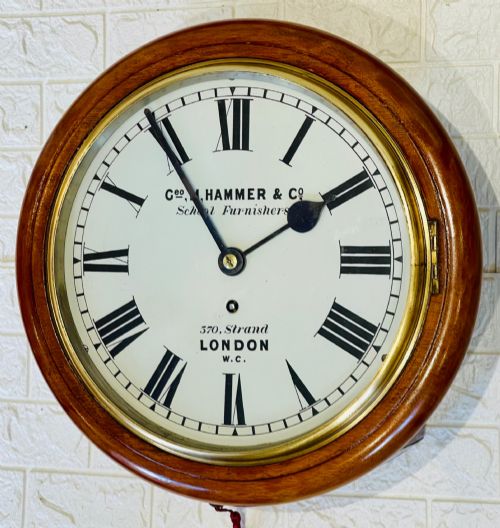
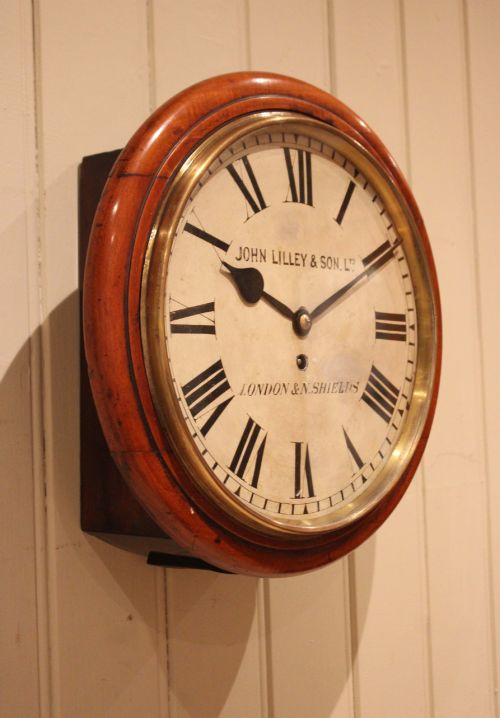
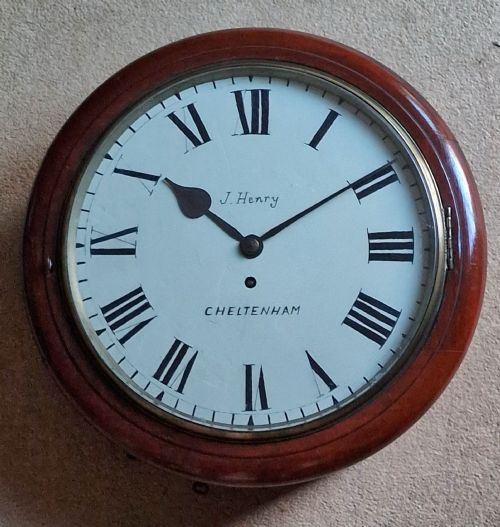
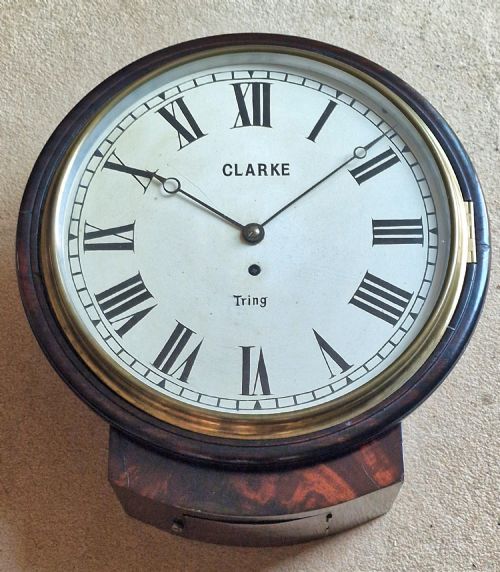
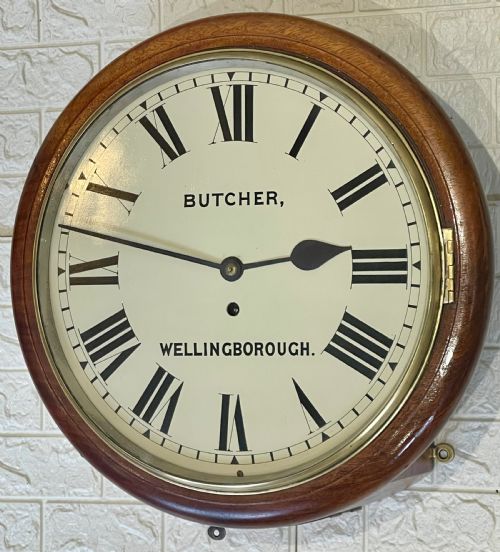
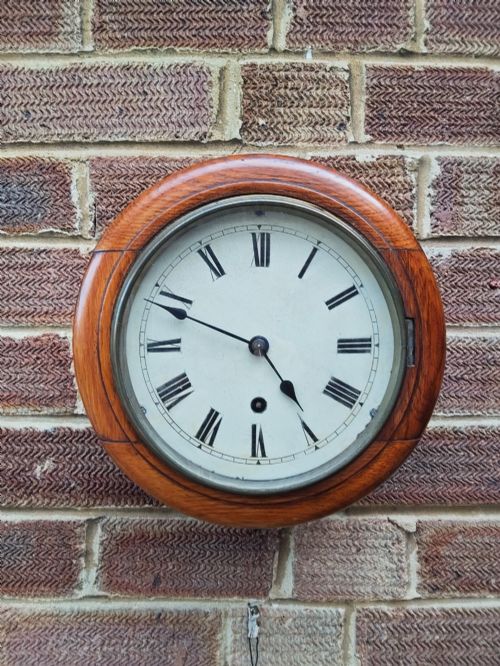
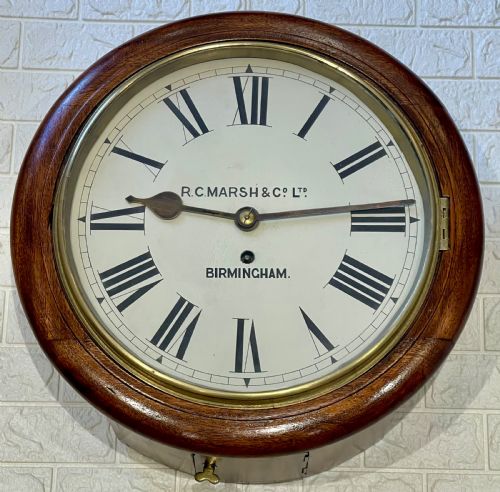
A victorian station wall clock is typically a round dial timepiece designed for public platforms, railway offices, and municipal buildings. These pieces span the Victorian period into the early twentieth century, incorporating robust railway company examples alongside domestic variants.
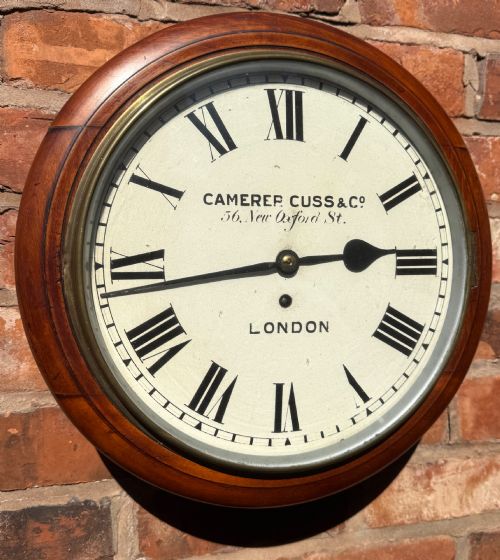
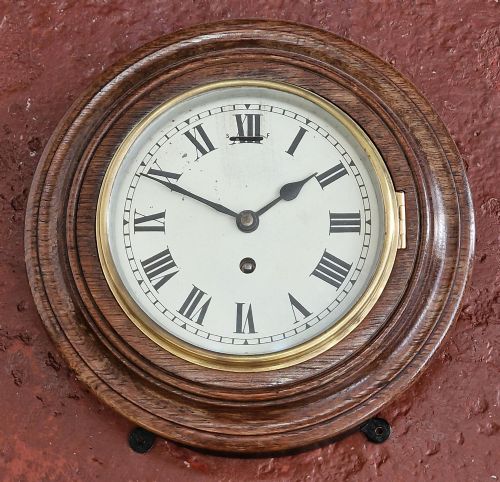
The most common format encountered here is the fusee dial clock housed in a sturdy mahogany or oak case. Many retain direct links to major networks like the Great Western Railway or London makers.
Materials and construction
Clockmakers relied on durable timbers such as mahogany and oak to construct the deep circular frames required to house heavy movements. Brass and iron components form the intricate gear trains, while glass protects the painted iron or enamel dials.
The fusee movement utilises a conical pulley and chain mechanism to ensure even tension as the mainspring unwinds, delivering steady power for accurate timekeeping.
Listings feature dial clocks spanning the Victorian period and Edwardian era, constructed from mahogany, oak, and walnut.
Distinctions in quality
Quality rests in the crispness of the dial lettering, the integrity of the timber framing, and the original maker signature on the movement. Clocks bearing verified railway provenance or names of notable makers command deeper interest.
The refinement of the brass bezels and the complexity of the movement, such as twin-fusee bell-striking configurations, elevate an ordinary timekeeper into a sophisticated piece of industrial history.
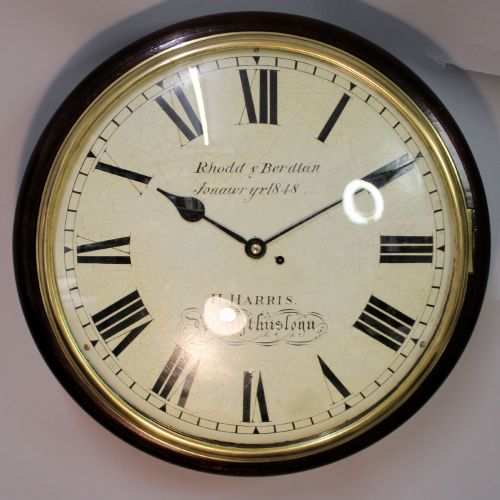
Camerer Cuss And Co·Henry Harris·John Walker·Dent Of London
The Victorian Station Wall Clock Glossary
- Fusee
- A conical pulley connected to the mainspring by a chain or cord, designed to maintain constant force on the gear train as the spring runs down.
- Drop-dial
- A clock case featuring an extended lower section below the circular face, often used to house a pendulum or weights.
- Dial clock
- A round-faced timepiece intended for wall mounting in public spaces, offices, or railway stations.
- Aneroid barometer
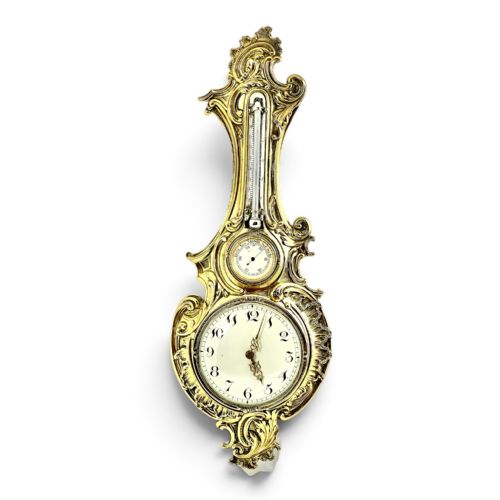
- An instrument that measures atmospheric pressure without using liquid, frequently paired alongside these clocks in combined station instruments.
- Bezel
- The metal or wooden ring that holds the glass door protecting the clock face.
Victorian Station Wall Clock: Frequently Asked Questions
How do fusee movements work?
A fusee movement uses a conical drum and a chain to regulate the pull of the mainspring. This clever device ensures the force driving the gears remains steady from full wind to empty.
Such mechanisms were essential for railway timekeeping where minute accuracy governed schedules across the network.
Where were these clocks originally hung?
These clocks hung in bustling station master offices, ticket halls, and platform waiting rooms. Their bold circular dials ensured passengers and staff could read the time at a glance.
Today, they transition easily into domestic hallways or kitchens, bringing industrial heritage into modern living spaces.
How do I identify a railway-issued clock?
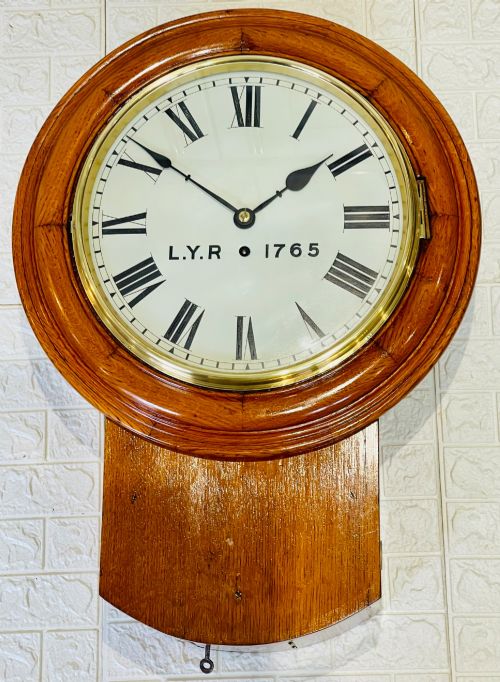
Railway clocks often feature company initials painted on the dial or stamped directly into the wooden case. Initials corresponding to major operators like GWR or LMS point directly to the line of origin.
Many also carry inventory numbers that trace their service history through specific provincial or London stations.
What is the difference between a dial clock and a drop-dial clock?
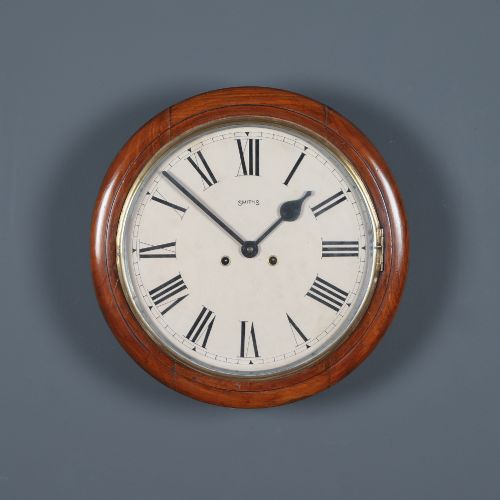
A standard dial clock is purely circular, housing the movement directly behind the face within a uniform wooden rim. A drop-dial clock extends downwards to accommodate a longer pendulum or a visible access door.
Both forms served railway and school environments, though drop-dial variations often housed more complex striking trains.