
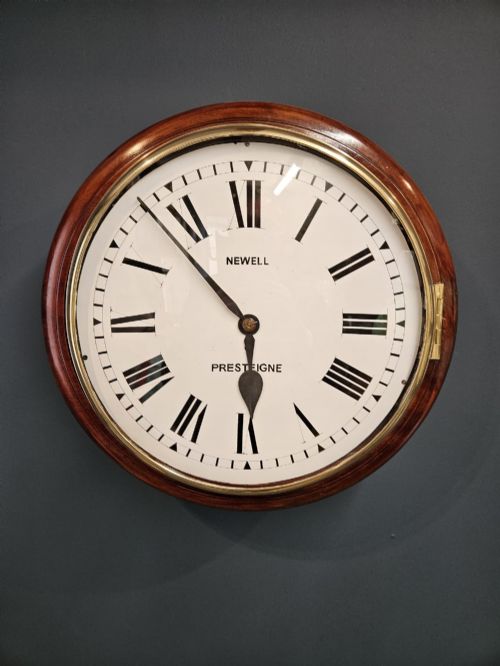
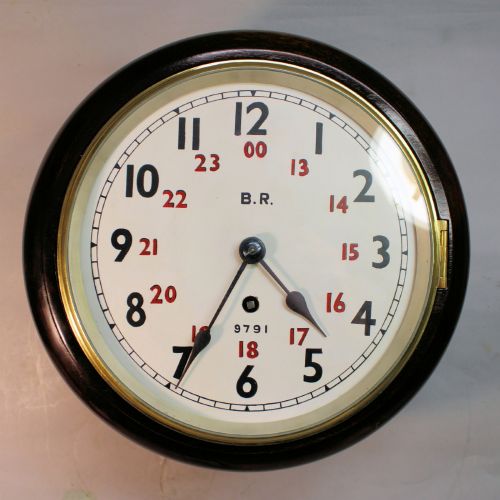


Victorian School Clock
A victorian school clock is a reliable wall dial timekeeper built to keep time in public rooms.
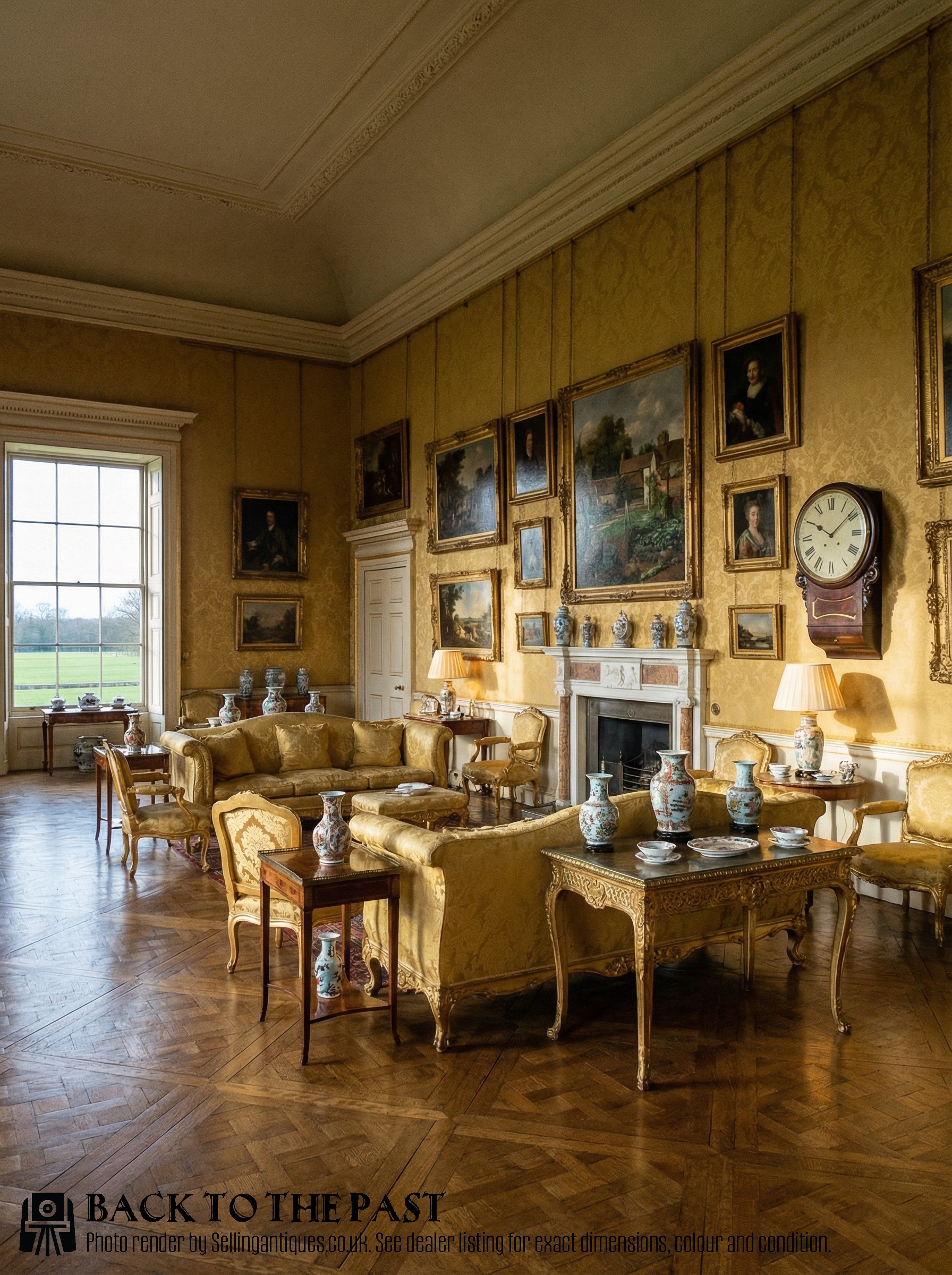
Victorian School Clock
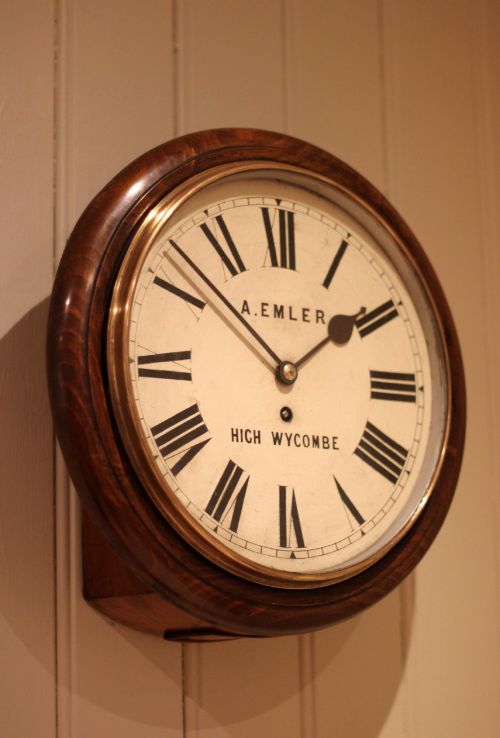
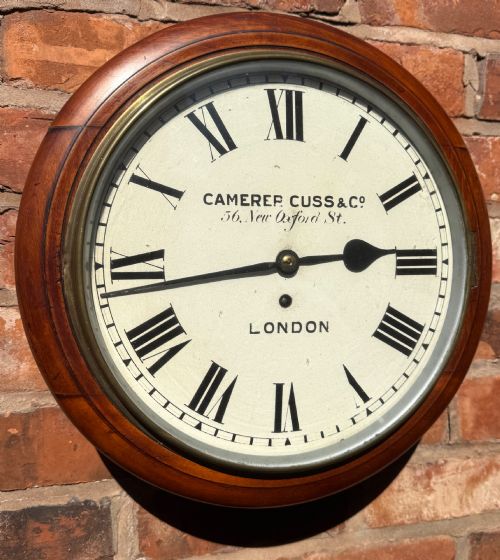
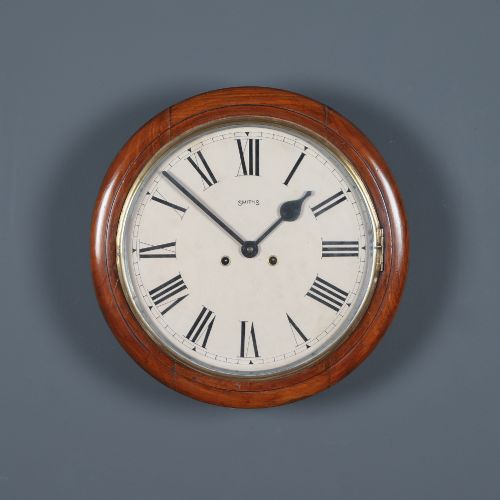
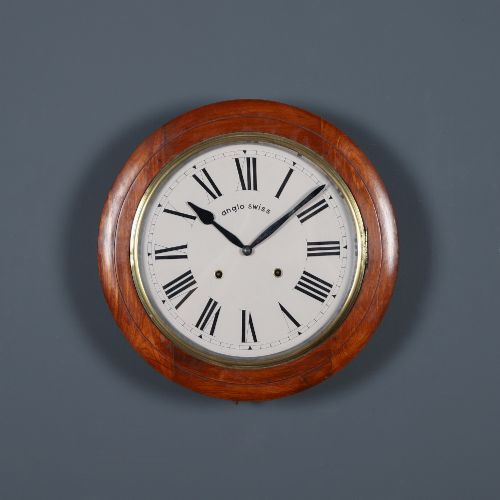
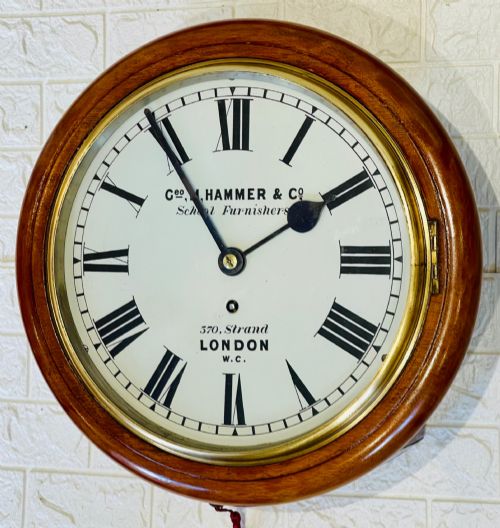
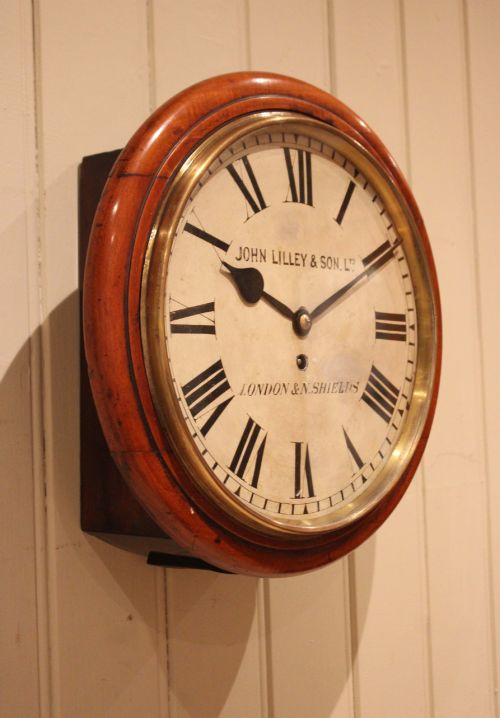
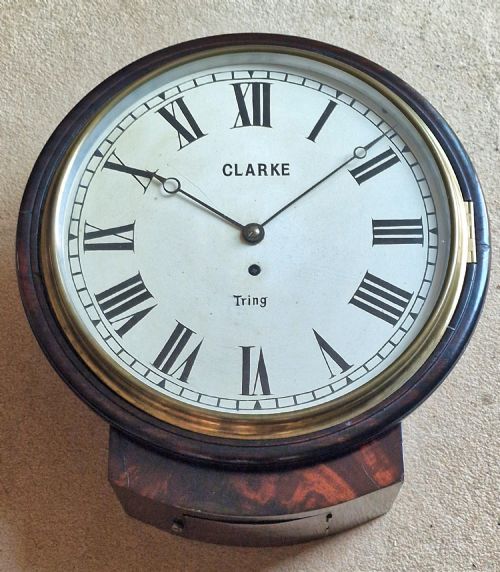
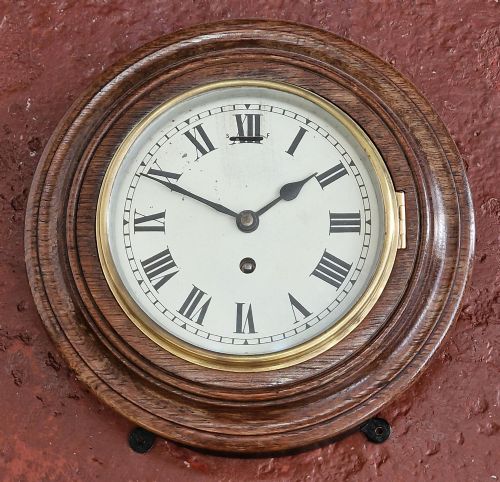
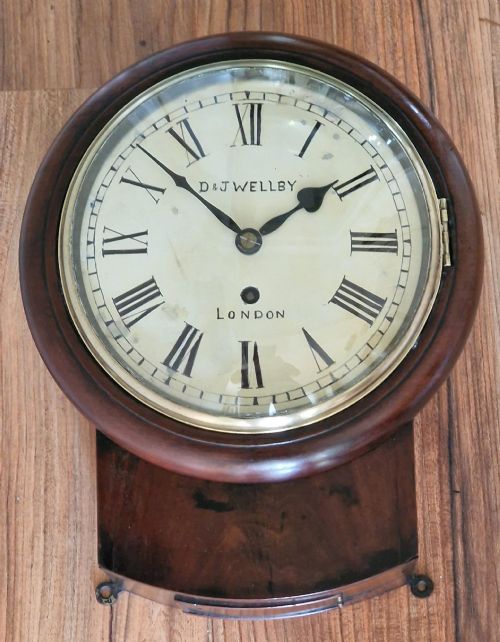
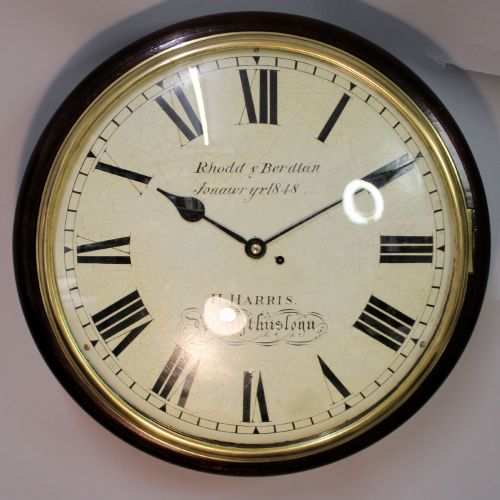
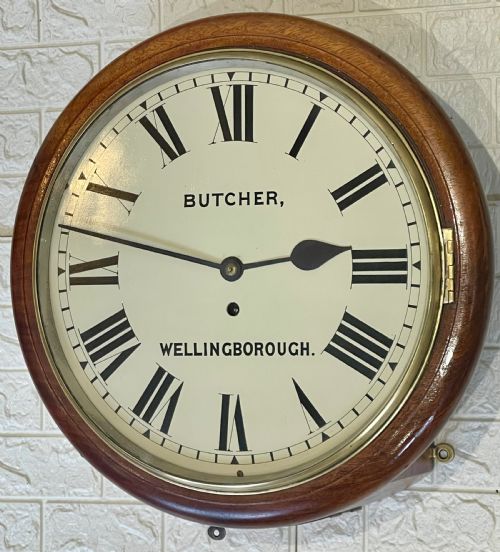
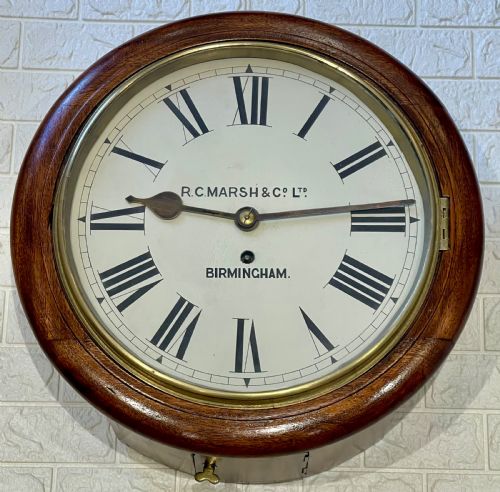
When you search for a victorian school clock, you encounter round wall dial timepieces housed in sturdy timber frames. Most examples on this page date from the nineteenth century into the early twentieth century, taking the form of simple circular dials or drop-dial variants.
The regional and railway stations of Britain utilised these robust timekeepers to keep strict schedules. Makers placed them high on walls for clear visibility across large rooms.
Dial sizes span from small domestic versions up to large railway examples intended for public halls. Mahogany and oak dominate the timber cases, framing clear painted iron dials beneath glass.
Materials and construction
Cabinet makers built the circular and drop-dial cases using solid timbers like mahogany, oak, beech, and rosewood. Brass components reinforced the movements while curved glass protected the painted iron dials and enamel markers.
Clockmakers fitted chain-driven fusee movements to regulate the pull of the mainspring and ensure steady timekeeping. Many examples feature simple eight-day single fusee trains, while larger variants incorporate twin-fusee bell striking mechanisms.
Victorian School Clock Retail Price Guide 2026
Typical asking prices for victorian school clock among the pieces listed under this phrase on Sellingantiques today, from the lower quarter to the upper quarter. They describe what is for sale here now, not the wider market.
Some dials curve outward to catch the schoolroom light, ensuring pupils could read the hour from the back row.
Distinctions in quality
The crispness of the timber moulding and the depth of the case set standard items apart from finer examples. Makers who spent extra care on the mahogany or oak housing produced pieces that retained their structural integrity.
The quality of the dial painting and the reputation of the maker inscribed upon the iron face influence the standing of a clock. Signed movements by known London or regional makers command greater attention than unsigned workshop pieces.
Camerer Cuss And Co·D And J Wellby·Henry Harris·Joseph Bird·Dent Of London·L Morris·R Roberts·Harrods
The Victorian School Clock Glossary
- Fusee
- A conical pulley used with a chain or cord to maintain equal power as the mainspring winds down. This mechanism helps the clock maintain accurate time throughout its running period.
- Drop Dial
- A clock case featuring a circular dial at the top above an extended lower box. The lower trunk often houses a pendulum bob and accommodates a side or bottom access door.
- Timepiece
- A clock that tells time without including any striking mechanism for hours or quarters. These rely purely on a go-train to drive the hands.
- Convex Dial
- A dial face that curves outward toward the viewer rather than remaining entirely flat. This shape reduces glare from interior lighting.
- Chain-driven
- A movement powered by a fine metal chain rather than a gut line or cord. It links the fusee cone to the barrel.
Victorian School Clock: Frequently Asked Questions
How do I wind a fusee wall clock?
Insert the winding key into the small hole on the dial face and turn it gently clockwise until resistance stops the key. Avoid over-winding to protect the delicate chain and spring mechanism.
Ensure you support the key evenly to prevent scoring the painted iron dial around the winding aperture.
Why do some clocks strike and others do not?
Timepieces only tell the time through the movement of the hands, whilst striking models contain a separate gear train and bell to chime the hours. Railway and school rooms required different auditory cues depending on the strictness of the schedule.
Clocks with bell striking mechanisms generally command more complicated internal setups involving twin-fusee trains.
Where should I hang a dial clock?
Mount the clock securely to a solid wall stud using a heavy screw through the internal fixing blocks provided in the timber case. Hanging the piece firmly ensures the pendulum swings evenly without catching.
Keep the clock away from direct sources of heat or dampness to protect the wooden case and movement oils.