
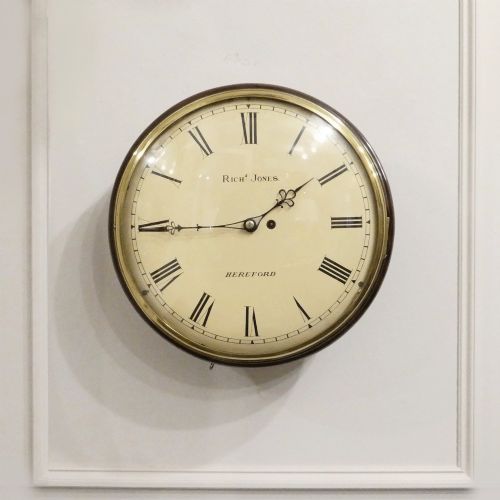
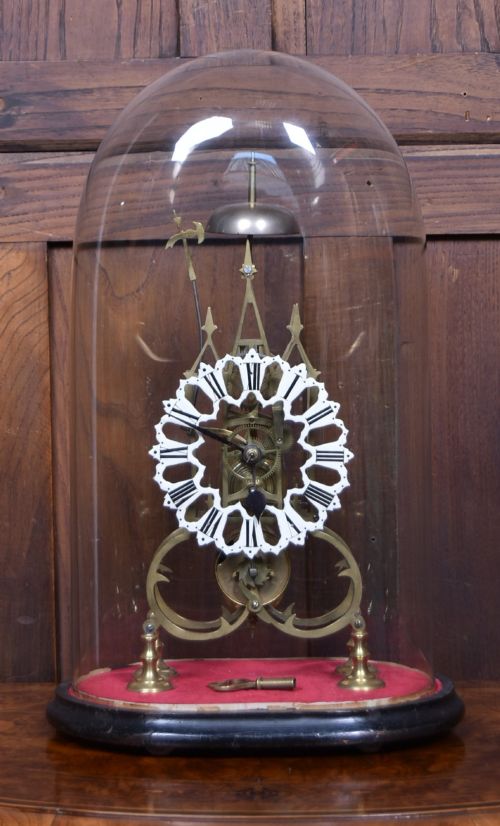
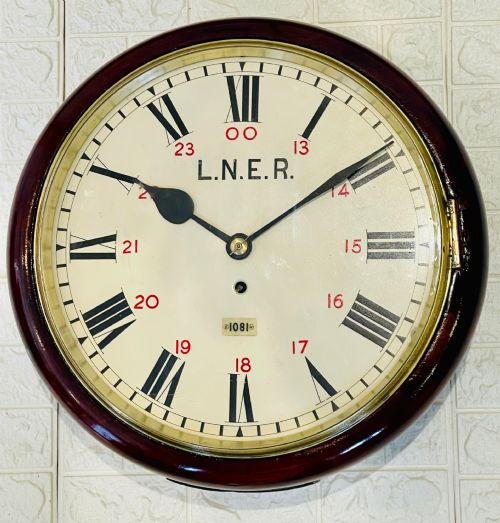
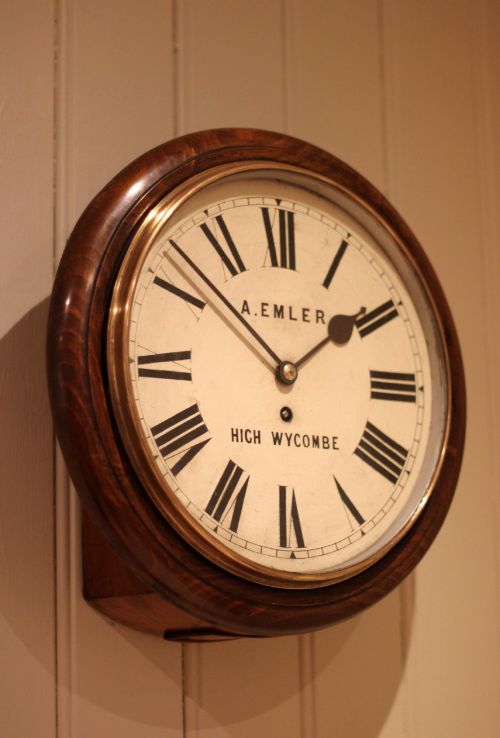

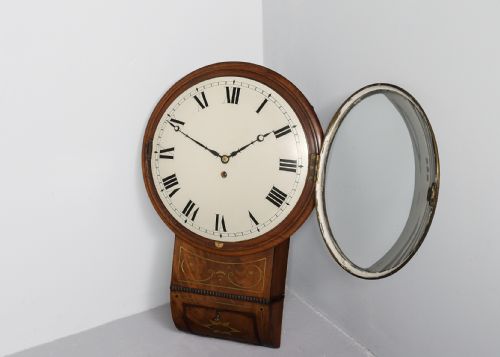
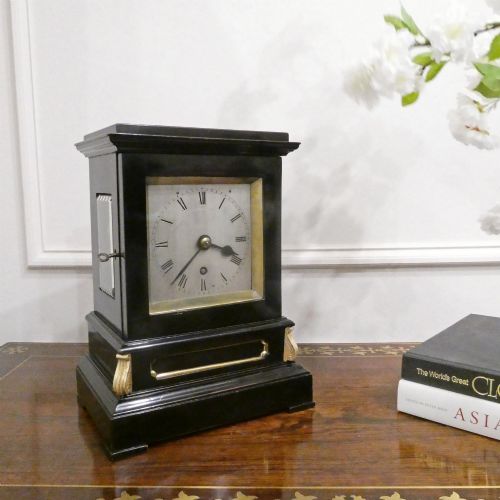
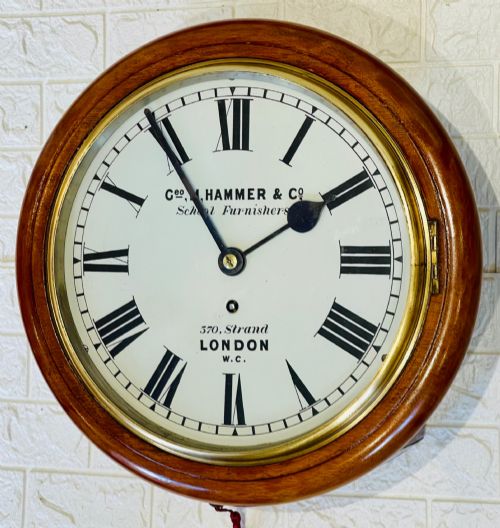
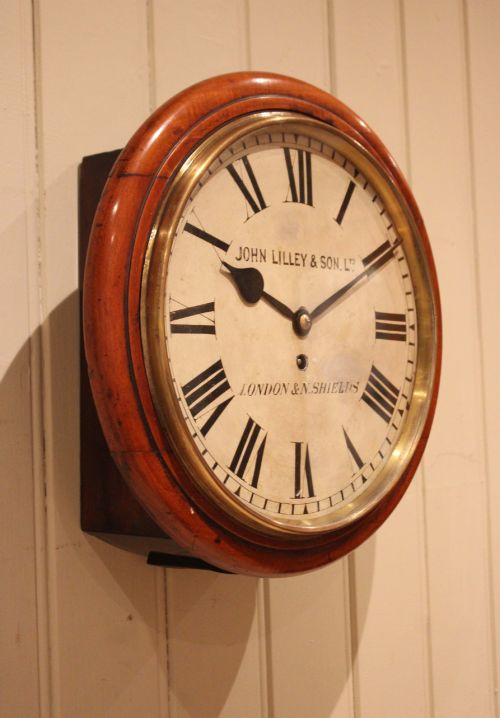
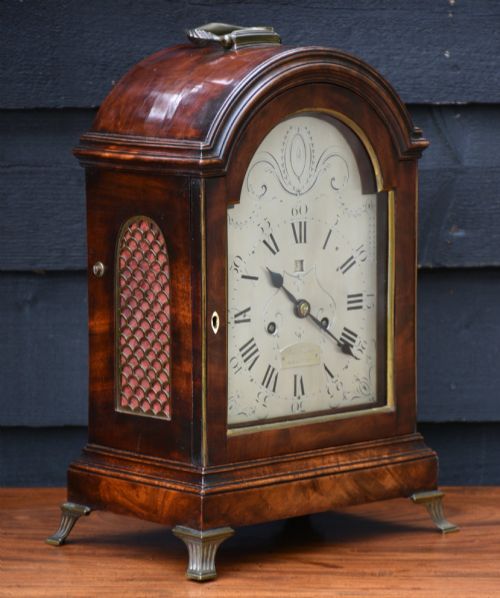
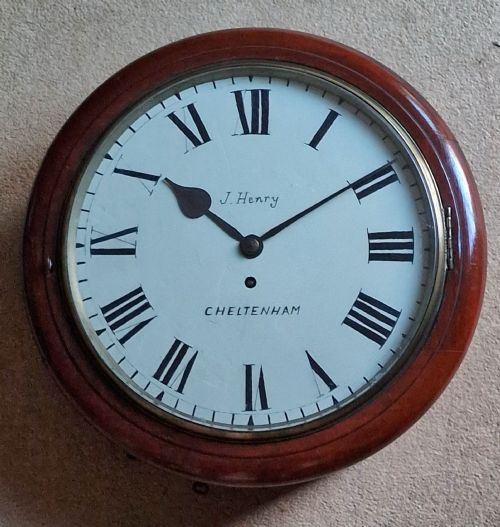
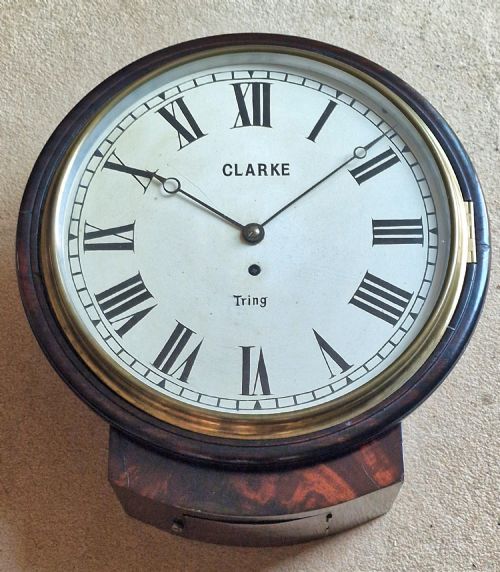
Fusee Dial Clock
A fusee dial clock is a precision timekeeper built for legibility, most often encountered as a sturdy mahogany or oak wall timepiece from the Victorian and Georgian periods.
Fusee Dial Clock
A fusee dial clock serves as a reliable timekeeper designed primarily for public spaces, offices, and homes where clear visibility matters. Buyers searching for a fusee dial clock encounter round-faced wall clocks and drop-dial variants dating from the Georgian, Regency, and Victorian eras.
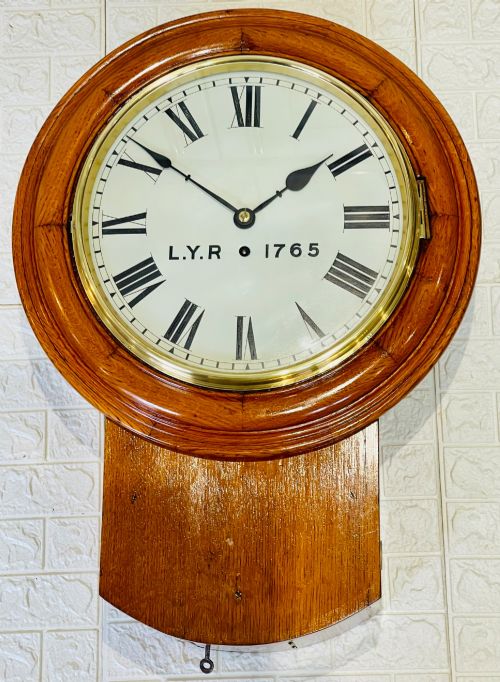
Many examples originate from railway companies such as the GWR and LNER, alongside civic buildings and domestic libraries. These pieces range from compact eight-inch dials to large mahogany and oak wall clocks built for enduring service.
How They Were Made
Cases utilise dense timbers like mahogany, oak, and rosewood, frequently incorporating brass bezels and glass face covers. Dial faces are constructed from painted metal or silvered metal, whilst select early examples feature convex wooden dials.
The mechanical movement relies on a fusee cone and chain or cord drive to equalise the pull of the mainspring as it unwinds. This mechanism ensures consistent torque and accurate timekeeping across the duration of the eight-day run.
Fusee Dial Clock Retail Price Guide 2026
Typical asking prices for fusee dial clock among the pieces listed under this phrase on Sellingantiques today, from the lower quarter to the upper quarter. They describe what is for sale here now, not the wider market.
Station masters trusted these heavy dials to keep trains running on time, though porters probably blamed them every single Monday morning.
What Varies in Quality
Quality rests in the crispness of the timber case joinery, the subtlety of brass inlay, and the cleanliness of the movement plates. Maker attribution also elevates an example, with signed dials from notable watch and clockmakers commanding greater interest.
Proportion and dial preservation dictate overall desirability. Retaining original painted or silvered dial surfaces without heavy repainting distinguishes the finest surviving specimens.
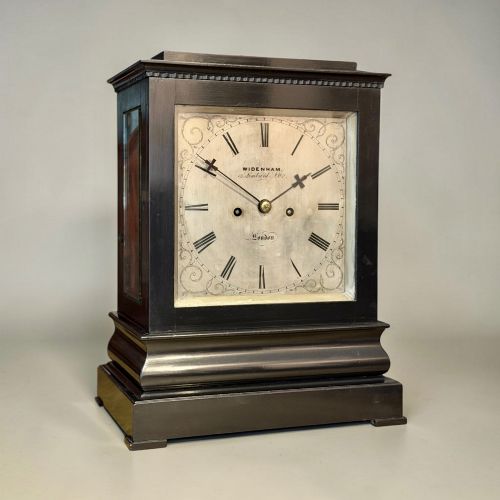
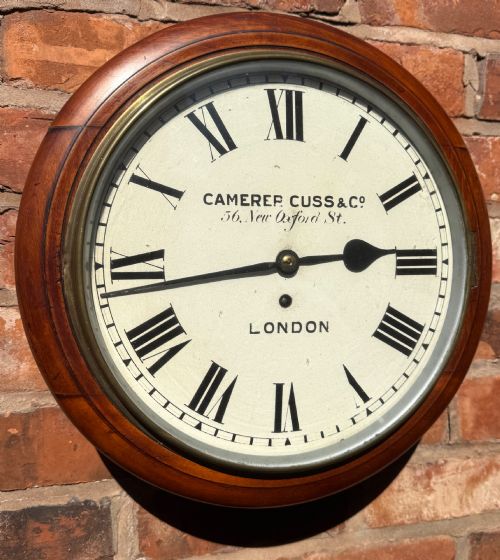
Widenham of London·Cousens And Whiteside·Camerer Cuss And Co·Ellicott And Smith·Henry Harris·Richard Winter
The Fusee Dial Clock Glossary
- Fusee
- A conical pulley designed to equalise the variable pull of the mainspring. It maintains steady power to the clock train as the spring unwinds.
- Drop dial
- A wall clock case featuring an extended lower section below the circular dial. This drop often houses a pendulum box with a curved or chisel bottom.
- Bezel
- The metal or wooden ring that holds the glass face in position over the dial. It usually hinges open to allow hand adjustment.
- Bracket clock
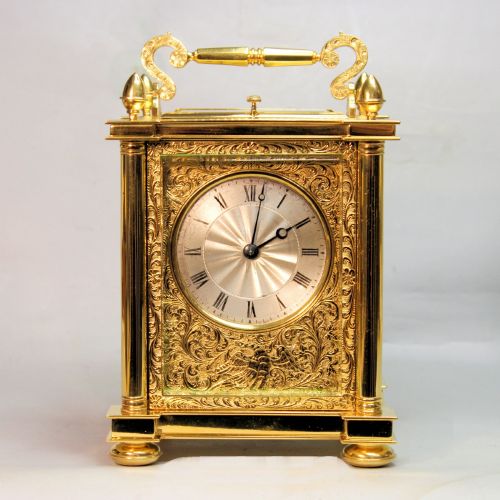
- A portable clock designed to sit on a shelf, bracket, or mantel. Many early examples feature handle-mounted rosewood or mahogany cases.
- Verge escapement
- An early escapement mechanism regulating the speed of the clock through pallet leaves engaging with a crown wheel.
Fusee Dial Clock: Frequently Asked Questions
How do I wind a fusee wall clock?
Use the appropriate winding key inserted into the dial aperture to turn the movement clockwise until resistance meets you. Care must be taken not to overwind the chain or cord on the fusee cone.
Ensure the pendulum is securely hung and the clock is plumbed flat against the wall before operating.
Why do railway companies use these clocks?
Railway networks required exact synchronisation across stations for timetabling and safety. Fusee movements offered superior accuracy compared to standard spring-driven alternatives.
Prominent companies like the GWR and LNER commissioned sturdy oak and mahogany dials for high-traffic platforms and offices.
How can I tell a Georgian clock from a Victorian one?
Georgian and Regency examples often feature refined mahogany cases with subtle brass inlay or convex wooden dials. Victorian versions frequently adopt heavier proportions, larger dial sizes, and distinct railway or institutional markings.
Examining the backbox construction and movement layout provides further clues regarding the manufacturing decade.
Where should I hang a drop dial clock?
Choose an interior wall free from dampness and direct temperature fluctuations to protect the wood and movement. Secure the clock directly into wall studs or use appropriate masonry fixings to support the weight.
Position the dial at eye level to ensure clear legibility and straightforward access for weekly winding.