


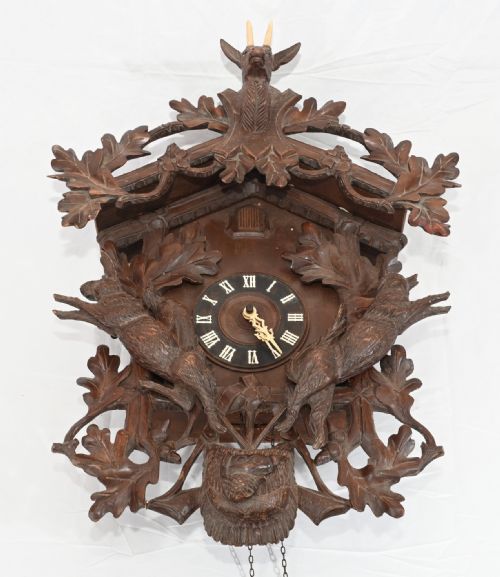


Carved Oak Wall Clock
A carved oak wall clock brings robust timber character and reliable timekeeping to any room.
Carved Oak Wall Clock
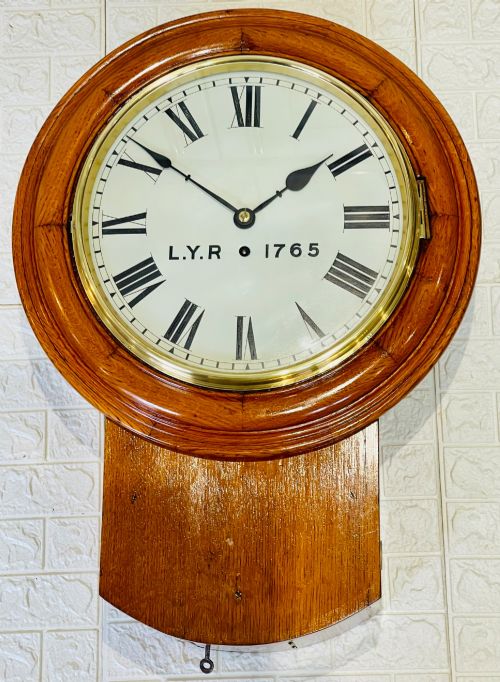
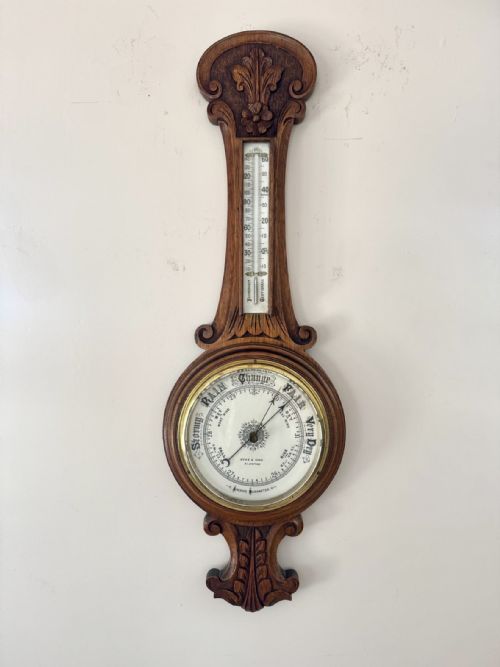
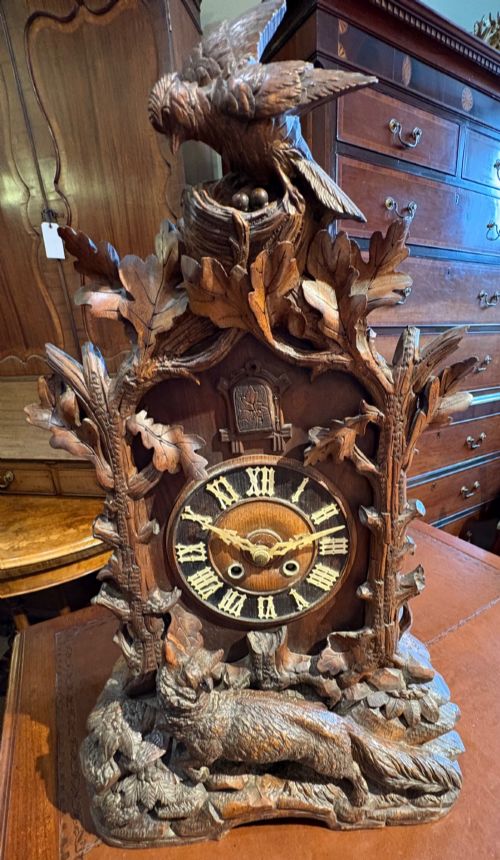
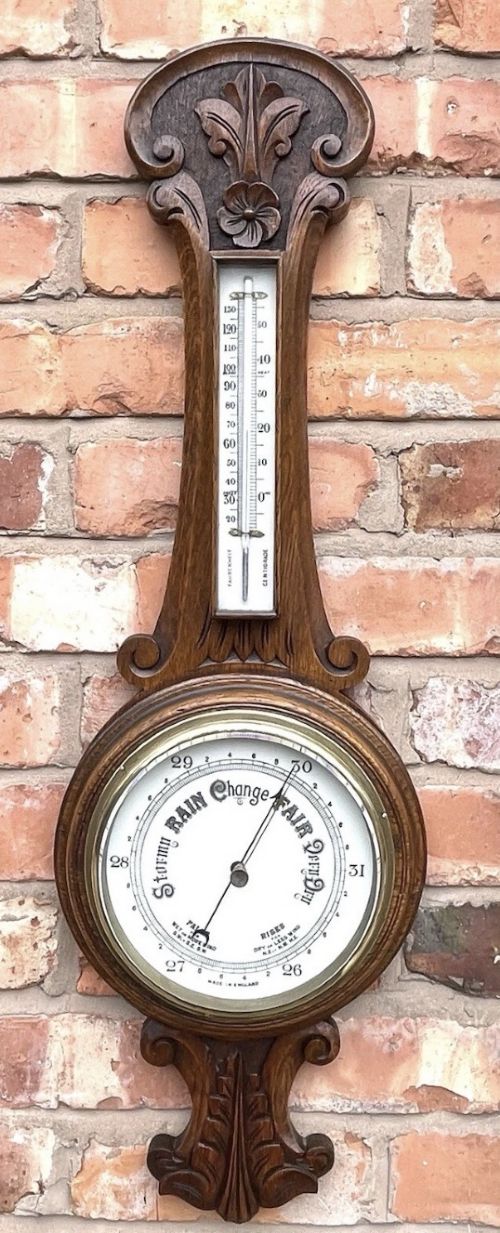
When you search for a carved oak wall clock, you are looking at substantial timepieces and barometers created primarily during the nineteenth and early twentieth centuries. These instruments range from railway drop dial timepieces and Vienna wall clocks to banjos and intricate Black Forest carvings.
You will most frequently encounter Victorian examples featuring rich oak cases adorned with foliate relief, alongside Edwardian and Art Deco iterations. Many pieces combine timekeeping with barometers and thermometers, reflecting domestic utility in period interiors.
How they were made
Cabinetmakers utilised solid oak for the structural cases, often employing deep hand-carving to produce floral and geometric motifs. Contrast was occasionally achieved through walnut or mahogany elements within regional and continental workshops.
Movements relied on brass gear trains, chain or fusee drives, and pendulum regulation. Dials incorporated glass bezels, enamel markings, and ceramic inserts protected by brass and metal fittings.
Carved Oak Wall Clock Retail Price Guide 2026
Typical asking prices for carved oak wall clock among the pieces listed under this phrase on Sellingantiques today, from the lower quarter to the upper quarter. They describe what is for sale here now, not the wider market.
One nineteenth-century French creation takes the literal shape of a caduceus.
What varies in quality
The distinction between ordinary and exceptional pieces lies in the crispness of the timber carving and the sophistication of the movement. Superior examples exhibit deeply undercut foliage and robust fusee movements signed by notable makers.
Case construction and dial preservation also dictate the standing of a piece. Original convex glass, clean enamel dials, and well-proportioned architectural framing elevate a clock far above standard utilitarian production.
Hyde & Sons Sleaford·Dent of London·W. Davis and Sons Birmingham·Negretti & Zambra
The Carved Oak Wall Clock Glossary
- Fusee
- A conical pulley used in clock movements to maintain even tension on the mainspring as it unwinds. This mechanism ensures more accurate timekeeping throughout the duration of the eight-day run.
- Drop dial
- A clock design featuring a circular dial mounted above a rounded or extended wooden trunk. This regional form was widely used in railway offices and public spaces.
- Vienna regulator
- A precision wall clock with a long glazed case designed to display the swinging pendulum and weights. These movements represent high standards of nineteenth-century horology.
- Aneroid barometer
- An atmospheric pressure gauge that operates without liquid, using a flexible metal capsule. It is frequently housed alongside thermometers within carved wooden wall instruments.
- Cartel
- A wall-hung clock enclosed in an ornamental scrollwork or architectural frame made of wood or metal. Originating in France, the style translates strongly into carved wooden cases.
Carved Oak Wall Clock: Frequently Asked Questions
How do I wind a fusee wall clock?
Use the appropriate winding key on the dial arbor, turning it steadily until resistance stops the movement. Take care not to overwind antique mechanisms.
Ensure you support the pendulum if the clock is moved during maintenance, as jarring can disrupt the delicate escapement inside.
Where should I hang a heavy oak clock?
Mount the clock directly into a solid wall stud or masonry using robust fixings suited to the weight of dense oak timber. Secure hanging prevents vibration from affecting the pendulum beat.
Keep the piece away from direct sunlight and radiators to protect the carved wood and dial from drying out and cracking.
What is the difference between a timepiece and a clock?
A timepiece refers strictly to an instrument that shows the time without any striking mechanism. Clocks include striking trains that chime on hours or half-hours.
Both types share similar gear train construction, but timepieces generally require simpler maintenance due to fewer internal levers.
How do I date an oak wall clock?
Examine the timber, style cues, and dial construction, comparing Victorian Gothic or Edwardian proportions with recorded regional forms. Maker signatures on the movement plates provide definitive benchmarks.
Inspect the backboards and screw types for signs of period manufacture, keeping in mind that movements and cases were occasionally paired together later in their working lives.