


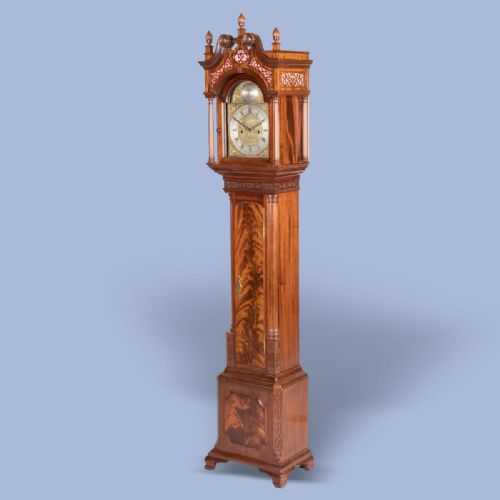


Dent London Clock
A dent london clock brings precision engineering and fine Victorian cabinet-making into a room, making it a sound acquisition for any serious collector.
What They Are
When you search for a dent london clock, you encounter precision timepieces spanning the nineteenth century, including wall clocks, mantel clocks, and longcase clocks.
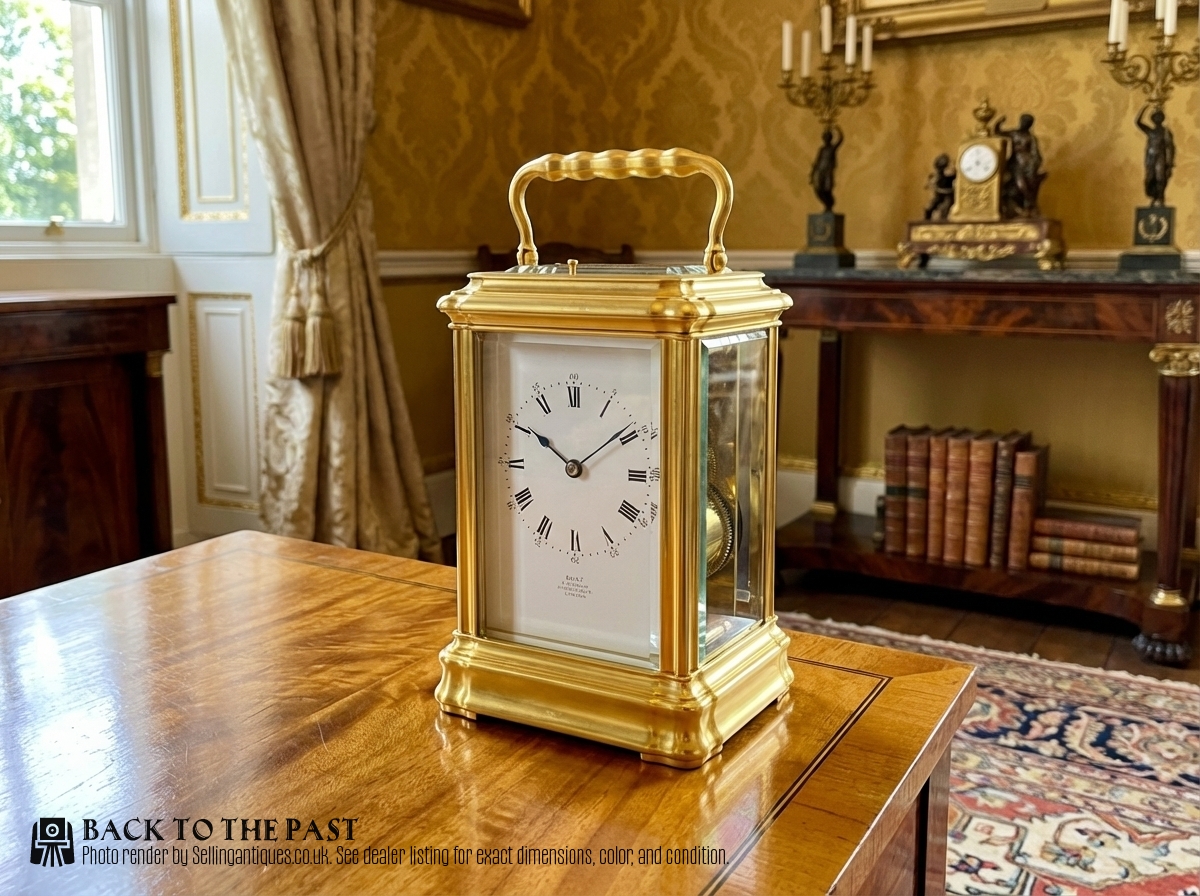
The pieces appearing on this page range from robust fusee wall timepieces to miniature grandfather clocks, carriage clocks, and intricate skeleton clocks.
Victorian examples dominate the selection, often housed in rich mahogany, oak, walnut, or rosewood, sometimes featuring brass inlay or gilt brass mounts.

How They Were Made
Maker workshops utilised durable metals like brass and gilt brass for delicate internal movements, dials with enamel numerals, and protective glass panels.
Cabinet makers constructed external housings from dense hardwoods such as mahogany, oak, walnut, and rosewood, incorporating detailed brass inlay and Georgian revival styling where appropriate.
Retail Price Guide 2026
Typical UK retail prices for dent london clock, calculated from the Sellingantiques database of over a million retail prices indexed since 2003. This retail price guide relies exclusively on Sellingantiques data; no external sources or auction records are used, so the figures do not describe the wider market.
Listings feature movements by Dent of London alongside materials such as mahogany, oak, walnut, glass, brass, gilt brass, and enamel.
What Varies in Quality
The upper tier of these timepieces demonstrates superior mechanical complexity, such as twin fusee movements, chain fusee setups, or repeating strike mechanisms.
Cabinet work distinguishes simpler wall dials from exceptional bracket and skeleton clocks, where figured burr walnut, rosewood, and meticulous brass inlay elevate the object.
Dent of London·Kendal and Dent London
The Dent London Clock Glossary
- Fusee
- A conical pulley used in spring-driven clocks to maintain even power as the mainspring unwinds. This mechanism ensures consistent timekeeping throughout the eight-day run.
- Skeleton clock
- A timepiece with an openwork frame designed to expose the gear train and escapement to view. These models often sit beneath a glass dome on a wooden base.
- Carriage clock
- A small, portable spring-driven clock originally designed for travelling officers and gentlemen. Many examples feature gilded brass cases and glass panels.
- Bracket clock
- A portable table clock traditionally placed on a bracket or shelf. They frequently include twin fusee movements and striking capabilities.
Frequently Asked Questions
What is a chain fusee movement?
A chain fusee movement uses a fine steel chain instead of a cord to connect the spring barrel to the conical fusee pulley. This metal chain provides greater durability and smooth power transmission.
Clocks featuring this mechanism represent higher precision engineering from the Victorian period.
How do I wind a fusee wall clock?
Winding requires inserting the key into the dial aperture and turning it gently clockwise until the mechanism resists further movement. Care must be taken not to overwind the chain fusee.
Most wall timepieces require attention every eight days to maintain accurate time.
Where should I place a bracket clock?
A bracket clock sits best on a sturdy mantelpiece, sideboard, or dedicated wall bracket where vibrations remain minimal. Stable placement protects the delicate pendulum and escapement.
Keeping the clock away from direct sunlight and damp areas preserves the mahogany, walnut, or rosewood timber.
Are carriage clocks meant for travel today?
Modern collectors treat carriage clocks as stationary decorative objects rather than portable travel pieces. Their delicate glass panels and gilded brass cases require gentle stationary display.
Many retain their original leather travelling cases for safe storage.