



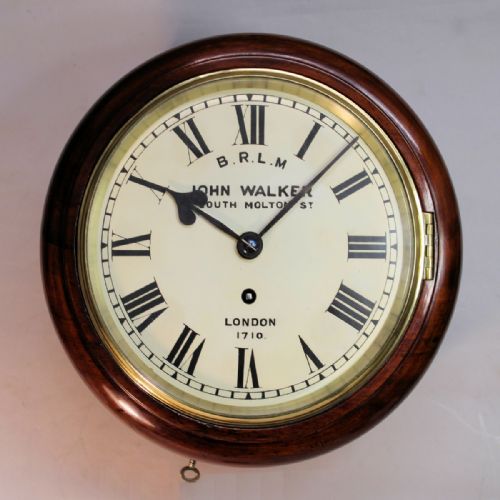
Mahogany Railway Clock
When you search for a mahogany railway clock, you are looking at substantial wall timepieces built to keep strict time for transport networks.
Mahogany Railway Clock
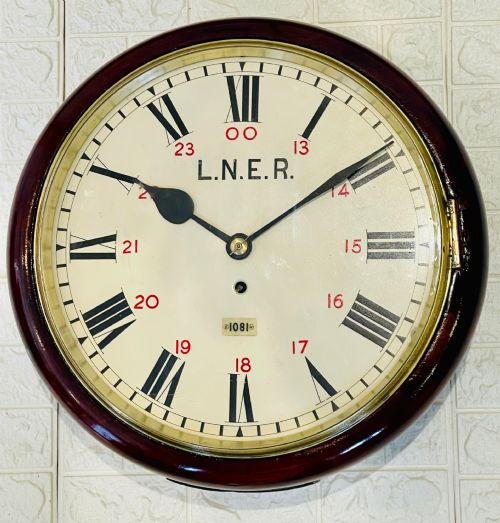
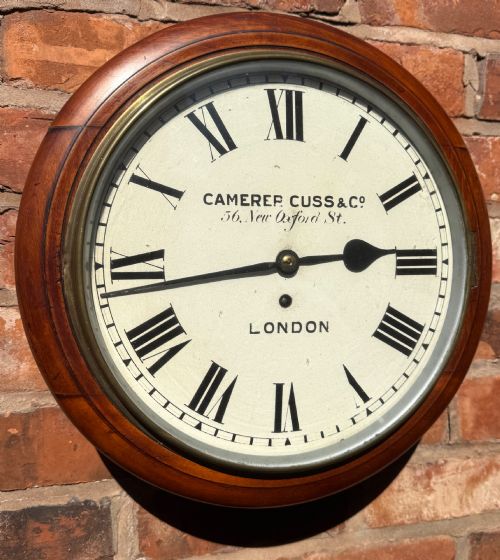
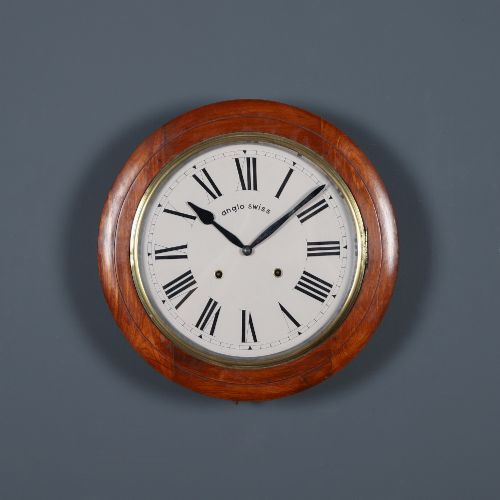
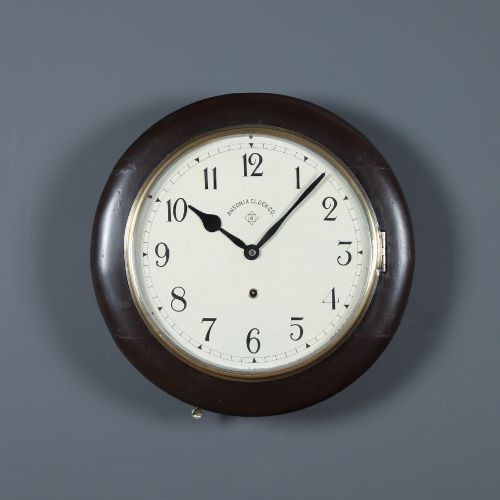
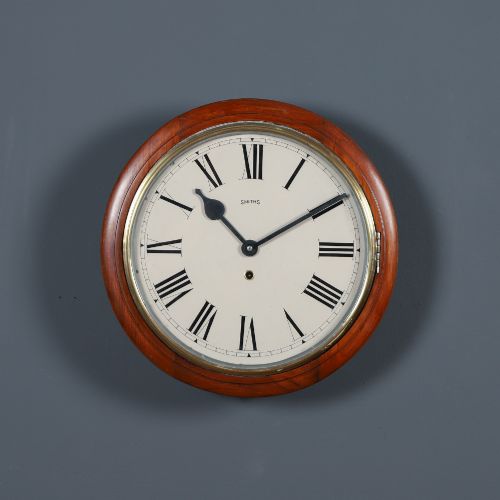
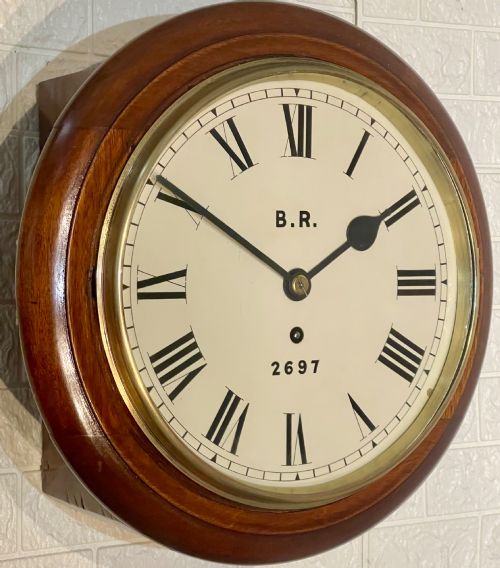
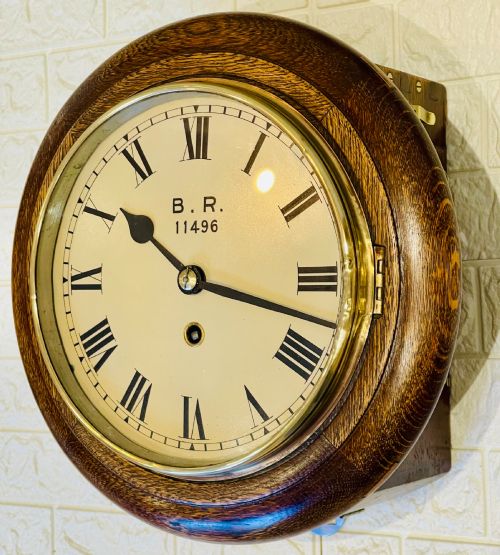
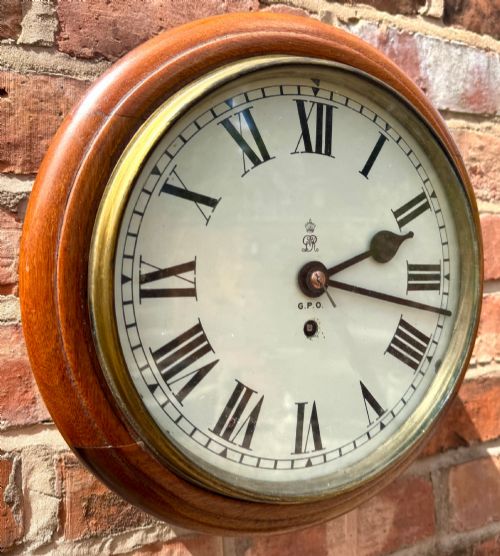
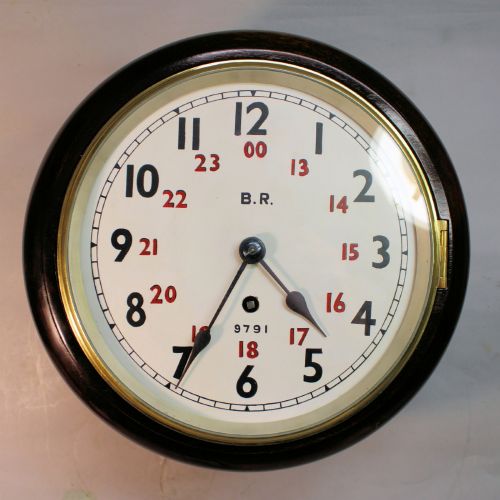
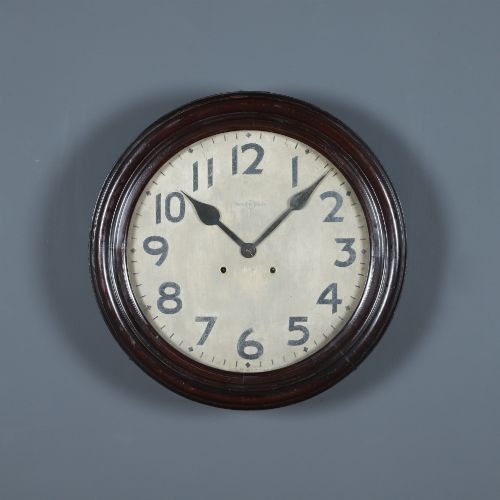
A mahogany railway clock is a round-dial wall timepiece originally housed in stations, offices, and platforms to regulate train schedules across British lines. These pieces typically feature deep timber surrounds, often paired with brass bezels and painted iron dials bearing company initials or station names.
The versions most common on this page date from the Victorian era through the early twentieth century, spanning periods like the 1930s and 1920s. You will encounter specimens bearing designations for historic networks such as the L.N.E.R, G.W.R, and British Railways, reflecting their operational past.
Most examples function as wall clocks configured with single chain fusee movements housed in robust mahogany cases. Their utility dictated a clear, legible face behind glass, designed for quick reading by staff and passengers alike.
How they were made
Makers housed these timepieces in solid mahogany cases turned or joined to withstand vibration and daily platform life. Brass frames secure the heavy glass bezels protecting the painted iron dials underneath.
The mechanical heart relies on fusee movements, which use a cone-shaped pulley to maintain even tension on the chain as the mainspring unwinds. This mechanism ensured consistent accuracy vital for railway operations before the era of quartz.
Some station clocks still carry the faint echo of platform whistle soot trapped inside their heavy mahogany bezels.
What varies in quality
Quality rests in the crispness of the movement and the integrity of the timber case rather than mere age. Finely cut fusee gears and original engraved maker signatures elevate certain pieces above standard utility models.
The preservation of original painted dials and authentic railway company lettering marks the upper tier of specimens. Cases with matching serial numbers stamped on the timber and movement components also indicate superior provenance.
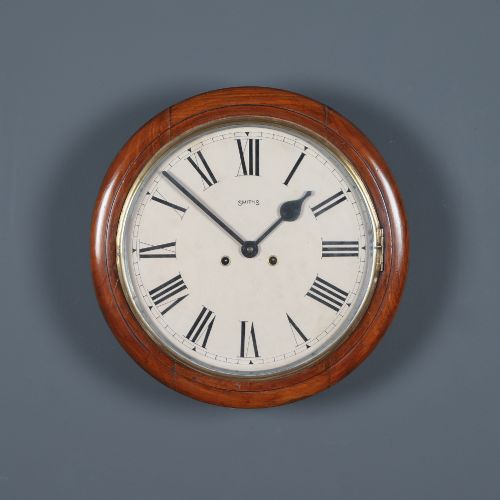
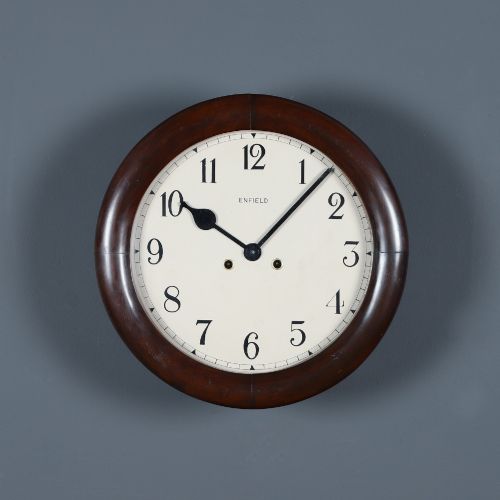
Camerer Cuss And Co·Smiths·Enfield·Ansonia·John Walker·Thomas Gibbs·Anglo Swiss Watch Co
The Mahogany Railway Clock Glossary
- Fusee
- A conical pulley connected to the mainspring by a chain or cord. This device equalises the diminishing power of the spring as it runs down.
- Dial
- The face of the clock where the numerals and hands are displayed. On these pieces, it is typically painted iron protected by a hinged glass door.
- Bezel
- The ring of brass or wood that holds the glass in front of the dial. It usually swings open on a hinge to allow hand-setting.
- Timepiece
- A clock that indicates the time but lacks a striking or chiming mechanism. Many railway clocks are simple timepieces built solely for punctuality.
Mahogany Railway Clock: Frequently Asked Questions
What is a fusee movement?
A fusee movement is a mechanical gear system driven by a chain and a cone-shaped pulley. It compensates for the dropping power of the mainspring to keep the clock running accurately.
This method was standard in British station clocks where reliable timekeeping was essential for coordinating train movements across the network.
How do I wind a railway clock?
You wind the clock by inserting a key into the small winding hole on the painted dial face. Turning it gently winds the chain back onto the fusee cone.
Most of these wall clocks require winding once a week to maintain proper tension on the mainspring.
Where were these clocks used?
These clocks hung in prominent locations such as station master offices, waiting rooms, and station platforms. They provided a unified time reference for staff and travellers.
Many bear specific company lettering or station stamps linking them to particular regional networks and junctions.
How do I date a railway clock?
Dating relies on examining the style of the mahogany case, the construction of the fusee movement, and any painted company initials on the dial. Victorian models often feature heavy timberbezels and substantialfusee plates.
Later twentieth-century examples from the 1920s and 1930s may show different maker signatures like Smiths or Enfield alongside updated railway branding.