

English Fusee Dial Clock
An english fusee dial clock delivers precise timekeeping through a reliable chain-driven movement housed in a clean, wall-mounted wooden case.
English Fusee Dial Clock
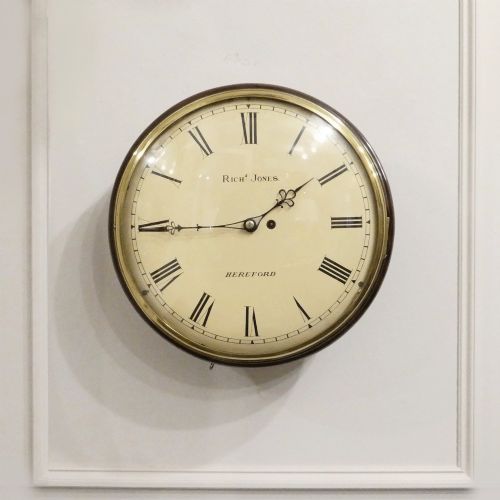
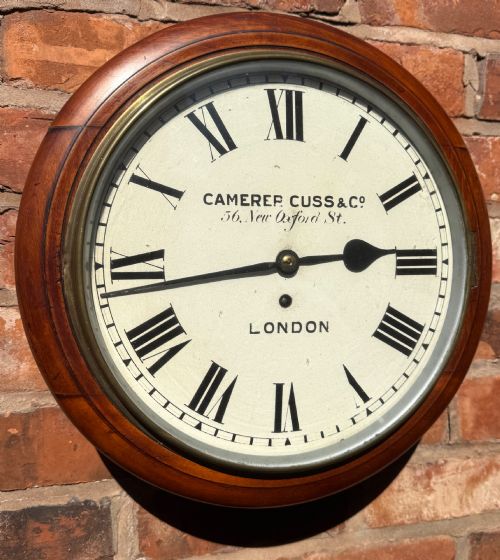
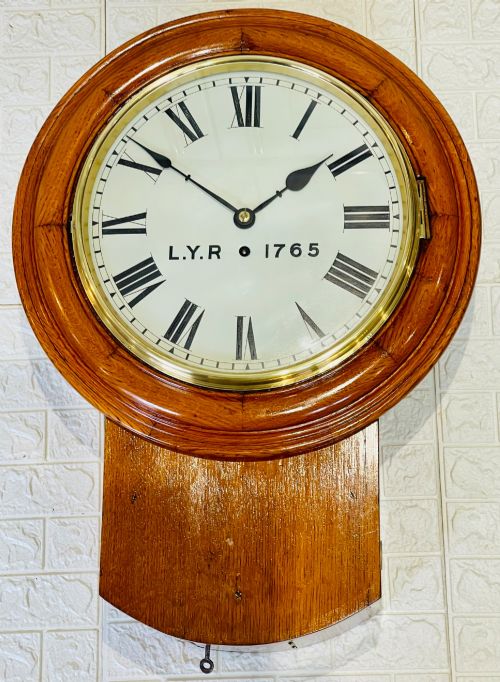
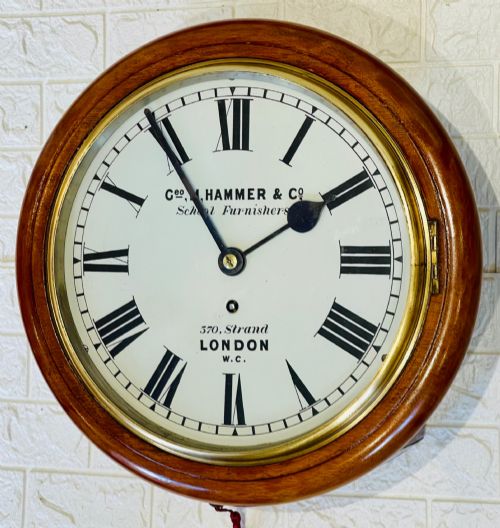
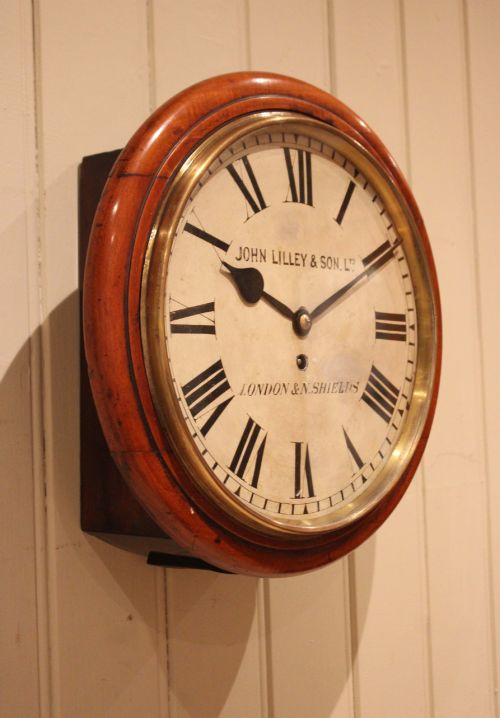
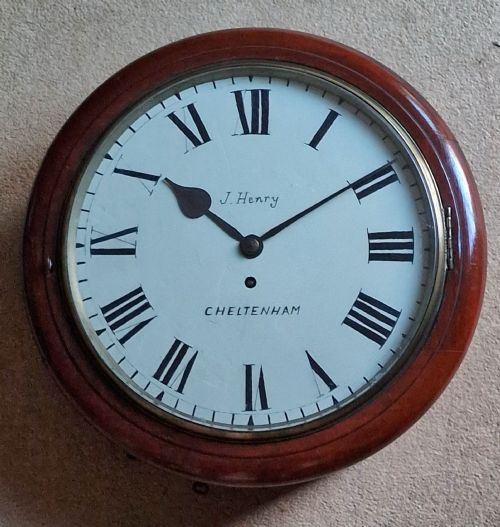
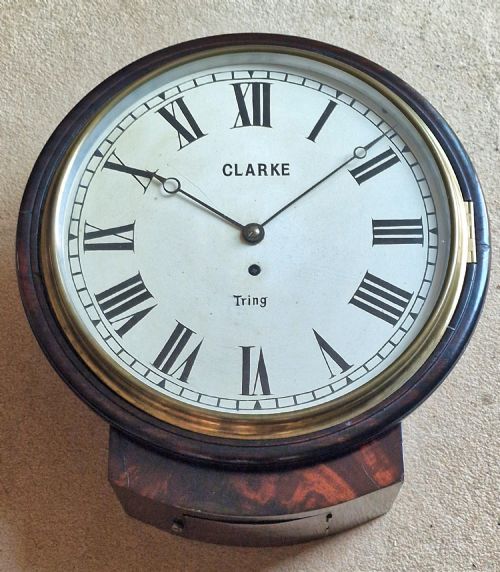
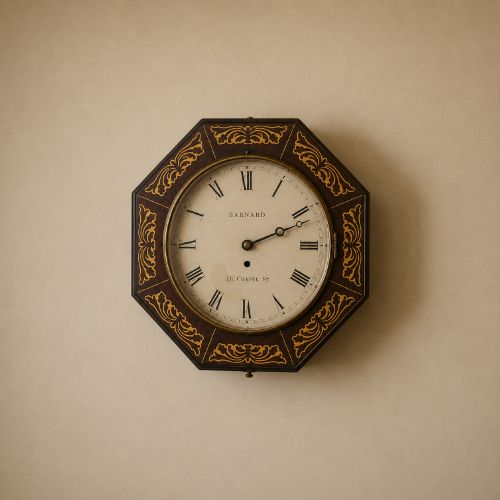
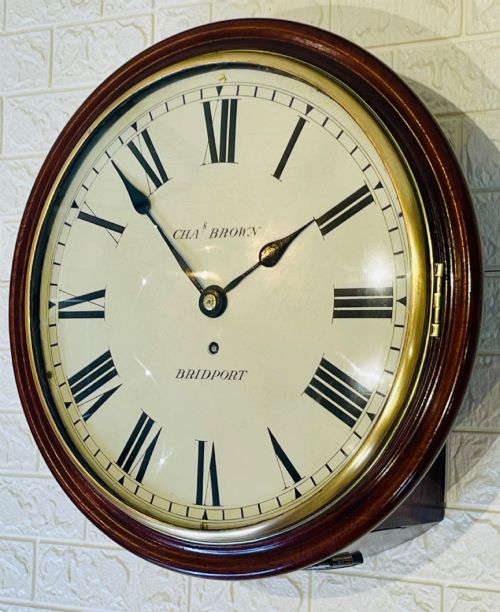
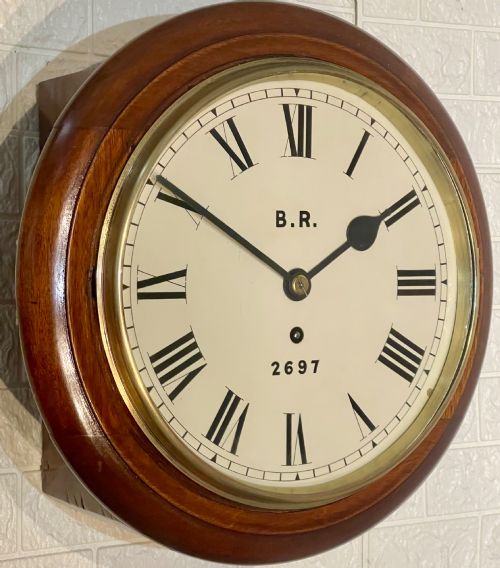
An english fusee dial clock is a wall-mounted timepiece driven by a conical pulley and chain mechanism designed to equalise the declining power of the mainspring. The version most commonly met on this page is the circular or drop-dial wall clock housed in a mahogany case, originating from the Victorian and Georgian periods.
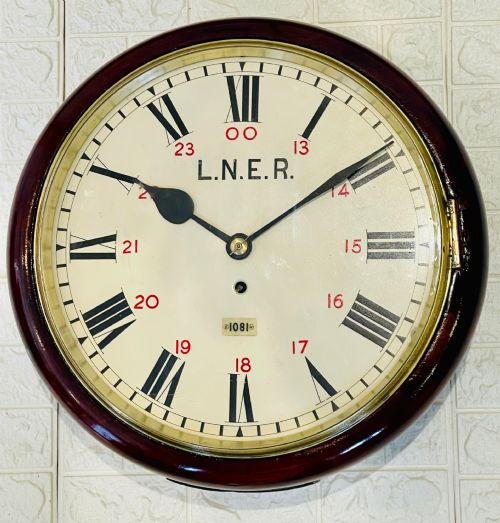
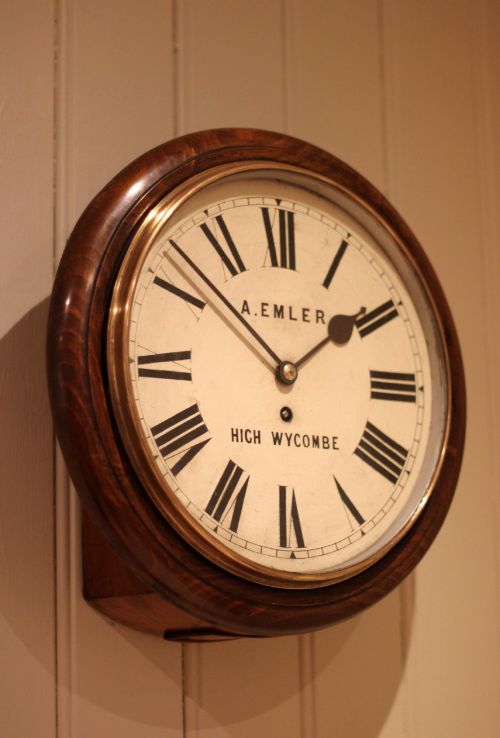
Makers often stamped their names directly onto the white painted or wooden dial faces, alongside regional railway companies that utilised these clocks for station platforms and offices. These pieces range from simple eight-inch railway timepieces to larger twin-fusee drop-dial variations capable of striking hours.
The enduring appeal of an english fusee dial clock lies in its minimalist circular face and functional engineering, which allowed clear time reading in public spaces, offices, and domestic halls alike.
How They Were Made
Clockmakers constructed the primary cases using solid timbers like mahogany, oak, and rosewood, frequently incorporating brass bezels to protect the glass and dial face. Workshops shaped mahogany and ebonised wood into traditional round frames and extended trunk drop-dial configurations designed to hang securely from walls.
The internal movement relied upon a brass gear train powered by a mainspring connected via a gut line or chain to a spiraled, grooved fusee cone. This intricate mechanical arrangement ensured an even distribution of torque as the spring unwound over the course of eight days.
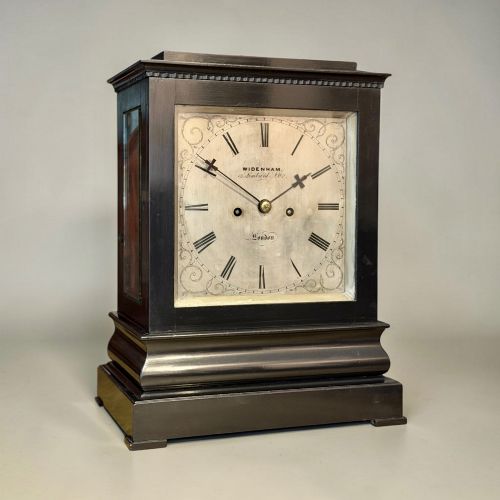
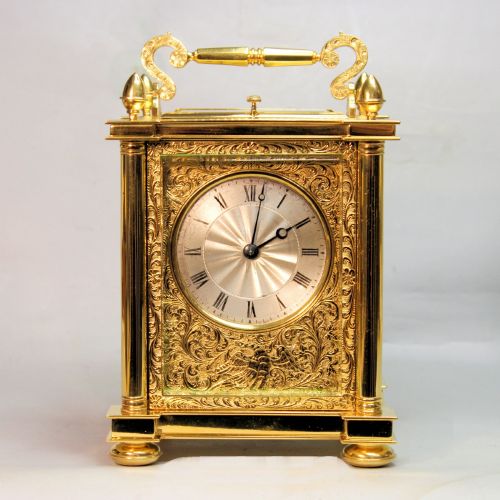
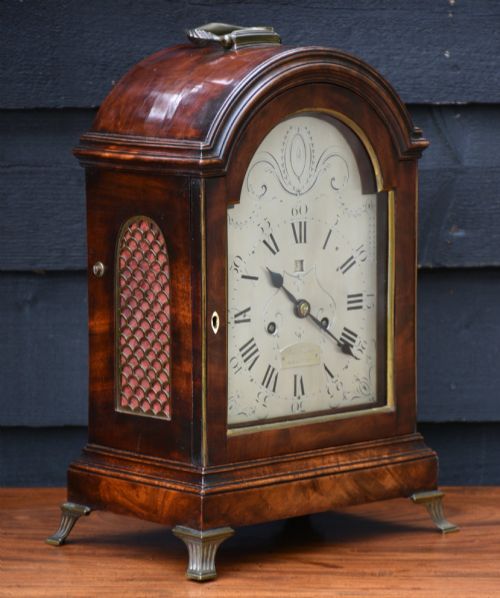
Listings feature robust oak and mahogany railway examples alongside refined rosewood bracket clocks spanning the Georgian, Regency, and Victorian eras.
What Varies in Quality
The distinction between standard commercial timepieces and exceptional examples rests upon the crispness of the movement's hand-engraving, the quality of the timber grain in the case, and the original signature of a known regional or London maker on the dial. Provincial railway clocks prioritize robust legibility and sturdy oak or mahogany construction, whereas high-end domestic pieces exhibit refined brass inlay, convex wooden dials, and delicate drop-trunk proportions.
Originality of components heavily influences the integrity of the piece, particularly when a dial retains its authentic painted numerals and the movement matches the maker recorded on the face without later alterations.
Widenham of London·Cousens & Whiteside·Camerer Cuss & Co·Ellicott & Smith·Richard Winter·Joseph Bird·Thomas Hedge·Mappin & Webb·John Walker·Thwaites & Reed·Barrauds Cornhill·James Tupman·Anthony Furnace·James Hargraves·Lawson and Son·Beecroft of Leeds·Potts & Sons·Curtis of Exeter·Meyer & Co·Edward Tulet·Goldsmiths Silversmiths Co
The English Fusee Dial Clock Glossary
- Fusee
- A conical pulley with spiral grooves that equalises the declining power of a mainspring as it unwinds. This clever mechanical device ensures consistent torque reaches the escapement for accurate timekeeping.
- Drop Dial
- A wall clock featuring a circular dial at the top and an extended wooden case below, often referred to as a trunk dial. The lower portion accommodates the descending pendulum swing.
- Chain Driven
- A movement that utilises a fine metal chain rather than a gut cord to connect the mainspring barrel to the fusee cone. This upgrade provided greater durability in heavy-use public clocks.
- Verge
- An early type of escapement controlling the release of the wheel train through the action of pallet leaves engaging a crown wheel. It represents traditional mechanical engineering found in older examples.
- Bezel
- The brass or wooden ring that holds the glass door protecting the dial face. It typically swings open on a hinge to allow hand-setting.
English Fusee Dial Clock: Frequently Asked Questions
How do I wind an english fusee dial clock?
Inserting a matching winding key into the small hole on the dial face allows you to turn the movement clockwise until gentle resistance indicates the spring is fully tensioned.
Careful handling ensures the chain remains seated correctly within the spiral grooves of the fusee cone during the winding process.
Why do some dials have a drop case?
The extended lower wooden trunk provides the necessary internal depth and clearance for a longer pendulum to swing freely beneath the movement.
This architectural layout improved timekeeping stability while creating a balanced visual proportion on the wall.
Were all these clocks used on railways?
Railway companies purchased large quantities of standardised dial clocks to maintain strict timetables across stations, junction offices, and telegraph rooms.
Many other examples were produced specifically for domestic halls, boardrooms, and retail shops without any transport association.
How can I tell the age of the clock?
Examining the timber choice, dial materials, and the mounting style of the movement helps narrow down the period of manufacture.
Mahogany cases with painted wooden convex dials typically point toward the earlier nineteenth century, while later Victorian models often feature flat brass bezels and heavy oak frames.