
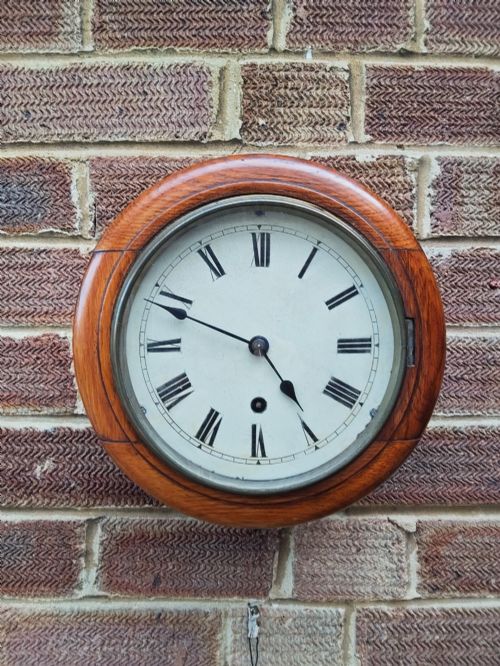
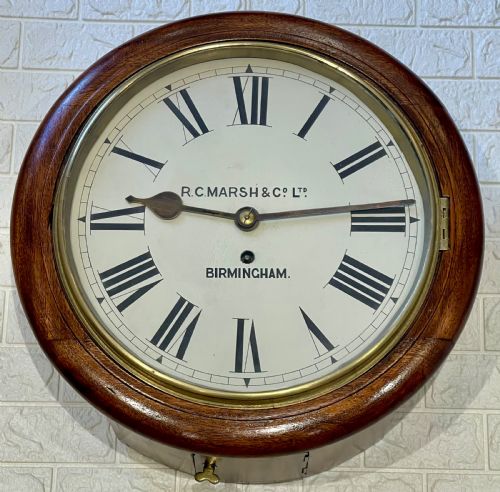
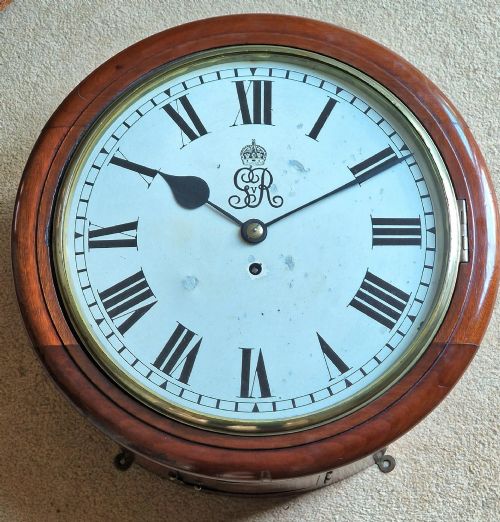


Edwardian Dial Wall Clock
An edwardian dial wall clock brings practical timekeeping and robust joinery into a room, favoured for clear circular faces and reliable fusee movements.
Edwardian Dial Wall Clock
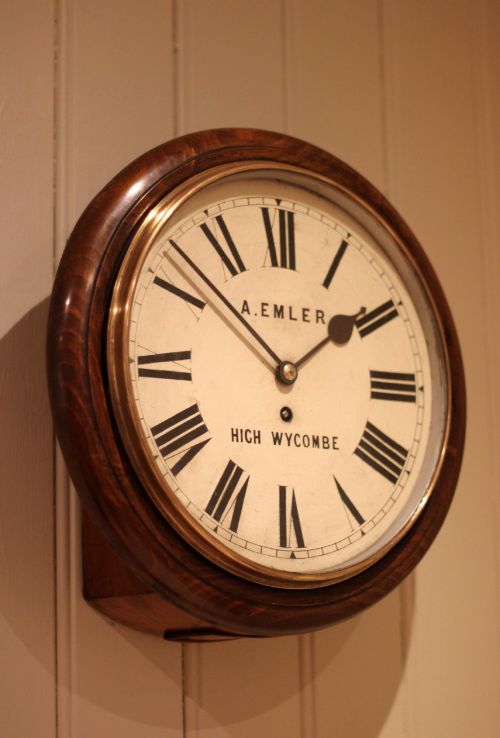
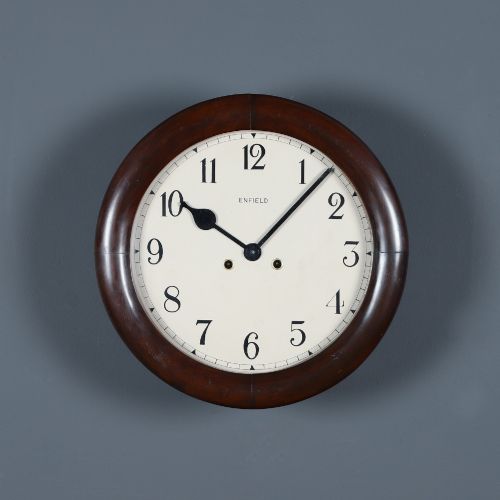
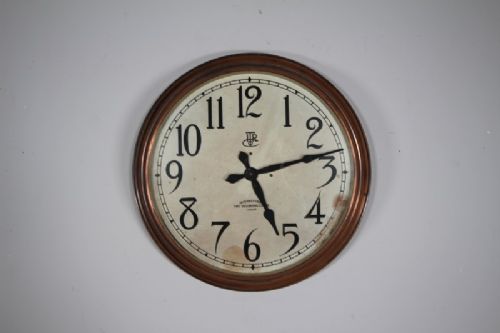
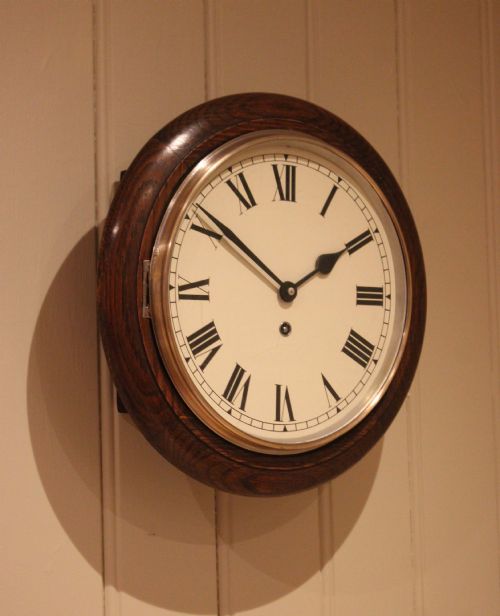
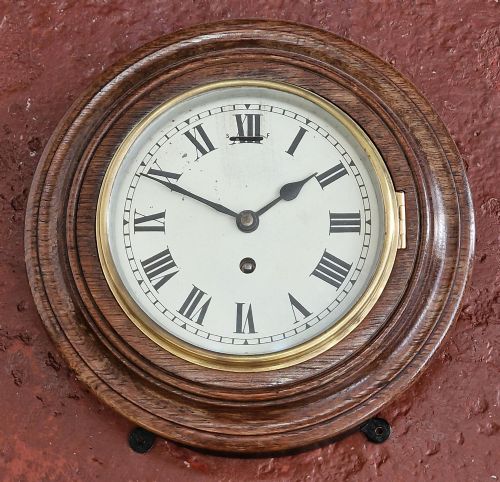
An edwardian dial wall clock serves as a utilitarian timepiece designed for public buildings, offices and domestic hallways. These pieces feature clean circular faces with clear numerals intended for reading from a distance rather than delicate ornamentation.
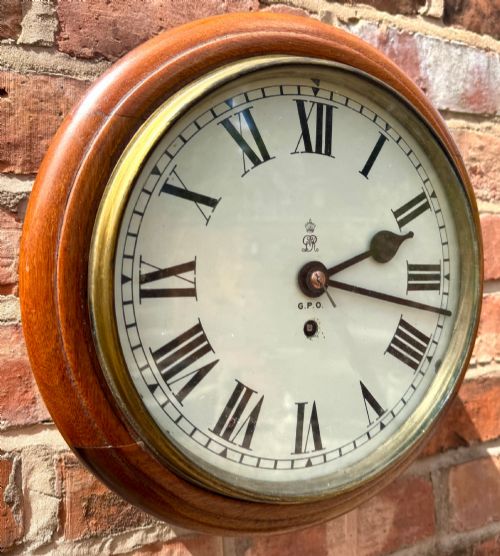
The versions met most frequently on this page span the late nineteenth century through to the interwar period. Examples range from compact domestic items to substantial railway station and factory pieces.
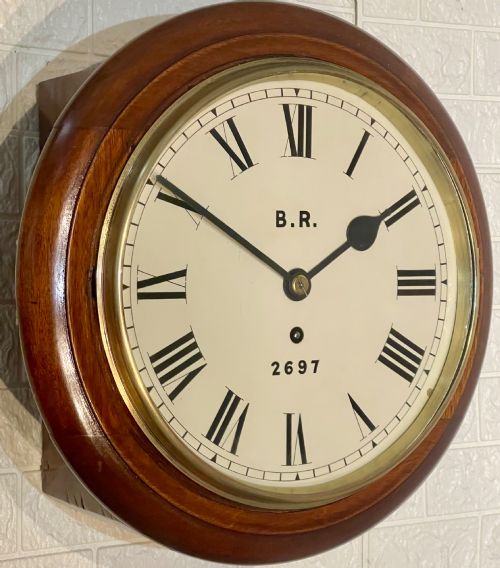
Makers housed these mechanisms in round wooden surrounds, often pairing simple oak or mahogany frames with heavy glass bezels to protect the paper or painted dial.
How they were made
Joiners built the timber surrounds using solid mahogany, oak, beech and occasional rosewood, turning rims on lathes or joining segmental blocks to form robust circular housings. Cases frequently incorporated hinged side doors or bottom access boxes to allow regular winding and regulation.
Clockmakers fitted mechanical movements driven by chains or cords running on a fusee cone, which equalised the force of the mainspring as it unwound to maintain steady timekeeping. Dials were constructed from painted iron, wood or brass, protected behind bevelled or flat glass set within metal bezels.
Some station clocks retain ghosts of old paint on their dials from generations of hasty maintenance by platform staff.
What varies in quality
Quality rests upon the precision of the movement and the integrity of the timber case. Finer examples display clean, hand-cut gear trains by known retailers and makers, housed in timber with well-fitted joints and original patination.
Simpler utility clocks made for transport networks or municipal buildings prioritise straightforward legibility and sturdy construction over decorative cabinetwork, though their mechanical execution remains robust.
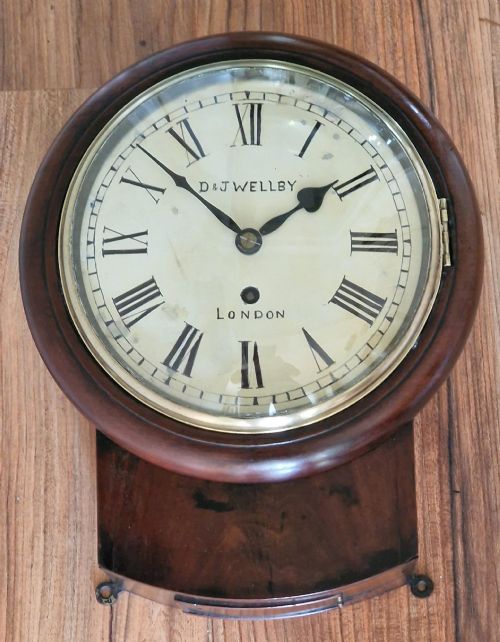
D&J Wellby, London·Kelvin White Hutton London·Anglo Swiss Watch Co·Payne of Tunbridge Wells
The Edwardian Dial Wall Clock Glossary
- Fusee
- A conical pulley connected to the mainspring by a chain or cord. This mechanism ensures even power delivery to the gear train as the spring unwinds.
- Drop dial
- A clock case featuring the circular dial at the top and an extended lower trunk below. This drop often accommodates a longer pendulum or simply balances the visual weight of the surround.
- Bezel
- The metal or wooden ring that holds the glass face over the dial. It usually hinges to open for hand-setting and winding.
- Timepiece
- A clock that indicates the hours and minutes without a striking mechanism. Such movements require winding solely for the going train.
Edwardian Dial Wall Clock: Frequently Asked Questions
How do I wind an edwardian dial wall clock?
Most of these clocks require a key inserted into the dial aperture to tension the fusee chain or spring. Turn the key steadily until resistance indicates the movement is fully wound.
Take care not to over-wind, and check that the pendulum hangs freely and swings in an even beat before leaving the clock to run.
Where should I hang a dial wall clock?
Choose a sturdy interior wall capable of supporting the weight of a solid timber case and heavy movement. Avoid damp areas and spaces subject to strong vibrations from doors or heavy traffic.
Mount the clock securely using appropriate fixings directly into studs or masonry so the case hangs plumb and the beat remains true.
What is the difference between a railway clock and a school clock?
Railway clocks were supplied to transport companies for strict timetable coordination, often bearing company initials on the dial or case. School clocks served classrooms and offices, featuring plain dials and robust cases designed for daily institutional use.
Both types share reliable fusee movements built for accuracy and simple maintenance.
How do I tell an Edwardian clock from a Victorian one?
Edwardian pieces generally date from the early twentieth century, showing lighter woods such as oak and simplified Edwardian cabinet styling. Victorian examples often utilise darker mahogany or rosewood with heavier mouldings.
Examine the construction of the case interior and any movement stamps to help determine the period of manufacture.