

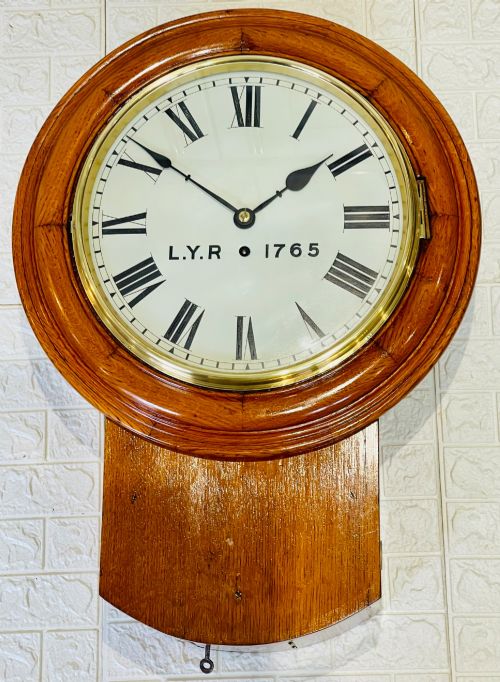
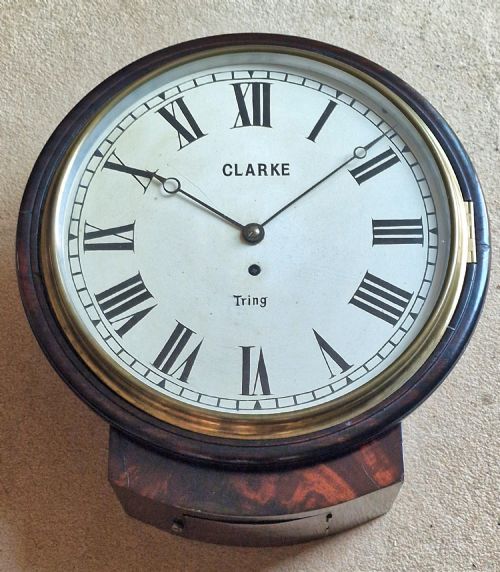


Antique Drop Dial Timepiece
An antique drop dial timepiece is a reliable wall-mounted clock designed for precision, offering both functional utility and classic historical presence.
Antique Drop Dial Timepiece
An antique drop dial timepiece combines a circular dial section with an extended lower wooden case designed to house the pendulum. These wall clocks appear predominantly in Victorian and nineteenth-century formats, reflecting practical timekeeping needs in public and domestic spaces.
The version most commonly met on this page is housed in mahogany or oak, featuring the characteristic fusee movement that sustained reliable timekeeping as the mainspring unwound. Examples range from plain railway station clocks to refined London-made pieces with inlaid rosewood cases.
Makers often inscribed their names directly onto the painted metal dials, creating a direct link to provincial towns and metropolitan workshops alike. Buyers encounter straightforward timepieces alongside twin fusee variants capable of striking the hour on a bell.
How they were made
Cabinetmakers constructed the cases using solid hardwoods such as mahogany, rosewood, and oak, frequently shaping the timber with bracket supports or chisel bottoms. Brass components feature heavily in the internal gear trains and bezels, while glass protects the painted metal dials.
Clockmakers utilised fusee movements driven by a cord or chain connected to a conical pulley, which equalised the force of the mainspring. Dial faces were typically painted metal, featuring numerals and signature inscriptions applied by hand.
The listings span the nineteenth century, featuring oak, mahogany, and rosewood cases alongside painted metal dials and brass bezels.
What varies in quality
Quality separates simple utility clocks from high-status London pieces through the sophistication of the movement and the fineness of the case timber. A twin fusee striking mechanism or an engraved backplate represents a higher standard of horological craftsmanship than a basic single-fusee timepiece.
The choice of cabinet wood and decorative execution also dictates standing, with figured mahogany and inlaid rosewood sitting above plain utilitarian oak. Original dial signwriting and clean case proportions distinguish superior examples from heavily restored or altered pieces.
George Clarke·John Walker·Kleyser of London·Haley and Milner·John Thwaites·Edward Hannam·Balbiani Brookley
The Antique Drop Dial Timepiece Glossary
- Fusee
- A conical pulley used in a clock movement to maintain even power as the mainspring winds down. This device ensures consistent timekeeping across the duration of the wind.
- Drop dial
- A clock case design where the circular dial sits above an extended lower box that encloses the pendulum. This form became a staple of nineteenth-century wall clock production.
- Timepiece
- A clock that tells the time without striking mechanism or bells. These units focus purely on continuous motion and visual observation.
- Twin fusee
- A movement incorporating two separate fusee chains or cords, typically separating the timekeeping train from the striking train. This setup powers both the clock function and the bell strike.
- Chisel bottom
- A specific lower case termination shaped in a wedge or chisel profile, seen on certain nineteenth-century wall clocks. It provides a distinct architectural finish to the hanging trunk.
Antique Drop Dial Timepiece: Frequently Asked Questions
How do I wind an antique drop dial clock?
Most fusee timepieces require a specialised key inserted into the dial face to tension the mainspring via the drum or fusee arbor. Care must be taken not to overwind the mechanism.
Depending on the movement, winding is typically required once a week to maintain accurate timekeeping across the gear train.
Where were these clocks originally hung?
Drop dial timepieces were designed for high visibility in spaces such as railway offices, public halls, and domestic hallways. Their wall-mounted format kept them secure and easily consulted by large numbers of people.
Railway companies utilised them extensively for station punctuality, while domestic examples adorned kitchens and entrance spaces.
What is the purpose of the lower drop box?
The extended lower case accommodates the swing of the pendulum beneath the dial. Without this drop section, the compact wall clock format could not house a proper regulating pendulum.
Different makers varied the length and shape of this box, producing round-bottomed, chisel-bottomed, or bracket-supported variations.