






Vienna Regulator Wall Clock
When you search for a vienna regulator wall clock, you are looking at precise 19th-century timekeepers built to anchor a room.
Vienna Regulator Wall Clock
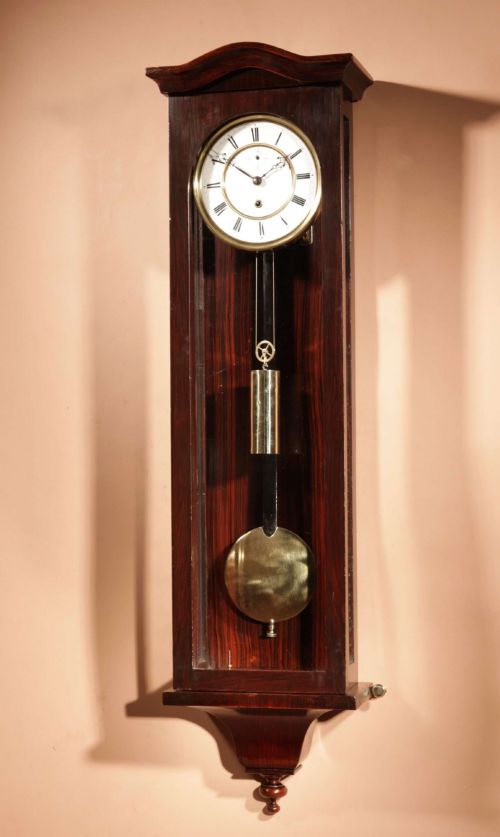
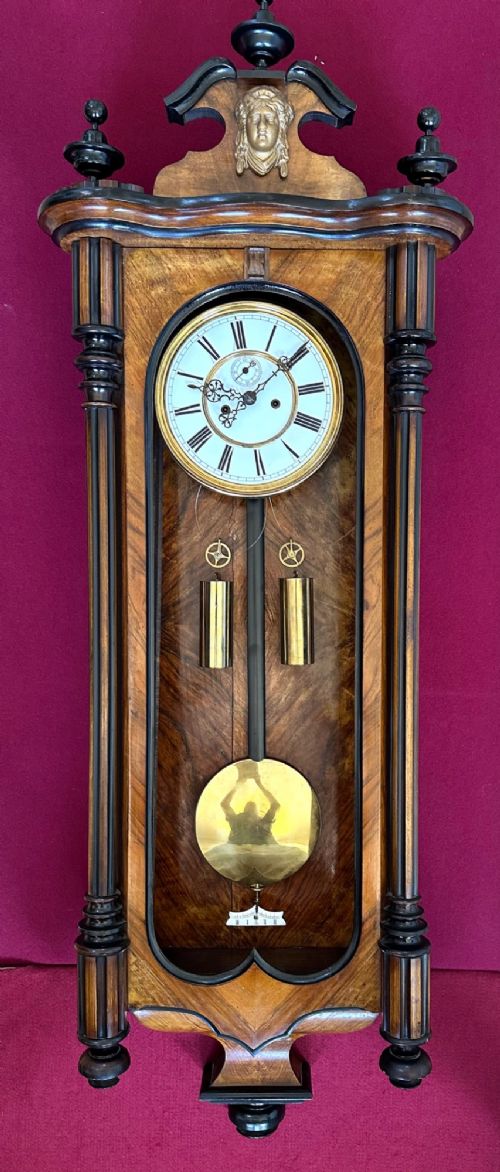
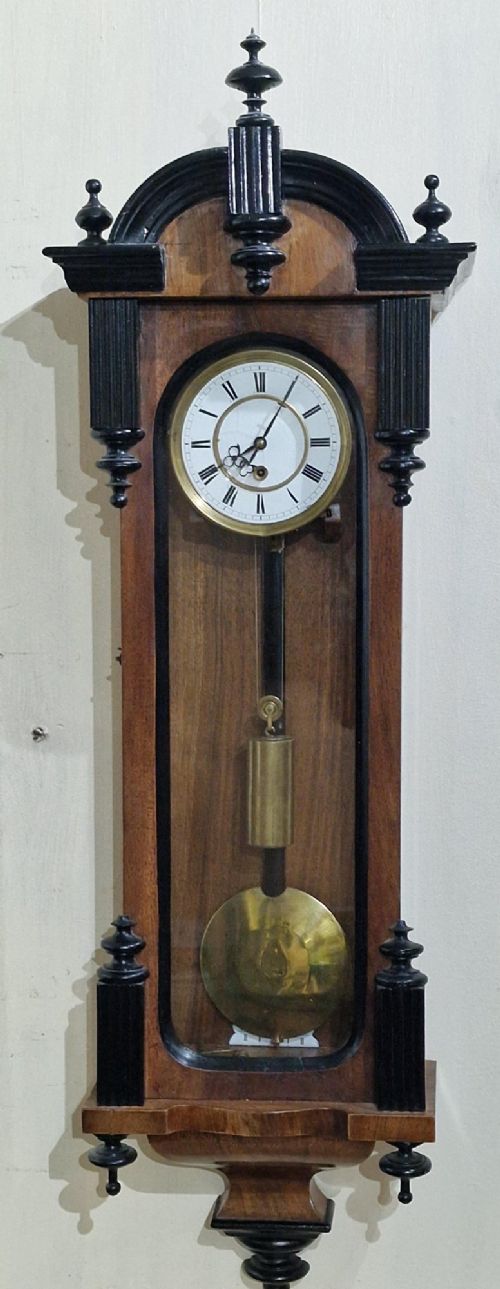
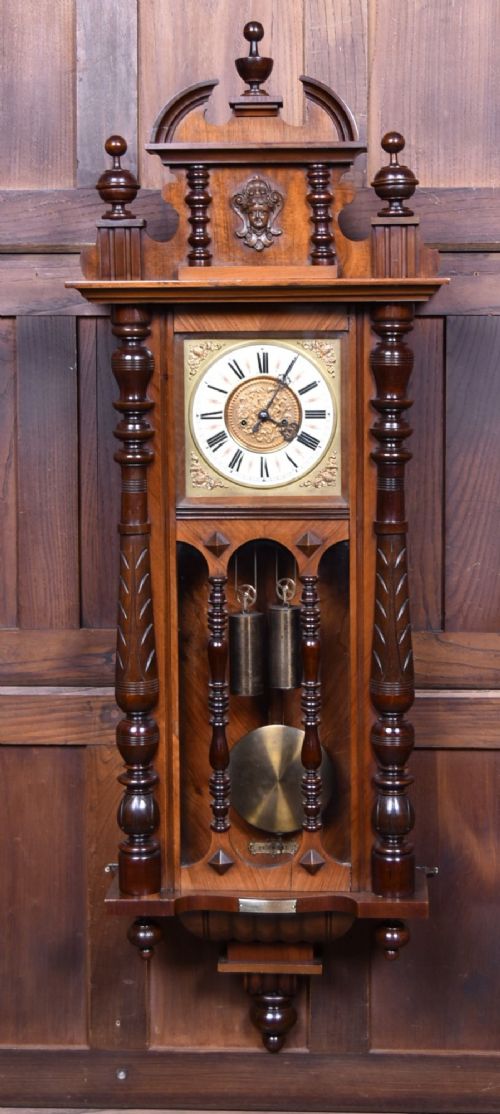
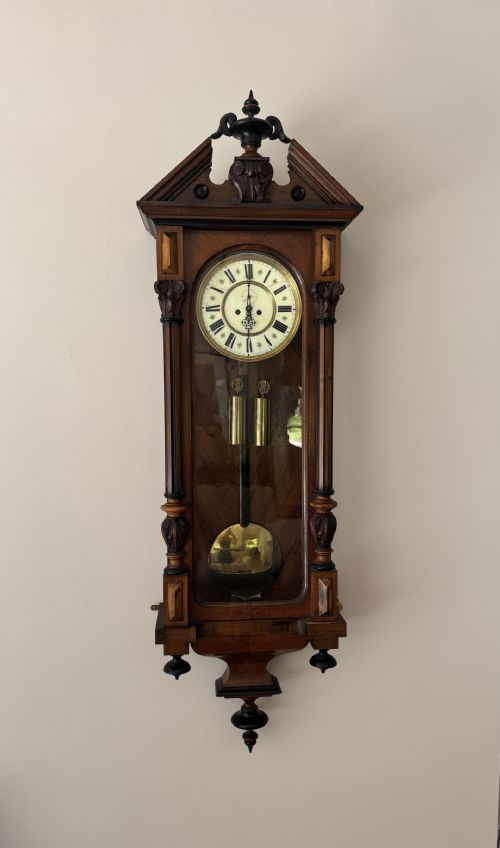
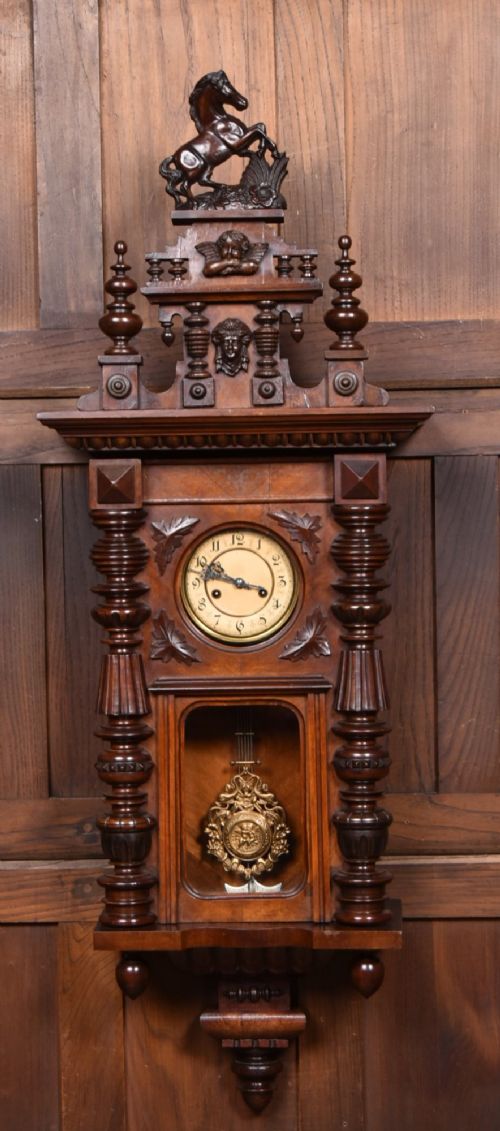
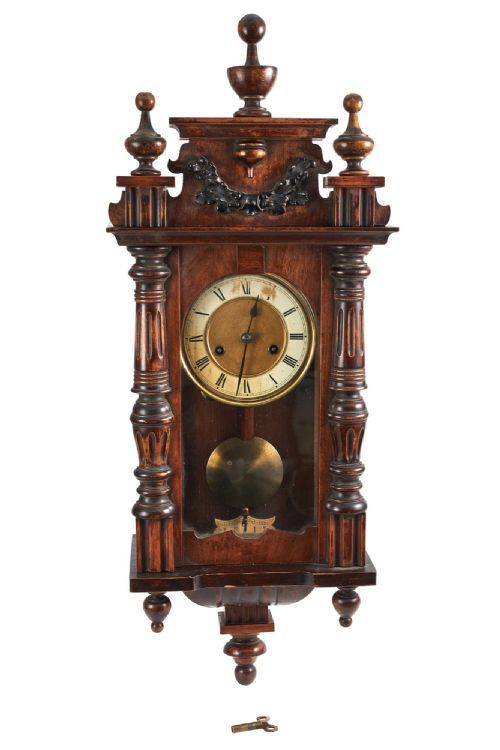
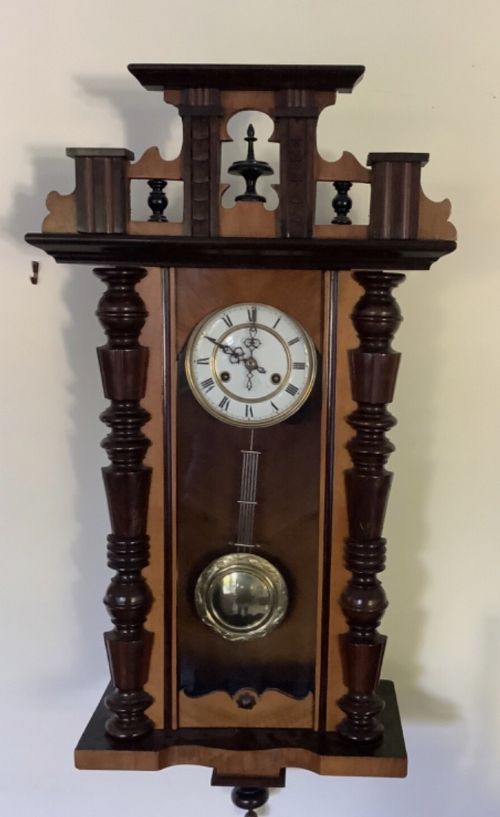
A vienna regulator wall clock is a precision pendulum timepiece rooted in 19th-century Austrian and German clockmaking traditions. The pieces on this page span the Victorian era, showing periods from the 1850s through to 1900.
Most examples you encounter here take the form of elongated wall cases housing tall glass panels that display the swinging pendulum and weights. Styles range from restrained Biedermeier designs to heavily carved Victorian, Gothic, and Altdeutsch interpretations.
Makers and workshops across Austria and Germany produced these regulators in single, double, and triple weight configurations, alongside spring-driven movements. Miniature versions and month-duration movements also appear among the selections.
How They Were Made
Cases were predominantly constructed from walnut, burr walnut, mahogany, and oak, frequently enhanced with ebonised wood details and brass fittings. Enamel dials provide the crisp white face typical of the period, shielded behind glazed doors.
Movements were engineered for accuracy, utilising brass gear trains driven by weights or springs. Carved wooden ornamentation and architectural mouldings define the exterior aesthetic of the finer architectural cases.
Vienna Regulator Wall Clock Retail Price Guide 2026
Typical asking prices for vienna regulator wall clock among the pieces listed under this phrase on Sellingantiques today, from the lower quarter to the upper quarter. They describe what is for sale here now, not the wider market.
Miniature regulators deliver the presence of a grand hall clock in a fraction of the wall space.
What Varies in Quality
The distinction between standard and exceptional pieces rests in the complexity of the movement and the depth of the cabinetwork. Grande sonnerie striking mechanisms, month-duration runs, and triple weight systems represent higher levels of horological ambition.
Cabinet quality shows in the choice of figured veneers like burr walnut, crispness of hand-carving, and the architectural balance of the case. Maker signatures from notable workshops further elevate the standing of an individual clock.
Gustav Becker·AG Lenzkirch·Johann Baptist Beha·Anton Mayer·Johann Bohm
The Vienna Regulator Wall Clock Glossary
- Regulator
- A precision clock designed to keep exceptionally accurate time, historically used as a standard to set other timepieces. These wall-mounted versions feature long pendulums visible through glass doors.
- Grande Sonnerie
- A striking mechanism that chimes both the hours and the quarters automatically on every quarter-hour. It represents a more complex movement than a standard hour-striking setup.
- Biedermeier
- An influential Central European style from the first half of the 19th century emphasising clean lines, utilitarian comfort, and elegant wood grains without excessive ornamentation.
- Timepiece
- A clock that indicates the time of day without a striking mechanism or chiming train. These depend solely on a going train to drive the hands and pendulum.
- Double Weight
- A movement driven by two suspended weights, typically powering both the time-keeping train and the striking train. This configuration requires a taller case to allow the weights adequate drop.
Vienna Regulator Wall Clock: Frequently Asked Questions
How do I wind a vienna regulator?
Winding involves using a matching key to draw the weights back up to the top of the case or to tension the spring movement. Care must be taken not to over-wind the mechanism.
Ensuring the weights are raised evenly maintains the correct drop distance required for the duration of the movement.
Where should I hang my wall clock?
Select an interior wall with a stable temperature away from direct sunlight, drafts, and heavy vibrations. A solid masonry wall or a sturdy stud provides the best support for a heavy wooden case.
The clock must hang completely plumb so the pendulum swings with an even beat.
What is the difference between a timepiece and a striking clock?
A timepiece simply tells the time through the movement of the hands and the swing of the pendulum. It contains no bells, gongs, or additional gear trains for chiming.
A striking clock adds a secondary train that sounds the hours or quarters, requiring extra weights or spring barrels.