
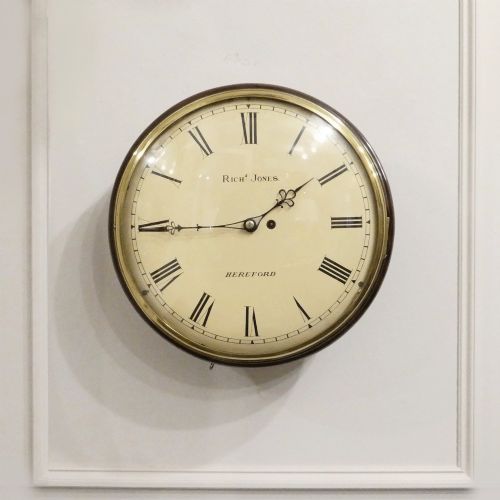
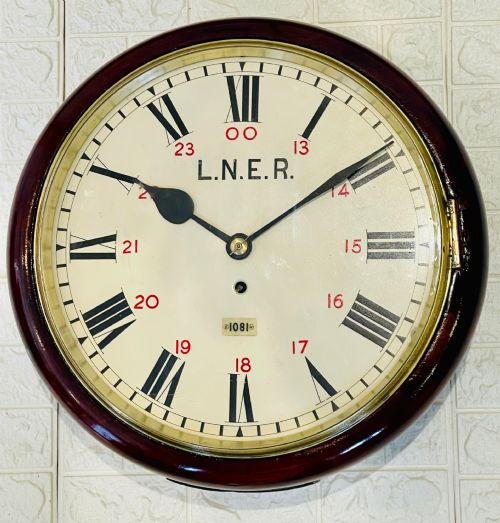
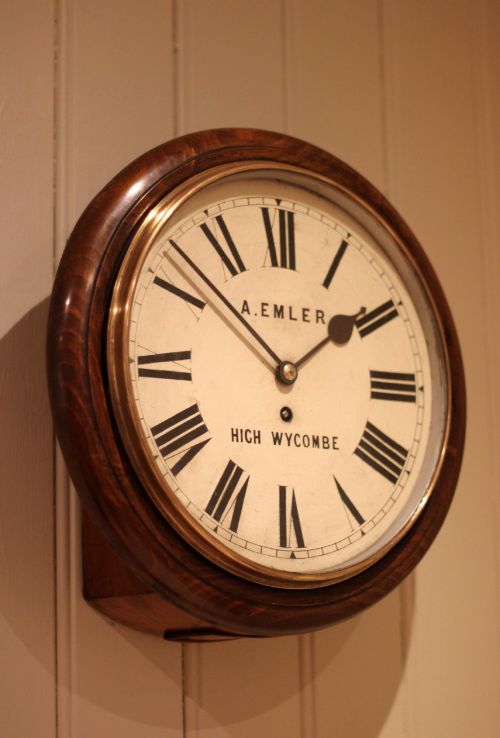
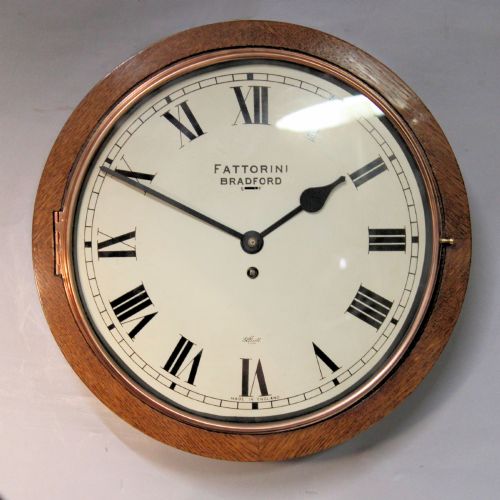
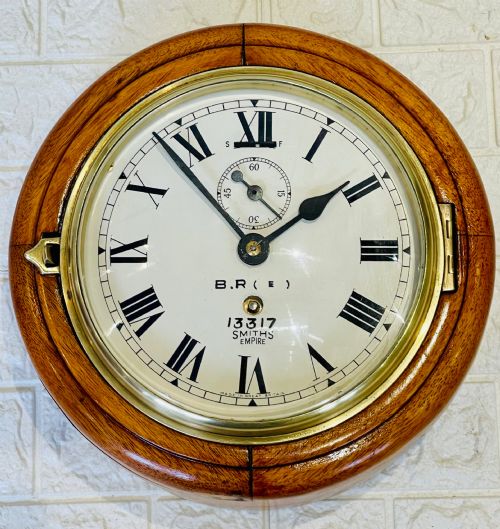
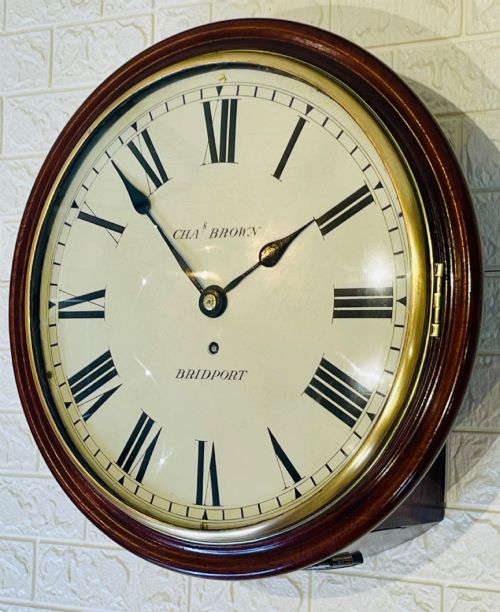
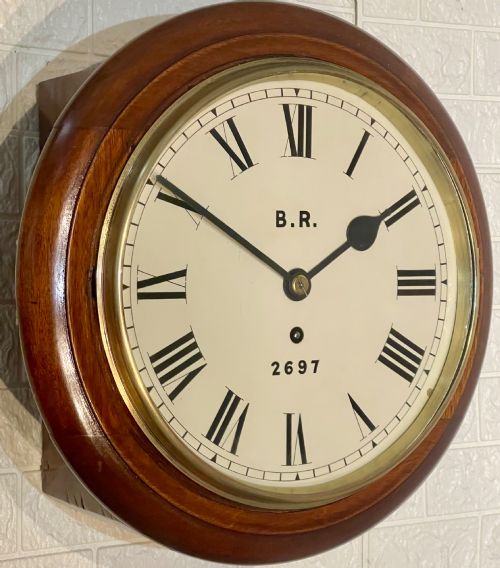
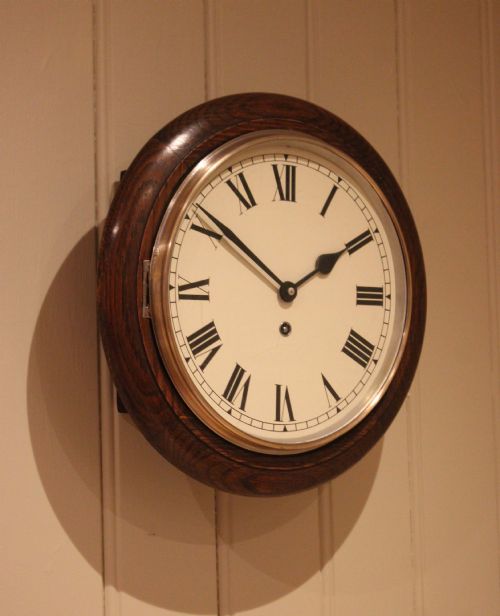
Brass Bezel Dial Clock
A brass bezel dial clock brings robust timekeeping and functional design into domestic and public spaces alike.
Brass Bezel Dial Clock
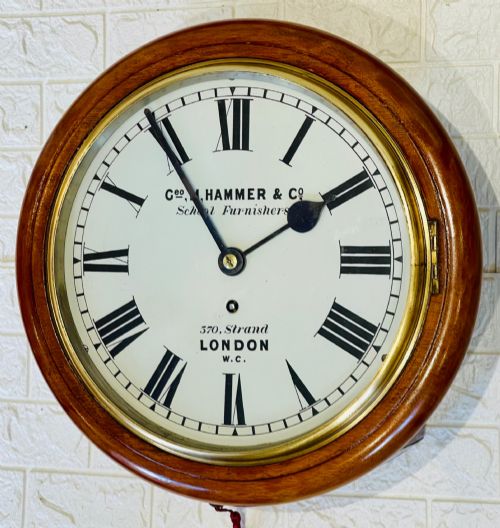
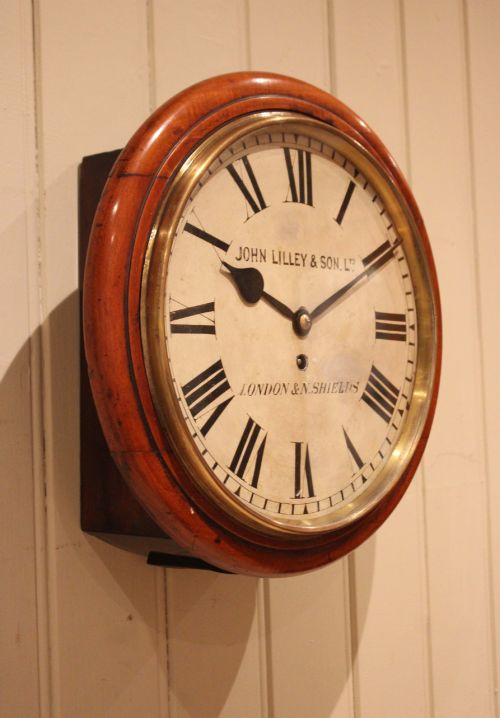
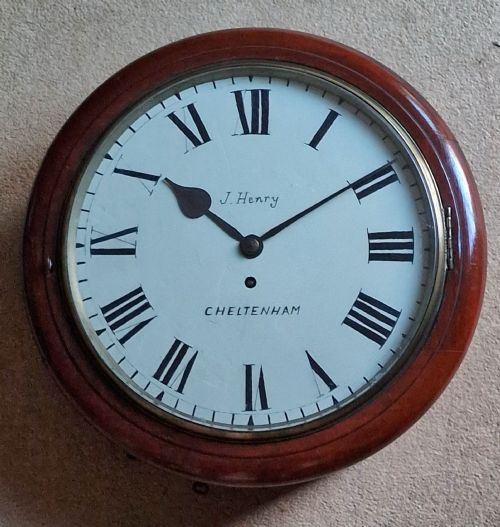
When searching for a brass bezel dial clock, you are looking at sturdy round wall or mantel timepieces designed for clear visibility in both homes and institutional settings. These objects appear in various regional styles, including railway stations, post offices, schools, and domestic parlours.
The pieces on this page span several periods, from the Georgian and Regency eras through the Victorian age into the early twentieth century. Most examples you will encounter take the form of wall-mounted circular clocks featuring protective glazed brass bezels that frame the dial.
Originating largely from British workshops and makers, these timepieces reflect practical utility combined with cabinet-making traditions. Materials range from traditional mahogany and oak to beech, rosewood, and iron cases housing enamel or painted timber dials.
Materials and Construction
Cabinet makers constructed the circular and drop-dial cases using solid timbers such as mahogany and oak, frequently housing fusee movements that provided steady tension for accurate timekeeping. Glass protected the dial behind hinged or fixed brass bezels, which required precision casting and finishing.
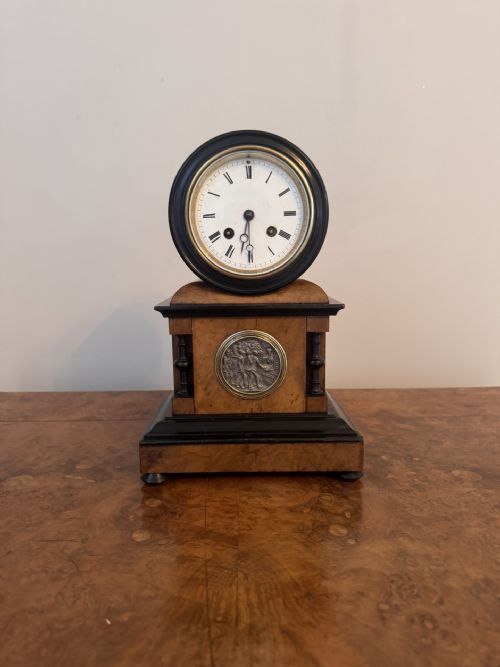
Dial faces were manufactured from painted wood, metal, or enamel, carrying Roman or Arabic numerals and fitted with delicate hands. Subsidiary materials like iron, mother of pearl, and brass wire occasionally embellished French and English mantel and wall variants.
Brass Bezel Dial Clock Retail Price Guide 2026
Typical asking prices for brass bezel dial clock among the pieces listed under this phrase on Sellingantiques today, from the lower quarter to the upper quarter. They describe what is for sale here now, not the wider market.
The selection spans Georgian, Victorian, Regency, and early twentieth-century periods, including railway and domestic forms.
Distinctions in Quality
The distinction between standard utility timepieces and finer examples rests upon the execution of the cabinet work and the sophistication of the internal movement. Clocks produced by named provincial or London makers often exhibit superior timber selection and finer dial lettering.
Condition and originality dictate the standing of a piece, particularly the retention of matching numbered cases, original fusee movements, and undisturbed wooden bezels. Finer versions show careful proportioning in the drop-dial or round frame, balancing the heavy brass bezel without visual clumsiness.
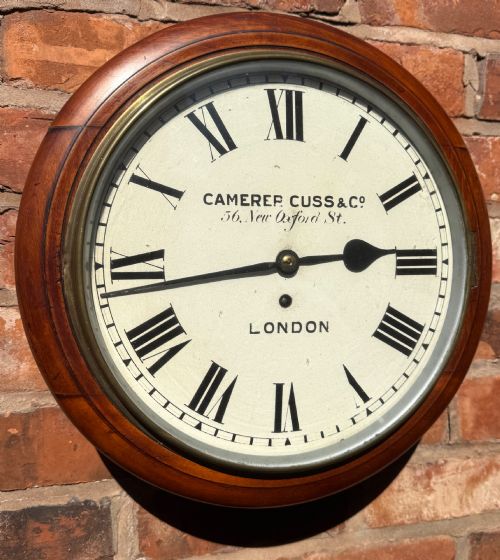
Richard Jones of Hereford·Elliott·Camerer Cuss and Co London·Henry Harris of Monythusloyn·W and H Sch·Joseph Bird of Stroud·Thomas Hedge of Colchester·Halliday and Rich Bridgwater·William Long of Bristol
The Brass Bezel Dial Clock Glossary
- Fusee
- A conical pulley used in clock movements to maintain an even pull on the mainspring as it unwinds. This mechanism ensures consistent timekeeping throughout the duration of the wind.
- Bezel
- The metal or wooden rim that holds the glass protecting the clock face. In these pieces, brass bezels are typically hinged to allow access to the hands.
- Drop Dial
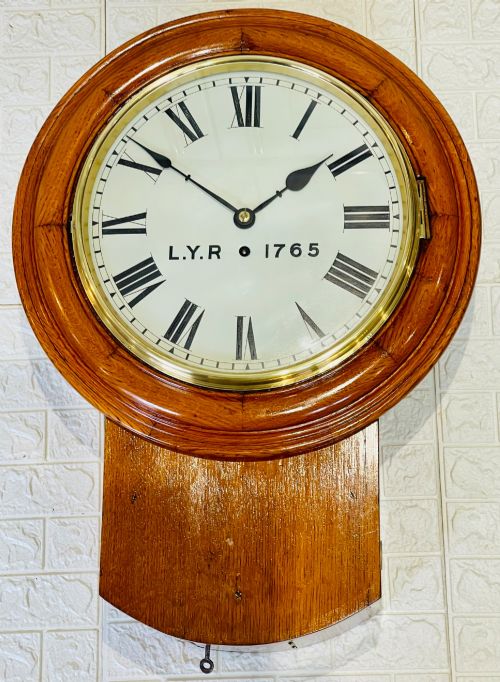
- A clock case featuring a circular dial at the top and an extended lower trunk, often used to house a longer pendulum or simply for aesthetic balance.
- Verge Escapement
- An early type of escapement mechanism that controls the release of the wheel train to regulate time. It is commonly found on older Georgian examples.
- Enamel Dial
- A fused glass-on-metal clock face providing a durable, bright background for painted numerals. These dials were widely utilised across Victorian and later station clocks.
Brass Bezel Dial Clock: Frequently Asked Questions
What is a fusee dial clock?
A fusee dial clock is a timepiece driven by a chain or gut line connected to a conical pulley, which equalises the decreasing power of the mainspring. This system ensures consistent accuracy throughout the winding cycle.
Such clocks were heavily utilised in railway stations, offices, and homes due to their reliable timekeeping and straightforward wall-mounted designs.
How do I wind a wall clock?
Winding typically involves inserting a key into the winding hole on the dial face and turning it carefully until resistance is felt. Care must be taken not to overwind the movement.
Most traditional fusee movements require attention every eight days, ensuring the mechanism maintains steady tension and correct time.
Where were these clocks used?
These clocks served practical timekeeping roles across public and private spaces, including railway networks, government offices, schools, and domestic rooms. Railway companies frequently installed them on platforms and in booking halls for precise synchronisation.
Domestic variants appeared in kitchens, hallways, and parlours, housed in timber cases suited to the interior decoration of the period.
How do I date a dial clock?
Dating relies upon examining the case timber, the style of the brass bezel, the construction of the movement, and any signatures painted on the dial. Georgian and Regency pieces often feature wooden bezels or verge escapements, while Victorian and later examples frequently incorporate fusee movements in oak or mahogany.
Maker signatures and railway company stampings also provide reliable clues to the exact era of manufacture.