
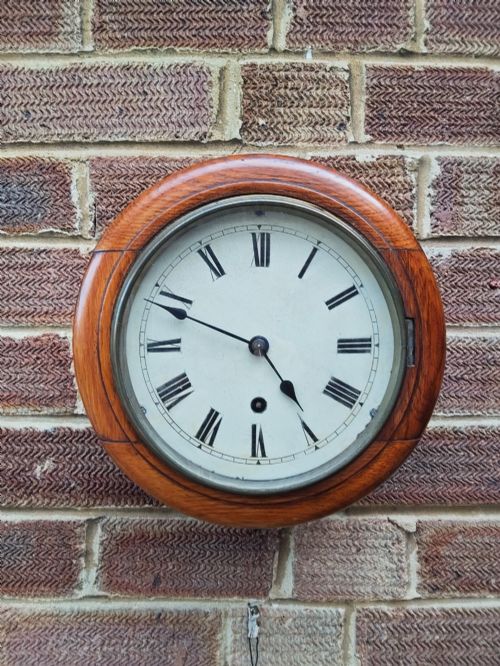
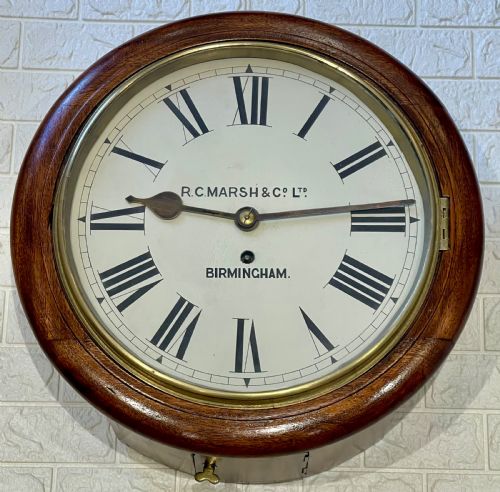
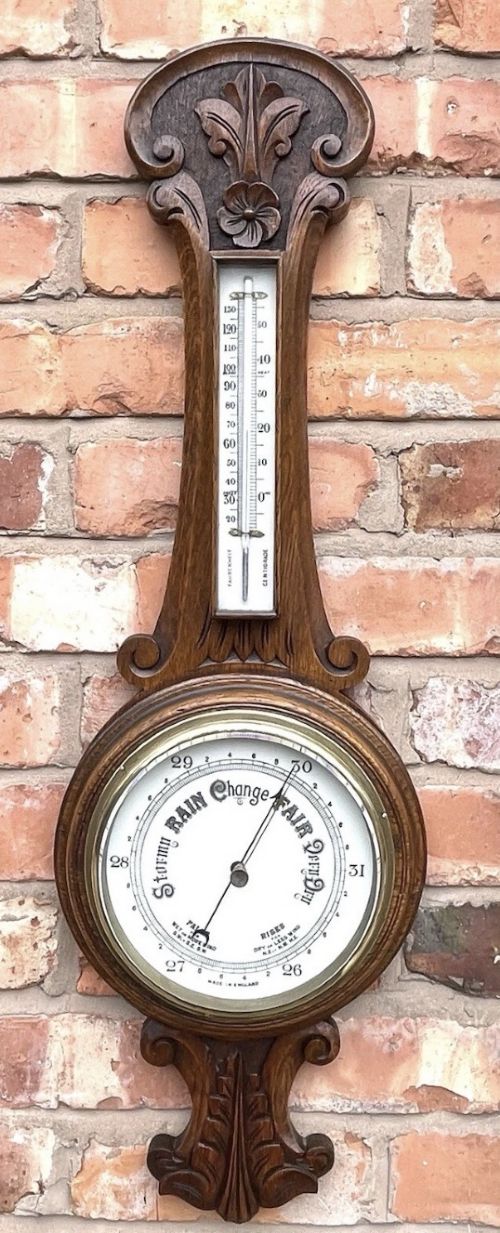


Edwardian Oak Wall Clock
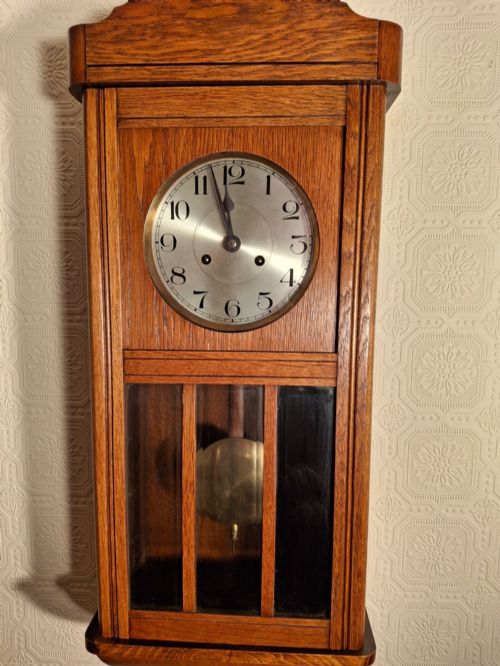
An edwardian oak wall clock brings honest British timekeeping into a hallway or kitchen with a solid timber case and clear dial.
Edwardian Oak Wall Clock
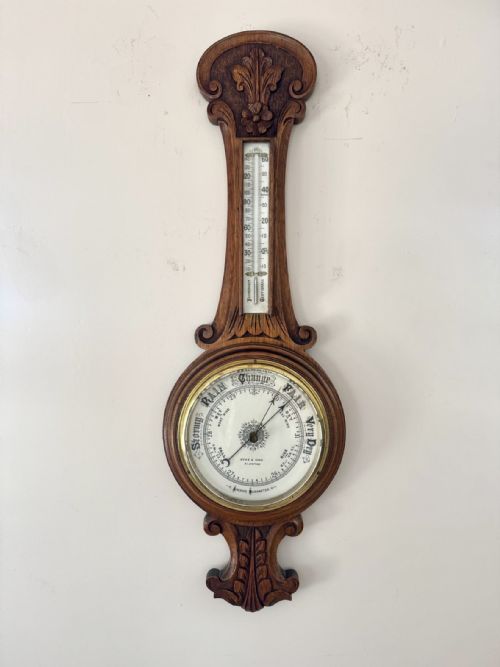
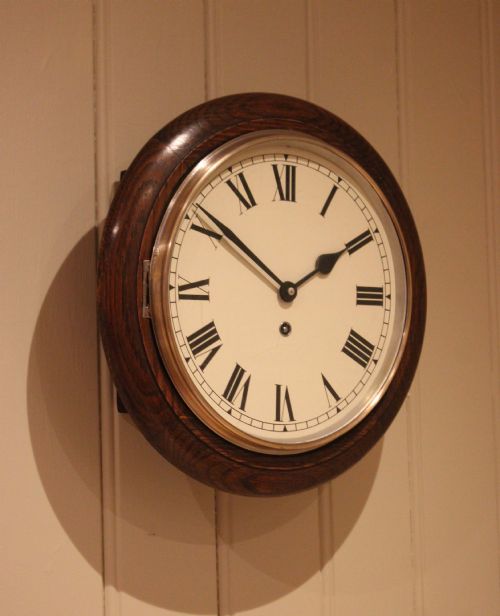
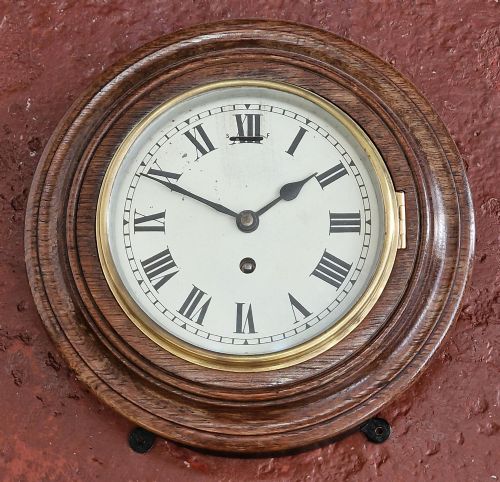
An edwardian oak wall clock encompasses dial clocks, drop-dial variants, banjo barometers, and industrial timepieces. The selection on this page spans the late nineteenth century through to the early twentieth century, including Edwardian, Victorian, and Arts and Crafts periods.
Most pieces display the warm grain of light or golden oak cases paired with brass bezels and glass faces. Buyers encounter both domestic fusee movements and industrial electric or time recorder systems.
Originating primarily from English workshops, these items served practical timekeeping roles in homes, offices, and factories. The typical piece relies on a straightforward dial design intended for daily utility and clear legibility.
What varies in quality
Quality rests upon the crispness of the oak case carpentry and the original condition of the dial and movement. Better examples retain their precise brass work, clear lettering on the face, and substantial timber housing without excessive alteration.
The sophistication of the internal movement dictates much of the distinction between standard timepieces and higher grade instruments. Fusee movements and specialist retailers add notable provenance and mechanical merit to individual clocks.
Some timekeepers doubled as industrial clocking-in machines, proving that even antique oak walls had to watch the punch card.
Hyde & Sons Sleaford·Gledhill Brook
The Edwardian Oak Wall Clock Glossary
- Fusee
- A conical pulley used in mechanical clocks to maintain even power as the mainspring unwinds. This mechanism helps the clock maintain consistent accuracy throughout its running cycle.
- Drop-dial
- A clock case where the dial section sits above an extended trunk that houses the pendulum. This configuration accommodates the drop in the pendulum length while providing a balanced wall presence.
- Aneroid barometer
- An instrument that measures atmospheric pressure using a flexible metal box rather than liquid mercury. These barometers frequently accompany clocks in carved oak banjo frames.
- Dial clock
- A wall timepiece featuring a prominent circular face designed for rapid reading from a distance. They were standard fixtures in public rooms, offices, and hallways.
- Arts and Crafts
- A design movement prioritising traditional craftsmanship, visible construction, and simple materials over mass-produced ornamentation. Oak furniture and clocks from this tradition display honest joinery and restrained carved decoration.
Edwardian Oak Wall Clock: Frequently Asked Questions
How do I wind an edwardian oak wall clock?
Use the provided key to turn the winding arbor in the correct direction until you feel firm resistance. Take care not to overwind the spring, as this can damage the internal mechanism.
Most traditional eight-day movements require winding once a week on the same day to maintain steady timekeeping. Keep the key in a safe place near the clock for convenience.
Where should I hang a heavy oak wall clock?
Mount the clock directly into a solid wall stud or use heavy-duty wall fixings rated for the weight of the timber case. Secure mounting prevents vibrations that might disrupt the pendulum swing.
Position the clock at eye level in a hallway, kitchen, or living room away from direct sources of heat and dampness. Stable room conditions help preserve the oak case and the metal movement.
How do I tell an Edwardian clock from a Victorian one?
Examine the case styling and the nature of the woodwork for clues regarding the period of manufacture. Victorian pieces often feature heavier proportions and darker finishes, whereas Edwardian examples frequently showcase lighter oak and simpler lines.
Makers' marks, paper labels inside the case, and the style of the numerals on the dial also provide helpful context. Comparing the construction details against the recorded production eras helps confirm the timeline.
Do these clocks keep accurate time?
Mechanical wall clocks from this era can achieve reliable daily timekeeping when properly serviced and adjusted. Environmental factors like temperature changes in the room may cause minor variations.
Setting the pendulum properly using the regulation nut at the bottom allows you to speed up or slow down the beat. Regular cleaning by a professional horologist ensures the gears operate smoothly.