


Oak Dial Wall Clock
An oak dial wall clock brings reliable timekeeping and solid craftsmanship into a room.
Oak Dial Wall Clock
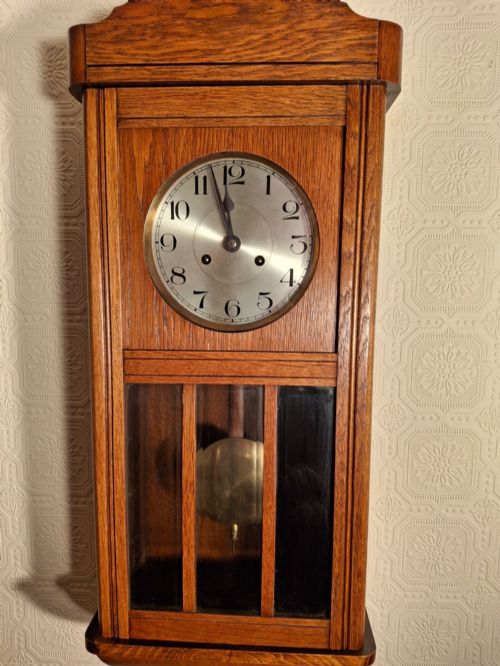
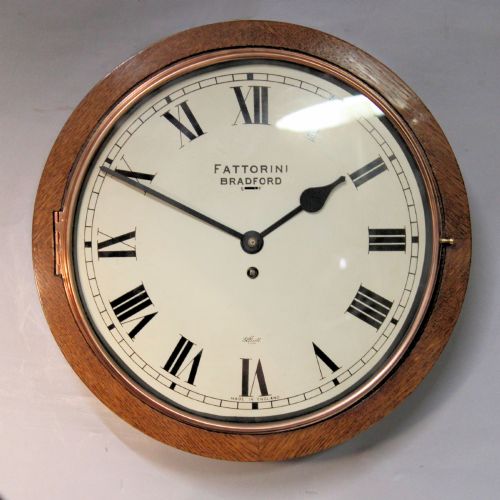
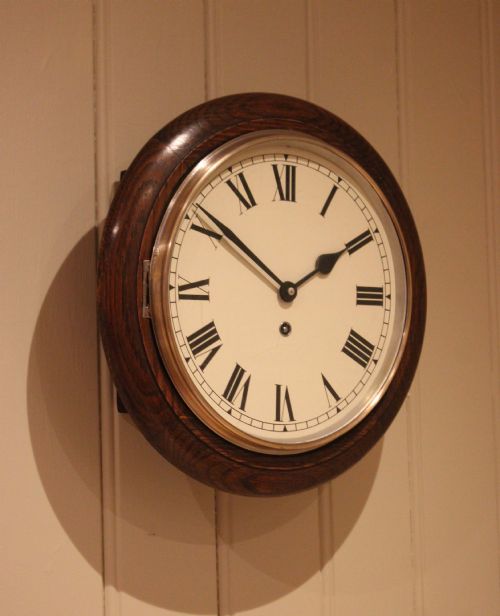
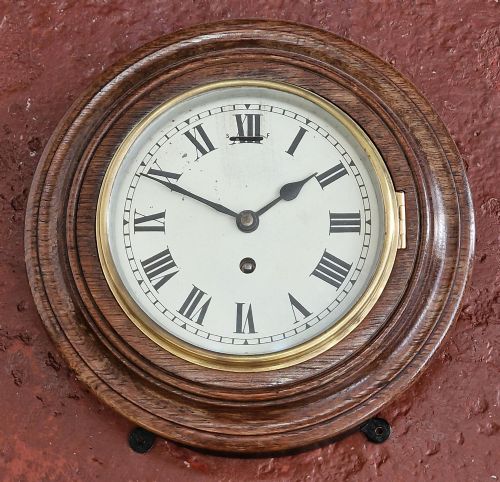
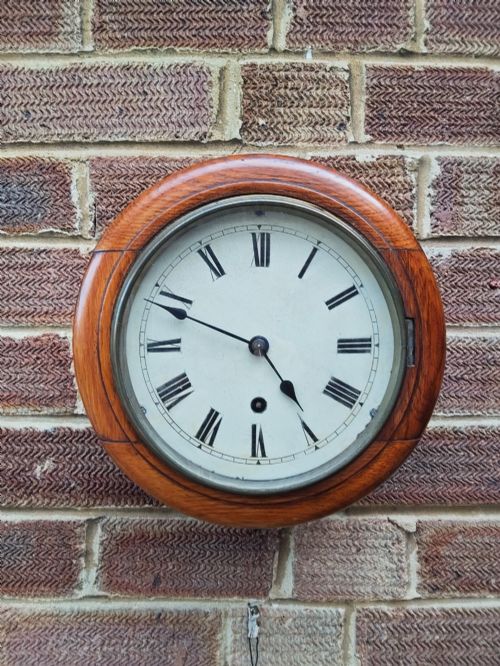
An oak dial wall clock is a circular-faced timepiece designed to hang on a wall, housed within a sturdy timber case. You will frequently encounter Victorian and early twentieth-century examples on this page, often featuring fusee movements.
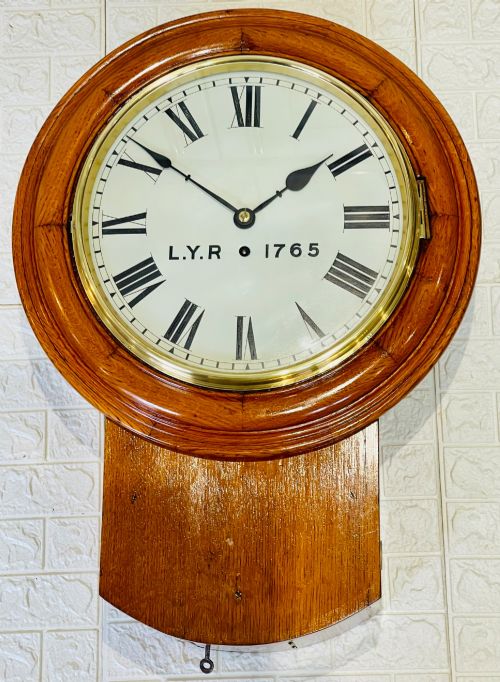
The form spans straightforward timepieces and drop-dial variants with extended lower cases. Railway, school, and factory clocks appear alongside domestic pieces in golden or light oak.
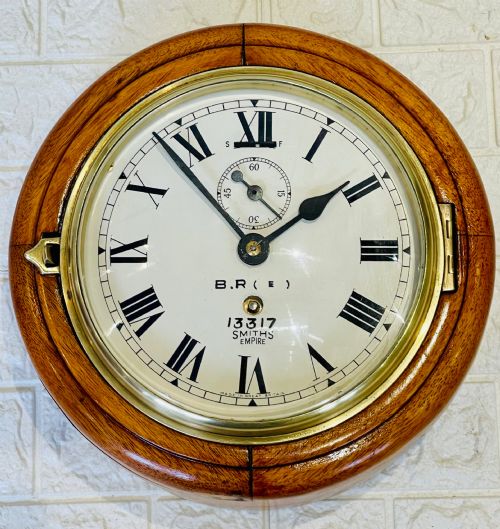
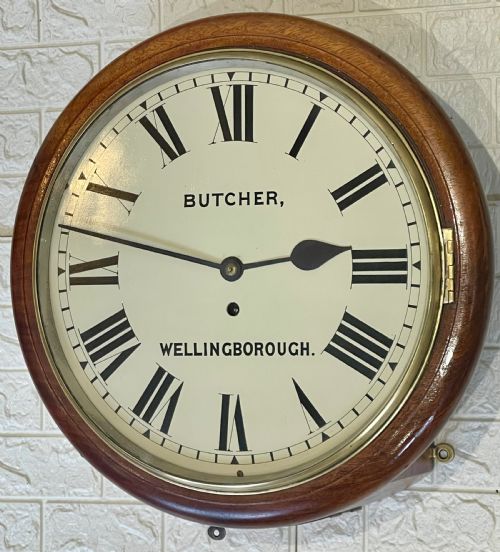
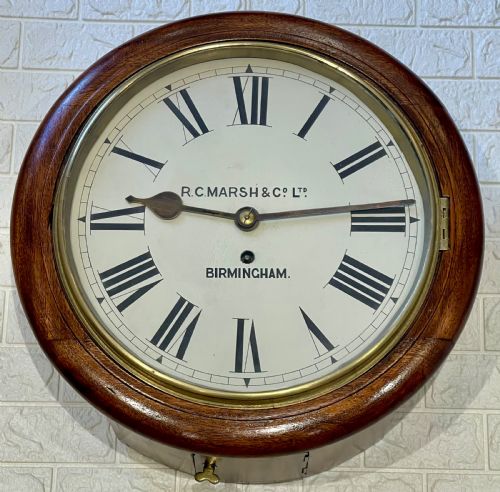
Originating largely from British workshops and retailers, these clocks combine utilitarian purpose with domestic presence. Their plain or brass-trimmed faces display Roman or Arabic numerals behind glass.
How they were made
The cases utilise solid oak, sometimes shaped into drop-dial profiles or fitted with brass inlays and carved wood details. Glazed doors protect the paper, enamel, or ceramic dials set within.
Mechanically, they rely on brass movements, including chain-driven fusee systems and lever escapements for steady timekeeping. Iron and brass components work together inside the wooden frames to drive eight-day or thirty-hour movements.
Listings feature oak, brass, glass, and enamel across periods ranging from the eighteenth century to the mid-twentieth century.
What varies in quality
The refinement of the movement distinguishes standard utility pieces from finer work. Fusee movements, particularly those signed by notable makers, represent a higher standard of clockmaking than simpler spring-driven alternatives.
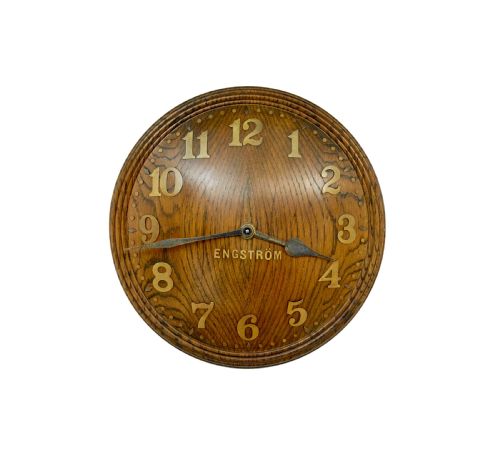
Cabinetwork also sets examples apart, from plain timber boxes to cases with well-figured golden oak, brass bezels, and carved decoration. The clarity and preservation of the dial face further influence the overall character of the piece.
Elliott·Zenith·Dent of London·Henry Deykin Worcester·Harrods·J Hummel of Worcester·Camerer Cuss·Charles Frodsham
The Oak Dial Wall Clock Glossary
- Fusee
- A conical pulley connected to the mainspring by a chain or cord, designed to equalise the declining power of the spring as it unwinds. This mechanism helps the clock maintain a consistent rate throughout its run.
- Drop-dial
- A clock case featuring a circular dial at the top and an extended lower trunk, often with a glazed pendulum window. The shape accommodates a longer drop for the pendulum or weight.
- Lever escapement
- A mechanism that controls the release of the gear train to deliver impulses to the balance or pendulum. It allows clocks to operate reliably even when mounted on vibrating walls.
- Dial
- The face of the clock where the hours and minutes are marked. On these pieces, dials are typically protected by a hinged brass bezel and curved glass.
Oak Dial Wall Clock: Frequently Asked Questions
How do fusee movements work?
A fusee movement uses a conical pulley and chain to regulate the pull of the mainspring. As the spring unwinds, the chain rides higher on the cone to maintain steady power.
This clever design ensures the clock keeps accurate time right up until it needs winding again.
Where were these clocks used?
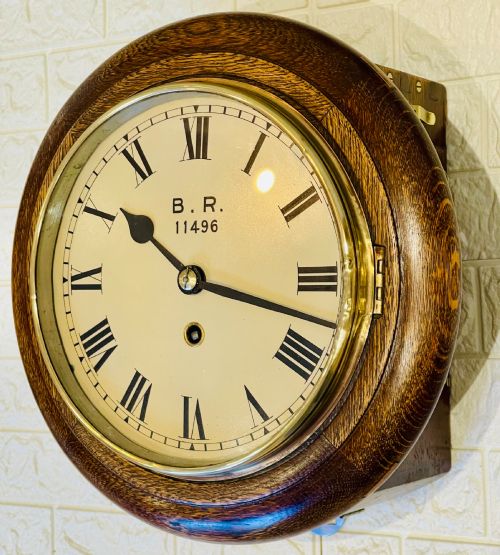
Many of these pieces served in public buildings, railway stations, post offices, and schools. Others were built for domestic rooms where reliable timekeeping was essential.
Railway and institutional examples often bear company lettering or stamps on their dials.
How do I wind the clock?
Most fusee and striking models require a matching winding key inserted into a small hole on the dial face. Turning the key carefully winds the spring or pulls up the chain.
Take care not to overwind the movement, stopping as soon as you feel firm resistance.
How do I date an oak clock?
Dating relies on a combination of case style, dial materials, and movement construction. Victorian and Edwardian pieces often show distinct lettering styles and cabinet timber finishes.
Makers' signatures or railway stamps on the dial or movement backplate provide the most precise clues.