
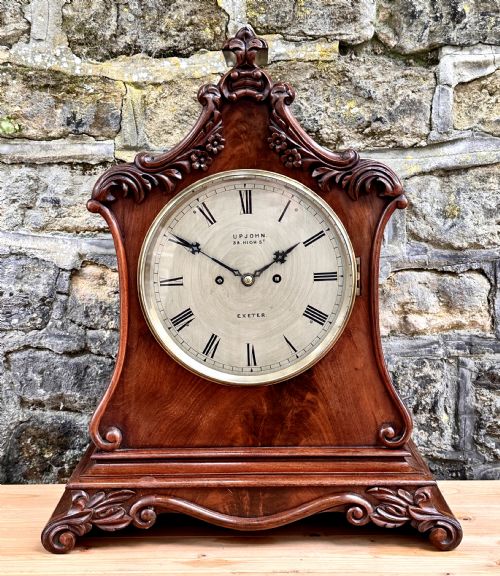
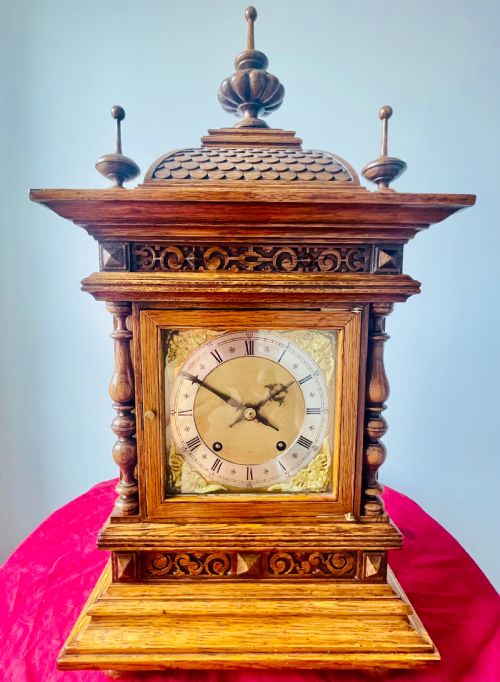


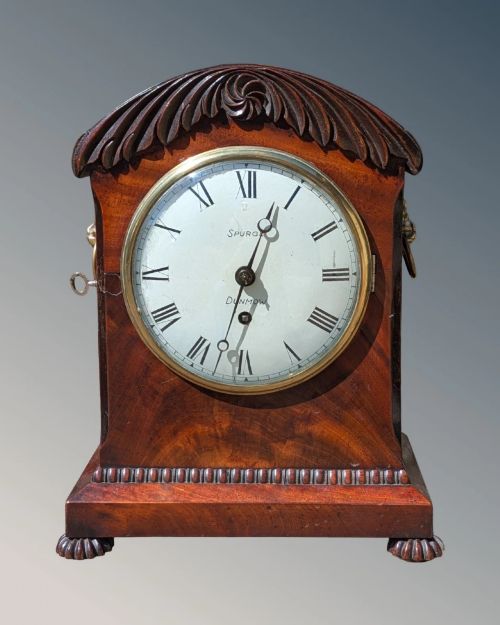

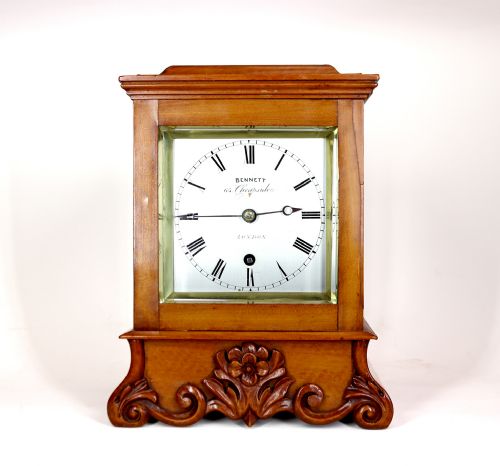


Victorian Carved Bracket Clock
These Victorian carved bracket clocks bring heavy timber, brass movements and precise timekeeping directly into a room.

Victorian Carved Bracket Clock
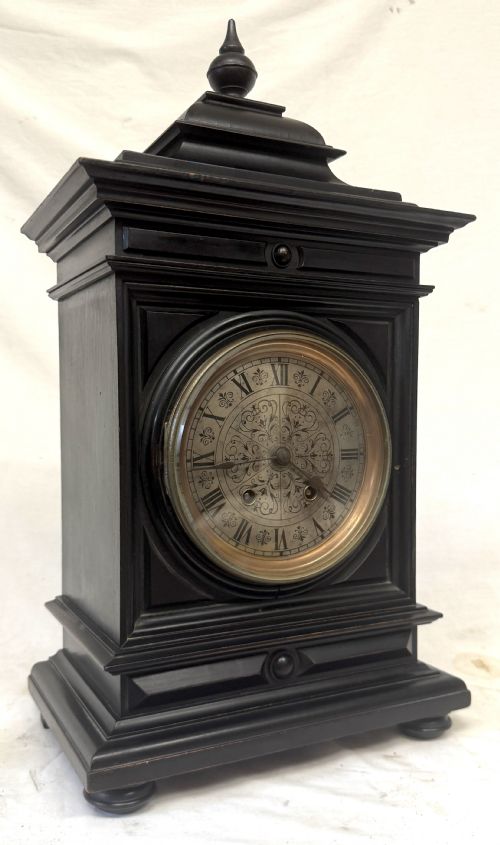
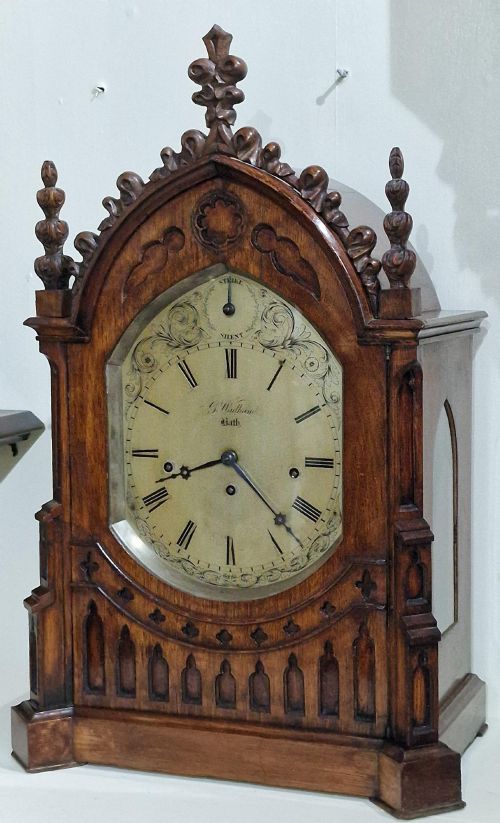
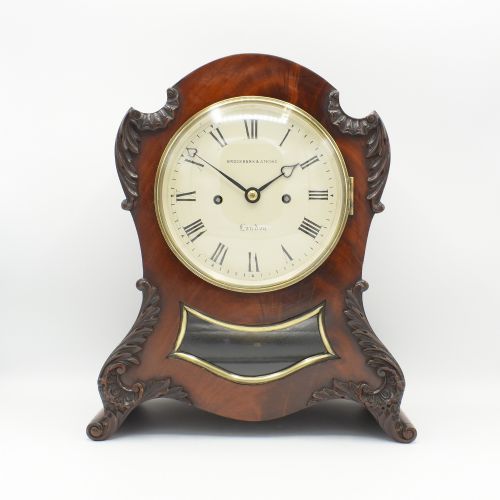
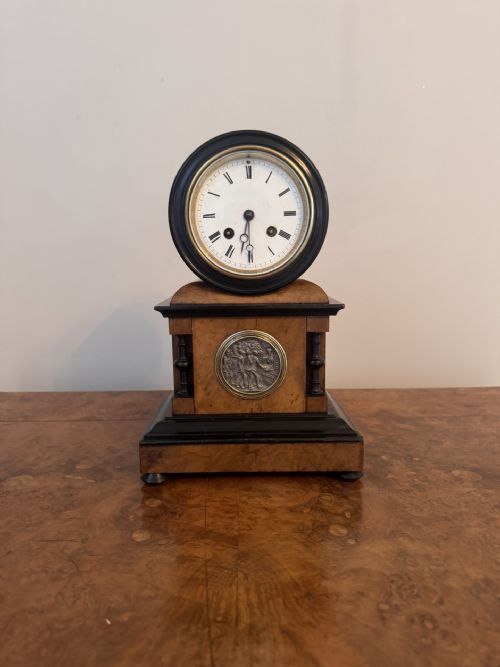
When you search for a victorian carved bracket clock, you encounter substantial timepieces designed to sit on a table, shelf or dedicated wall bracket. The selection includes examples in mahogany, oak, walnut and ebonised wood from various decades of the nineteenth century.
Makers housed complex movements within architectural wooden cases, incorporating styles from Gothic Revival to French Rococo. Most pieces rely on fusee or triple fusee mechanisms to drive the striking trains and chimes.
How they were made
Craftsmen shaped solid timbers such as mahogany, oak and burr walnut, applying hand carving and ebonising to enrich the surfaces. They fitted glass doors and brass bezels to protect the silvered, enamel or brass dials.
Interior mechanical assemblies utilised brass plates, steel pivots and fusee chains or cords to maintain even tension as the mainspring wound down. Makers engraved backplates and signed dials to record their workshop origins.
Victorian Carved Bracket Clock Retail Price Guide 2026
Typical asking prices for victorian carved bracket clock among the pieces listed under this phrase on Sellingantiques today, from the lower quarter to the upper quarter. They describe what is for sale here now, not the wider market.
Listings feature movements by English and German makers housed in mahogany, oak, walnut and ebonised timber.
What varies in quality
Depth and crispness of the hand carving separate standard production models from exceptional workshop output. Timber selection dictates the visual weight, with figured burr walnut and dense mahogany commanding attention.
The complexity of the movement, such as triple fusee or quarter-striking capability, dictates the mechanical standard of the piece. Engraved dial details and signed backplates reflect the standing of the original maker.
Winterhalder & Hofmeier·Lenzkirch·Brockbanks & Atkins·Sir John Bennett·Mappin & Webb
The Victorian Carved Bracket Clock Glossary
- Fusee
- A conical pulley designed to equalise the power of the mainspring as it unwinds. This mechanism helps the clock maintain consistent timekeeping throughout its run.
- Bracket clock
- A portable timepiece originally designed to sit on a wall bracket to elevate it for better sound distribution. Later examples often stood directly on mantelpieces or tables.
- Silvered dial
- A brass clock face treated with a silver solution to create a matte metallic finish. Numbers and maker details are then engraved and filled with dark wax.
- Quarter-striking
- A mechanism that sounds the quarters of the hour on bells or gongs in addition to striking the full hour. It requires a more complex gear train than a standard time-and-strike movement.
Victorian Carved Bracket Clock: Frequently Asked Questions
How do I wind a fusee clock?
Use the appropriate winding key on the dial arbor, turning it steadily until resistance indicates the spring is fully wound. Avoid over-winding, as this can strain the chain and movement.
Ensure you do not touch the delicate escapement or balance components inside the case while handling the key. Regular gentle winding preserves the tension of the brass mechanism.
What is the difference between a bracket clock and a mantel clock?
Historically, bracket clocks were portable spring-driven timepieces placed on small wall shelves or tables to assist with sound projection. Mantel clocks evolved later and sat directly on the fireplace mantel.
Many nineteenth-century examples blur these definitions, as clockmakers built them for general table or shelf placement regardless of their traditional name.
Where should I place a heavy wooden clock?
Position the clock on a stable, level surface or a dedicated wall bracket screwed firmly into masonry or timber studs. A steady foundation prevents vibrations that can disrupt the pendulum or balance wheel.
Keep the piece away from direct sunlight, radiators and damp exterior walls to protect the timber veneer and movement oils from degradation.
How do I identify the period of a carved clock?
Examine the timber choices, carving motifs and dial style to determine the likely decade of manufacture. Mid-nineteenth-century pieces often favour dense mahogany and simpler architectural cases, while later decades introduce elaborate Gothic or Rococo ornamentation.
Look for maker signatures on the dial or movement backplate, which often correspond to known working periods of specific firms or provincial watchmakers.