






Walnut Vienna Clock
These walnut vienna clock examples are precise timekeepers built for grand domestic interiors during the nineteenth century.
Walnut Vienna Clock
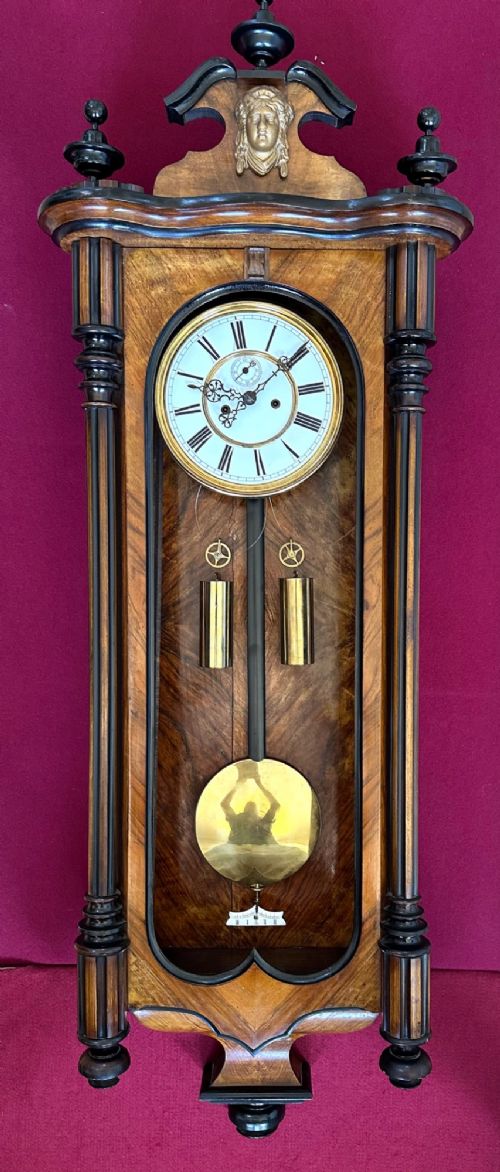
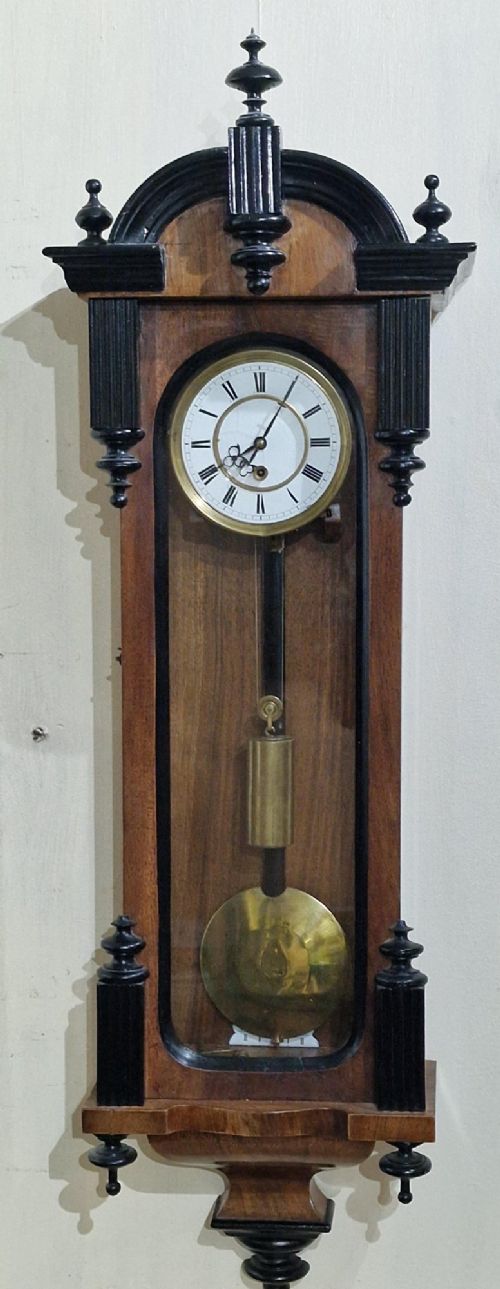
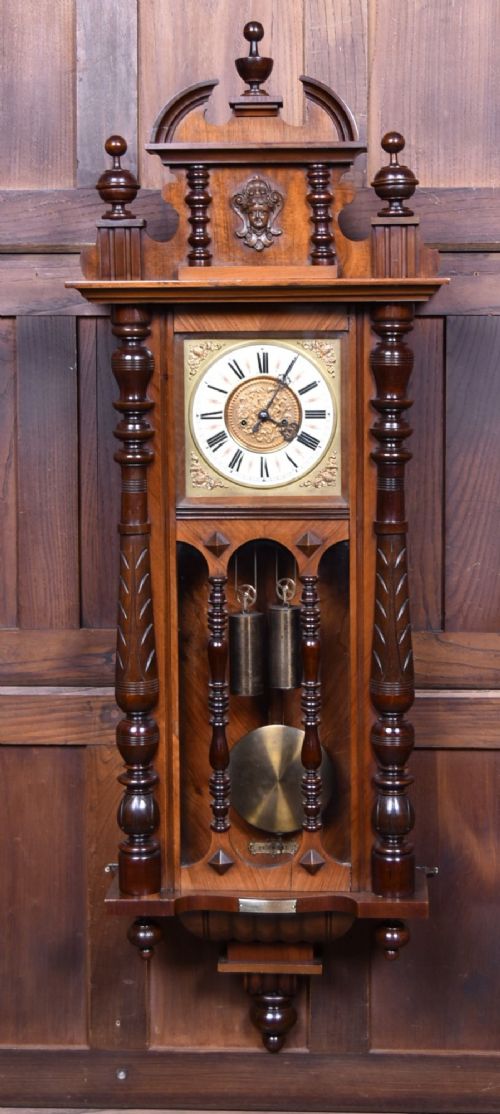
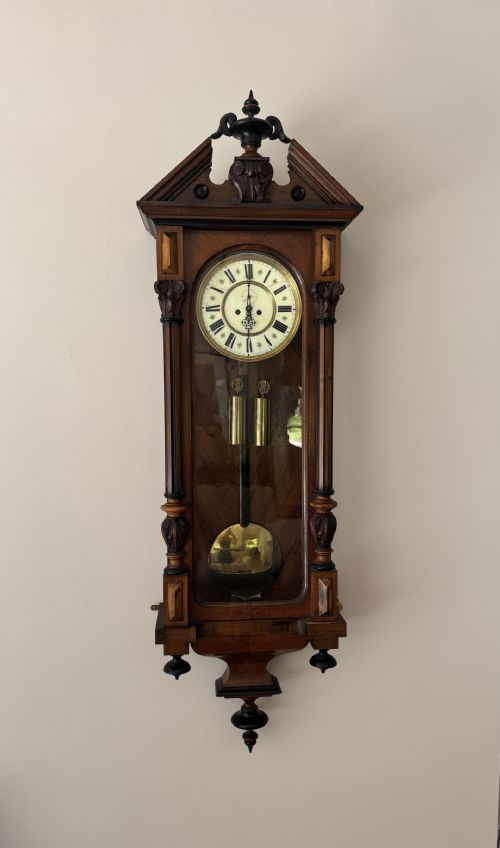
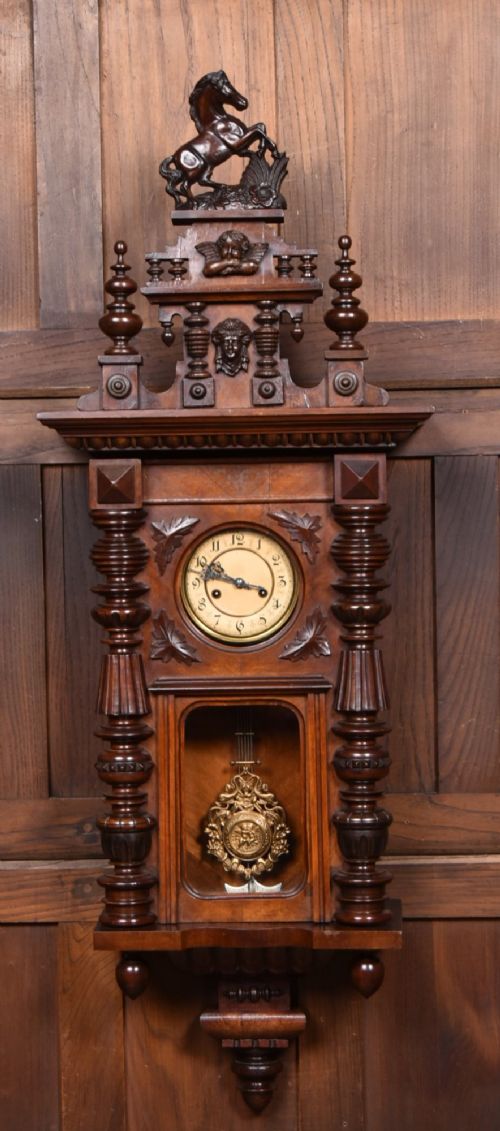
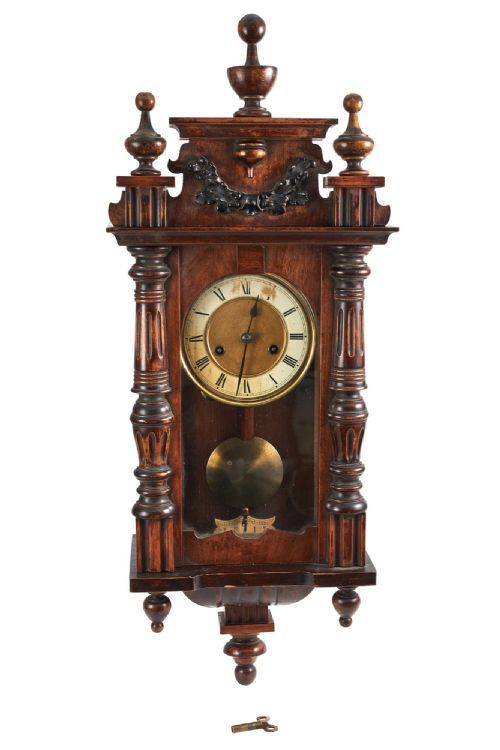
A walnut vienna clock is a wall-hanging precision timepiece originating from nineteenth-century Austrian and German workshops, designed for domestic interiors. The pieces on this page span the Victorian era, specifically appearing in formats from single weight regulators to large triple weight systems.
Buyers will encounter various configurations including eight-day striking movements, month-duration pieces, and drop dial wall clocks. The Victorian examples dominate the selection, showing distinct regional styles such as Biedermeier and the classic Vienna Regulator.
How they were made
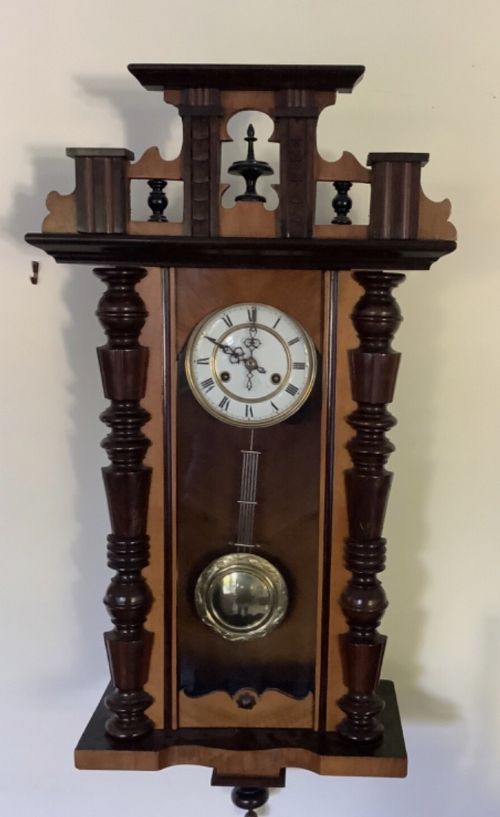
Cases are constructed from walnut, frequently augmented with burr walnut veneers or ebonised wood to create dark contrast against the grain. Glazed doors protect the dial and pendulum, allowing a clear view of the brass weights and mechanisms.
Dials utilise enamel for clarity, paired with brass components within the movement. Carved wooden ornamentation often decorates the crest and base of the walnut cases.
Some clocks feature small side glass panels so curious visitors could spy on the ticking brass innards without opening the case.
What varies in quality
The sophistication of the movement dictates the upper tier of the range, moving from simple spring-driven timepieces to complex double and triple weight regulators with grande sonnerie striking capabilities. Case execution also separates examples, with finely carved solid walnut and burr walnut veneers representing superior craftsmanship over simpler construction.
Signed movements by known makers elevate individual pieces, while the crispness of the enamel dial and the proportional balance of the carved wooden case determine the overall success of the design.
AG Lenzkirch·Gustav Becker·Johann Baptist Beha·Junghans
The Walnut Vienna Clock Glossary
- Vienna Regulator
- A precise weight-driven wall clock developed in nineteenth-century Vienna, known for accurate timekeeping and long pendulums. These pieces often feature glass-sided cases to display the swinging pendulum and brass weights.
- Grande Sonnerie
- A complex striking mechanism that chimes the hours and the quarters on every quarter hour. This movement requires multiple weights or spring barrels.
- Ebonised Wood
- Timber treated with a finish to imitate expensive ebony, frequently used on these clock cases for contrasting mouldings and architectural details. It provides a dark, matte or polished border that highlights the lighter walnut grain.
- Burr Walnut
- Wood harvested from walnut tree growths, producing swirling, intricate grain patterns used as veneer on high-status clock cases. This material is selected for decorative panels on the front of the case.
- Double Weight
- A movement powered by two suspended weights, typically driving the time and the striking train separately. This configuration requires an eight-day duration between windings.
Walnut Vienna Clock: Frequently Asked Questions
Where should I hang a wall clock?
Mount the clock securely to a solid wall stud using appropriate fixings that can support the substantial weight of the walnut case and heavy brass components. Avoid placing the clock in areas subject to excessive vibrations or fluctuating temperatures.
Level the case carefully on the wall so the pendulum swings with an even beat. Proper alignment is essential for the escapement to maintain accurate time.
How do I tell different periods apart?
Nineteenth-century pieces often display clean Biedermeier lines, while later Victorian examples frequently incorporate heavier carved walnut ornamentation and ebonised detailing. Examining the style of the case and the complexity of the movement helps narrow down the production era.
Signatures on the enamel dial or backplate can also point to specific makers active during the 1860s through to 1900. Material choices like burr walnut veneer become more prominent in certain high-grade Victorian variations.
What is the difference between single and double weight?
A single weight clock typically drives a simpler time-only movement or a basic striking mechanism that requires less power. These pieces are often smaller in scale and suited for domestic rooms.
Double weight clocks separate the timekeeping train from the striking train, providing independent power for the chimes. This setup is common in larger Vienna regulators featuring eight-day movements.