






Victorian Vienna Regulator
These Victorian Vienna regulator wall clocks bring precision timekeeping and walnut cases to the wall.

What a victorian vienna regulator is
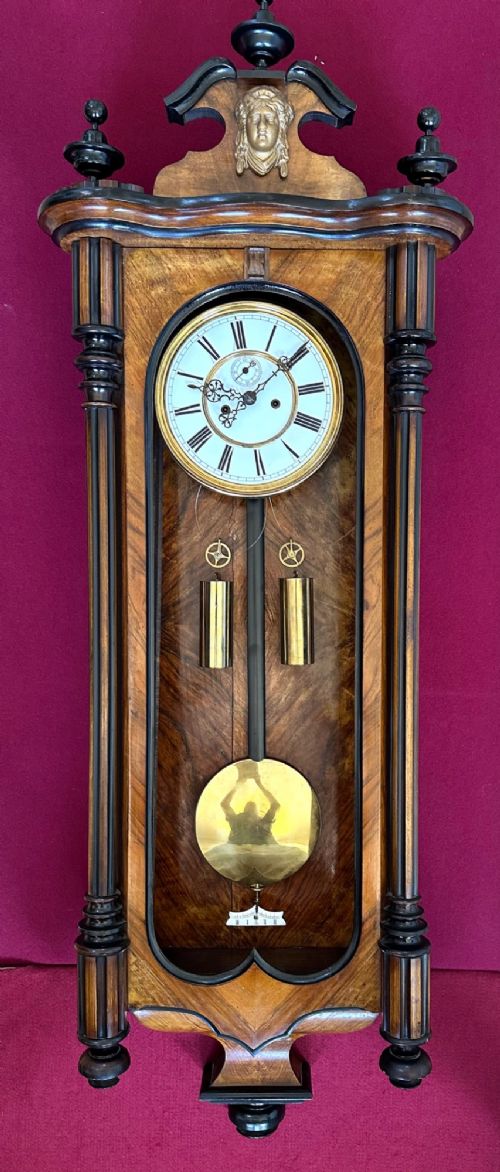
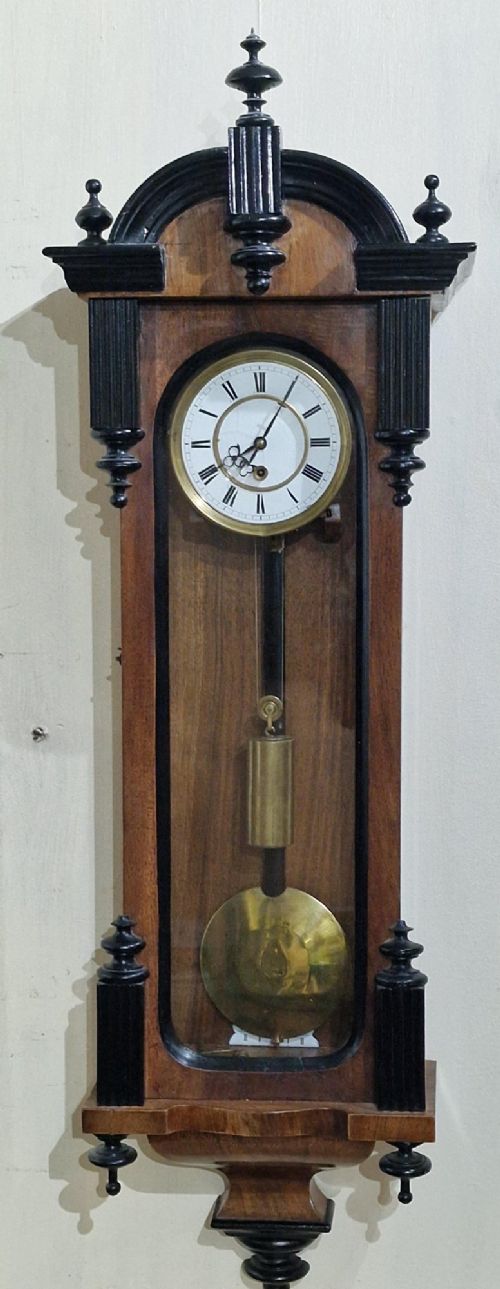
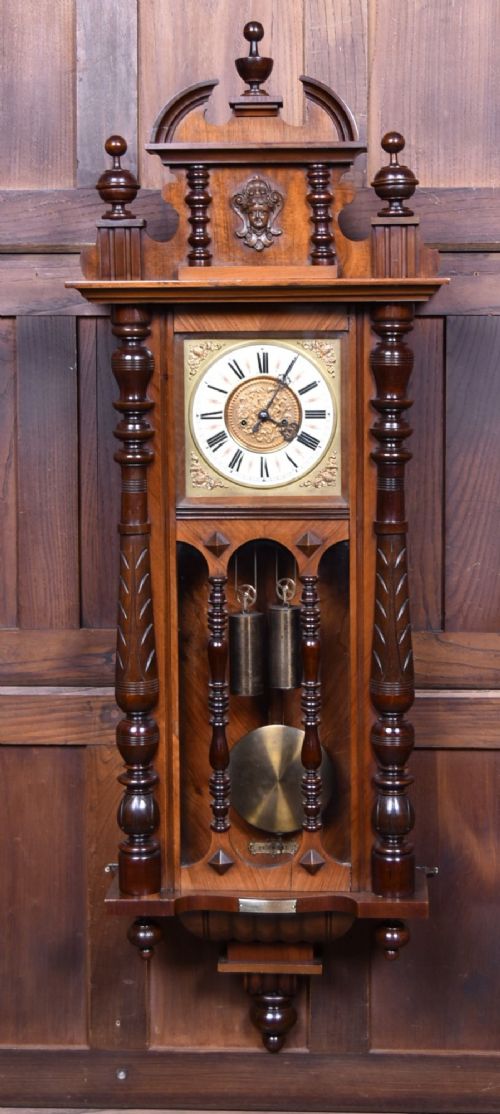
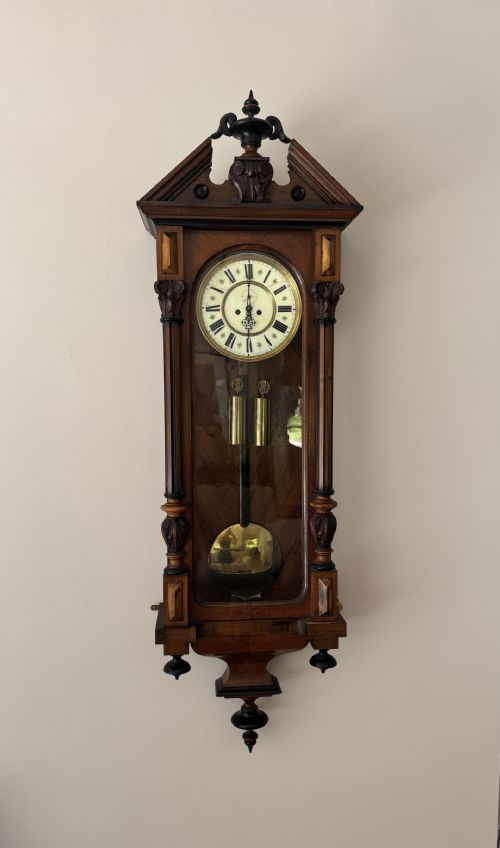
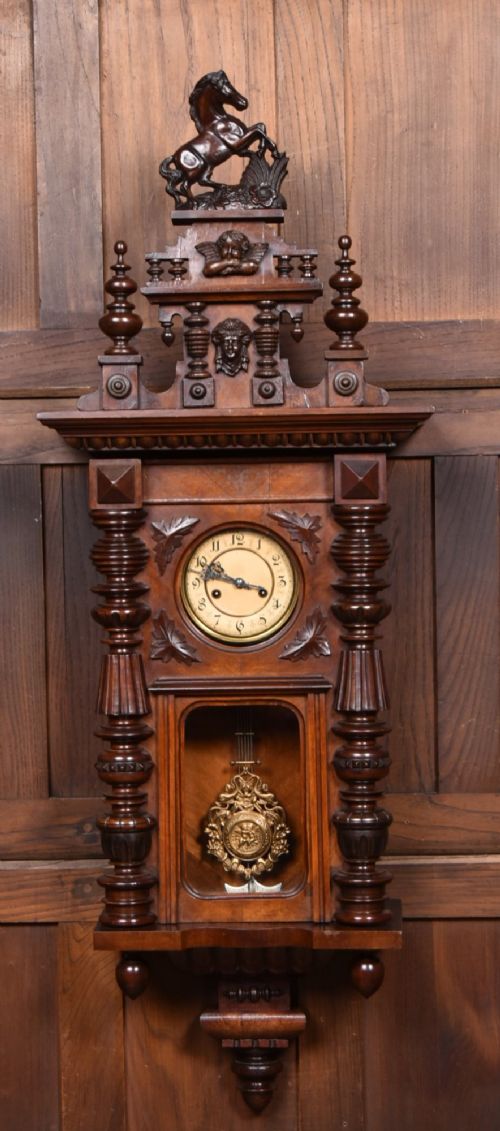
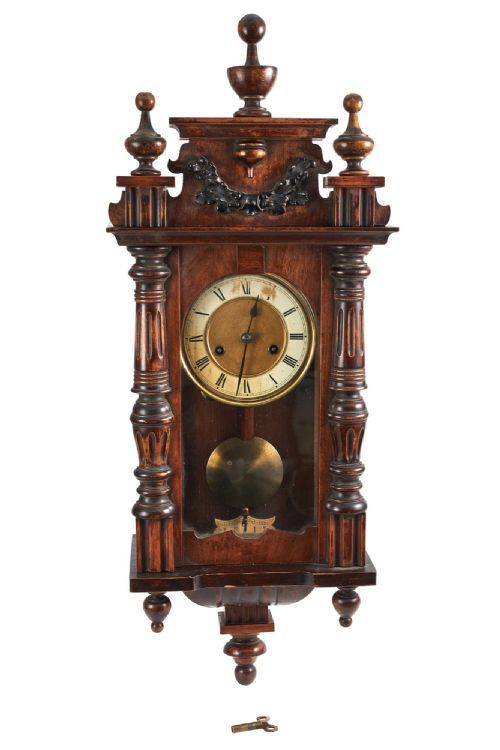
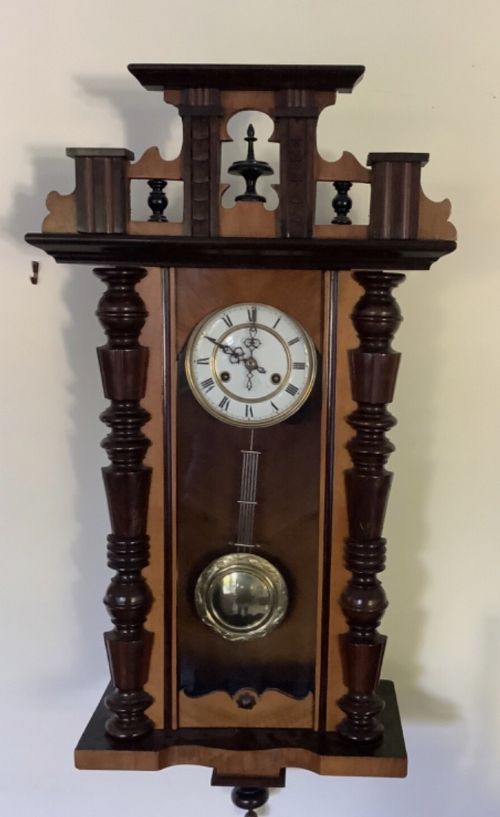
A victorian vienna regulator is a wall clock designed for accuracy, typically featuring a glazed case that displays the swinging pendulum and weights. The pieces found here span the Victorian period, including specific dates such as eighteen sixty, eighteen eighty, and eighteen ninety-six.
Most examples take the form of wall clocks housed in timber cases with glass panels. Collectors encounter single weight, double weight, and spring-driven movements operating within these vertical enclosures.
Origins represented in the record point to British and German workshops, including makers such as Gustof Becker and Lenzkirch. The styles range from standard nineteenth-century pieces to Biedermeier influences.
How they were made
The cases utilise timber construction, predominantly walnut and ebonised wood, alongside mahogany and oak. Glazed doors and windows permit a clear view of the dial and movement inside.
Dials feature enamel surfaces paired with brass bezels and hands. Movements rely on brass gear trains, powered by hanging brass weights or internal springs.
Retail Price Guide 2026
Typical UK retail prices for victorian vienna regulator, calculated from the Sellingantiques database of over a million retail prices indexed since 2003. This retail price guide relies exclusively on Sellingantiques data; no external sources or auction records are used, so the figures do not describe the wider market.
Listings feature walnut, mahogany, oak, and ebonised wood cases fitted with glass and brass.
What varies in quality
Quality differences emerge in the complexity and capability of the movement, ranging from standard time-only mechanisms to month duration movements, striking trains, and Westminster chimes. Finer examples display meticulous carved woodwork and superior timber selection.
The presence of named makers such as Gustof Becker or Lenzkirch elevates an item above standard anonymous production. The choice between single weight, double weight, or spring-driven setups also marks the hierarchy of these clocks.
Gustof Becker·Lenzkirch
The Victorian Vienna Regulator Glossary
- Regulator clock
- A precision timepiece designed for high accuracy, traditionally used as a standard to set other clocks. These wall-mounted pieces display long pendulums and clear enamel dials.
- Month duration
- A movement capable of running for approximately thirty days on a single wind. This complex mechanism separates standard weekly clocks from higher-tier pieces.
- Double weight
- A drive system utilising two hanging brass weights to power the timekeeping and striking functions. Such systems require taller cases to accommodate the drop.
- Ebonised wood
- Timber treated to imitate ebony, creating a dark, glossy finish. This technique appears frequently on nineteenth-century clock cases.
- Westminster chime
- A quarter-hour chiming melody played on multiple gongs or rods. It represents a more intricate acoustic complication found in later pieces.
Frequently Asked Questions
What is a victorian vienna regulator?
A victorian vienna regulator is a precise wall-mounted clock housed in a glass-fronted wooden case. These timepieces display the pendulum and weights clearly.
They emerged during the nineteenth century and were prized for their dependable timekeeping. The category includes various weight-driven and spring-driven movements.
How do I wind the clock?
Winding depends on whether the movement uses hanging weights or an internal spring mechanism. Weight-driven versions require pulling the chains or cords to raise the brass weights.
Spring-driven variants utilise a winding key inserted into the dial face. Care must be taken not to over-wind the mechanism.
Where should I hang a wall clock?
These clocks require a sturdy wall that can support the weight of the timber case and internal components. Stable interior walls away from direct sunlight and damp conditions are ideal.
The case must hang completely plumb to ensure the pendulum swings evenly and the movement keeps accurate time.
How do I tell different periods apart?
Period identification relies on timber choice, case style, and movement markings. Earlier pieces often feature walnut and Biedermeier influences, while later examples incorporate oak or mahogany and more complex chiming functions.
Maker signatures on the movement plates or dials also provide definitive dates and origins.