





Traditional Regulator Clock
A traditional regulator clock offers steady timekeeping housed in handsome wood, making it a reliable centrepiece for any room.
Traditional Regulator Clock
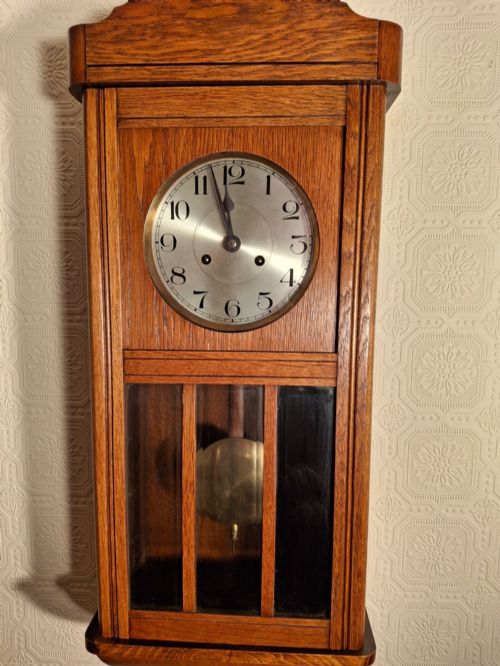
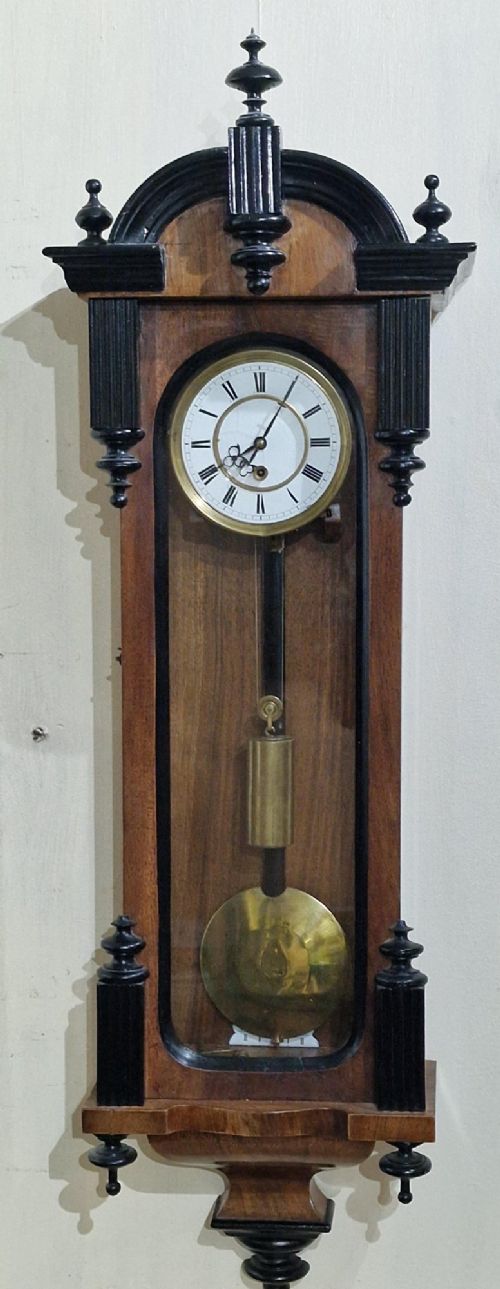
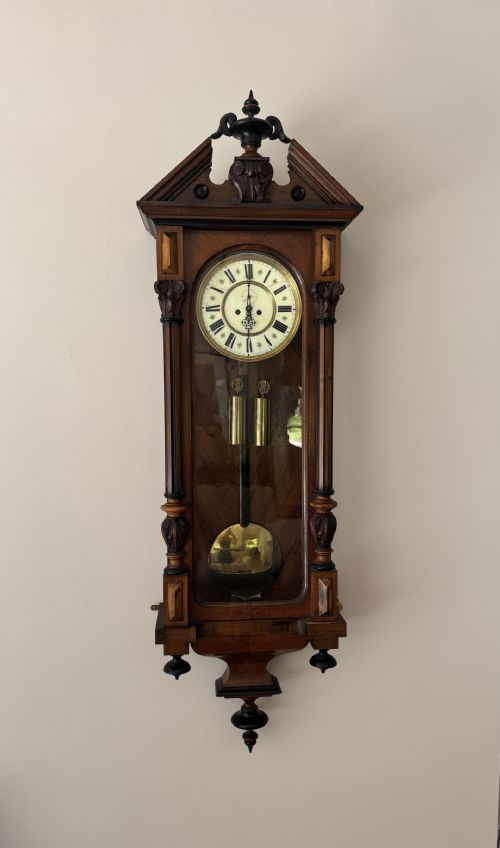
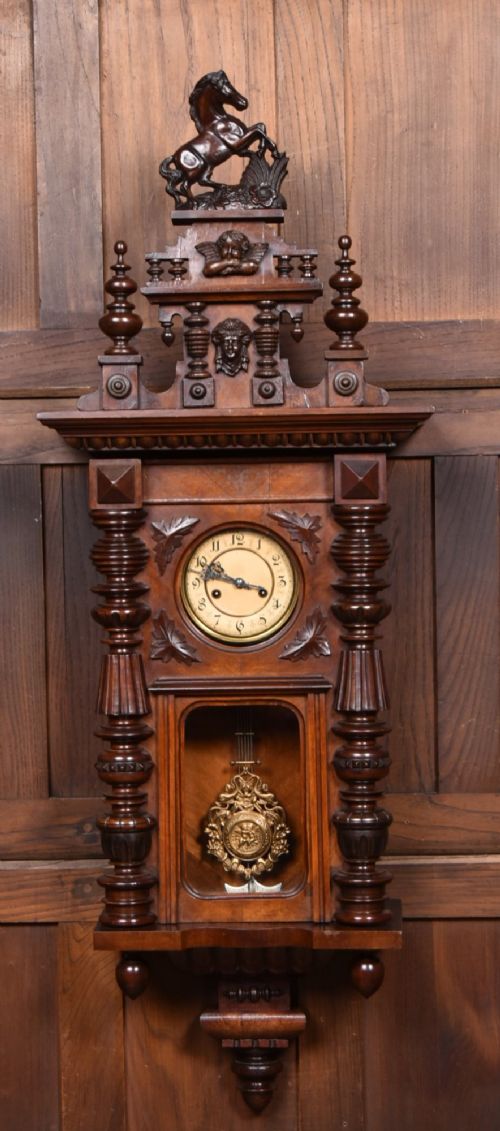
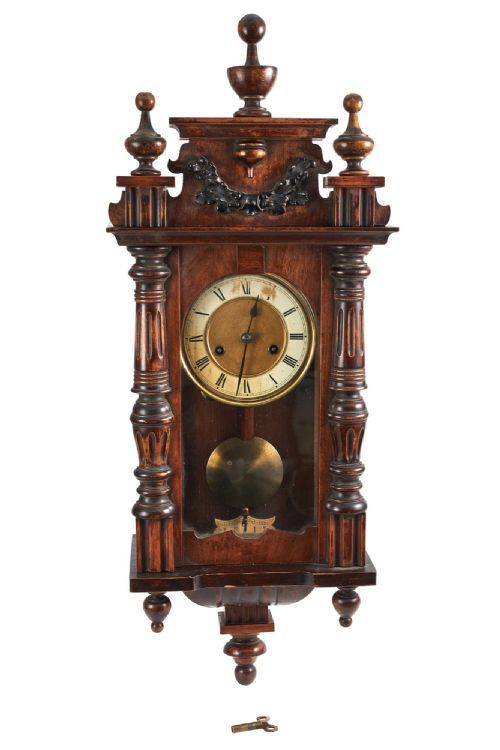
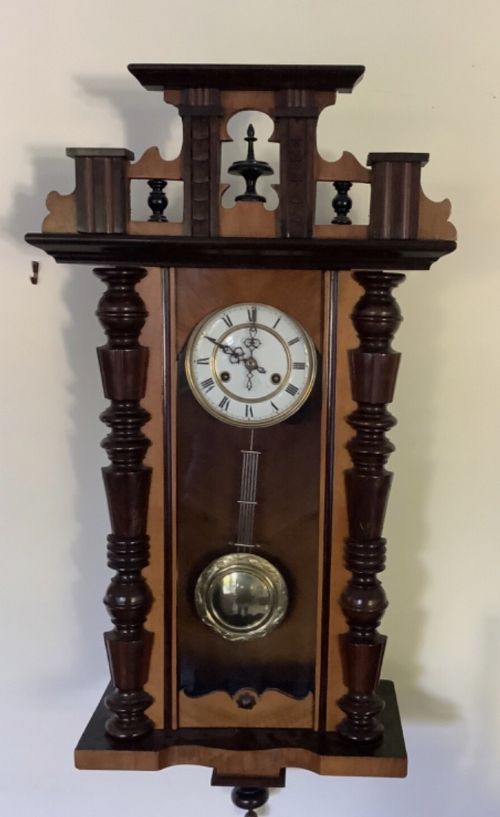
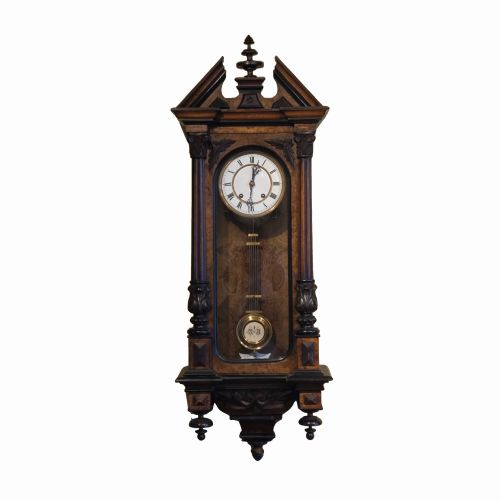
A traditional regulator clock is primarily a precision timekeeper designed for accurate observation, most commonly appearing on this page as a Vienna wall clock from the nineteenth century. These pieces span wall clocks, longcase clocks, and mantle clocks, originating from periods such as the Victorian era, the Regency era, and the Biedermeier style.
Buyers will frequently encounter walnut or mahogany cases featuring glass panels that reveal the swinging pendulum and weights. Architectural styles range from plain nineteenth-century designs to carved Victorian, Gothic, and Arts and Crafts variations dating up to the nineteen-twenties.
How they were made
Case makers utilised cabinet timbers such as walnut, mahogany, oak, and ebonised wood, often incorporating brass bezels and weights. Enamel dials with Roman or Arabic numerals provide the face, protected behind glass doors.
Movement assembly involved brass gear trains and steel pinions, paired with pendulums designed for precise motion. Some examples incorporate complex striking trains or double weight systems to drive the movement.
What varies in quality
The standard of cabinetwork sets apart different examples, with finer pieces displaying crisp wood carving, well-matched veneers, and harmonious proportions. Plain pine carcases contrast with richly figured walnut or mahogany housings.
Movement sophistication also dictates quality, distinguishing simple eight-day timepieces from double weight driven regulators or chiming longcase movements made by established makers.
Gillett and Johnston·Johann Baptist Beha·L Epee France·John Taylor London
The Traditional Regulator Clock Glossary
- Regulator clock
- A precision pendulum clock designed for high accuracy and used as a standard to set other timepieces. They typically feature a long, clear dial and a visible pendulum.
- Vienna regulator
- A style of weight-driven wall clock developed in Austria during the nineteenth century. These clocks are noted for their clean architectural lines and glazed side doors.
- Fusee
- A conical pulley used in some spring-driven clocks to maintain equal force on the gear train as the mainspring unwinds. It ensures consistent energy delivery for better timekeeping.
- Drop dial
- A wall clock featuring a circular dial face above a short, hanging trunk or drop case that encloses the pendulum. This form was widely produced in England during the nineteenth century.
- Grandmother clock
- A smaller version of a longcase clock, standing shorter in height while retaining traditional weights and pendulum. They are often cased in mahogany or oak.
Traditional Regulator Clock: Frequently Asked Questions
Where should I hang a wall clock?
Hang your wall clock on an interior partition wall away from direct draughts and vibrations from heavy doors. A stable mounting ensures the pendulum swings evenly.
Ensure the dial sits at eye level so you can easily read the hands and observe the movement of the weights and pendulum through the glass.
How do weight-driven clocks work?
Weight-driven clocks use gravity pulling down on suspended brass weights to power the gear train. As the weights slowly descend over days or weeks, they turn the wheels that drive the hands.
To keep the clock running, you must pull the chains or wind the cords to raise the weights back to the top of the case.
What is a Biedermeier regulator?
A Biedermeier regulator is a central European wall clock dating from the mid-nineteenth century that reflects the clean, understated aesthetic of the Biedermeier period. These pieces emphasise fine wood grain and restrained geometric forms over heavy ornamentation.
They provide a clear view of the pendulum through a long glass door set into a polished walnut or light-timber case.
How do I tell nineteenth century clocks apart?
Nineteenth-century clocks vary significantly by region and style, ranging from Austrian Vienna wall clocks to English drop dial and longcase formats. Examining the timber choice, dial numerals, and case mouldings helps identify the origin and decade.
German and Austrian pieces often utilise walnut veneers and architectural pediments, whereas English variants frequently employ mahogany with brass bezels.