


Glazed Wall Clock
These glazed wall clock selections offer precise timekeeping housed in timber frames designed to hang securely in domestic or public rooms.
Glazed Wall Clock
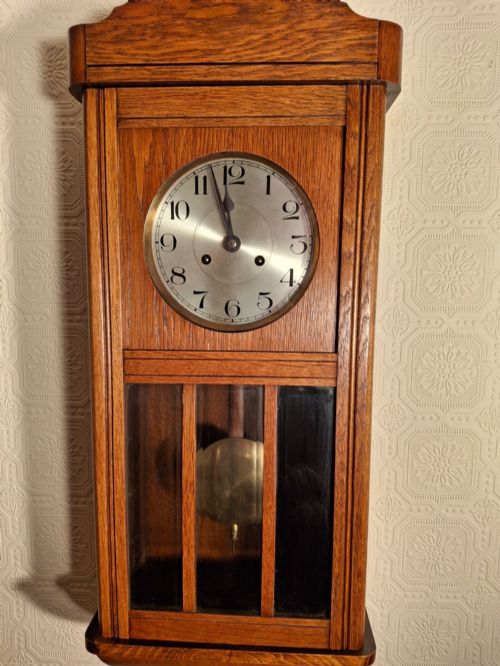
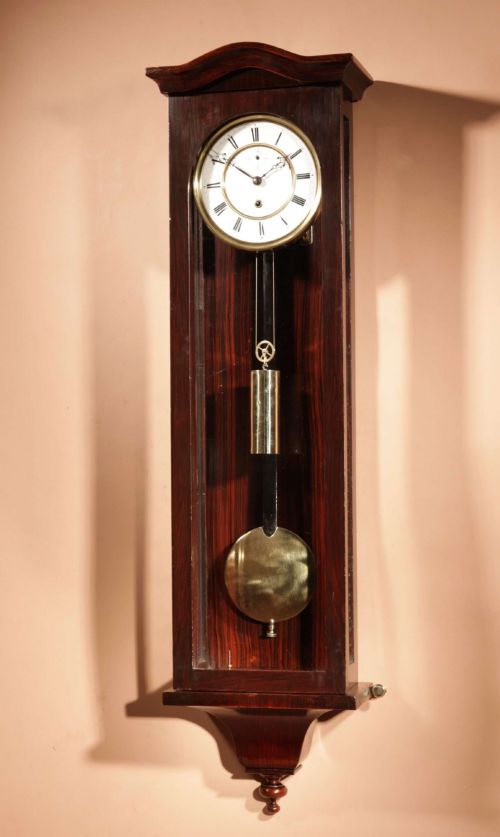
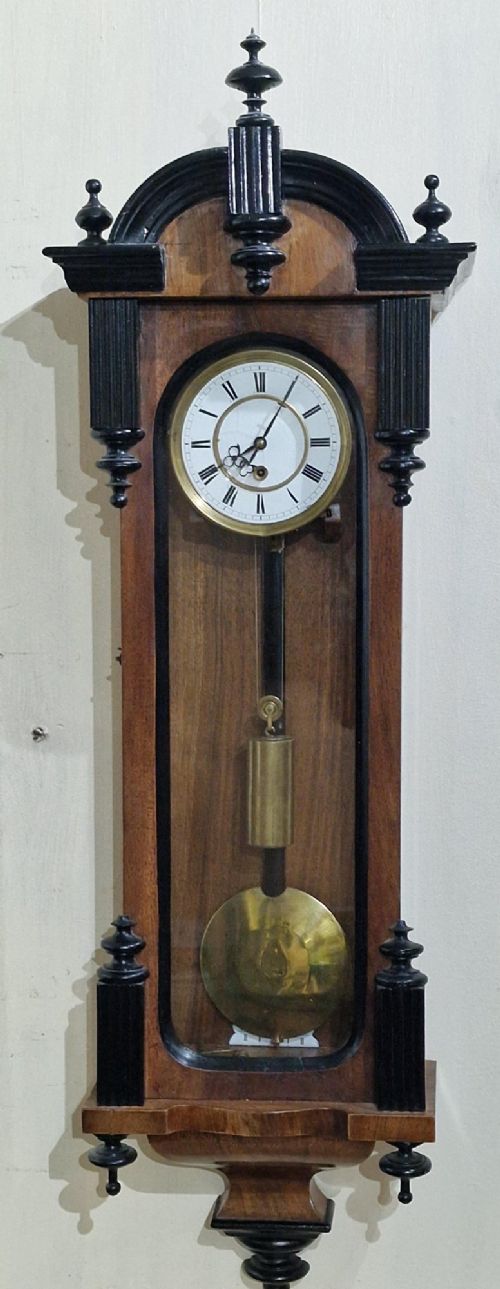
A glazed wall clock provides a clear view of the dial and movement through a glass door or panel set into a wooden case. These pieces range from substantial Vienna regulators to compact Victorian timepiece variants designed for domestic interiors.
The materials span walnut, mahogany, oak, and ebonised wood, housing enamel dials behind protective glass. Brass weights and steel components drive the mechanical actions visible within the timber housing.
Most examples originate from the nineteenth century, including Victorian and Biedermeier periods, alongside later Arts and Crafts and Art Deco interpretations. The structural form prioritises visibility of both the swinging pendulum and the rotating hands.
Materials and construction
Cases utilise timber veneers and solid woods such as walnut and mahogany, shaped into architectural or simple hanging enclosures. Glazing protects the delicate enamel dials and brass bezels from dust and damage.
Movements combine brass plates, steel pinions, and suspended pendulums, powered by weights or springs. Enamel dials feature painted numerals protected behind fitted glass doors.
Glazed Wall Clock Retail Price Guide 2026
Typical asking prices for glazed wall clock among the pieces listed under this phrase on Sellingantiques today, from the lower quarter to the upper quarter. They describe what is for sale here now, not the wider market.
Some models are designed to run for a full month on a single wind, saving the owner from weekly maintenance.
Assessing quality
The refinement of the timber case carving and the choice of walnut or mahogany veneers distinguish standard production from superior workshop output. Maker attribution, such as signed movements by known makers, elevates the standing of an individual clock.
The complexity of the movement, ranging from simple timepieces to month duration mechanisms and Grande Sonnerie striking trains, separates basic utility from high horological achievement.
AG Lenzkirch·Gustav Becker·Charvet
The Glazed Wall Clock Glossary
- Vienna Regulator
- A high-precision pendulum clock developed in Austria during the nineteenth century, featuring a long glazed trunk to display the swinging pendulum. These movements are prized for their accuracy.
- Double Weight
- A movement powered by two suspended weights rather than one, typically driving both the timekeeping train and the striking mechanism. This setup allows for longer operation between windings.
- Enamel Dial
- A clock face made by fusing powdered glass to a metal substrate at high temperatures, producing a durable, glossy white surface. Roman or Arabic numerals are then painted onto this smooth background.
- Fusee
- A conical pulley connected to the mainspring by a cord or chain, designed to equalise the torque as the spring unwinds. This mechanism ensures consistent force is delivered to the gear train.
- Grande Sonnerie
- A complex striking mechanism that chimes both the hours and the quarters automatically on every quarter hour. It represents an advanced level of clockmaking skill.
Glazed Wall Clock: Frequently Asked Questions
How do I wind a wall clock?
Most mechanical wall clocks require a key inserted into holes on the enamel dial to wind the weights or springs. Care must be taken not to overwind the mechanism.
Consult the specific requirements of the movement type, such as eight-day or month duration, to establish the correct winding schedule.
Where should I hang a wall clock?
Mount the clock on a sturdy interior wall capable of supporting the weight of the timber case and metal components. Avoid damp areas or direct sunlight that might damage the wood and dial.
Ensure the wall is flat so the case hangs plumb, which is essential for the pendulum to beat evenly.
What is a regulator clock?
A regulator is a precision timepiece designed to maintain high accuracy, often used as a standard for setting other clocks. They typically feature a clear glazed door to monitor the pendulum and a prominent seconds sub-dial.
These pieces were central to workshops, railway stations, and wealthy households where exact timekeeping mattered.
How do I date a wall clock?
Dating relies on stylistic clues in the wooden case, such as Biedermeier simplicity or Victorian carving, alongside materials like ebonised wood or walnut veneers. Maker signatures on the movement plates provide definitive attribution.
Mechanical developments, such as the transition from spring-driven to weight-driven movements, also help narrow the period of manufacture.