





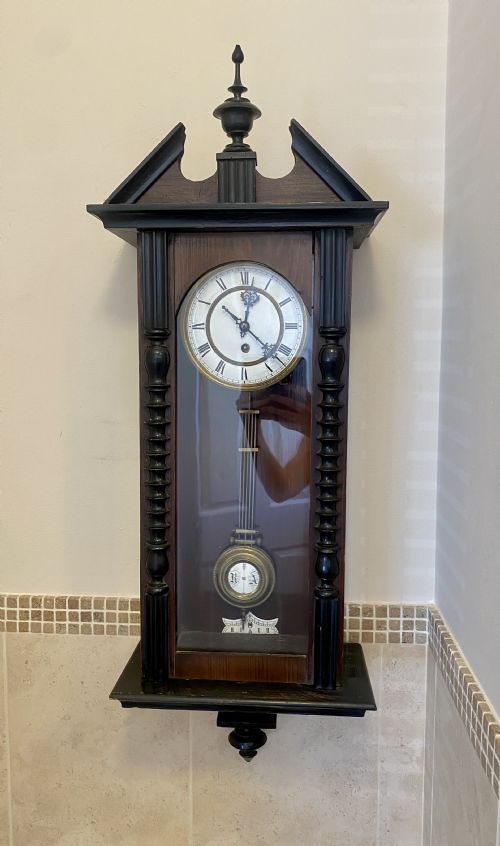

Architectural Wall Clock
An architectural wall clock brings monumental presence and precise mechanical engineering into a room, turning functional timekeeping into striking wall art.
Architectural Wall Clock
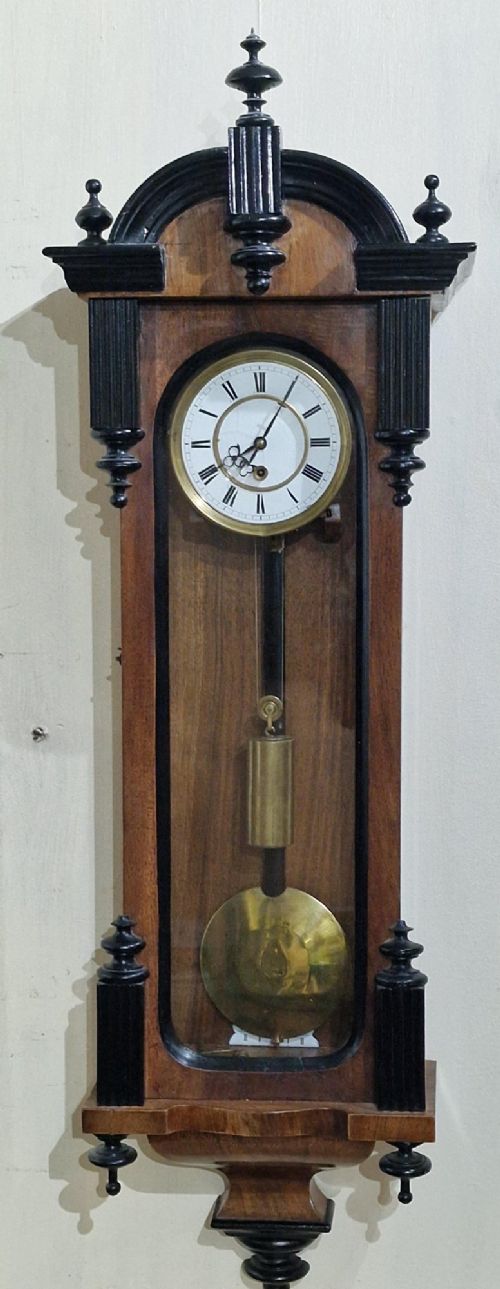
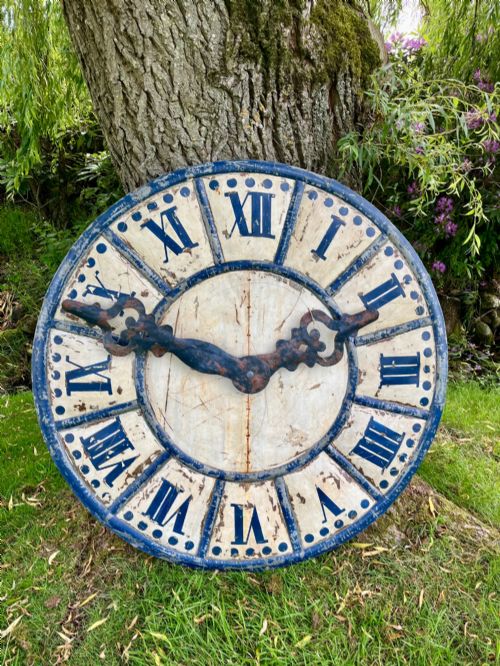
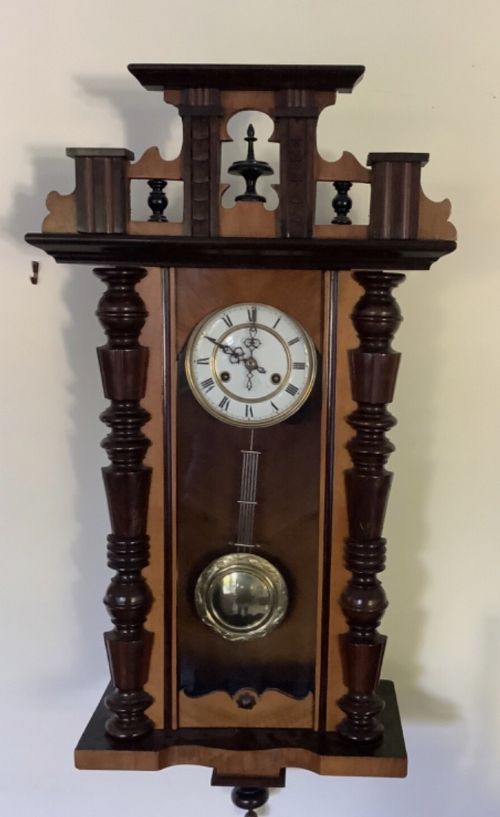
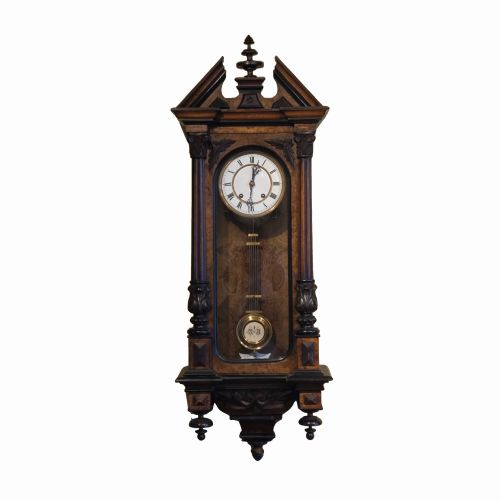
An architectural wall clock encompasses robust timepieces and monumental dials originating from Victorian parlours, French towers, and grand public halls. When exploring an architectural wall clock, collectors encounter everything from refined walnut Vienna regulators to massive cast iron and enamel turret clock faces.
The selection ranges from domestic spring-driven movements housed in architectural wooden cases to large industrial dials salvaged from municipal buildings. These pieces reflect diverse functional origins, including German workshops, Austrian makers, and English public institutions.
Domestic regulator styles feature structured wooden surrounds reminiscent of classical building facades, while larger industrial examples showcase the bold numerals and protective bezels of outdoor and tower installations.
How they were made
Construction relies on durable materials such as walnut, ebonised wood, and brass, paired with protective glass bezels and heavy iron framing. Cases often incorporate architectural mouldings and applied carvings to mimic building facades, housing intricate weight-driven or spring-driven movements.
Some dial faces still bear the faint, soot-stained ghost of municipal smoke from their decades guarding town hall libraries.
What varies in quality
Quality rests upon the crispness of the dial markings, the integrity of the original case timber, and the sophistication of the internal movement. Finer examples retain their original enamel finish without extensive restoration, alongside sophisticated pendulum mechanisms bearing maker signatures.
The proportion and architectural detailing of the wooden surrounds also dictate distinction, with superior walnut cases displaying harmonious grain and well-preserved mouldings. Industrial dials achieve higher status through monumental scale, original weathered patination, and documented institutional provenance.
Johann Baptist Beha·Joyce Whitchurch
The Architectural Wall Clock Glossary
- Regulator wall clock
- A precision timekeeper driven by weights or a heavy spring, designed to keep exact time and usually featuring a long pendulum. These clocks were historically used as reference standards in offices, railway stations, and fine homes.
- Turret clock face
- A large exterior dial originating from a church tower, municipal building, or factory. They are typically constructed from heavy iron, zinc, or enamel to endure the elements.
- Vienna regulator
- A high-grade wall clock developed in Austria during the nineteenth century, characterised by a meticulous movement and a refined wood case. They are celebrated for their exceptional accuracy and elegant proportions.
- Ebonised wood
- Timber treated with a chemical stain or finish to imitate expensive ebony. This technique was widely utilised in Victorian clock cases to provide a stark, formal contrast against white enamel dials.
Architectural Wall Clock: Frequently Asked Questions
Where should I hang an architectural wall clock?
These substantial pieces require a prominent wall with sufficient structural support to bear their weight, particularly models housed in heavy walnut cases or large iron dials. Living rooms, hallways, and studies provide ideal proportions to showcase their commanding visual presence.
Ensure the selected wall allows the pendulum to swing freely if the movement requires one, and position the dial at a comfortable viewing height to appreciate the painted numerals and mechanical details.
How do I wind a Vienna regulator?
Winding requires using the appropriate key to gently tension the springs or raise the driving weights, depending on whether the movement is spring-driven or weight-driven. Care must be taken not to overwind the mechanism, stopping as soon as resistance is felt.
Consulting the specific movement type ensures the pendulum remains in beat and the timekeeping stays accurate after maintenance.
What is the difference between a turret face and a domestic clock?
Turret clock faces are massive outdoor dials salvaged from public buildings or towers, built with weather-resistant iron, zinc, and heavy enamel. They prioritise legibility from a distance over internal domestic chime complications.
Domestic wall clocks are scaled for interior rooms, combining precision movements with polished wooden cases and glass bezels designed for close viewing.
How do I date an architectural wall clock?
Dating relies on examining the style of the case woodwork, the materials of the dial, and any signatures inscribed on the movement plates. Victorian and nineteenth-century examples often exhibit distinct architectural revival motifs and specific enamel firing techniques.
Makers' stamps and serial numbers on the brass movement provide further clues to the precise decade of manufacture and the workshop of origin.