



Black Forest Wall Clock
A black forest wall clock brings woodland carvings and timekeeping together, offering intricate relief work that transforms a simple dial into a rustic focal point.

What a black forest wall clock is
When you search for a black forest wall clock, you are looking at timepieces that originate from the mountainous forested region of southwestern Germany, known for traditional wood carving. The versions you are most likely to meet on this page date from the nineteenth century, with walnut and stained pine being common timbers.
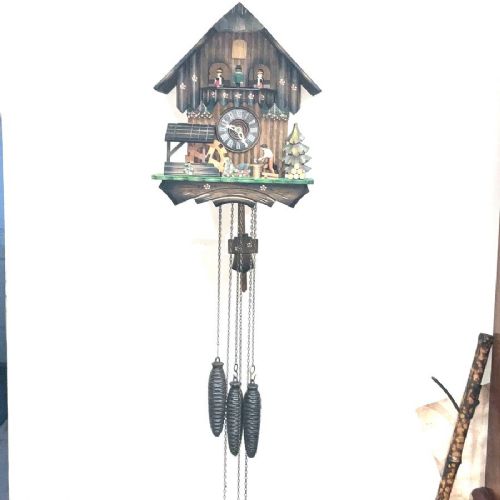
These pieces take various forms, including cuckoo clocks with moving birds, musical movements, and striking wall clocks featuring enamel numbers. Some examples incorporate bone highlights and brass components alongside the primary carved woodwork.
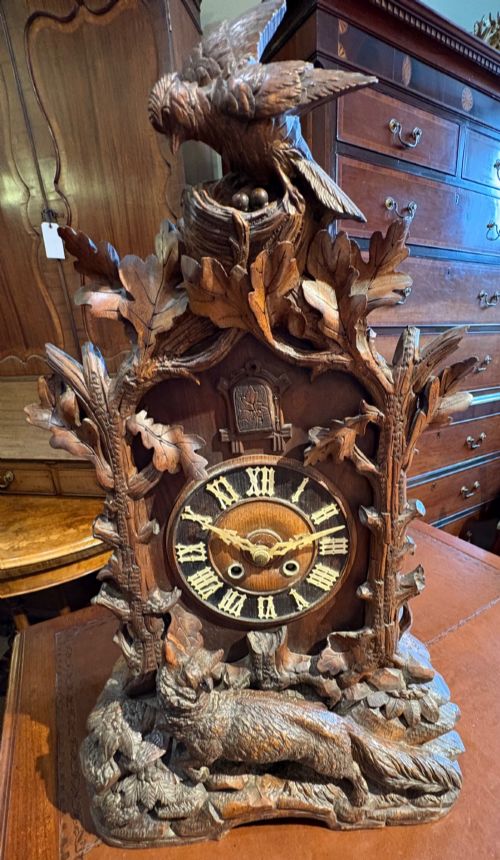
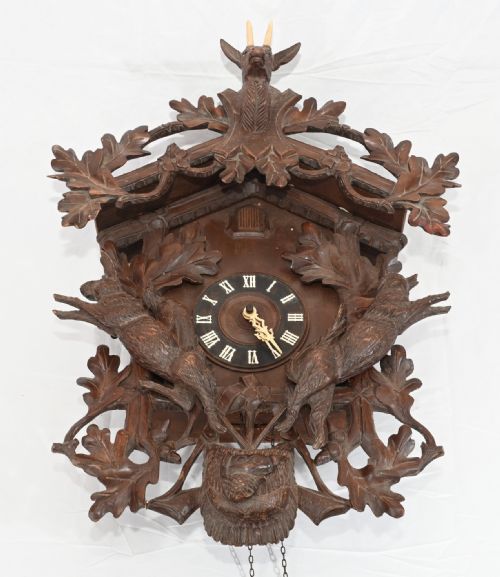
Styles range from Victorian influences to classic Black Forest motifs depicting birds, fruit, and foliage in deep relief. Buyers frequently encounter both twin weight systems and eight-day movements among the recorded items.
How a black forest wall clock was made
Maker workshops utilised natural timbers such as walnut, oak, and pine, shaping them with hand-carving tools to create elaborate foliage and animal subjects. Casework often combined solid carved wood with applied elements, while dials frequently featured enamel numbers and delicate brass or metal hands.
The mechanical interiors relied on brass gear trains, cast iron weights, and sometimes complex pinned barrels for musical functions. Bone details were occasionally integrated into the dial markers or bird carvings to provide sharp visual contrast against the dark timber.
Retail Price Guide 2026
Typical UK retail prices for black forest wall clock, calculated from the Sellingantiques database of over a million retail prices indexed since 2003. This retail price guide relies exclusively on Sellingantiques data; no external sources or auction records are used, so the figures do not describe the wider market.
The recorded listings span the nineteenth century up to nineteen fifty, encompassing carved walnut, stained pine, brass, bone, and cast iron.
What varies in quality
The depth and animation of the wood carving separate standard items from superior pieces, particularly where foliage and animal subjects display undercut relief rather than flat surface scoring. Crisp detailing around the enamel numbers and the precision of the brass movement components further distinguish finer examples.
Scale and complexity also influence the character of the clock, with massive proportions or musical mechanisms representing more ambitious workshop output than simple time-only formats. The integration of materials like bone and cast iron shows the maker's attention to varied textures.
JOHANN BAPTIST BEHA
The Black Forest Wall Clock Glossary
- Cuckoo clock
- A striking clock that uses whistles and a carved bird to announce the hours. This mechanism is characteristic of the Black Forest tradition.
- Vienna wall clock
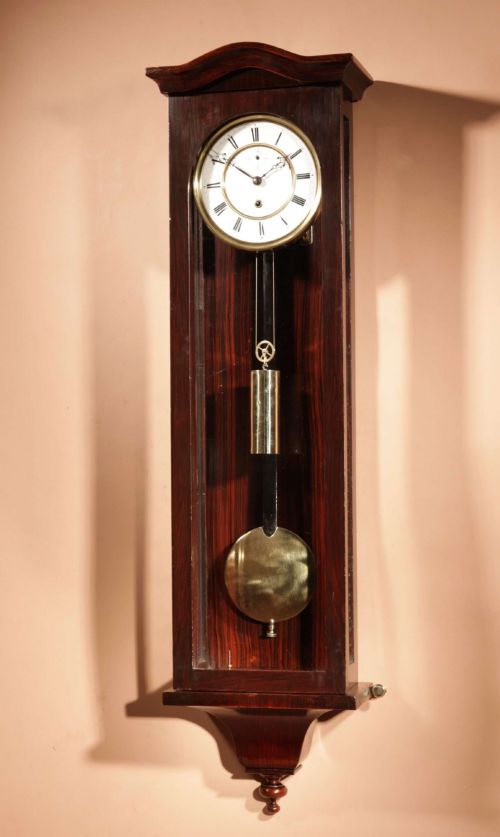
- A precise pendulum timekeeper housed in a refined wooden case. These regulators often feature long glass panels and weight-driven movements.
- Enamel numbers
- Individual markers fired onto small plaques for clock dials. They provide a durable and legible surface against darker wooden backdrops.
- Twin weight
- A suspension system utilising two heavy metal weights to power separate time and strike trains. This setup requires adequate drop space below the dial.
Frequently Asked Questions
What powers a black forest wall clock?
These timepieces typically rely on weight-driven movements suspended by chains or cords, using cast iron weights to drive the gear train. Many nineteenth-century examples utilise twin weights to operate both the timekeeping and striking functions.
Some variations feature spring-driven or eight-day movements that require periodic winding with a dedicated key. The visible weights and pendulums form an integral part of the traditional presentation on the wall.
How do I care for carved wood?
Keep the clock away from direct sunlight and sudden temperature shifts to prevent the carved walnut or pine casework from drying out or splitting. Gentle dusting with a soft, dry brush helps protect the deep recesses of the foliage and animal carvings without snagging delicate details.
Avoid using liquid polishes or modern chemical sprays on antique timber surfaces. Professional oiling of the brass movement every few years ensures the mechanical parts continue to function smoothly.
Are all these clocks cuckoo clocks?
Not every timepiece in this category includes the traditional bird and whistle mechanism. While many feature cuckoo functions or musical barrels, others are standard striking wall clocks with traditional dial layouts and enamel numbers.
Examples range from simple time-only pieces to large musical formats and Vienna regulators. The unifying element is the regional style of casework rather than a single mechanical layout.
How can I tell the period?
Dating relies on examining the construction of the wooden case, the materials used for the dial, and the type of movement. Nineteenth-century pieces often display hand-carved walnut with distinct patination and traditional enamel chapter rings.
Later twentieth-century versions may show different finishing techniques or machine-assisted carving methods. Comparing the complexity of the brass components and the style of the foliage motifs helps establish the timeline.