




Spring Driven Regulator
These spring driven regulator wall clocks keep time with a steady beat and hang with quiet authority in a room.
Spring Driven Regulator
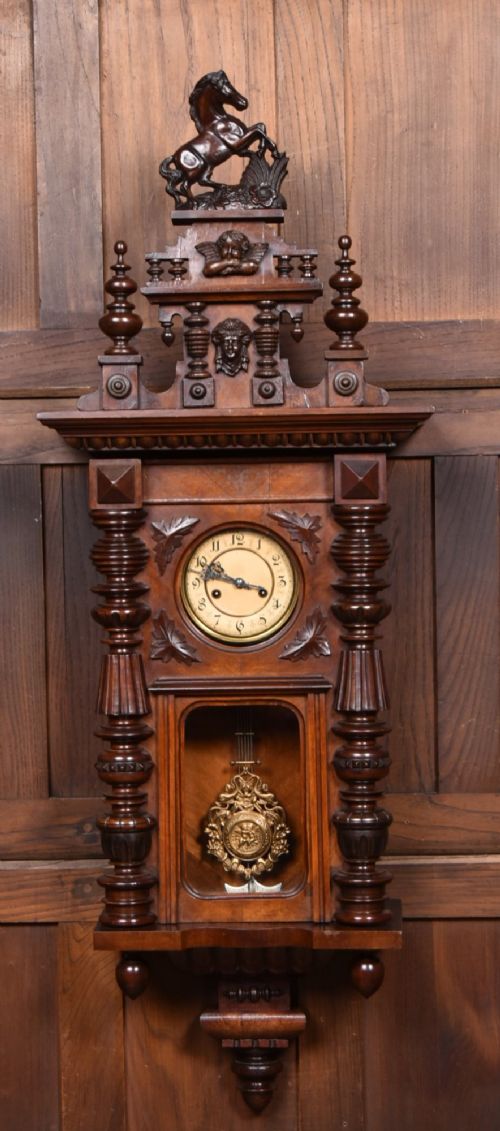
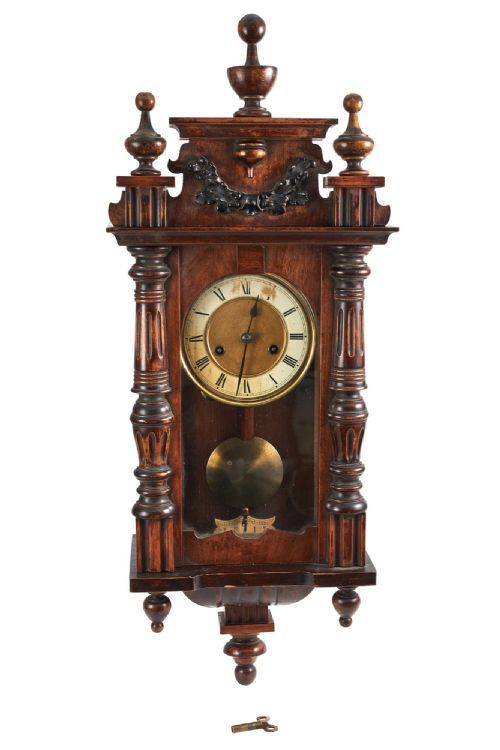
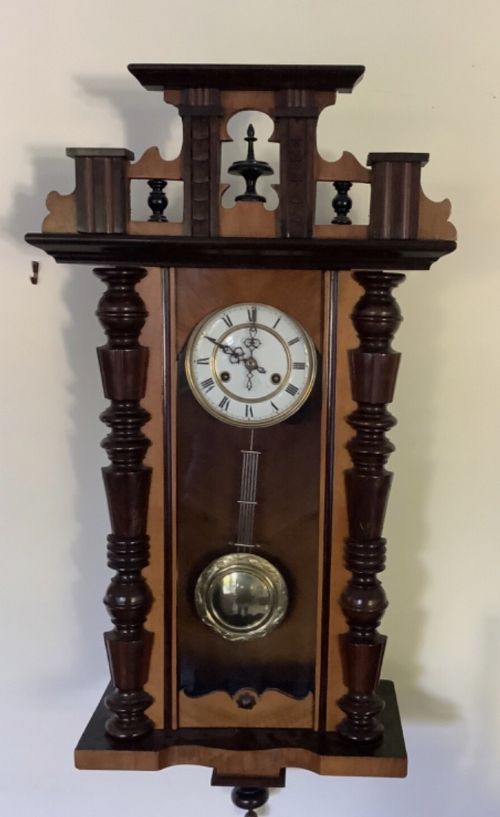
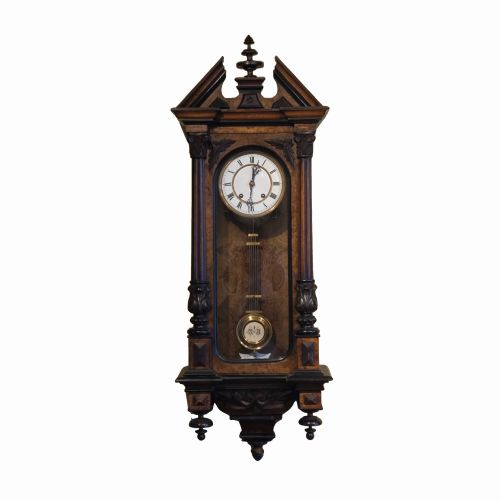
A spring driven regulator is a wall clock designed to measure time with high precision, driven by a mainspring rather than hanging weights. When buyers search for a spring driven regulator, they look for dependable movement housed in a polished timber case meant for hanging on a wall.
Most examples found here date from the Victorian and Edwardian periods, stretching from the mid nineteenth century into the early twentieth century. These pieces typically take the form of Vienna wall clocks originating from German and Austrian workshops.
Cases come mainly in walnut, mahogany, or ebonised wood, often featuring glass panels that reveal the pendulum swinging within. Dial faces generally show enamel with clear markings, designed to be read easily across a room.
Materials and Construction
Cabinet makers used timber veneers like walnut and mahogany over solid woods to build the tall hanging cases, finishing surfaces with polished lacquer to highlight the natural grain. Glass viewing doors allowed owners to check the pendulum without opening the case.
Clockmakers fitted brass movements driven by steel springs, pairing them with metal pendulums that regulated the beat. Enamel dials provided a durable, bright face for the painted numerals.
Ebonised wood occasionally served as an alternative dark finish, giving the wall clocks a severe, striking appearance suited to period interiors.
Some spring driven regulators include a visible pendulum swinging behind glass, turning the measurement of time into a hypnotic room feature.
Distinctions in Quality
The sophistication of the movement and the crispness of the case carving separate standard production pieces from finer examples. Maker signatures on the dial or movement plate indicate higher workshops.
Timber selection and veneer matching dictate visual appeal, where well figured walnut outweighs plain surfaces. Well preserved enamel dials free from heavy hairline cracks hold greater authority than repaired faces.
JOHANN BAPTIST BEHA·Gustof Becker
The Spring Driven Regulator Glossary
- Regulator
- A precision clock designed to keep accurate time, often used as a standard against which other timepieces were set. These models rely on spring power rather than hanging weights.
- Vienna regulator
- A style of wall clock originating from Austrian and German centres, known for long glass door panels and fine wood cases.
- Enamel dial
- A metal clock face covered with fused powdered glass to create a smooth, white surface for painted numbers. This finish resists tarnishing over decades of use.
- Ebonised wood
- Timber treated with a dark stain or finish to imitate ebony. This dark treatment was popular for Victorian clock cases.
- Pendulum
- A suspended weight that swings back and forth to regulate the speed of the clock mechanism. Its steady motion provides the rhythmic heartbeat of the wall clock.
Spring Driven Regulator: Frequently Asked Questions
What is a spring driven regulator?
A spring driven regulator is a wall clock powered by a mainspring inside the movement rather than suspended weights hanging below. This mechanical setup allows the clock to fit neatly onto a wall while maintaining precise timekeeping.
Most examples seen here date from the nineteenth and early twentieth centuries, originating from German and Austrian workshops.
How do I hang a wall clock safely?
These clocks require a secure fixing directly into a wall stud or use heavy duty wall anchors capable of supporting the combined weight of the timber case and brass movement. Because the case hangs vertically, stability prevents any sway that might disrupt the pendulum.
Once mounted, the case must be levelled so the pendulum swings with an even tick to left and right.
How do I tell the periods apart?
Mid nineteenth century pieces often display warm walnut veneers and classical architectural pediments reflecting Victorian tastes. Later examples moving towards nineteen twenty lean towards simpler mahogany hanging cases with fewer decorative carvings.
Examining the dial style, wood finish, and interior movement stamps helps place a clock within its correct decade.
How do these clocks keep time?
Power comes from a coiled mainspring that gradually unwinds to drive the gear train within the brass movement. The escapement and swinging pendulum control the release of this power, turning steady force into regular, measured ticks.
Many of these movements include an eight day striking train that sounds the hours.