



Traditional Black Forest Clock
A traditional black forest clock brings carved timber and mechanical movement together, offering the charm of automated bird calls and musical movements.
Traditional Black Forest Clock
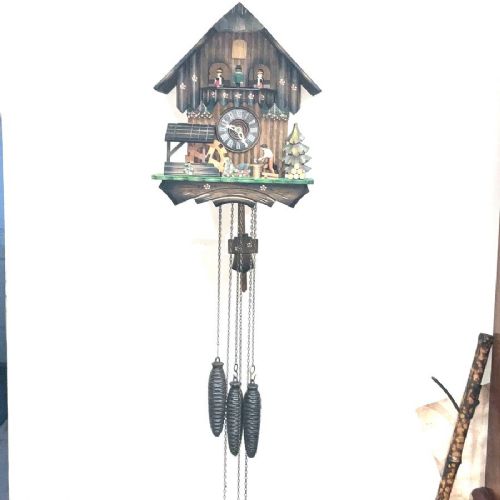
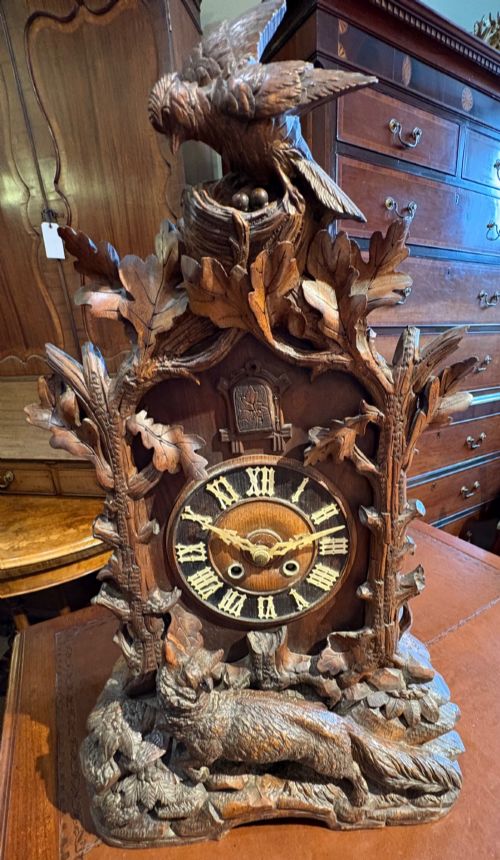
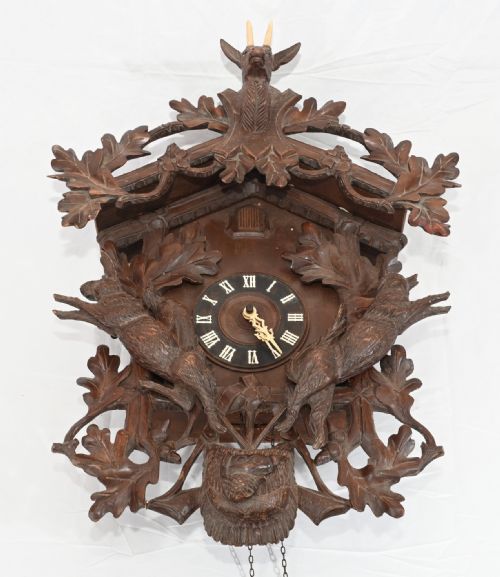
A traditional black forest clock takes the form of wall clocks and mantel clocks shaped by the forestry traditions of the German region. These pieces appear across the nineteenth century and into the mid-twentieth century, showing Black Forest, Victorian, and German Historicism styles.
Buyers will most frequently meet wall-mounted cuckoo clocks alongside larger mantel clocks and Vienna wall clocks. The selections span simple nineteenth-century examples to musical automaton pieces dated around nineteen-fifty.
How traditional black forest clocks were made
Carved wood and walnut form the primary housings for these timepieces, often detailed with carved motifs and bone or enamel accents. Brass and metal components drive the internal mechanical movements, while cast iron weights power the hanging clock works.
Makers shaped the wooden cases by hand, incorporating mechanical musical systems and moving automatons alongside traditional dial faces. The integration of woodwork with precision brass gear trains defines the construction of these items.
Listings feature items from the nineteenth century alongside pieces dated eighteen-sixty, eighteen-seventy, eighteen-ninety, nineteen-hundred, and nineteen-fifty.
What varies in quality
The sophistication of the wood carving separates standard wall clocks from superior examples, with deep relief work and refined walnut cases marking out the better pieces. Musical automata and mechanical complexity further divide basic timepieces from elaborate musical clocks.
The precision of the movement and the integration of specialised makers, such as Lenzkirch or Johann Baptist Beha, influence the standing of a piece within the range. Execution of the traditional Black Forest style dictates the overall character of the work.
JOHANN BAPTIST BEHA·Lenzkirch
The Traditional Black Forest Clock Glossary
- Automaton
- A mechanical figure that moves automatically during the striking of the hour. These devices often animate birds or musicians on the clock face.
- Vienna wall clock
- A precise timepiece featuring a long wooden case and a clear pendulum display. These styles reflect nineteenth-century German and Austrian clockmaking standards.
- Mantel clock
- A freestanding clock designed to sit upon a fireplace mantel or shelf. These pieces rely on flat bases rather than wall brackets.
- German Historicism
- An artistic style drawing on historical forms and regional vernaculars. This aesthetic influenced nineteenth-century Black Forest design.
Traditional Black Forest Clock: Frequently Asked Questions
Where were these clocks made?
These pieces originated in the Black Forest region of Germany, known for its extensive woodworking and clockmaking heritage. Regional workshops produced both wall-mounted and mantel designs.
Makers utilised local timber such as walnut and carved wood to build the distinctive housings. This localized production created the recognizable styles associated with the region.
How do I identify the period?
Dating relies on materials, movement types, and stylistic indicators present in the woodwork and metal components. Pieces span the nineteenth century up to nineteen-fifty, showing shifts in design.
Nineteenth-century examples often display traditional hand-carved motifs, while mid-twentieth-century pieces incorporate updated musical movements. Examining the dial, case timber, and maker details helps clarify the era.
Are all these clocks musical?
Not every piece includes music, as many focus solely on timekeeping and the traditional cuckoo call. Musical versions feature built-in mechanical organs or automata.
Listings differentiate standard cuckoo clocks from large musical automaton pieces. The presence of musical elements depends on the specific design of the clock.