



Large Wooden Wall Clock
A large wooden wall clock brings mechanical presence and architectural depth to a room, driven by traditional movements and heavy timber cases.

Large Wooden Wall Clock
A large wooden wall clock functions as both a timekeeper and a dominant wall fixture, originating from periods spanning the nineteenth century through the mid twentieth century. Buyers seeking a large wooden wall clock encounter varied regional designs, from domestic English dial clocks to alpine Black Forest examples.
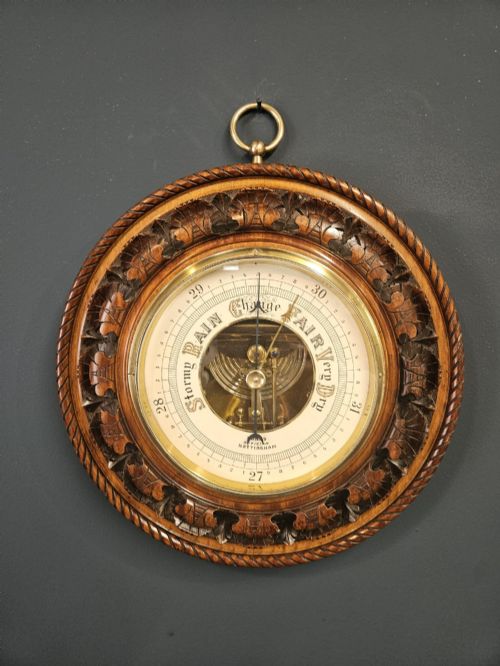
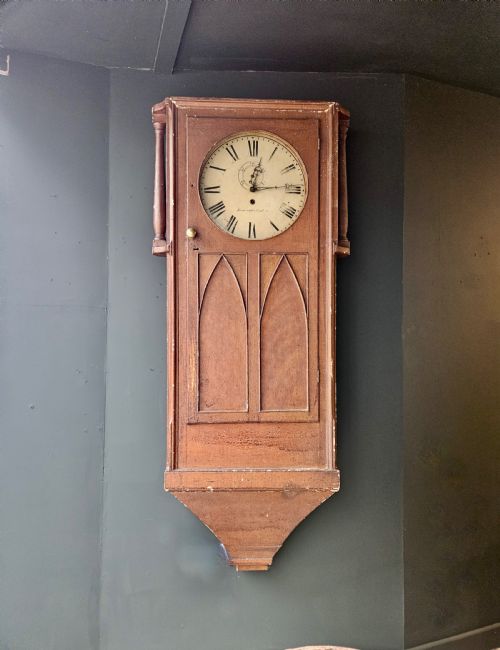
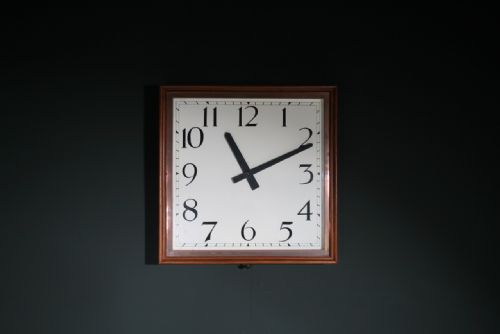
The selection here encompasses robust dial clocks, tavern clocks, and barometer combinations housed in mahogany, walnut, pine, and oak. These pieces reflect the functional requirements of public houses, offices, and large domestic spaces from Victorian, Edwardian, and Art Deco eras.
How they were made
Case construction relies heavily on solid timber and veneers, utilising mahogany, walnut, and pine formed into circular bezels, octagonal surrounds, and architectural trunk cases. Brass and copper details appear in bezels, pendulum bobs, and inlaid dial markers, contrasting against the dark wood surfaces.
Dial faces incorporate painted wood, metal, or glass coverings to protect the hand-painted Roman or Arabic numerals. Movements within these heavy cases rely on fusee mechanisms or spring-driven systems designed to maintain tension across extended periods.
Listings feature mahogany, walnut, and pine cases spanning the Victorian, Edwardian, and Art Deco periods.
What varies in quality
Quality differentiates itself through the crispness of timber carving, the retention of original painted finishes on dials, and the precision of brass fusee movements. Superior examples maintain untouched original painted wooden dials and complex mechanical gearing rather than replaced quartz conversions.
The integration of brass inlay and the structural integrity of the heavy wooden cases mark the division between standard utility timepieces and finer architectural specimens. Original glass bezels and intact pendulum assemblies further elevate the standing of a clock.
Palmer & Co.·Camerer Cuss
The Large Wooden Wall Clock Glossary
- Fusee
- A conical pulley used in clock movements to maintain an even pull as the mainspring unwinds. This mechanism ensures consistent timekeeping accuracy across the power reserve.
- Dial
- The face of the clock upon which the hours and minutes are marked. These can be formed from wood, metal, or painted glass.
- Drop dial
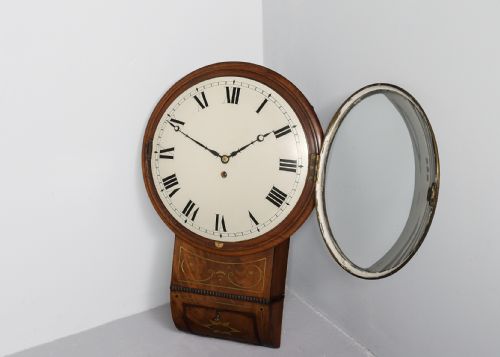
- A wall clock design featuring an extended wooden case below the dial to accommodate a swinging pendulum. This form became common in railway stations and offices during the nineteenth century.
- Bezel
- The metal or wooden rim that holds the glass cover in place over the clock face. It often hinges open to allow hand-setting.
- Aneroid barometer
- A meteorological instrument measuring atmospheric pressure without liquid, frequently incorporated into large wall-mounted wooden instrument cases.
Large Wooden Wall Clock: Frequently Asked Questions
How do fusee movements work?
A fusee movement uses a conical pulley connected to the mainspring via a cord or chain. This compensates for the diminishing force of the spring as it runs down.
This clever mechanical design ensures the clock receives constant power, resulting in more accurate timekeeping throughout the duration of the wind.
Where should I hang a heavy wall clock?
Large wooden wall clocks require secure mounting directly into wall studs or solid masonry using heavy-duty fixings. Their substantial timber frames and mechanical movements add considerable weight.
Positioning the clock at eye level ensures easy viewing of the dial and safe access for regular winding and adjustment.
How do I wind a dial wall clock?
Winding involves inserting a matching clock key into the winding hole on the dial face and turning it gently until resistance is felt. Care must be taken not to over-wind the mainspring.
Many nineteenth-century fusee clocks require weekly winding, while others operate on thirty-hour or eight-day cycles depending on their internal gear train.
Are original wooden dials common?
Original wooden dials appear on specific regional pieces, such as early tavern clocks and specialised dial timepieces. They showcase hand-painted numerals directly upon the timber surface.
Over the decades, some dials were repainted or replaced during routine servicing, making untouched early wooden examples particularly notable for collectors.