



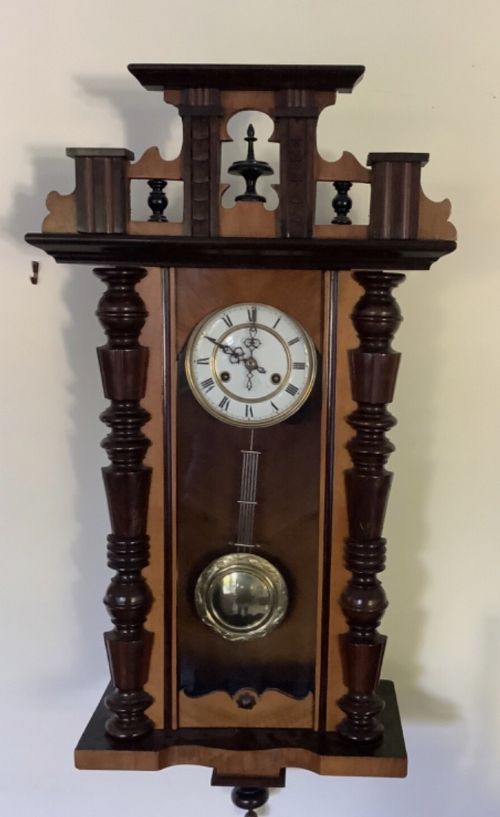


Striking Pendulum Wall Clock
A striking pendulum wall clock brings mechanical depth and steady motion to a room, measuring time through the visible swing of a pendulum and audible strikes on bells or gongs.
Striking Pendulum Wall Clock
A striking pendulum wall clock relies on a swinging pendulum to regulate time while an internal mechanism sounds the hours or quarters. Buyers exploring this category encounter a range of formats spanning from the nineteenth century into the twentieth century, with Victorian pieces appearing frequently.
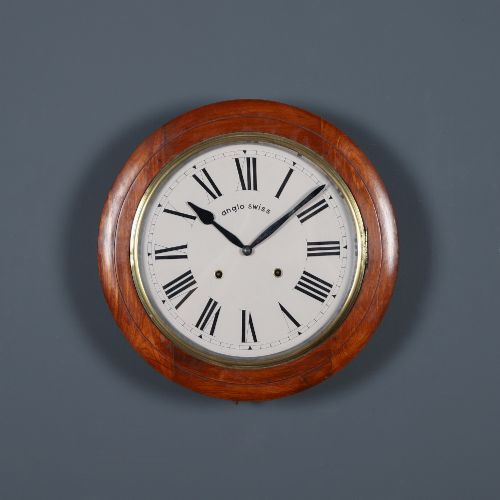
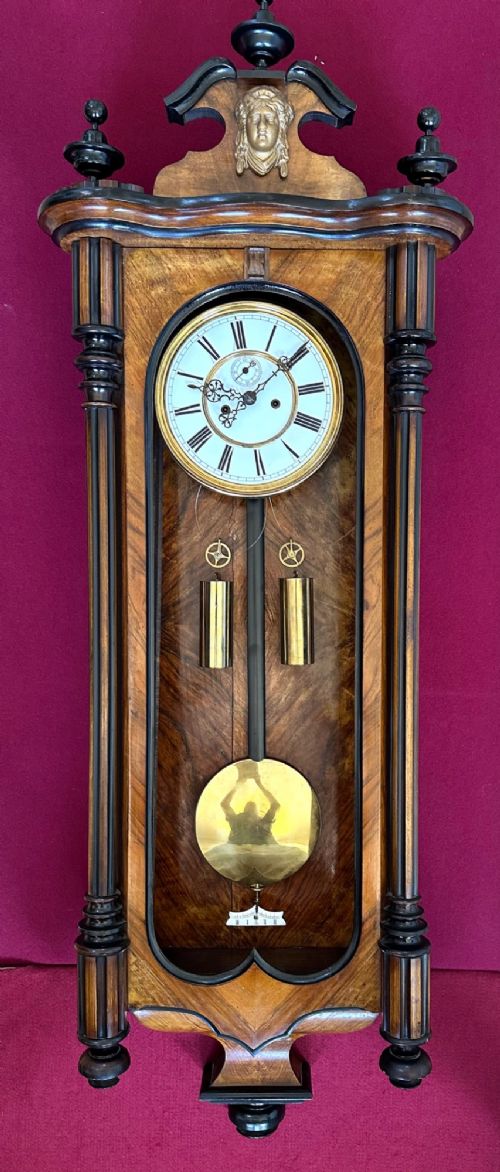
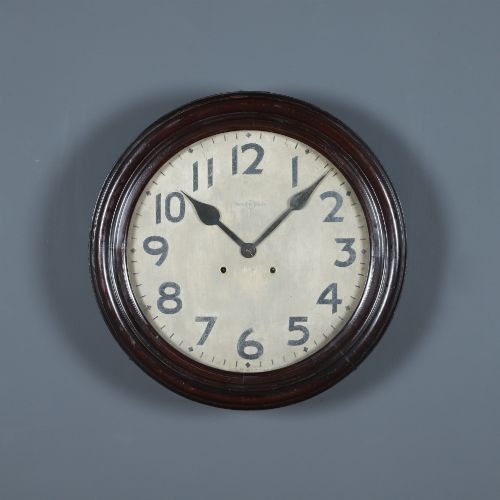
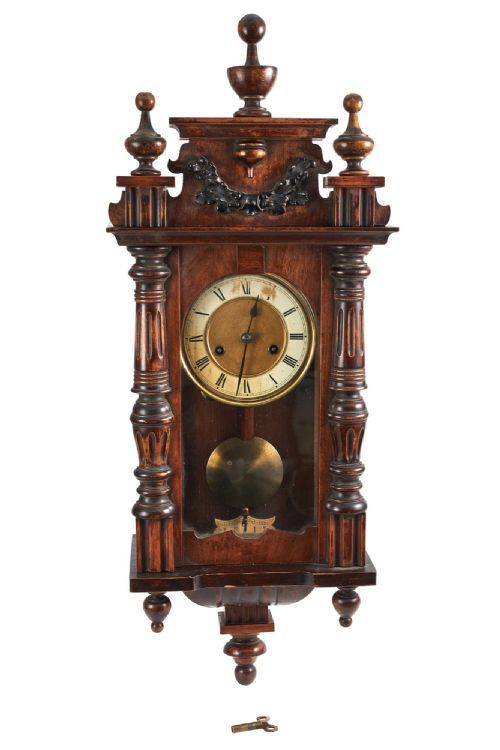
The selection encompasses traditional round dial railway and school clocks alongside elaborate drop-dial variants and tall Vienna wall clocks. Materials shift across these formats, incorporating dark hardwoods alongside lighter oak and occasional brass details.
Origins vary between British workshops and continental European centres, including German and Austrian makers. Regional styles range from plain school dial designs to decorative Arts and Crafts or Art Deco interpretations.
Materials and Construction
Cases rely heavily on timber construction, employing mahogany, walnut, rosewood, and oak to house the delicate brass gear trains. Glass panels protect the dial face while allowing a clear view of the chapter ring and hands.
Movements utilise brass wheels, plates, and escapements driven by weights, springs, or twin fusee mechanisms that equalise the pull of the mainspring. Dials feature painted enamel or metal grounds marked with Roman or Arabic numerals.
Listings feature Victorian, Regency, and early twentieth-century periods, utilising mahogany, walnut, rosewood, brass, and glass.
Evaluating the Mechanism and Case
The refinement of the internal movement distinguishes superior examples, particularly those employing twin fusee systems or delicate striking arrangements rather than simpler spring-driven layouts. Precision in the gear cutting and the quality of the brass components dictate how reliably the clock keeps time and strikes.
Case construction and timber selection also divide the range, with figured mahogany, rich walnut veneers, and solid rosewood housings showing greater joinery skill than utilitarian oak or basic pine. Original glass, well-preserved dials, and intact maker signatures add mechanical and historical substance to an individual piece.
Smiths·Odo·Johann Baptist Beha·J.W. Benson·C. Coleman·Mark Bartley
The Striking Pendulum Wall Clock Glossary
- Fusee
- A conical pulley connected to the mainspring by a chain or cord, designed to equalise the diminishing power of the spring as it unwinds. This mechanism ensures consistent force reaches the escapement throughout the eight-day run.
- Drop-dial
- A wall clock design featuring an extended lower case beneath the circular dial, often housing the pendulum swing. This drop portion frequently incorporates wooden fretwork or glass viewing windows.
- Double weight
- A movement driven by two suspended weights rather than a single weight or mainspring barrel. One weight powers the timekeeping train while the second drives the striking train.
- Chapter ring
- The metal or painted ring on the clock face that bears the hour numerals. It is often secured separately to the dial background.
- Escapement
- The mechanism that converts the rotary motion of the gear train into impulses that keep the pendulum swinging. Common types include anchor and deadbeat variants found in traditional wall clocks.
Striking Pendulum Wall Clock: Frequently Asked Questions
How do twin fusee movements work?
A twin fusee movement uses two separate conical pulleys and chain systems within the clockwork. One train drives the timekeeping hands while the second powers the bell striking mechanism.
This setup maintains even tension across the gear train as the power source runs down. It represents a higher standard of clockmaking found in better nineteenth-century examples.
Where were Vienna wall clocks made?
Vienna wall clocks originated primarily in Austria and Germany during the nineteenth century. Makers in these regions focused on precise regulators and striking movements housed in polished walnut or mahogany cases.
These pieces typically display long glass viewing doors to showcase the pendulum and weights. Their architectural cases reflect the neoclassical and Victorian tastes of Central Europe.
How do I care for a striking wall clock?
Mount the clock securely to a solid wall using appropriate fixings to ensure the case hangs entirely plumb. A level position allows the pendulum to swing evenly and prevents the striking train from binding.
Wind the clock regularly using the correct key, avoiding over-winding the springs or weights. Professional cleaning and lubrication every few years will keep the brass gears operating smoothly.
What is a school wall clock?
A school wall clock is a functional timepiece designed with a clear, easy-to-read dial and a sturdy wooden surround. These clocks were commonly placed in public buildings, railway stations, and classrooms.
They usually feature simple mahogany or oak frames with brass bezels protecting the enamel dial. Their robust movements were built to withstand continuous daily operation.