


Brass Cartel Clock
A brass cartel clock brings asymmetric grace and intricate metallic scrollwork to a wall, transforming a plain room with the tick of a fine mechanical movement.
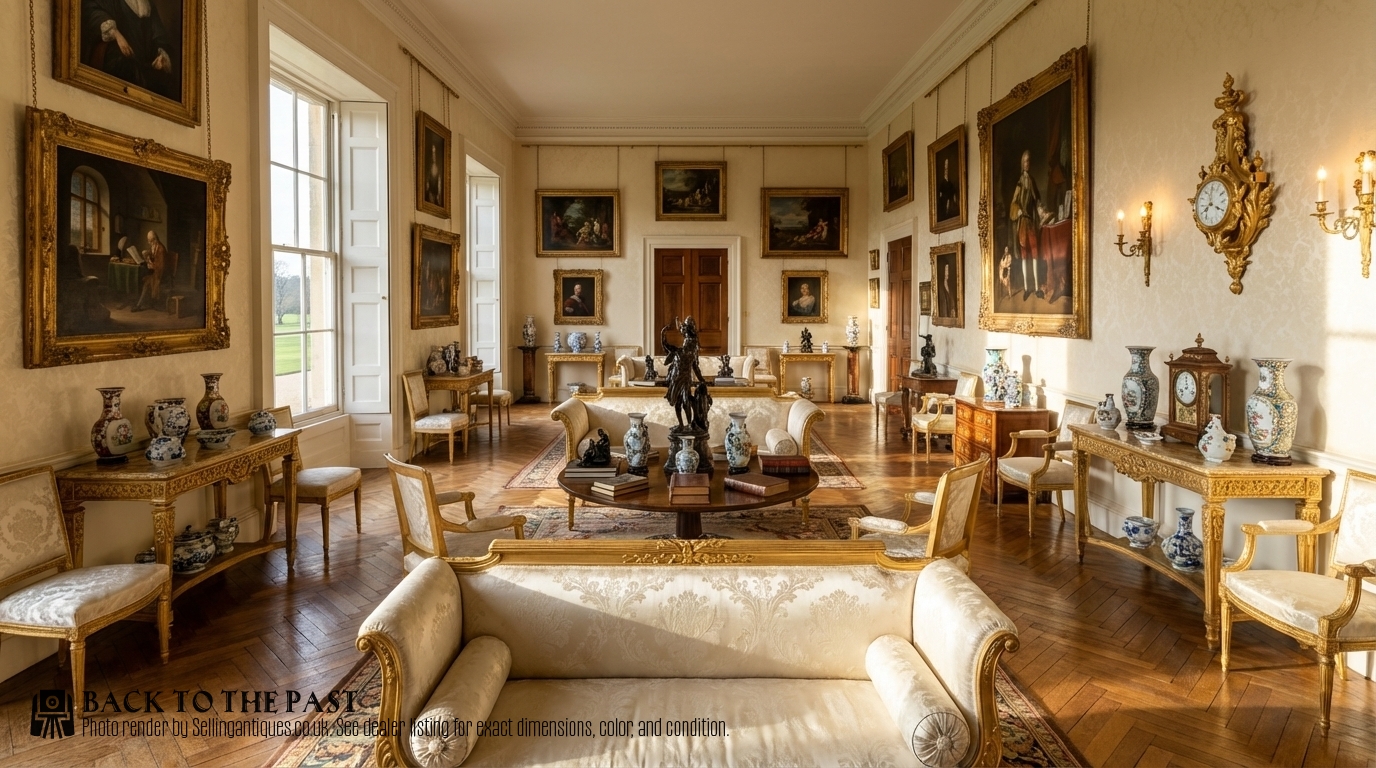
Brass Cartel Clock
A brass cartel clock is a wall-mounted timepiece housed within an ornate frame of cast metal or wood, designed to be hung rather than placed on a mantel. When searching for a brass cartel clock, a buyer encounters substantial wall clocks spanning the eighteenth and nineteenth centuries.
The selections on this page are dominated by French designs, particularly the flamboyant curves of the Rococo style and the balanced geometry of the Louis XVI Neoclassical manner. Makers such as Henri Marc, William Webster, Japy Freres, and Samuel Marti appear among these wall-hung timepieces.
Beyond the standard brass and gilt metal, examples emerge in rosewood, gilt bronze, ormolu, and even tortoiseshell marquetry like Boulle work. These pieces function simultaneously as mechanical timekeepers and sculptural wall ornaments.
Materials and construction
The structural frames of these wall timepieces rely heavily on cast brass, gilt bronze, and ormolu, often built over wooden carcases or combined with giltwood elements. Metal founders used lost-wax or sand-casting methods to achieve deep, scrollwork patterns, which were then gilded to create a rich surface sheen.
Enamel dials with painted numerals provide the face of the clock, protected behind convex glass bezels that keep dust away from the delicate hands. Movement plates and gears were meticulously cut from brass and steel by skilled horologists working in London and Paris workshops.
French workshops dominate the surviving record for this search phrase, spanning Rococo Revival, Louis XVI Neoclassical, and Victorian interpretations of the wall clock.
Assessing craftsmanship
The refinement of the surface chasing and the depth of the casting separate simpler brass pieces from substantial gilt bronze works. Sharper relief in the foliage, dragons, or hunting motifs indicates a higher level of artisan skill in the metalwork.
The integration of the movement with the case, alongside the presence of signed dial plates from notable makers, elevates the standing of a wall-hung timepiece. Dials featuring individually pinned enamel cartouches and well-preserved fire gilding represent the upper tier of the range.
HENRI MARC·WILLIAM WEBSTER·JAPY FRERES·SAMUEL MARTI
The Brass Cartel Clock Glossary
- Cartel clock
- A wall-mounted clock enclosed in an ornamental frame made of metal, wood, or tortoiseshell. These pieces were developed in France during the eighteenth century specifically for interior wall hanging.
- Ormolu
- Finely ground high-carat gold applied to a bronze base using a mercury amalgamation technique. This historic process yields a durable, warm metallic finish seen on finer French wall clocks.
- Boulle work
- A style of marquetry utilising tortoiseshell and brass inlaid in contrasting patterns. It is named after the master cabinetmaker André-Charles Boulle and appears on select nineteenth-century wall clocks.
- Rococo
- An artistic style characterised by asymmetrical scrolls, C-curves, and naturalistic plant motifs. This aesthetic heavily influences the cast frames of eighteenth and nineteenth century wall timepieces.
Brass Cartel Clock: Frequently Asked Questions
How do I hang a heavy cartel clock?
These wall clocks require a secure fixing directly into a wall stud or masonry anchor rather than standard plasterboard hooks. The substantial weight of gilt bronze and brass demands robust support to ensure safe suspension.
Ensure the mounting bracket matches the hanging loop or bracket on the back of the clock case. Professional installation is recommended to protect the mechanical movement from alignment shifts.
Where were these clocks placed historically?
Cartel clocks were originally mounted on drawing room and salon walls where guests could admire the decorative metalwork. Their wall-hung nature preserved valuable surface space on tables and mantelpieces.
Positioning them at eye level or slightly above allowed easy viewing of both the time and the elaborate Rococo or Neoclassical framing.
How do I wind a mechanical wall clock?
Most of these mechanical movements utilise a key inserted into winding holes on the enamel dial face. Turning the key clockwise tensions the internal spring or lifts the driving weights.
Take care not to over-wind the movement, stopping as soon as resistance is felt. Regular gentle winding keeps the beat steady and maintains accurate timekeeping.
How do I distinguish Louis XV from Louis XVI styles?
Louis XV style pieces, often linked to Rococo revivals, feature asymmetrical curves, flowing organic lines, and exuberant scrollwork. The frames embrace irregularity and dramatic, dynamic movement.
Louis XVI style pieces introduce symmetry, straight lines, neoclassical urns, and formal architectural proportions. The transition moves from fluid organic chaos to restrained geometric elegance.