
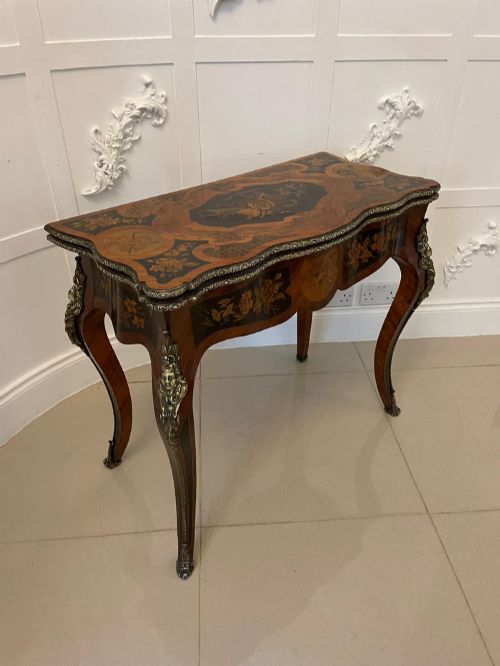


Antique Floral Marquetry
Antique floral marquetry describes wooden furniture and decorative items adorned with intricate botanical veneers, offering enduring craftsmanship and rich historical character for the interior.
Antique Floral Marquetry
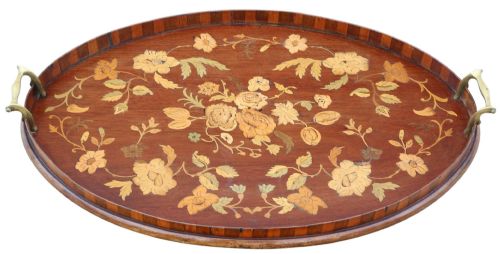
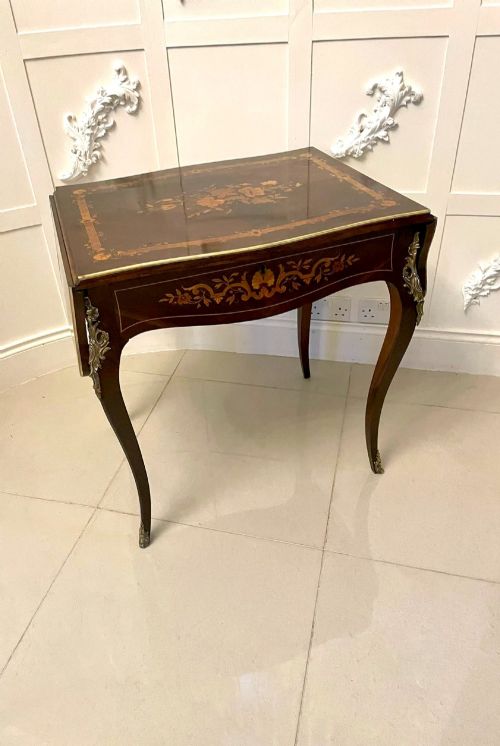
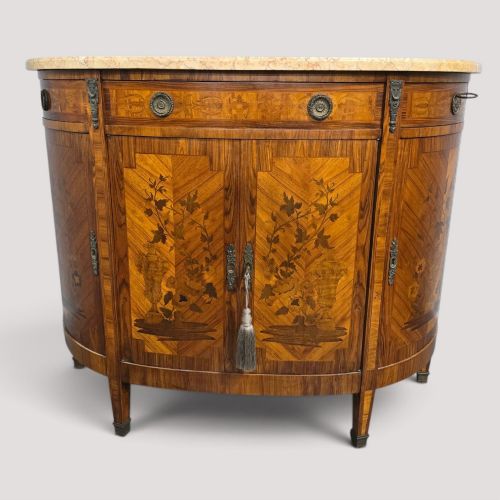
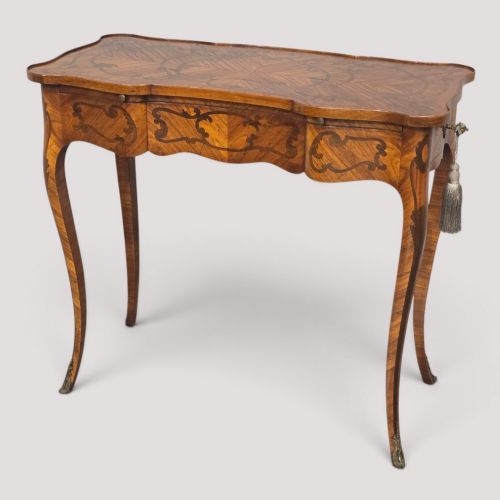
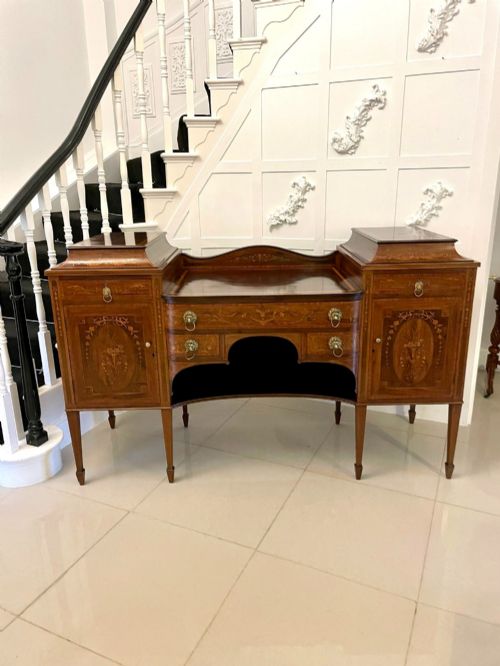
When searching for antique floral marquetry, buyers encounter a diverse range of furniture forms spanning multiple centuries and regional workshops. The selection includes case furniture such as bureaus, cabinets, credenzas, and wardrobes alongside functional surfaces like centre tables, writing desks, and serving trays.
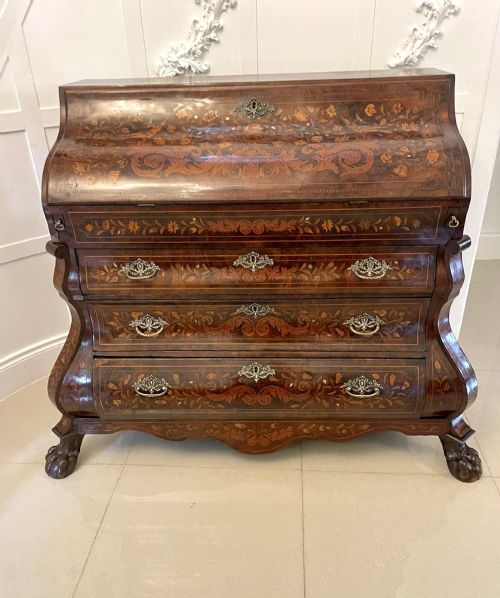
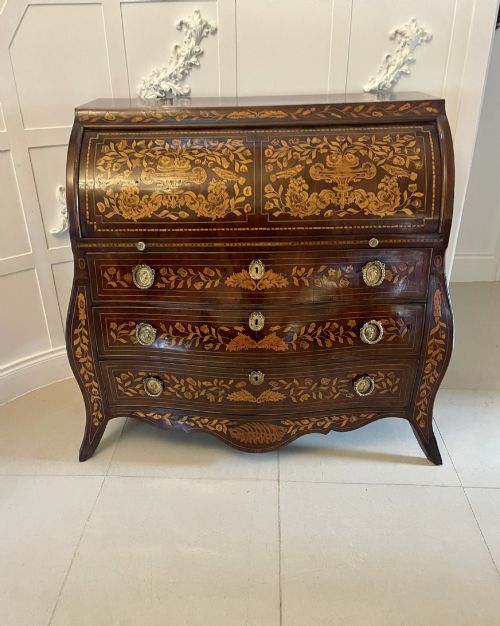
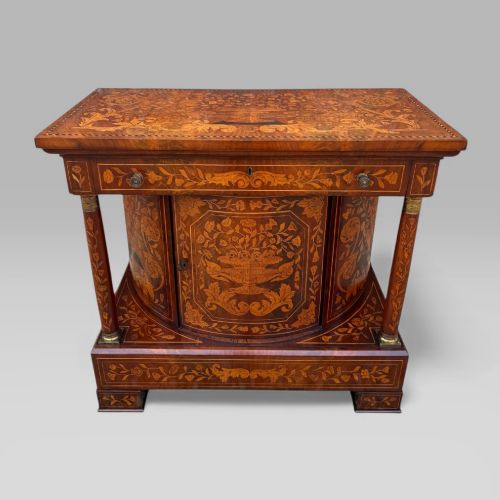
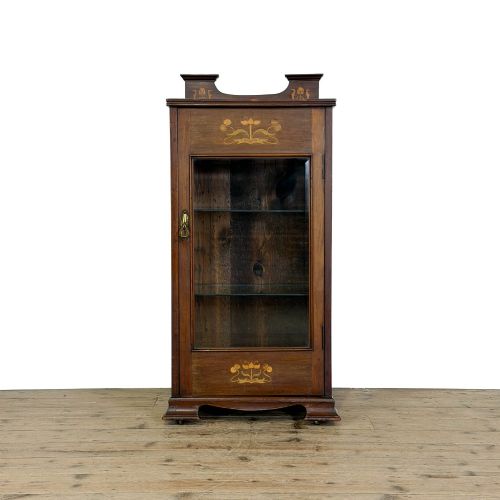
Pieces originating from the eighteenth century frequently display robust Dutch interpretations featuring burr walnut and mahogany foundations. Victorian examples lean towards heavily figured walnut and rosewood compositions, often integrating elaborate floral panels into credenzas, display cabinets, and lamp tables.
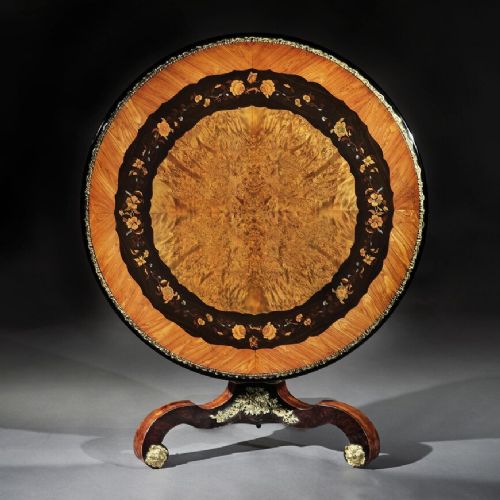
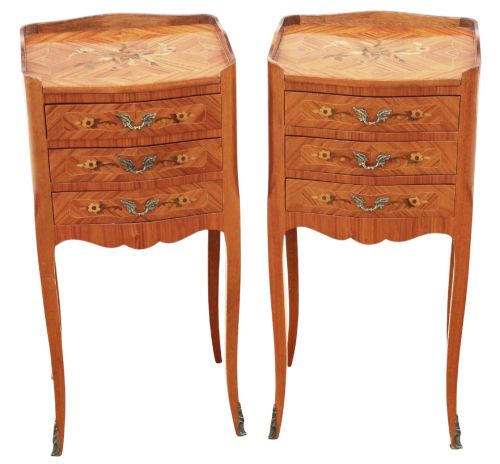
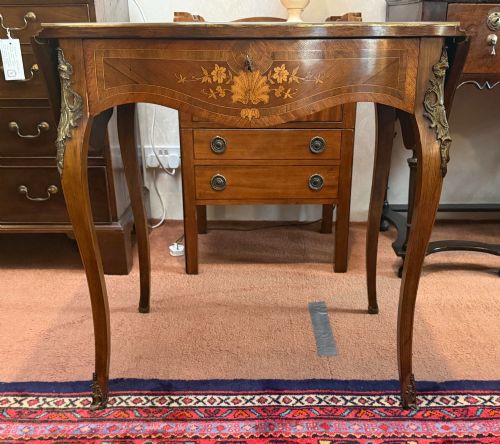
French influence appears prominently through Louis XV and Louis XVI style pieces utilising kingwood, rosewood, and occasional marble tops. Smaller decorative accessories such as occasional tables, étagères, and trays provide accessible entry points into this tradition of inlaid ornamentation.
How they were made
Craftsmen built these surfaces by applying thin slices of decorative veneers onto solid secondary timbers such as oak, pine, or mahogany. Woods like burr walnut, kingwood, rosewood, fruitwood, and satinwood provided contrasting natural tones and grain patterns necessary to delineate stems, leaves, and petals.
The decorative designs relied on precision cutting where multiple layers of veneer were sawn simultaneously and interlocked. Ormolu mounts, cast brass hardware, and glass elements occasionally supplemented the timber construction, particularly on grander French and Victorian reception furniture.
Listings feature walnut, mahogany, rosewood, and kingwood, spanning the eighteenth to early twentieth centuries.
What varies in quality
The tier of workmanship depends heavily on the precision of the veneer cutting and the botanical complexity of the floral compositions. Superior examples demonstrate seamless integration where individual wood species create natural shading without excessive reliance on inked or burned lines.
Structural harmony also dictates value, distinguishing balanced proportions and well-figured primary timbers from simpler constructions. The integration of secondary materials such as fire-gilded ormolu mounts and finely cast brass handles elevates the overall execution of the piece.
Edward Holmes Baldock·Hewetsons London·Grand Ducal Workshops
The Antique Floral Marquetry Glossary
- Marquetry
- A technique of forming decorative patterns by fitting together thin slices of wood veneer onto a structural support. It differs from inlay by covering the entire surface rather than sinking pieces into a solid ground.
- Ormolu
- Gilded bronze mounts applied to furniture edges, feet, and corners during the eighteenth and nineteenth centuries. This decorative metalwork frequently accompanies French and Victorian floral designs.
- Bombe
- A swollen or bulging contour found on the sides and fronts of certain eighteenth-century bureaus and commodes. This curved form provides a challenging canvas for continuous floral veneer patterns.
- Credenza
- A long, low cabinet featuring central doors flanked by side cupboards or display sections, popular during the Victorian era. These pieces often showcase expansive top and front marquetry panels.
- Étagère
- An open tiered stand or shelving unit designed for displaying small decorative objects. Marquetry versions typically feature inlaid wood motifs on the shelves and top surfaces.
Antique Floral Marquetry: Frequently Asked Questions
What is antique floral marquetry?
Antique floral marquetry involves wooden furniture decorated with detailed botanical patterns formed from various tinted and naturally coloured wood veneers. These designs typically depict flowers, foliage, and scrolling vines across table tops, cabinet doors, and bureau fronts.
Craftsmen selected specific timbers to exploit natural grain variations, creating depth and shadow within the floral compositions without relying solely on painted details.
How do I care for inlaid wood?
Caring for inlaid furniture requires maintaining stable indoor humidity levels to prevent the delicate wood veneers from shrinking or lifting away from the carcase. Avoid placing these pieces in direct sunlight or near direct heat sources.
Applying a traditional microcrystalline wax rather than modern silicone polishes helps nourish the timber and protects the aged surface without building up harmful residues.
How can I tell Dutch pieces apart?
Dutch marquetry pieces from the eighteenth century frequently utilise dark walnut foundations paired with heavily figured floral designs that cover almost the entire surface. They often appear on bombé bureaus, display cabinets, and console tables with robust proportions.
In contrast, French styles tend to isolate floral sprays within reserves framed by kingwood or rosewood borders, accompanied by delicate ormolu mounts and cabriole legs.
Where were these pieces used?
These decorative items served prominent roles in formal reception rooms, drawing rooms, and private studies across affluent European households. Larger pieces like credenzas, sideboards, and centre tables displayed wealth and taste during social gatherings.
Smaller forms such as writing tables, occasional tables, and serving trays functioned as portable or specialised domestic accessories for writing, sewing, or serving refreshments.