


Brown Walnut Jardiniere
A brown walnut jardiniere brings the garden indoors, offering a grounded display for potted plants through rich timber grain.
Brown Walnut Jardiniere
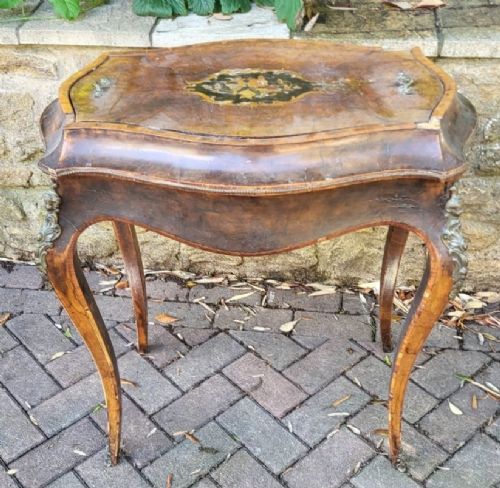
A brown walnut jardiniere is a dedicated plant holder or display stand designed to elevate greenery within a room. These pieces appear in forms ranging from low table models with lift-off lids to tall stands and wine coolers adapted for botanical use.
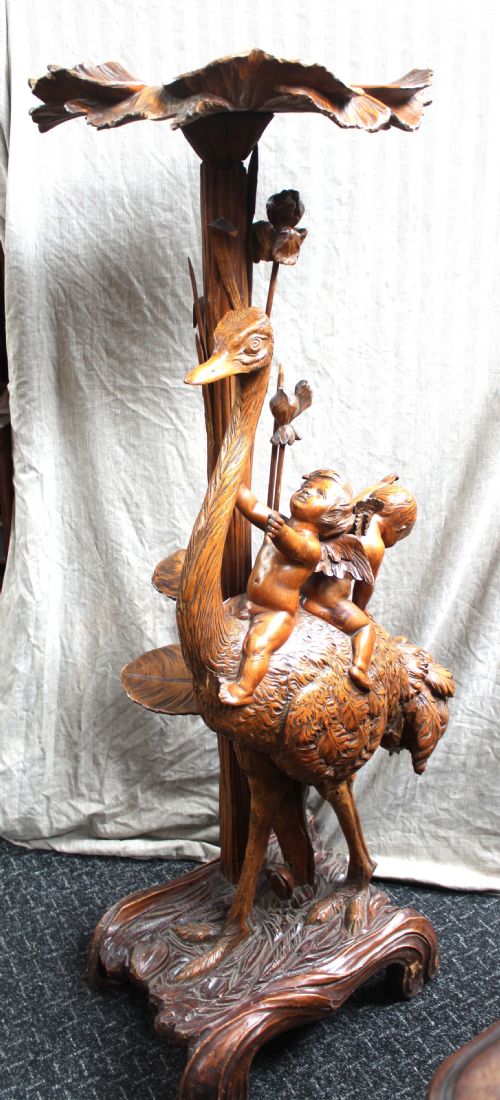
The pieces on this page span several centuries, with Victorian and 19th-century examples alongside Georgian and 18th-century pieces. Styles shift from restrained William IV lines to ornate Victorian Rococo Revival, Italian Renaissance Revival, and sweeping Art Nouveau curves.
Buyers will encounter various configurations, including plant stands, pedestals, planter tables, and side tables. Many incorporate specialised liners or wells designed to hold moisture and plants safely away from the timber.
Materials and construction
Makers utilised solid walnut and burr walnut veneers to construct the bodies of these pieces, often selecting figured timber for decorative impact. Kingwood also appears as a contrasting accent wood on specific regional examples.
Metal and stone components provide essential functional contrast to the timber. Brass liners, zinc inserts, ormolu mounts, and gilt bronze details protect the wood from water, while marble tops add a durable surface for displaying pots.
Listings feature walnut, burr walnut, brass, zinc, ormolu, and marble across periods spanning the 18th, 19th, and 20th centuries.
Distinctions in craftsmanship
Quality rests in the selection of the timber grain, particularly where burr walnut veneer is matched symmetrically across a surface. Finer examples display crisp hand-carving and careful integration of metal mounts or marble inserts.
The survival of original internal components, such as zinc or brass liners, elevates a piece by maintaining its intended function. Structural integrity in the joints of tall stands and plant tables also separates robust workshop production from lighter output.
The Brown Walnut Jardiniere Glossary
- Jardiniere
- An ornamental pot or stand designed to hold growing plants or flowers. They often feature waterproof inserts to protect the surrounding furniture.
- Burr walnut
- A prized timber harvested from walnut tree growths, producing swirling, intricate grain patterns. It is typically sliced into veneer for cabinet work.
- Ormolu
- Gilded bronze applied as decorative mounts on furniture and decorative objects. The technique involves creating a mercury-gilt finish on bronze.
- Zinc
- A durable, corrosion-resistant metal commonly utilised for the internal linings of plant stands. It prevents water damage to the wooden structure.
- Rococo Revival
- A 19th-century design style mimicking 18th-century French curves, asymmetry, and naturalistic scrollwork. It appears frequently on Victorian pieces.
Brown Walnut Jardiniere: Frequently Asked Questions
What is a brown walnut jardiniere used for?
These pieces serve as ornamental stands for displaying indoor plants, ferns, and floral arrangements. They elevate greenery to eye level and protect household surfaces from moisture.
Historically, they occupied prominent positions in drawing rooms and parlours, bringing structured nature into interior domestic spaces.
How do I protect the wood from water?
Most pieces rely on fitted metal liners made of zinc or brass, or internal wells designed to contain moisture and soil. Ensuring these liners remain intact protects the underlying walnut structure.
When watering plants inside the jardiniere, it is best to remove pots entirely and allow them to drain before returning them to the stand.
How do I tell a jardiniere table from a plant stand?
Jardiniere tables generally feature a table-height surface with an integrated well or recess for plants, sometimes accompanied by a lift-off lid. They function as conventional tables when closed.
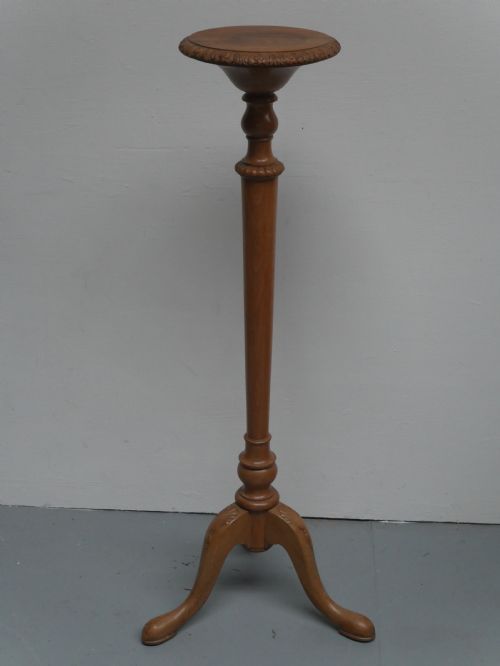
Plant stands and pedestals are typically taller and narrower, designed primarily to support a single pot or urn rather than provide a broad surface area.
What styles can I expect to find?
The selection includes formal Georgian and Regency designs, alongside elaborate Victorian Rococo Revival and Belle Epoque models. Art Nouveau examples feature flowing, organic carved lines characteristic of the turn of the twentieth century.
French Provincial and Italian Renaissance Revival styles also appear, reflecting diverse European cabinet-making traditions.