


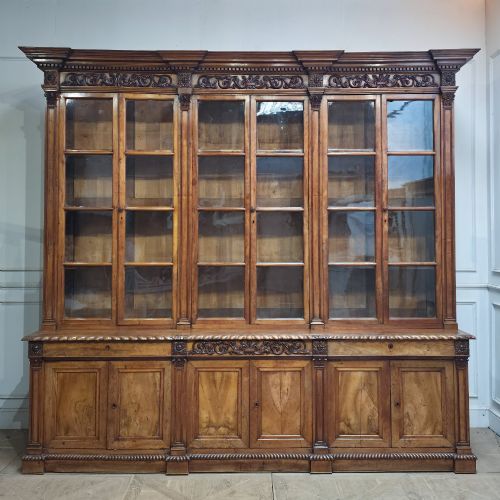
Walnut Breakfront Cabinet
A walnut breakfront cabinet brings architectural presence and rich grain to a room, offering generous display and storage space.
Walnut Breakfront Cabinet
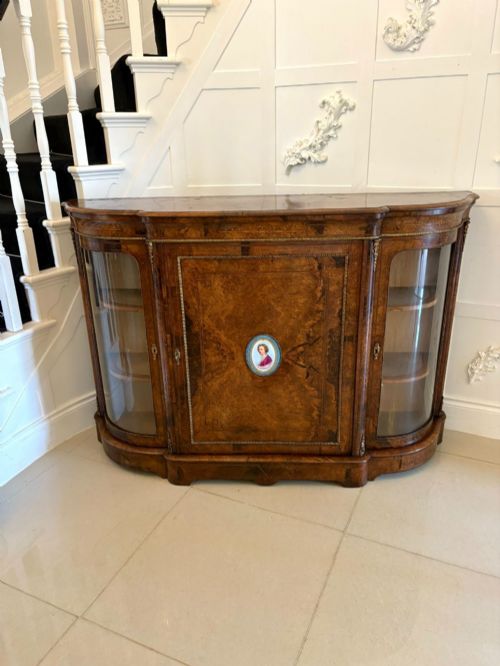
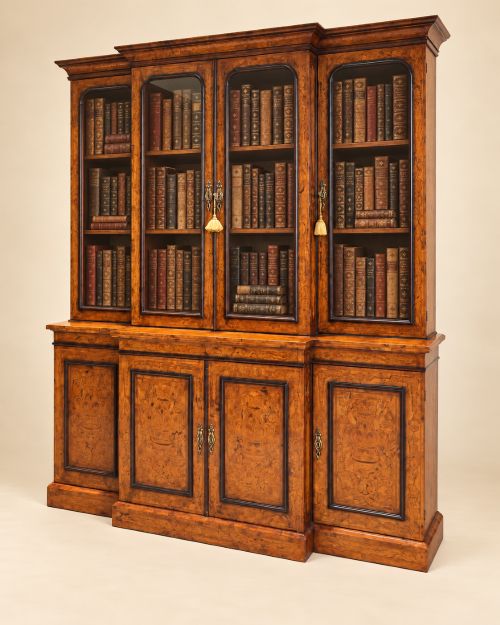
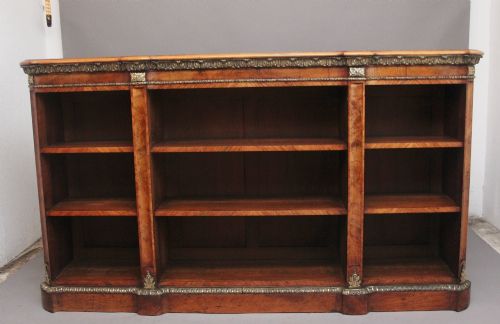
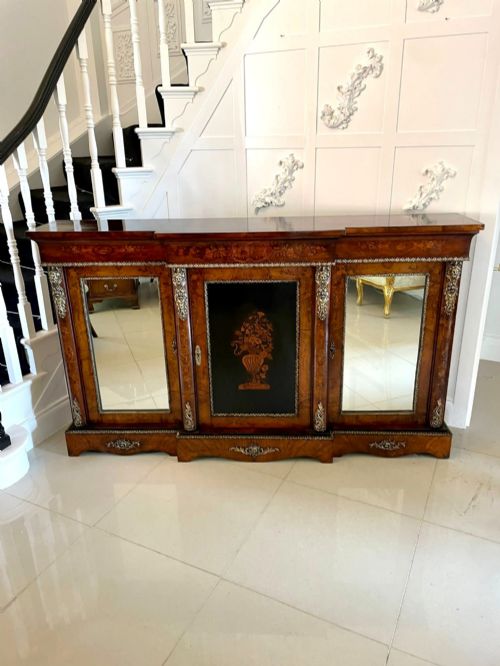
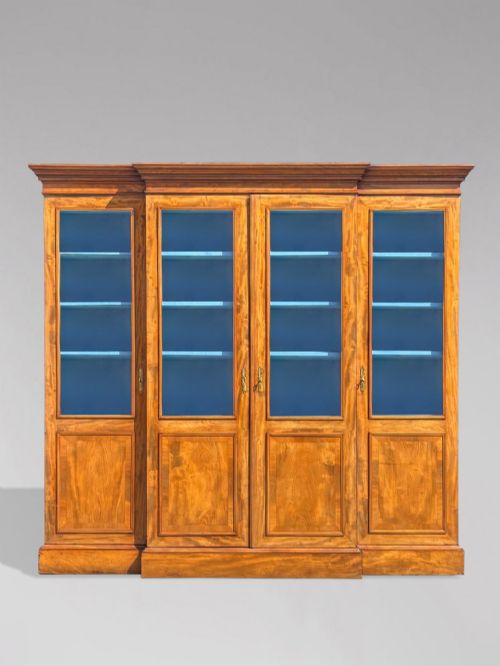
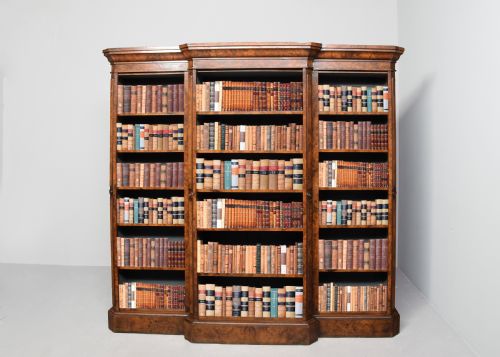
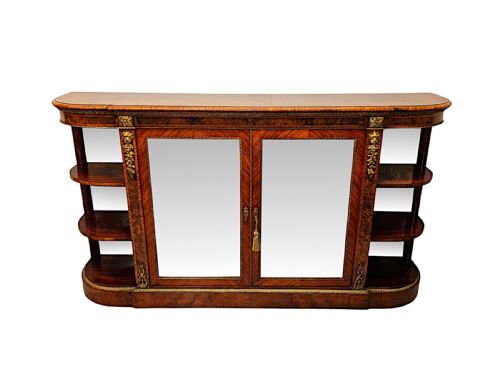
A walnut breakfront cabinet is a substantial storage piece defined by a projecting central section flanked by slightly recessed sides, creating a rhythmic facade. When searching for a walnut breakfront cabinet, collectors encounter grand libraries, glazed display bookcases, and low credenzas designed for formal living spaces.
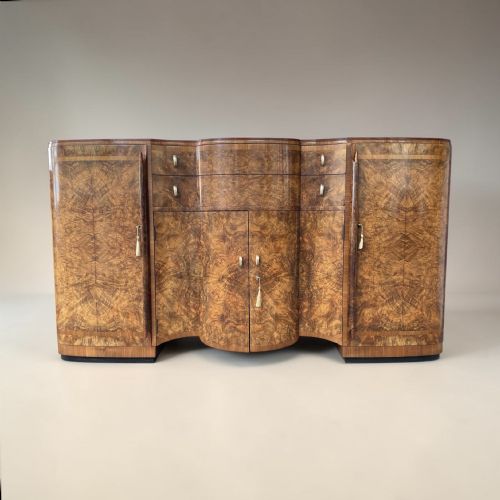
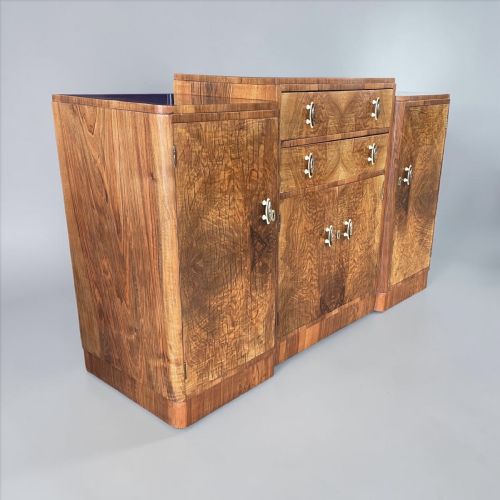
The pieces appearing here span the nineteenth and twentieth centuries, ranging from early Victorian and Mid-Victorian masterworks to Edwardian, Art Deco, and revival interpretations. Makers utilise this prominent form to showcase figured woods, symmetrical glazing bars, and classical proportions across English and continental workshops.
Bookcases and display cabinets dominate the selection, offering adjustable shelving behind glass doors alongside credenza and sideboard variations. These forms serve as focal points in period interiors, combining architectural dignity with practical display capacity.
Materials and construction methods
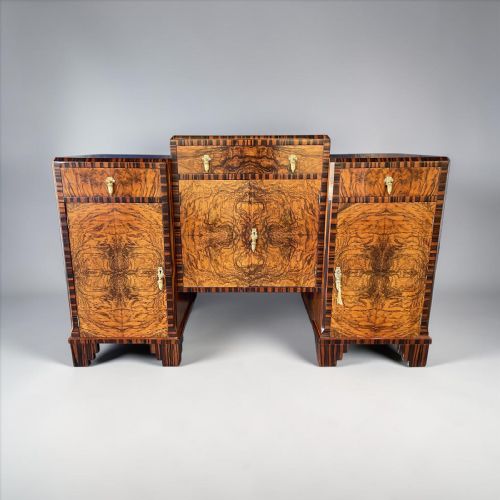
Craftsmen construct these cabinets using solid walnut carcasses finished with highly decorative burr or figured walnut veneers to create striking symmetrical patterns on doors and drawer fronts. Cabinetmakers select walnut for its rich tonal depth and stability, applying fine veneers to large flat surfaces.
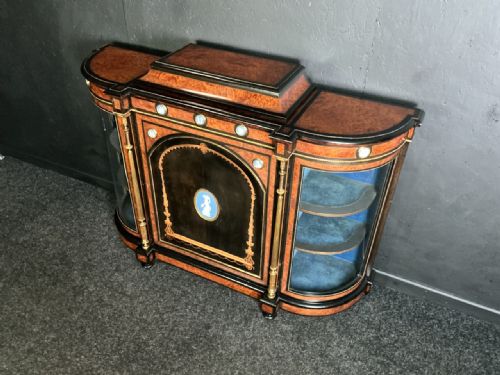
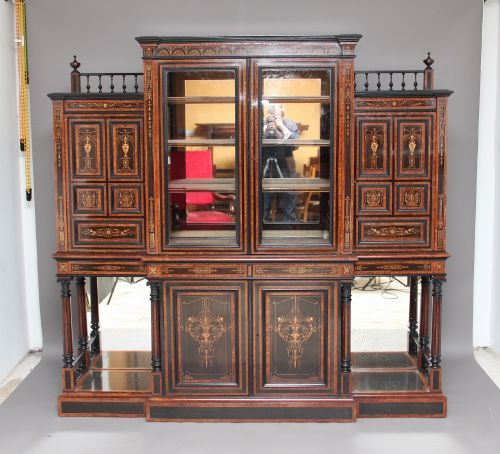
Ornate decoration relies on contrasting inlay materials such as boxwood and ebony, alongside delicate marquetry motifs and Tunbridgeware banding. Metalwork plays a structural and decorative role, with ormolu mounts, brass grilles, and gilt bronze details enhancing the primary timber.
Walnut Breakfront Cabinet Retail Price Guide 2026
Typical asking prices for walnut breakfront cabinet among the pieces listed under this phrase on Sellingantiques today, from the lower quarter to the upper quarter. They describe what is for sale here now, not the wider market.
Some nineteenth-century walnut cabinets hide secret compartments behind decorative moulding where owners stored private correspondence.
Distinguishing quality in construction and detail
The hierarchy of quality rests upon the selection and matching of the walnut veneer, where continuous grain patterns across multiple doors indicate superior cabinetmaking. Lesser examples rely on plain timber, whereas exceptional pieces display highly figured burr walnut matched with meticulous precision.
Mounts and interior fittings further differentiate the range, distinguishing standard production from maker-stamped exhibition pieces. Hand-chased ormolu, finely cast brass mounts, porcelain plaques, and adjustable shelving systems reflect the original maker's commitment to excellence.
Johnstone and Jeanes·Gillows·Lamb of Manchester·Maple and Co·Holland and Sons·Maurice Adams
The Walnut Breakfront Cabinet Glossary
- Breakfront
- A cabinet facade where the central section projects forward from the flanking side sections. This architectural arrangement creates depth and shadow across large bookcases and sideboards.
- Burr walnut
- A specialised timber cut from the gnarled growths on walnut trees, yielding swirling, organic grain patterns. It is sliced into thin veneers for decorative furniture panels.
- Ormolu
- Gilded bronze mounts applied to furniture for decorative accent. Makers secure these cast metal ornaments to corners, friezes, and pilasters.
- Marquetry
- The art of forming decorative patterns by fitting together small pieces of different coloured veneers. Craftsmen apply these intricate designs to cabinet doors and friezes.
- Credenza
- A low cabinet, frequently featuring glass doors or open central shelves flanked by cupboards. Victorian iterations often incorporate gilt bronze and porcelain plaques.
Walnut Breakfront Cabinet: Frequently Asked Questions
What rooms suit a walnut breakfront cabinet?
These large cabinets anchor formal drawing rooms, libraries, and dining spaces where their architectural scale and glazed display doors command attention. They provide substantial vertical or horizontal presence while housing collections of books or ceramics.
Placement requires measuring wall space and ceiling height carefully, as breakfronts demand breathing room to display their projecting central sections properly. Position them away from direct sunlight to protect the fragile walnut veneers and antique glass.
How do I distinguish Victorian from Art Deco examples?
Victorian examples display rich burr walnut veneers, complex marquetry, ormolu mounts, and classical revival motifs such as columns and glazing bars. They emphasise ornamentation and historical references in their proportion and detailing.
Art Deco pieces from the 1930s favor streamlined silhouettes, geometricveneering, and plain polished surfaces without historical revival ornamentation. They rely on the natural grain of the timber and clean architectural lines for visual impact.
How should I care for the walnut veneer?
Maintain stable humidity and temperature in the room to prevent the walnut veneers from lifting, drying out, or cracking over time. Avoid harsh commercial polishes, using only a soft, dry cloth for routine dusting.
Period wax applied sparingly once or twice a year nourishes the timber and preserves the natural sheen of the aged surface. Protect the top surfaces from moisture rings by using coasters beneath displayed objects.
Are the shelves adjustable?
Many Victorian and Edwardian breakfront bookcases feature internal rack systems with wooden bearers or metal pegs that allow shelf height adjustment. This modular interior design accommodates books and display items of varying sizes.
Earlier or simpler cabinets may have fixed wooden shelving secured directly into the carcass sides. Buyers should verify interior configurations when planning storage for large folios or collections.