
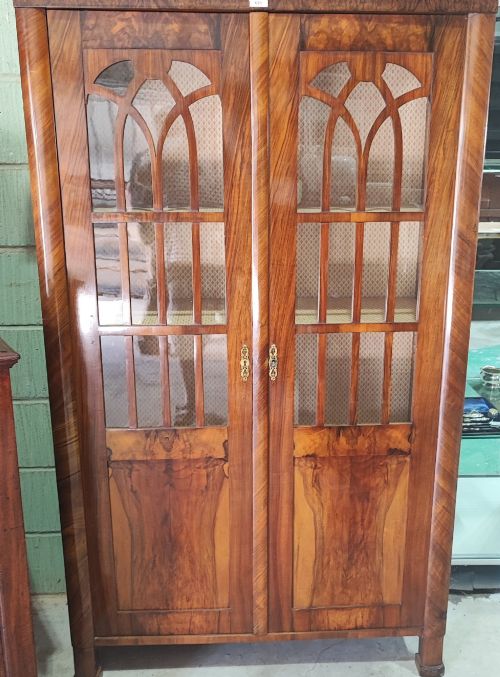
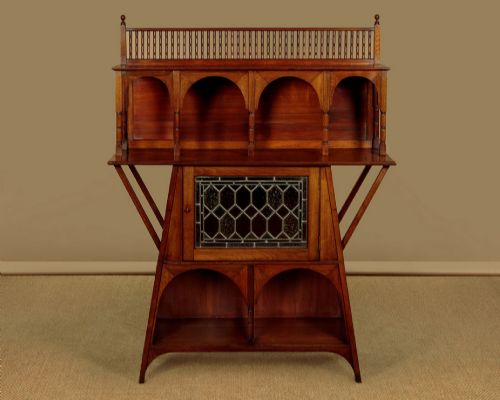
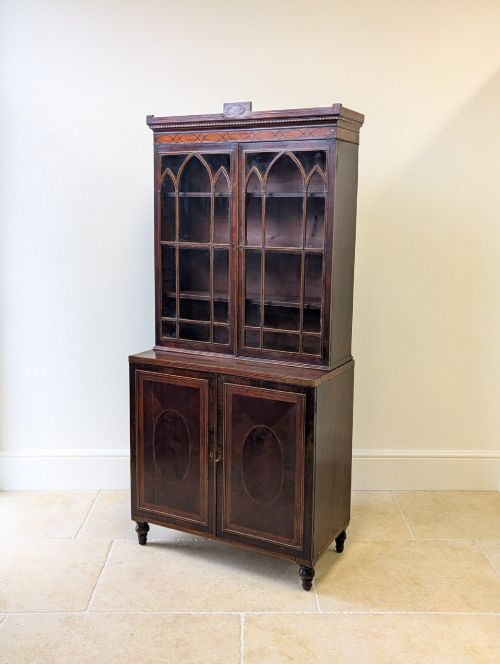
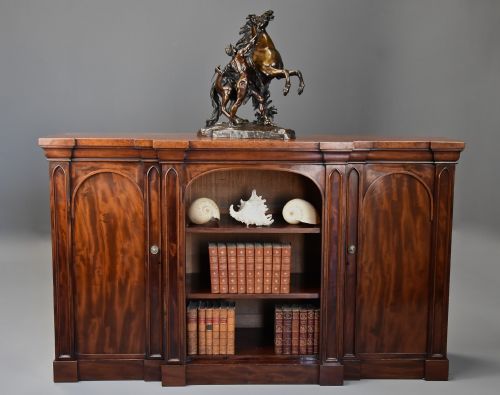


Gothic Arch Display Cabinet
These gothic arch display cabinet pieces offer architectural presence and timber warmth, bringing serious period character to any room.
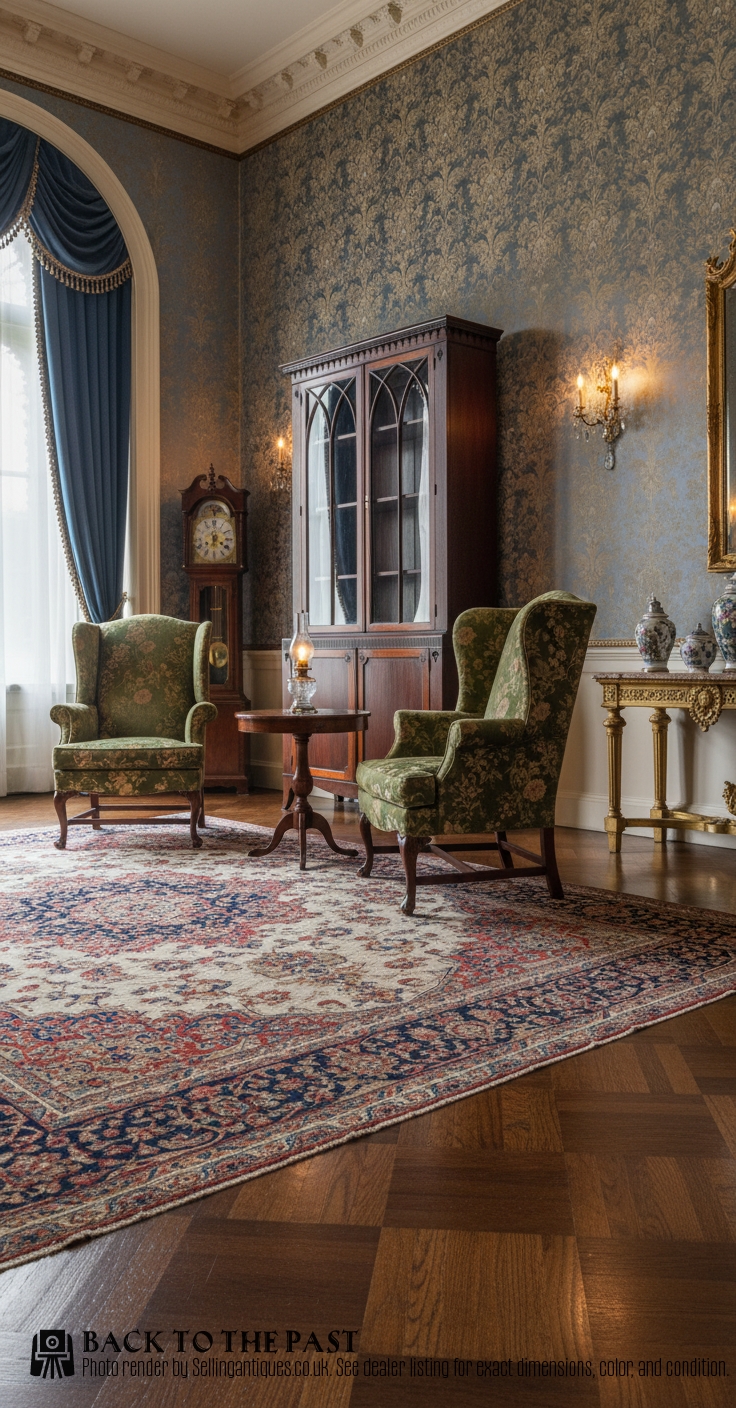
What these pieces are
A gothic arch display cabinet brings distinctive architectural lines and glazed storage into a room, drawing the eye with pointed arches and timber framing. These items serve as focal points for housing collections while keeping dust at bay behind glass doors.
The gothic arch display cabinet examples found here span several distinct periods including the 19th Century, Regency, and 1920 Georgian Revival. Buyers will encounter various timber choices and configurations, from breakfront designs to smaller side cabinets.
The selection ranges from elaborate walnut pieces featuring Tunbridgeware inlay down to simple mahogany and rosewood constructions. Each version reflects the enduring appeal of Gothic Revival and revivalist tastes across different decades.
How they were made
Cabinet makers utilised dense hardwoods such as mahogany, rosewood, burr walnut, and standard walnut for the main carcasses and framing. These timbers provided the structural strength needed to support heavy glazed doors and internal shelving.
Makers incorporated specialist decorative elements including Tunbridgeware inlay, ormolu mounts, and brass hardware to enhance the visual weight of the furniture. Glass panels allowed for the display of precious objects while fabric linings occasionally added texture to the interior backing.
Structural details such as barley twist turns appeared on related cupboard forms, while glazing bars were meticulously jointed to form the signature gothic arch profiles. Every element relied on traditional joinery methods appropriate to each respective period.
Retail Price Guide 2026
Typical UK retail prices for gothic arch display cabinet, calculated from the Sellingantiques database of over a million retail prices indexed since 2003. This retail price guide relies exclusively on Sellingantiques data; no external sources or auction records are used, so the figures do not describe the wider market.
Listings feature items built from mahogany, rosewood, burr walnut, and walnut, incorporating glass, fabric, brass, ormolu, and Tunbridgeware inlay.
What varies in quality
The sophistication of the timber selection marks the primary division between standard items and superior examples. Highly figured burr walnut and carefully matched rosewood veneers elevate a piece far above plain mahogany constructions.
Detailing in the decorative embellishments dictates the standing of individual cabinets. Fine Tunbridgeware inlay and crisp ormolu mounts require exceptional skill, whereas simpler mouldings reflect more utilitarian workshop production.
The Gothic Arch Display Cabinet Glossary
- Breakfront
- A cabinet design where the central section projects forward from the side sections. This layout creates depth and breaks up the flat line of a long wall.
- Tunbridgeware inlay
- Small pieces of coloured wood assembled into precise geometric mosaic patterns. This technique decorates the surface with intricate decorative banding.
- Ormolu
- Gilded bronze applied as mounts and decorative hardware on fine furniture. It adds metallic contrast against dark timbers like walnut and rosewood.
- Barley twist
- A turning technique resembling a spiralling rope carved into wooden supports or columns. It creates movement and shadow along upright members.
Frequently Asked Questions
What periods do these cabinets represent?
The available pieces span the Regency era, the late 19th Century, around 1900, and the 1920s Georgian Revival. Each period interprets architectural revival styles through the lens of its own prevailing cabinetmaking standards.
Materials and decorative techniques shift slightly across these decades, ranging from early rosewood side pieces to later walnut breakfronts.
What timbers are commonly used?
Makers relied heavily on mahogany, rosewood, and walnut, often selecting burr walnut for highly decorative grain patterns. Secondary materials like brass and ormolu provided hardware and structural mounts.
Fabric linings and glass panes completed the interiors and doors, balancing solid timber weight with transparency for display purposes.
How do I identify a revival piece?
Georgian Revival and later interpretations often copy earlier architectural motifs like gothic arches using period-appropriate machinery alongside traditional hand joinery. Comparing the timber ageing and construction methods helps clarify the actual date of manufacture.
Stylistic cues such as Tunbridgeware inlay or specific turning styles offer further clues to the workshop origins.
How should I care for a timber cabinet?
Keep wooden furniture away from direct heat sources and sudden humidity changes to prevent timber movement and veneer splitting. Regular dusting with a soft dry cloth protects the polished surfaces.
Avoid chemical polishes that can build up a residue over delicate inlays and ormolu mounts.