
Glazed Door Credenza
A glazed door credenza provides a grand centrepiece for a dining room or drawing room, combining display space with concealed storage behind panelled doors.
What these credenzas are
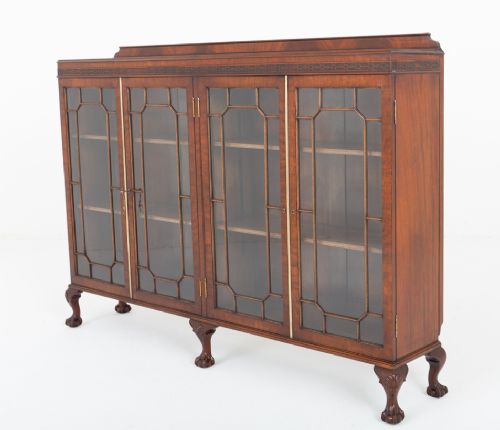
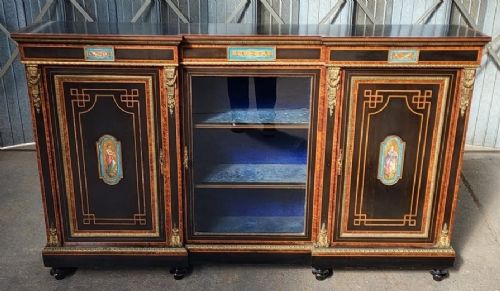
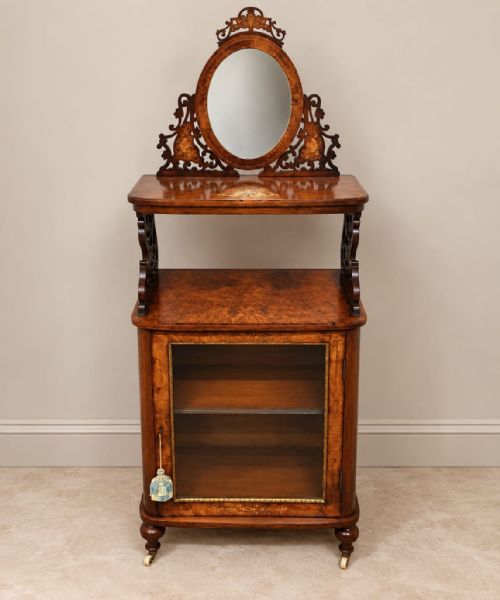
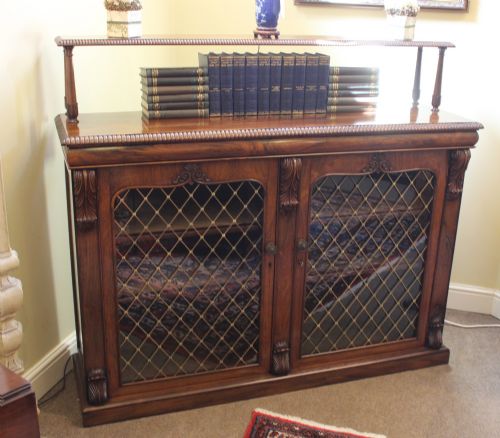
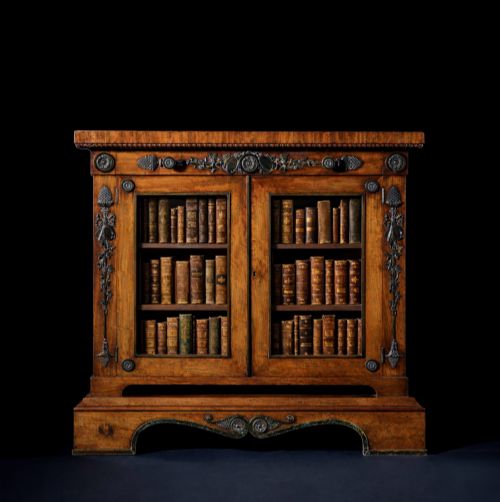
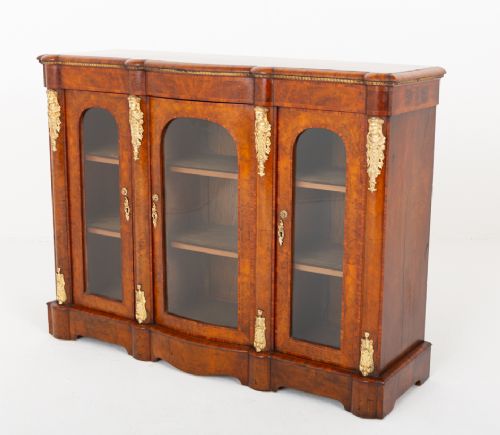
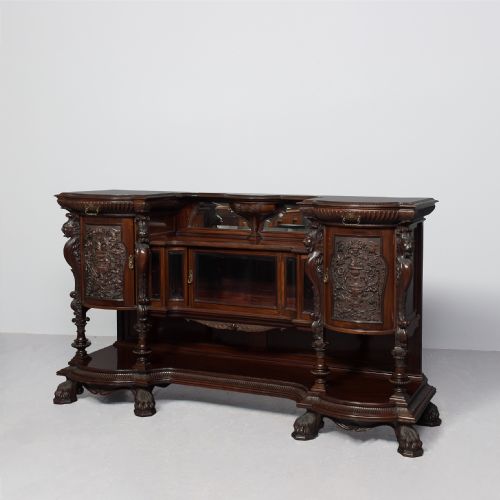
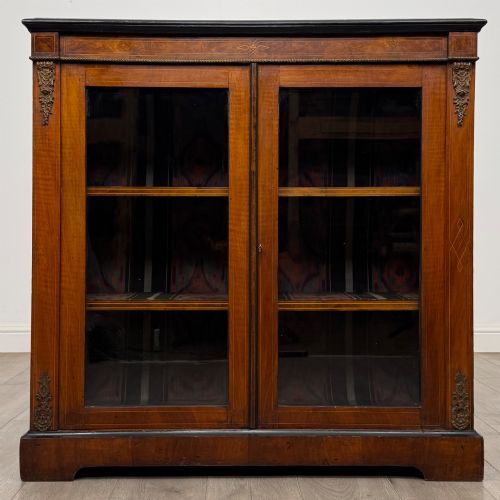
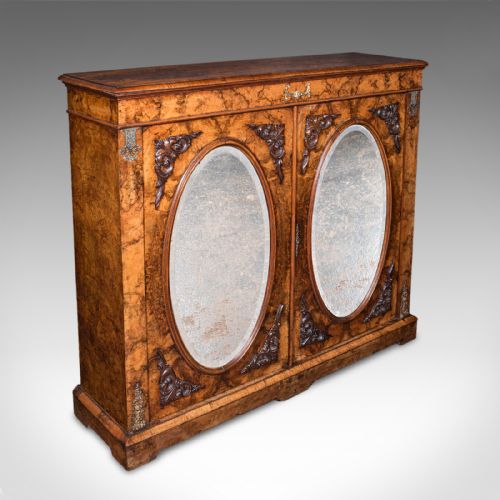
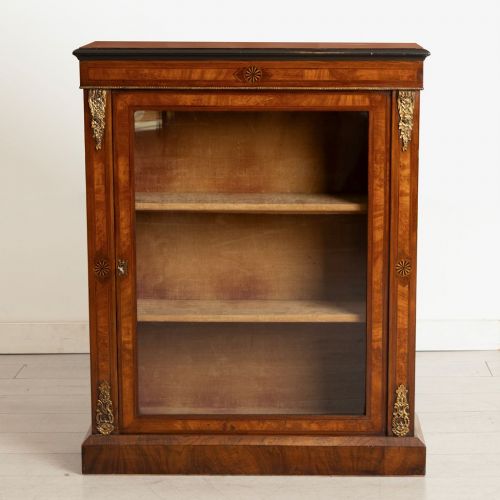
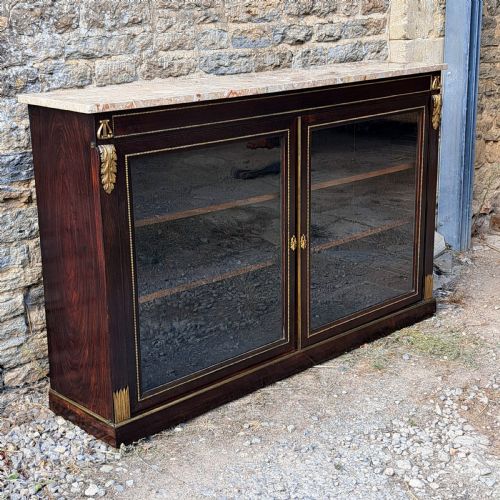
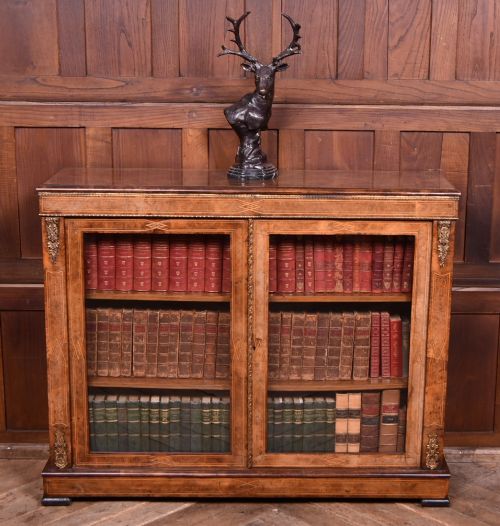
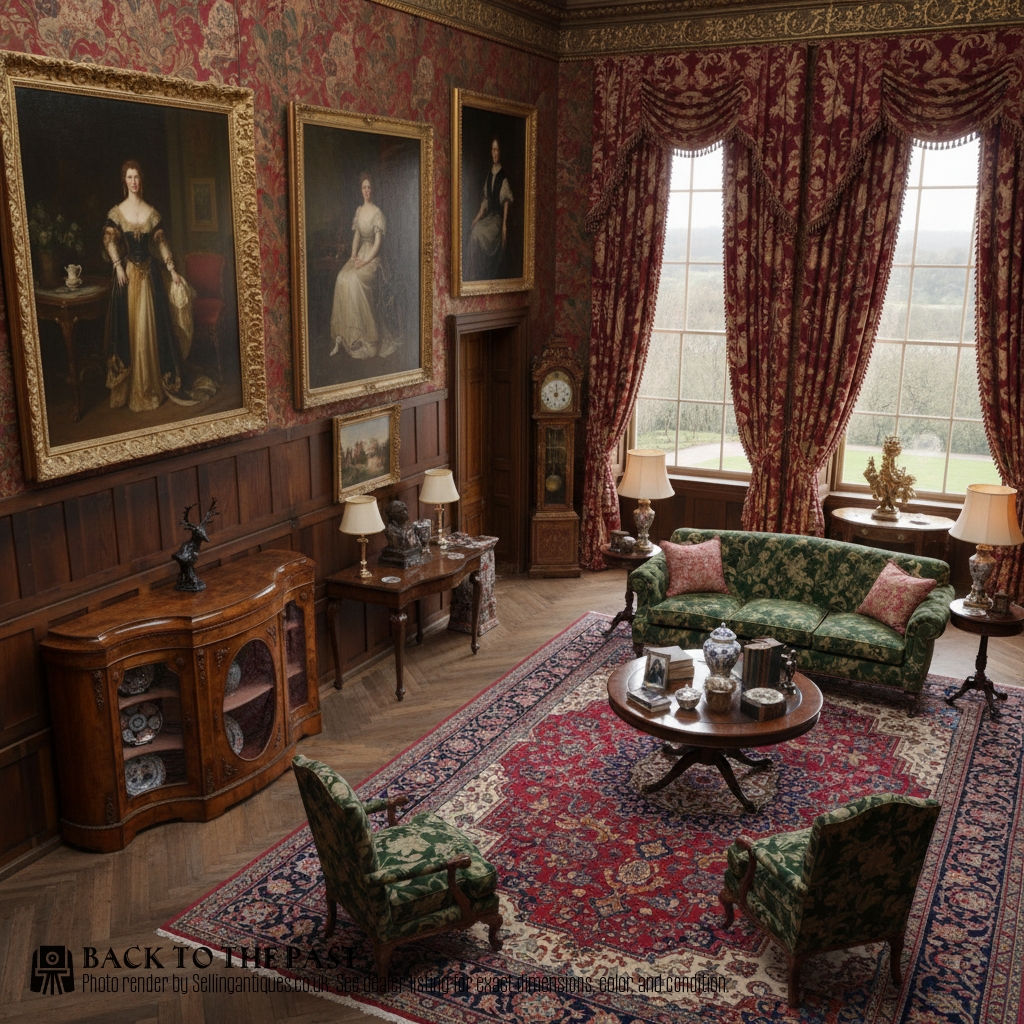
A glazed door credenza is a substantial nineteenth-century low cabinet designed to stand against a wall, typically featuring central glass doors flanked by curved or straight side cupboards. The examples appearing here belong exclusively to the Victorian period, dating around eighteen sixty and through the nineteenth century.
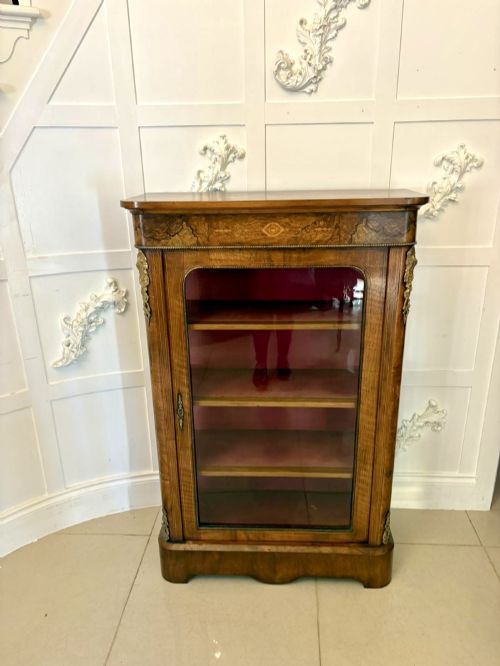
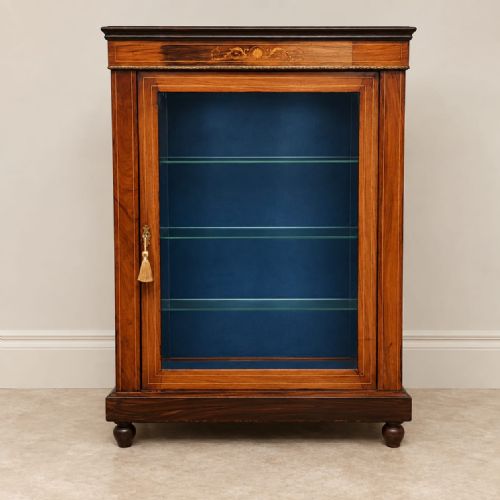
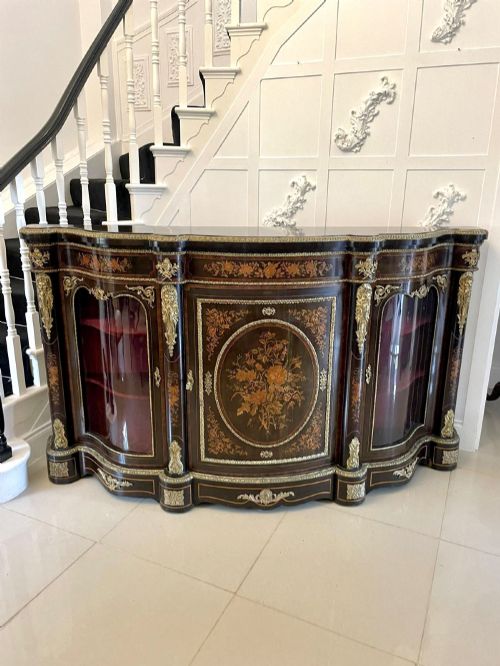
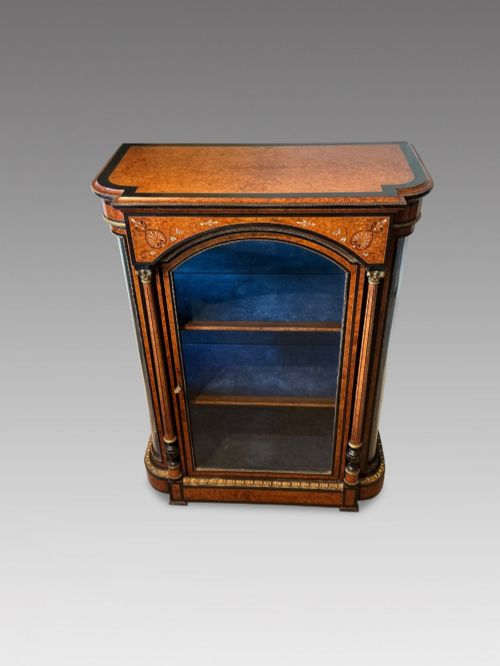
These pieces function as both display cabinets for porcelain and fine objects and as functional sideboards. Most forms seen here utilise walnut and burr walnut timber, often shaped with serpentine fronts and enhanced by decorative marquetry.
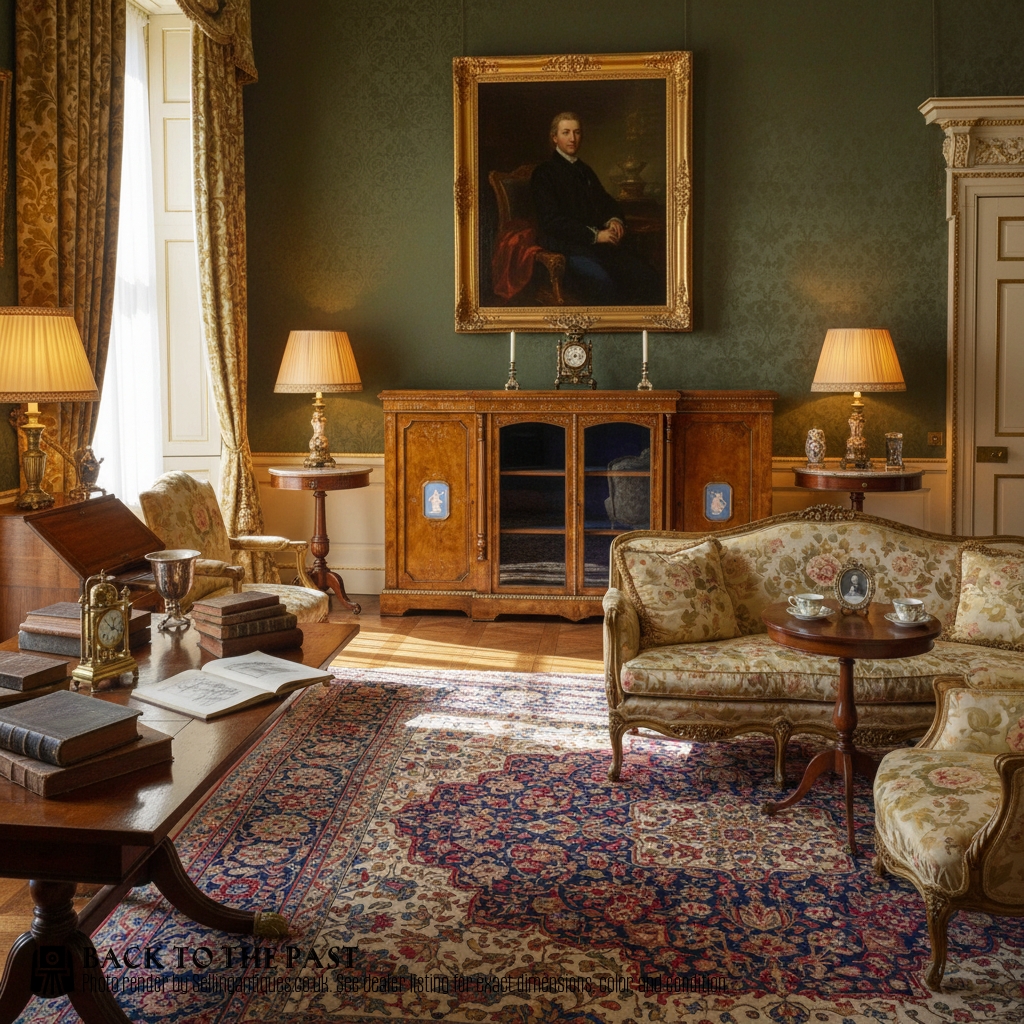
The standard configuration on this page combines glazed central compartments with flanking cabinet doors, occasionally incorporating fitted secretaire writing drawers inside. The overriding character is one of architectural presence and rich timber figuring.
How they were made
Cabinet makers constructed these credenzas using solid timber carcases faced with highly figured burr walnut veneers, supplemented by intricate boxwood inlay and marquetry. Ormolu mounts in cast gilt bronze frame the glazed doors and highlight the curved corners and plinths.
The glass panels are set into framed wooden doors that open to reveal fitted shelving, whilst internal drawer sections utilise secondary timbers like mahogany or pine. Interior linings frequently incorporate velvet to cushion display items.
The integration of brass hardware, porcelain plaques, and cast ormolu ornamentation required collaboration between cabinet makers, bronze workers, and marquetry specialists during the Victorian era.
Retail Price Guide 2026
Typical UK retail prices for glazed door credenza, calculated from the Sellingantiques database of over a million retail prices indexed since 2003. This retail price guide relies exclusively on Sellingantiques data; no external sources or auction records are used, so the figures do not describe the wider market.
Materials recorded across the current selection include burr walnut, ormolu, glass, boxwood, porcelain, and velvet.
What varies in quality
The standard of a glazed door credenza rests on the choice of timber and the precision of the marquetry work. Highly figured burr walnut with symmetrical grain patterns distinguishes superior examples from plain walnut carcasses.
Proportion and silhouette dictate overall elegance, particularly in serpentine-fronted examples where the curvature of the glass doors and wooden carcase demands advanced joinery skills.
The Glazed Door Credenza Glossary
- Credenza
- A low cabinet or sideboard originating in the nineteenth century, typically featuring central glass doors and flanking side cupboards.
- Burr walnut
- A prized timber veneer taken from the growth growths of a walnut tree, showing swirling, highly decorative grain patterns.
- Ormolu
- Gilded bronze mounts and decorative trimmings applied to furniture surfaces during the nineteenth century.
- Marquetry
- Decorative patterns created by fitting different wood veneers and boxwood into a solid background.
- Serpentine
- A furniture front shape characterised by a central convex curve flanked by concave sections.
- Secretaire drawer
- A pull-out drawer fitted with a drop front and internal small drawers and pigeonholes for writing.
Frequently Asked Questions
What is a glazed door credenza used for?
These cabinets serve as principal display pieces in formal rooms, allowing porcelain and collectables to be shown behind glass. The flanking cupboards provide closed storage for dining accessories and household linens.
The flat top surface also offers a platform for lamps, decorative vases, or serving dishes during gatherings, fulfilling the traditional role of a sideboard.
How do I date a Victorian credenza?
Dating relies on stylistic markers such as the presence of nineteenth-century revival motifs, ormolu mounts, and timber selection like burr walnut. Pieces from around eighteen sixty often exhibit Rococo Revival curves and precise marquetry.
Examining the construction methods, secondary timbers inside drawers, and the style of the brass hardware helps confirm the Victorian manufacturing period.
Are these credenzas difficult to place in a modern home?
Their low profile allows them to sit beneath artwork or mirrors without dominating the wall height. The combination of display glass and enclosed storage makes them practical for living rooms or large hallways.
Measuring the floor space carefully is essential because serpentine fronts and projecting ormolu mounts add depth beyond the basic cabinet dimensions.
What is the difference between a sideboard and a credenza?
While both provide storage, a traditional sideboard often includes plate racks or higher splashbacks and is designed primarily for dining rooms. A credenza sits lower and more frequently incorporates glass doors for display purposes.
Nineteenth-century examples like those on this page blur the distinction by functioning as decorative display cabinets that double as serving furniture.