


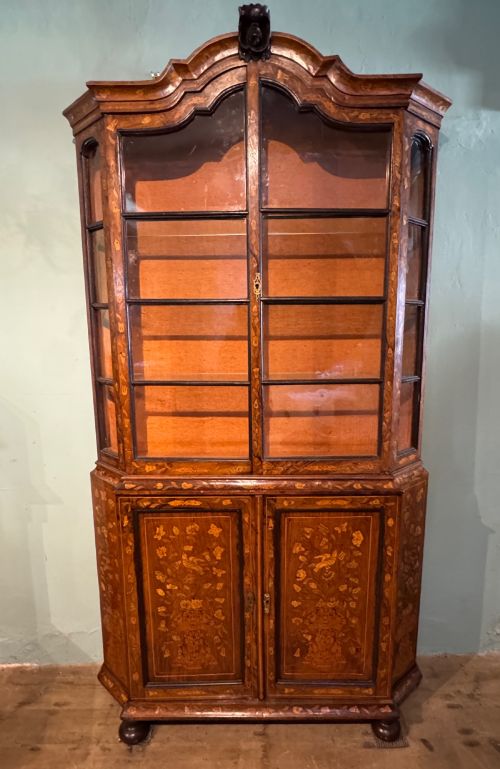
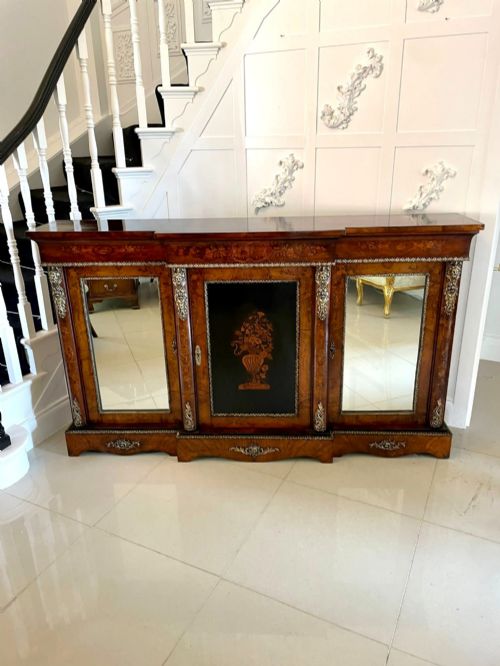
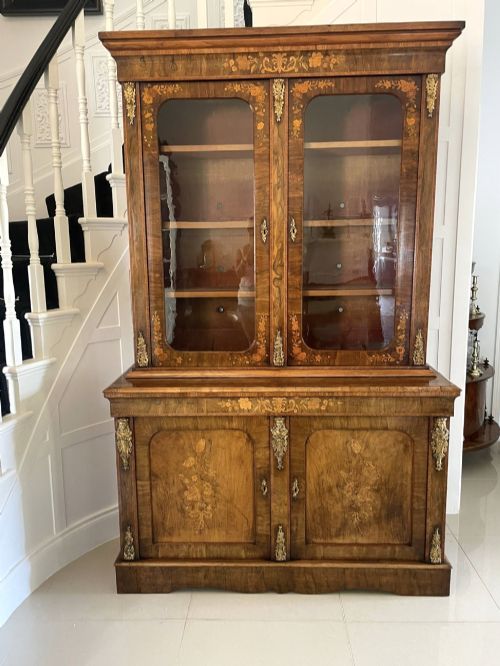
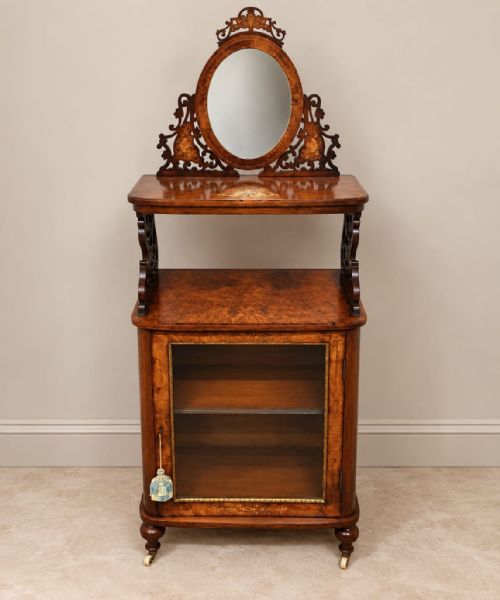
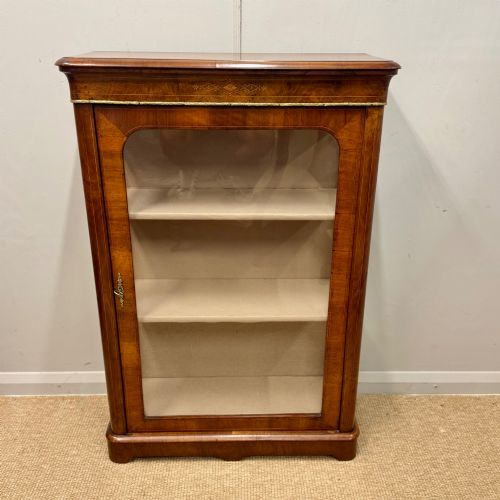
Inlaid Walnut Display Cabinet
An inlaid walnut display cabinet holds precious objects behind glass while showing the rich grain and contrasting stringing of nineteenth-century timber.
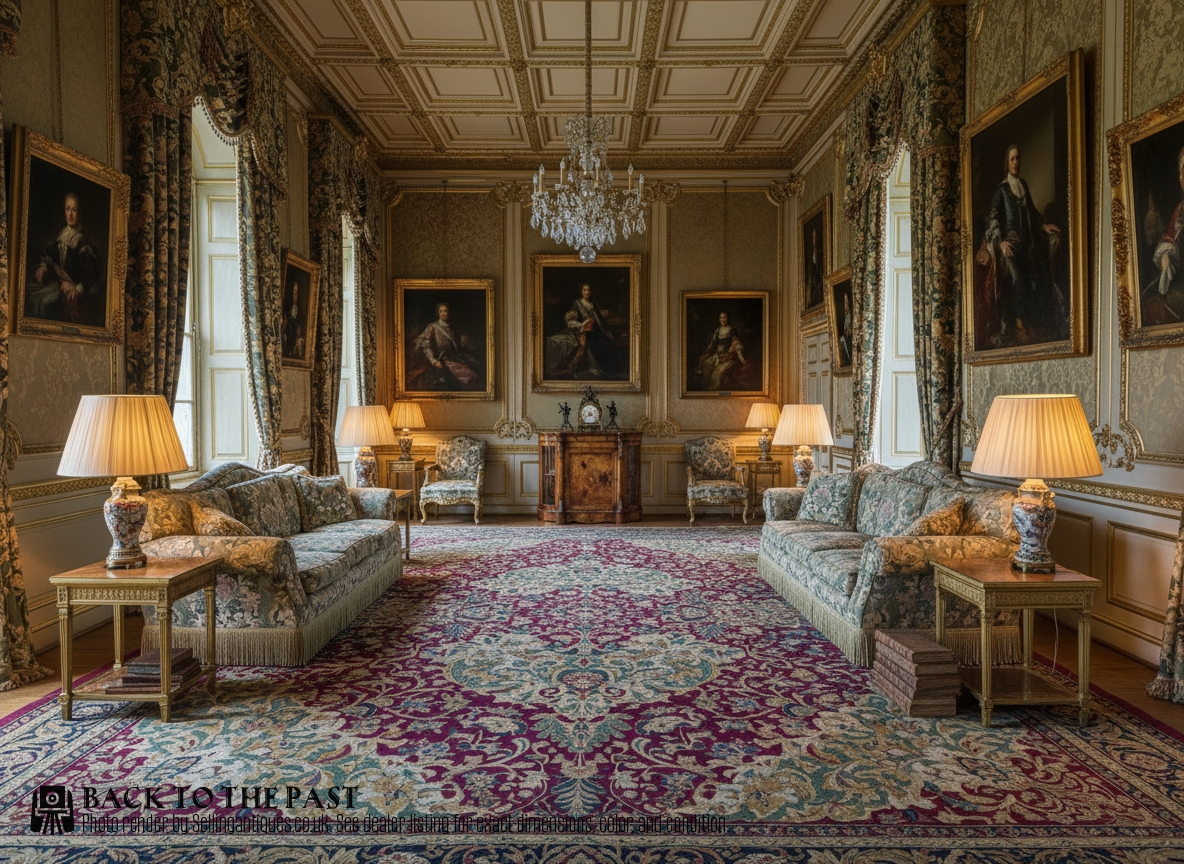
The forms and periods of an inlaid walnut display cabinet
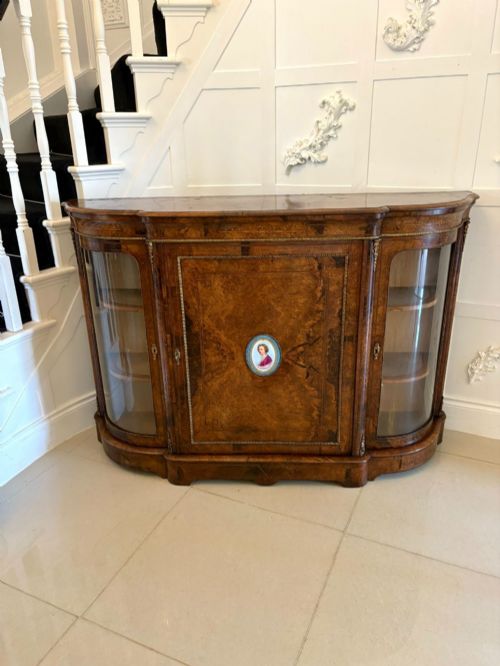
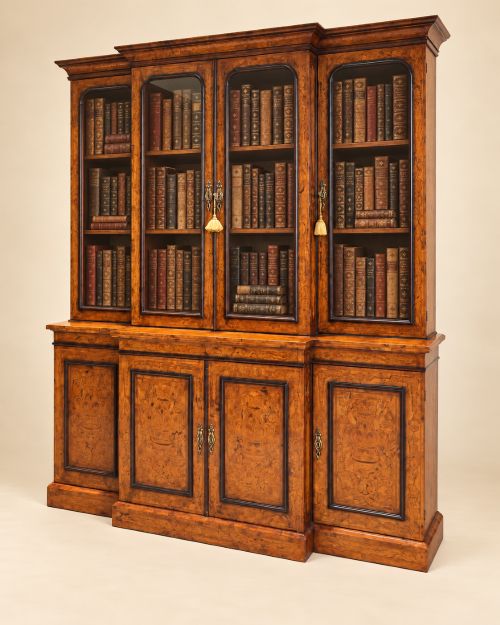
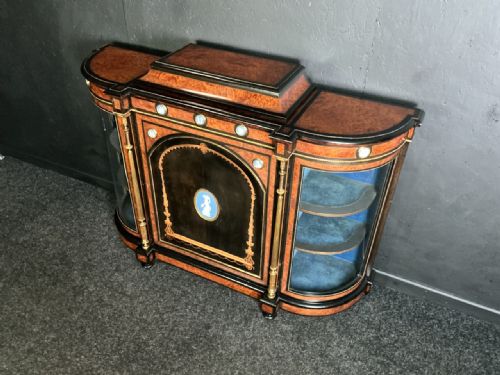
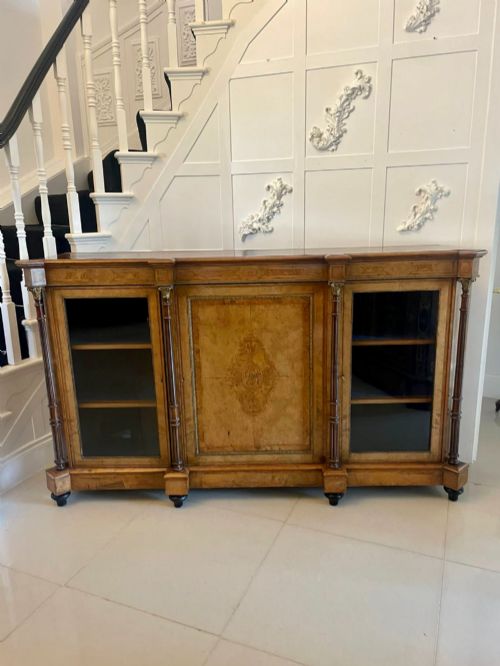
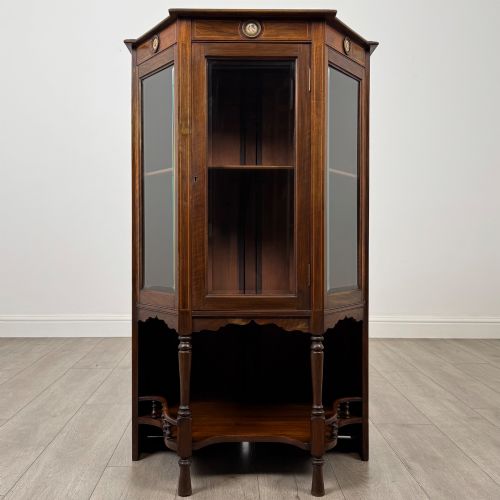
An inlaid walnut display cabinet brings together timber, glass, and metal mounts to showcase ceramics, books, and curiosities in nineteenth-century interiors. These pieces emerge predominantly from the Victorian period, spanning breakfront bookcases, corner units, and credenzas.
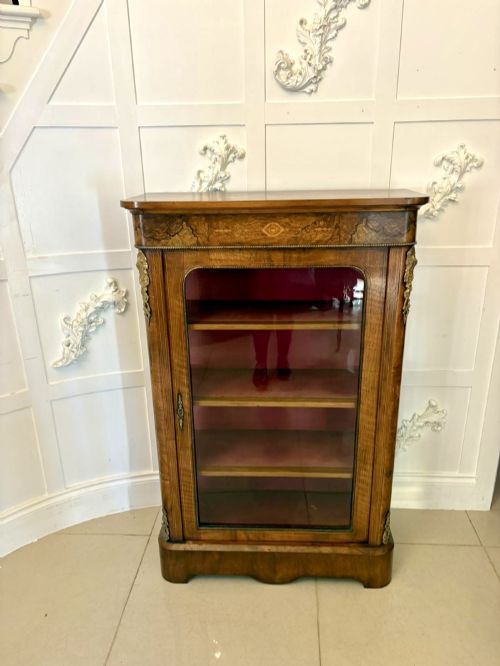
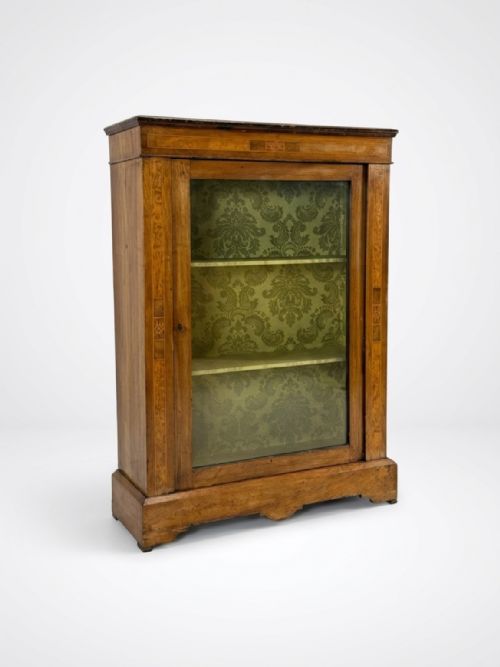
The single door pier cabinet stands as the most common encounter on this page, designed to fit narrow wall spaces between windows. Alongside these narrow vertical formats, wider sideboards and music cabinets appear, often carrying glazed doors and velvet-lined interior shelving.
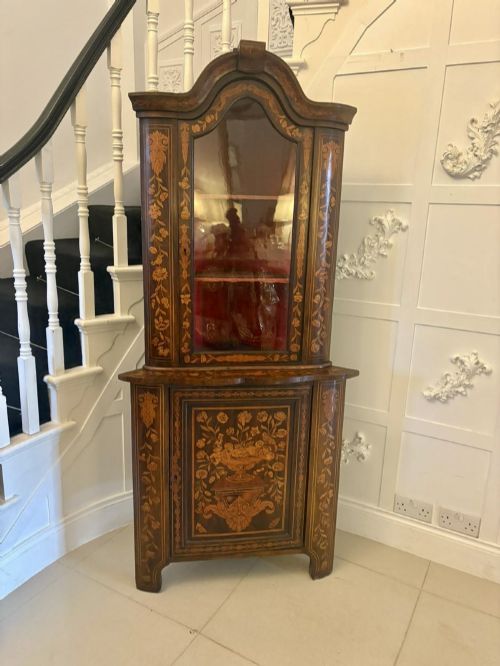
Origins trace largely to nineteenth-century English workshops, though Dutch examples featuring floral marquetry surface among past and present records. The construction spans the middle and later decades of the era, reflecting a sustained demand for figured timber furniture.
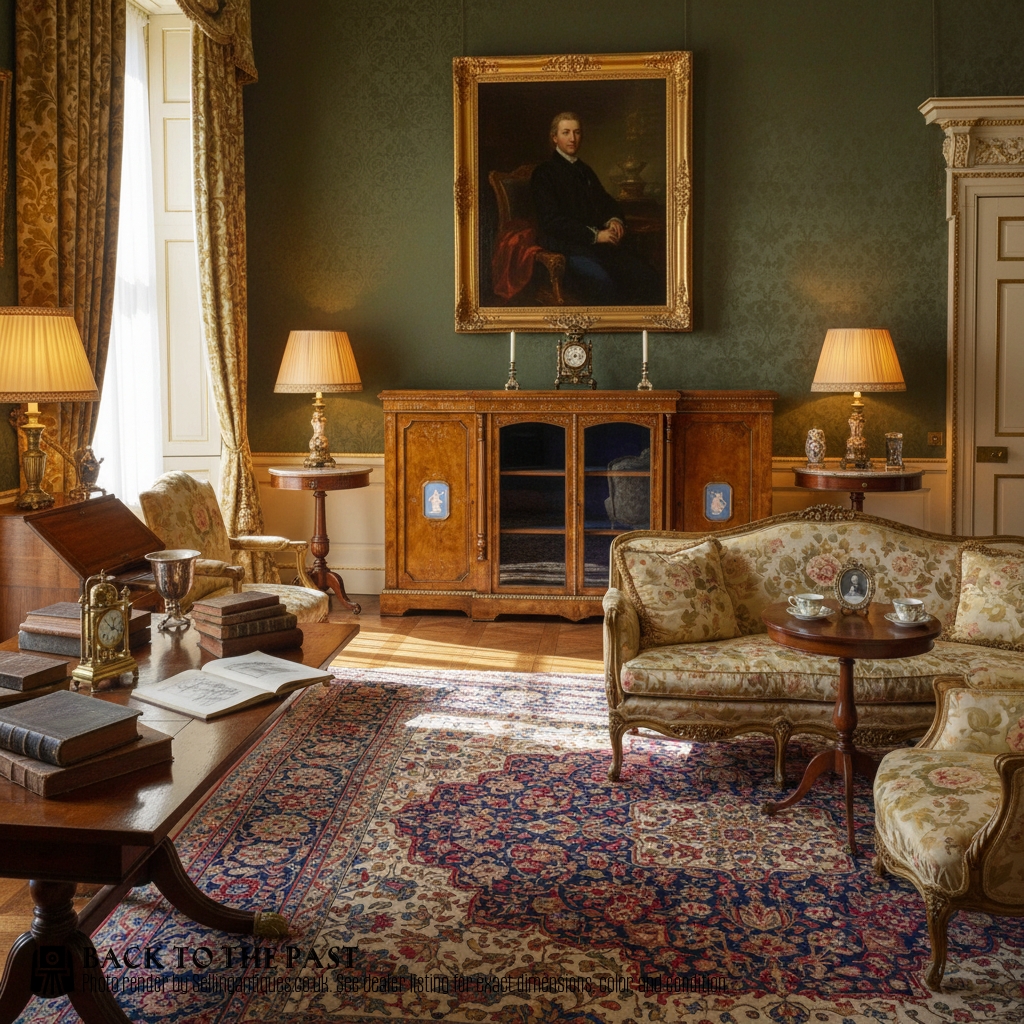
Materials and construction methods
Carpenters built these cabinets upon carcassing timbers, applying veneers of burr walnut, figured walnut, and straight-grained walnut to exterior surfaces. The distinctive swirling patterns of burr timber and the linear grain of figured walnut create rich optical movement across the flat expanses and curved doors.
Inlay work utilises contrasting light woods such as boxwood and satinwood, cut into delicate scrolling motifs, floral marquetry, and geometric stringing. Artisans set these delicate details flush into the dark walnut ground to form crisp borders and central panels.
Ormolu mounts in cast and gilt brass frame glass panels, corner brackets, and feet, adding metallic gleam to the timber surfaces. Glazing employs clear sheet glass held within timber rebate frames, whilst interior linings often incorporate fitted velvet or silk.
Retail Price Guide 2026
Typical UK retail prices for inlaid walnut display cabinet, calculated from the Sellingantiques database of over a million retail prices indexed since 2003. This retail price guide relies exclusively on Sellingantiques data; no external sources or auction records are used, so the figures do not describe the wider market.
Some nineteenth-century walnut cabinets secretly moonlighted as champagne display stands, urging guests to appreciate both the wood grain and the bubbles.
Distinctions in construction and decoration
The hierarchy of these cabinets rests upon the choice of timber and the precision of the marquetry. Cabinets featuring highly figured burr walnut veneers and intricate multi-wood floral inlay sit at the upper end of execution, displaying careful grain matching across doors and panels.
Secondary ornamentation defines the graduation between standard and superior models. The inclusion of heavy cast ormolu mounts, specialised internal fittings such as secretaire writing drawers, and curved serpentine woodwork indicates elevated workshop standards.
The Inlaid Walnut Display Cabinet Glossary
- Burr walnut
- A timber harvested from walnut tree growths, producing swirling, knotty grain patterns prized for decorative veneer work. It forms the primary visual field on superior nineteenth-century furniture.
- Marquetry
- The art of forming decorative pictures or patterns using thin veneers of different coloured woods. Craftsmen assemble these pictorial designs by hand before gluing them to the cabinet carcase.
- Ormolu
- Gilt bronze mounts attached to furniture corners, feet, and borders for decorative effect. The technique involves applying a gold amalgam to cast brass components.
- Pier cabinet
- A low freestanding cabinet designed to stand against the solid wall space between two windows. These narrow vertical units typically feature a single glazed door.
- Stringing
- Thin inlaid lines of contrasting timber set flush into the surface of furniture to create borders. Boxwood or satinwood provides the pale contrast against dark walnut.
- Vitrine
- A glass-fronted display cabinet used specifically for showcasing porcelain and small curiosities. The term emphasises the extensive use of glazing on doors and sides.
Frequently Asked Questions
What is an inlaid walnut display cabinet used for?
These cabinets served in nineteenth-century parlours and drawing rooms to display prized collections of ceramics, glassware, and small ornaments behind protective glass doors. Certain variations incorporated dedicated music storage or concealed writing drawers alongside the main display space.
Today, they fulfil a similar domestic role by housing collections while keeping dust away from delicate objects. The enclosed shelving protects items from handling while maintaining full visibility.
How do I identify a Victorian walnut cabinet?
Victorian walnut cabinets display deep brown timber grain enriched by contrasting boxwood stringing and floral marquetry. The construction commonly relies on solid carcases faced with figured walnut veneers, frequently accompanied by cast ormolu mounts around the glass doors.
Dating relies on stylistic markers such as serpentine shaping, gilt brass mounts, and the specific proportions of pier cabinets built during the middle and late nineteenth century.
Where should I place a pier cabinet at home?
A pier cabinet suits narrow wall spaces, hallways, or corners where standard wide furniture would block movement. Their shallow depth allows them to sit flush against walls without dominating the floor area of a room.
Placing the cabinet away from direct sunlight protects the walnut veneer and internal fabric linings from fading. Adequate ambient lighting helps illuminate the contents behind the glass panels.
What is the difference between burr walnut and figured walnut?
Burr walnut derives from distorted tree growths, producing dense, swirling clusters of knots and eyes across the timber surface. Figured walnut exhibits straight yet undulating grain patterns that catch the light with natural chatoyancy.
Cabinets utilising burr walnut veneers generally represent higher-status production due to the scarcity of the burl material and the skill required to veneer curved surfaces.