

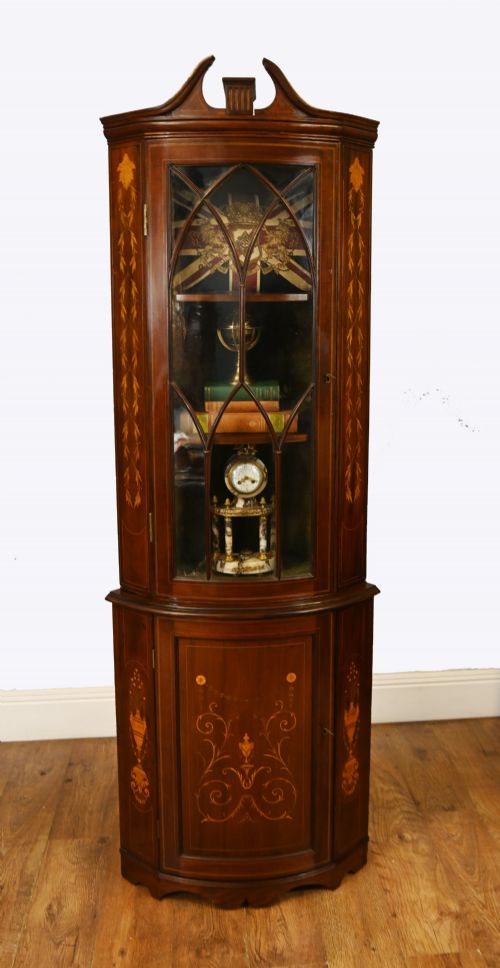


Corner China Cabinet
A corner china cabinet puts an empty junction to work, holding china behind glass across periods from the eighteenth century to the art deco era.
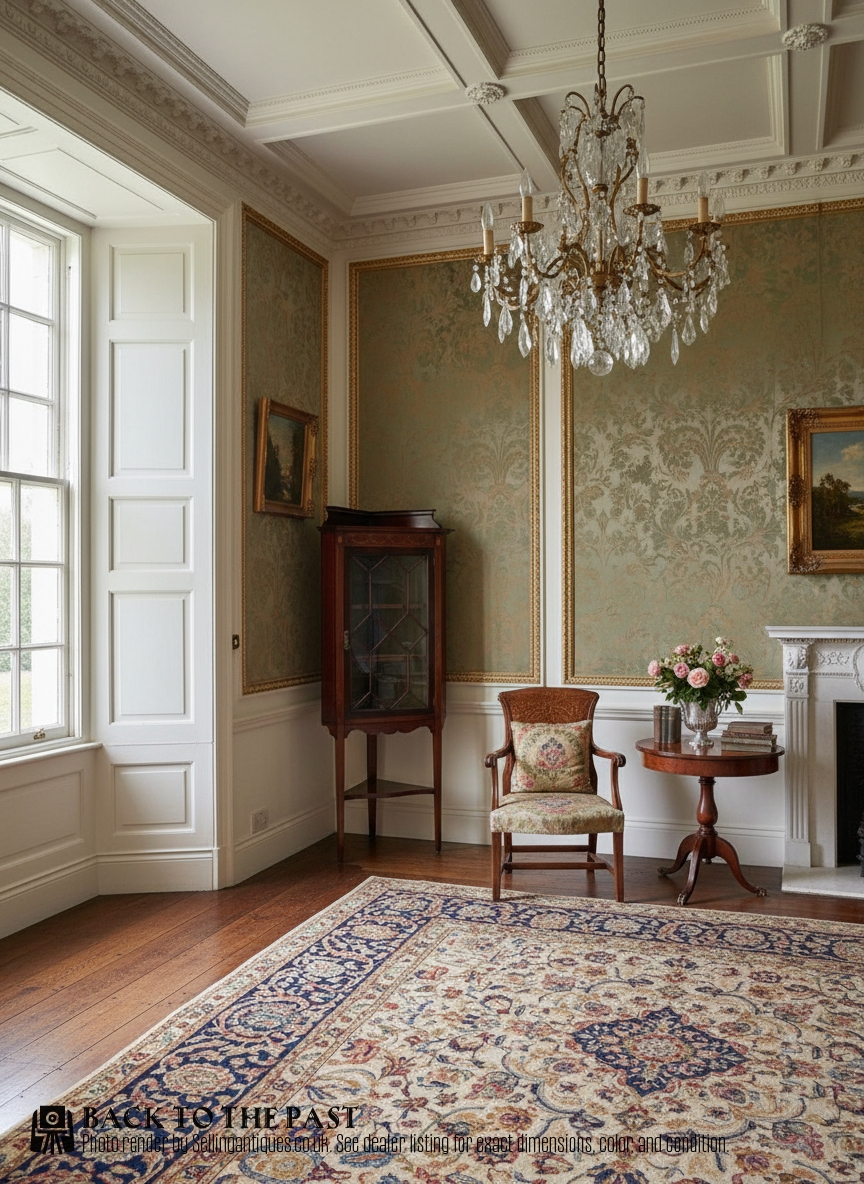
Corner China Cabinet
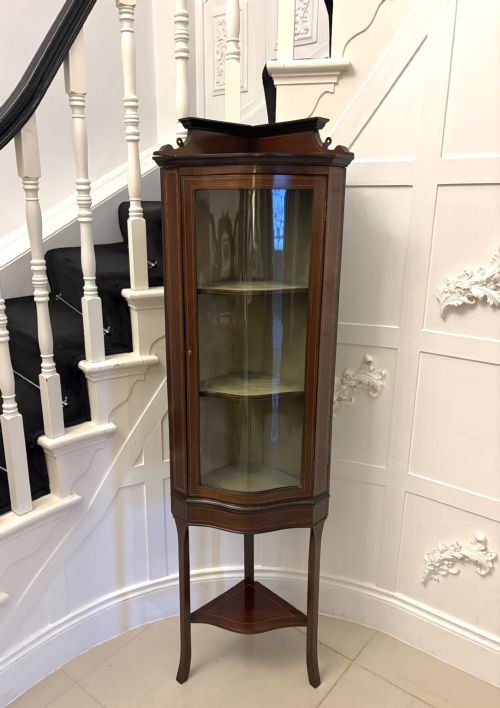
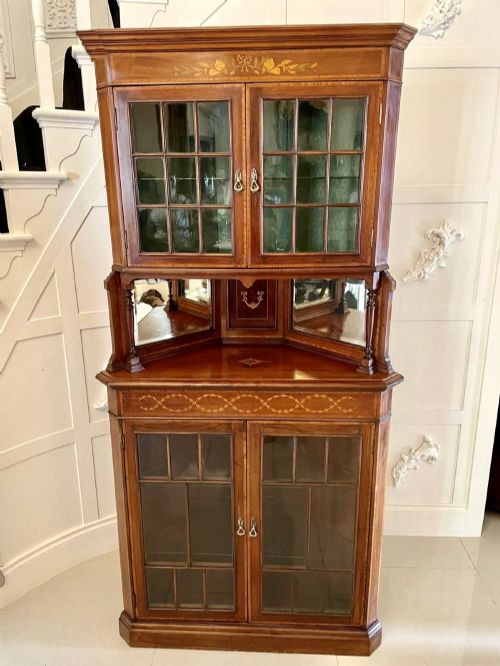
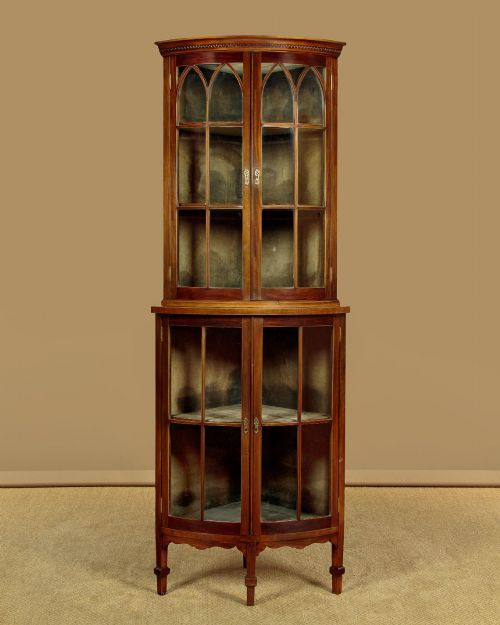
A corner china cabinet turns unused room angles into display space for porcelain and glassware. These items take the form of floor-standing standing units, wall-mounted cupboards and two-piece double height designs.
The pieces span several eras, appearing most frequently in Edwardian mahogany and eighteenth-century Georgian oak or walnut. Surviving examples also include Victorian satinwood and nineteen-thirtyish art deco designs.
Makers built these vessels to fit tightly into house corners, saving floor space while framing precious ceramics behind single or double doors.
How they were made
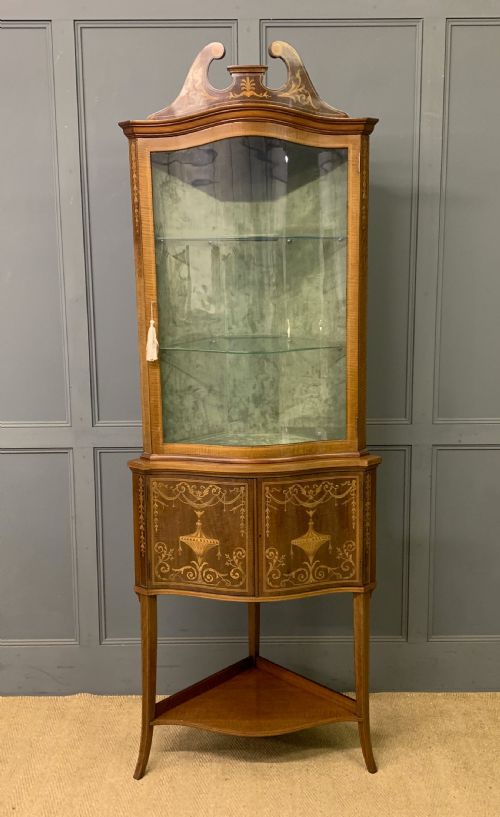
Craftsmen built the primary carcass frames in solid mahogany, oak, and walnut, frequently applying satinwood veneers and decorative inlay. Brass hinges and escutcheons secure the doors, while internal fabric linings sometimes back the display shelves.
Glazing techniques define the facade, using individual glass panes held by astragal bars or bent bowed glass in later models. Cabinetmakers matched wood grain patterns carefully across the front panels and door frames.
Corner China Cabinet Retail Price Guide 2026
Typical asking prices for corner china cabinet among the pieces listed under this phrase on Sellingantiques today, from the lower quarter to the upper quarter. They describe what is for sale here now, not the wider market.
Certain Dutch painted cabinets introduce cheerful floral pigments to traditional corner storage.
What varies in quality
Quality rests in the crispness of the inlay work, the selection of figured wood veneers, and the joinery of the internal shelving. Superior cabinets display balanced proportions and refined timber choices rather than heavy carcass construction.
Glazing quality differentiates the standard production from finer cabinet work, seen in slender wooden astragal bars and clean, distortion-free glass panes. The integration of the curved or angled joints dictates the enduring stability of the piece.
Maurice Adams
The Corner China Cabinet Glossary
- Astragal glazing
- The wooden glazing bars that divide a glass door into smaller individual panes. These thin strips shape the visual grid of the cabinet door.
- Bow front
- A convex curved cabinet facade that projects forward from the corner angle. This shape softens the harsh lines of a room junction.
- Marquetry
- Decorative patterns formed by fitting together contrasting pieces of wood veneer. Artisans apply this pictorial inlay to door panels and friezes.
- Sheraton Revival
- A late nineteenth and early twentieth century style drawing on eighteenth-century neoclassical designs. Pieces feature light mahogany construction and delicate satinwood inlay.
- Vitrine
- A glass-fronted display cabinet designed specifically for showing porcelain and objets d'art. These pieces prioritise visibility through glazed sides and doors.
Corner China Cabinet: Frequently Asked Questions
How do I fit a corner cabinet?
Measure the wall depth and the angle of the room corner before selecting a cabinet. Floor standing units require stable contact against both adjoining walls.
Two-piece models make transport simpler when moving the upper and lower sections into position. Ensure the floor level is even so the doors close correctly without binding against the frame.
Are these cabinets secure for heavy china?
Most antique corner cupboards feature fixed or adjustable wooden shelving designed for regular ceramic display. Solid hardwood carcasses distribute weight effectively down to the floor base.
Overloading upper shelves can destabilise wall-mounted versions, so heavier porcelain belongs on the lower tiers. Check the internal shelf supports to confirm their weight capacity.
How do I care for mahogany surfaces?
Dust timber surfaces regularly with a soft, dry cloth to prevent grit accumulation on the polish. Avoid placing cabinets in direct sunlight to protect mahogany and satinwood from fading.
Apply occasional quality wax feeds to nourish the grain without building up a sticky film. Keep humidity levels stable to prevent timber shrinkage around the glazed doors.
How do I distinguish Edwardian pieces from Georgian ones?
Georgian cabinets from the eighteenth century utilise heavy oak, dense mahogany, and simple fielded panels or thick glazing bars. Their construction relies on hand-cut joinery methods suited to the period.
Edwardian and nineteen-hundreds revivals often display lighter satinwood inlay, brighter polished surfaces, and machine-assisted precision in the veneering. The interior carcass woods and backboards also reveal the manufacturing era.